
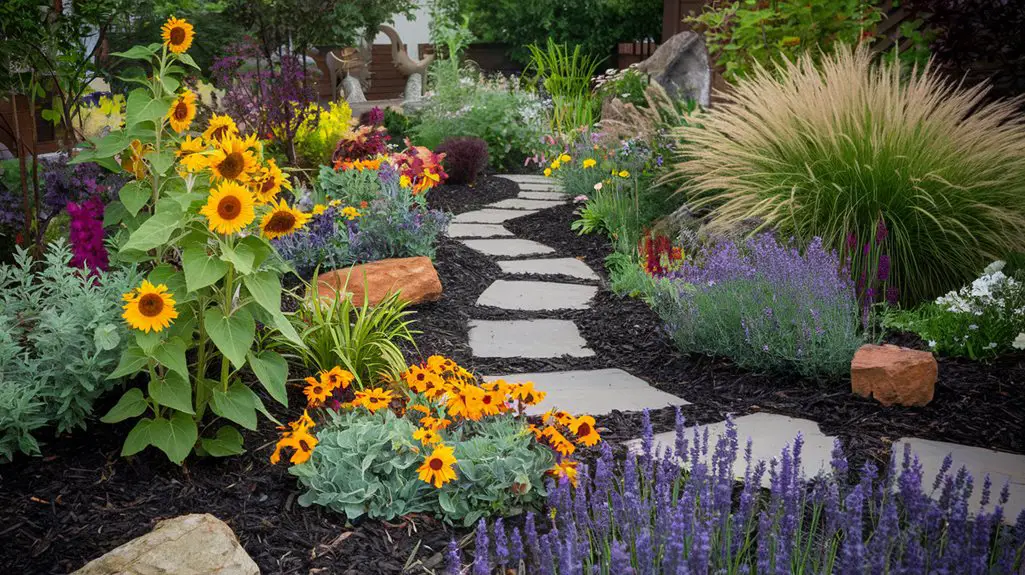
Designing flower beds for your backyard can transform your outdoor space into a vibrant oasis. Start by choosing the right location that gets ample sunlight and has good drainage.
You'll want to take into account your local climate when selecting flowers, ensuring they thrive in your hardiness zone. As you plan your layout, think about height and color combinations for visual impact. But the real artistry lies in how you bring these elements together—what will your final masterpiece look like?
On this page
Choosing the Right Location for Your Flower Bed
When you're ready to create a vibrant flower bed, choosing the right location is essential for ensuring your blooms thrive.
Start by evaluating sunlight; most flowers need at least six hours of direct sunlight daily. Observe how the light shifts throughout the day to find the sunniest spot.
Next, consider drainage; avoid low areas where water pools, as soggy roots can lead to rot.
Soil quality is vital too—test it for pH and nutrients, enriching it with compost if needed.
Finally, think about accessibility; you'll want to easily reach your flowers for maintenance and harvesting.
Selecting the Best Flowers for Your Climate
How can you guarantee your flower bed thrives in your specific climate? Start by researching your hardiness zone; it's essential in determining which flowers will flourish.
For hot, dry regions, consider drought-resistant varieties like lavender and succulents. In cooler climates, opt for perennials such as coneflowers and asters that can withstand frost.
Pay attention to sunlight requirements—some flowers love full sun while others thrive in shade. Additionally, think about soil type; well-draining loam supports a wider variety, while clay might require tougher species.
Don't forget local pests and diseases, which can impact your choices. By selecting flowers suited to your environment, you'll create a vibrant, resilient flower bed that showcases nature's beauty.
Designing Layouts for Eye-Catching Arrangements
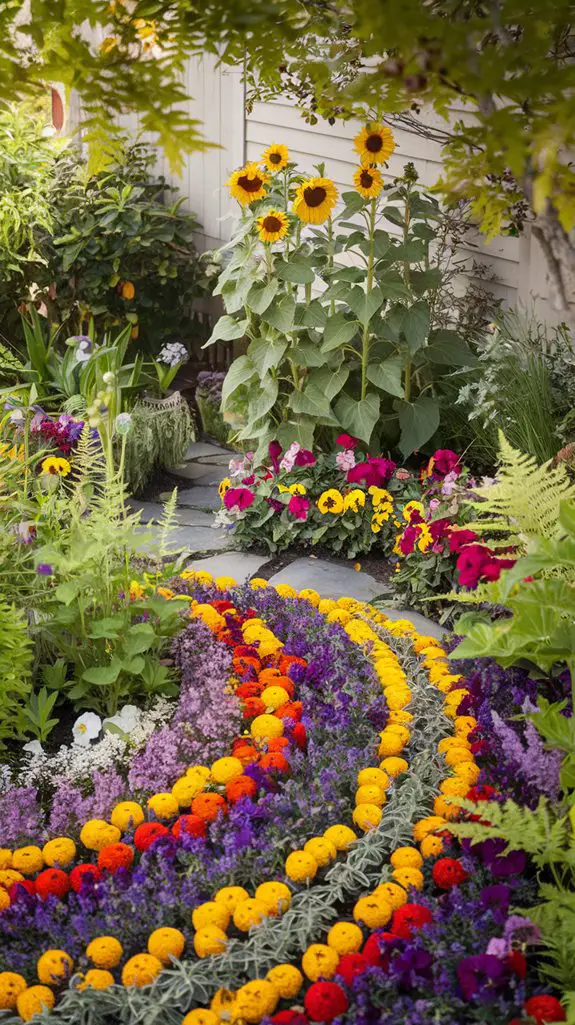
To create an eye-catching flower bed, you'll want to contemplate both the arrangement and the visual flow of your plants.
Start by layering your flowers; place taller plants at the back and shorter ones in front to guarantee all blooms are visible.
Consider color schemes—choose complementary or analogous colors to enhance visual appeal.
Use odd numbers of plants for a more natural look, and intersperse varying textures and leaf shapes for interest.
Curved lines often create a more inviting feel than straight rows.
Don't forget to account for seasonal changes; select plants that bloom at different times to maintain color throughout the year.
Finally, leave some space for pathways or stepping stones to invite exploration into your beautiful arrangement.
Incorporating Hardscaping Elements
While softscaping focuses on the vibrant plants that breathe life into your flower beds, hardscaping elements play an essential role in providing structure and functionality to your garden.
Incorporating pathways made from stone or pavers adds a practical yet aesthetic touch, guiding visitors through your blooming oasis. Consider edging materials like bricks or natural stone to define your flower bed boundaries, preventing soil erosion and enhancing visual appeal.
A decorative trellis or arbor not only supports climbing plants but also introduces vertical interest. Additionally, installing benches or seating areas creates inviting spots for relaxation. Incorporating water features can further enhance the tranquil atmosphere of your garden.
Understanding Soil Preparation and Maintenance
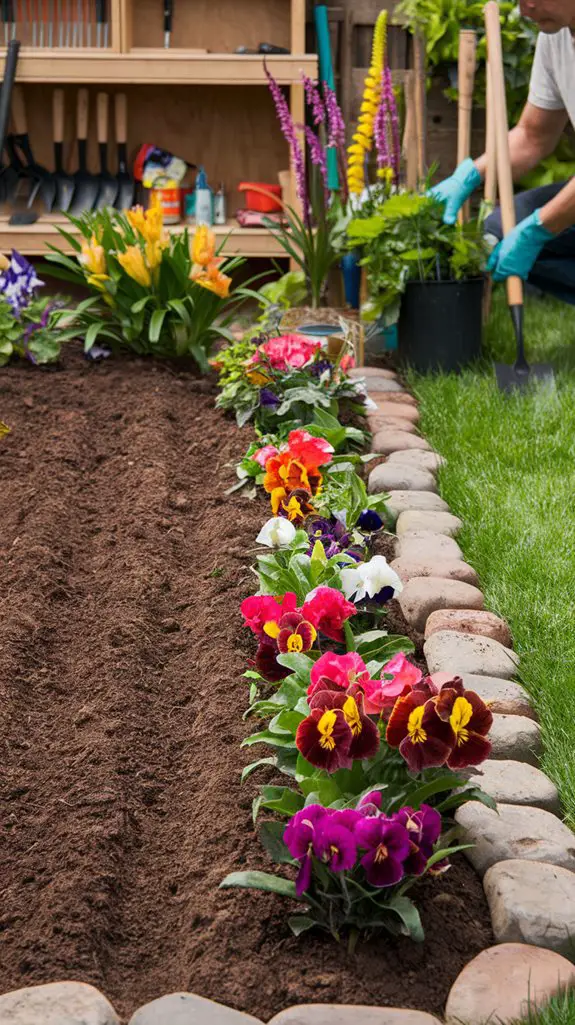
Soil preparation and maintenance are essential for a thriving flower bed, as they lay the foundation for your plants' health and growth.
Start by testing your soil's pH and nutrient levels—this helps you understand what amendments are needed. Loosen compacted soil with a garden fork to improve aeration and drainage. Incorporate organic matter like compost or well-rotted manure; this enriches the soil and boosts microbial activity.
Guarantee proper drainage by creating raised beds if your soil retains too much water. Don't forget to mulch around your plants; it retains moisture, suppresses weeds, and regulates temperature.
Regularly check for any pests or diseases, and adjust your maintenance routine accordingly to keep your flower bed flourishing throughout the growing season.
Planning for Seasonal Changes and Blooms
As you plan your flower bed, consider how seasonal changes will influence your blooms throughout the year.
Choose a mix of perennials and annuals to guarantee color and texture, from early spring to late fall. Incorporate early bloomers like crocuses and daffodils for a vibrant spring display.
Shift to summer favorites like zinnias and coneflowers, which thrive in the heat. As fall approaches, add asters and chrysanthemums for rich autumn hues.
Don't forget winter interest; consider evergreens or ornamental grasses that provide structure and beauty.
Planning this way not only maximizes visual appeal but also creates a dynamic, ever-changing landscape that showcases nature's seasonal rhythms, making your flower bed remain enchanting all year round.
Adding Decorative Features to Enhance Your Flower Bed
To truly elevate your flower bed, consider incorporating decorative features that not only enhance its visual appeal but also create a harmonious environment.
Start with edging materials, like natural stone or decorative bricks, to define the space and add structure. Incorporate trellises or arbors for climbing plants, adding vertical interest and depth.
Garden ornaments, such as sculptures or whimsical bird baths, can serve as focal points, drawing the eye throughout the bed. Use mulch or gravel to create contrast and improve drainage while maintaining a tidy appearance.
Finally, consider lighting options, like solar-powered garden lights, to highlight your flower bed at night, making it a stunning sight even after sunset. Additionally, you might explore nature-inspired designs that blend your flower bed seamlessly with the surrounding landscape.
These elements will transform your garden into an enchanting retreat.
Conclusion
As you step back to admire your blossoming oasis, remember that a well-designed flower bed is like a canvas painted with nature's vibrant palette. By choosing the right location, flowers, and layout, you've crafted not just a garden, but a sanctuary for both you and local wildlife.
Embrace the changing seasons, welcoming each bloom as a new brushstroke in your masterpiece. With a little care and creativity, your backyard will transform into a stunning floral retreat that delights the senses year-round.
