

In San Diego County, homeowners implementing simple rainwater management systems captured an average of 4,300 gallons annually per household during the 2021 drought. You’re likely missing similar opportunities in your own backyard.
Suburban properties generate significant runoff that carries fertilizers, pesticides, and hydrocarbons directly into local waterways. The environmental consequences extend beyond your property line, while the financial benefits of proper management remain largely untapped. What’s flowing away from your home might be costing more than you realize.
On this page
The Hidden Environmental Impact of Suburban Runoff
While suburban neighborhoods appear tranquil and ecologically benign, they generate significant volumes of stormwater runoff that poses substantial environmental threats.
Your property’s impervious surfaces—rooftops, driveways, and patios—prevent natural soil infiltration, forcing rainfall to flow across chemically-treated lawns and into storm drains.
This runoff carries fertilizers, pesticides, automotive fluids, and microplastics into local waterways.
These pollutants trigger algal blooms, deplete oxygen levels, and contaminate drinking water sources. Additionally, the velocity of suburban runoff accelerates stream bank erosion, destroying aquatic habitats and increasing flooding risks downstream.
You’re directly connected to these watershed-scale impacts through your property’s drainage patterns, making your rainwater management choices environmentally consequential. Implementing rainwater harvesting practices in your garden can significantly mitigate these adverse effects.
Financial Benefits of Backyard Water Conservation
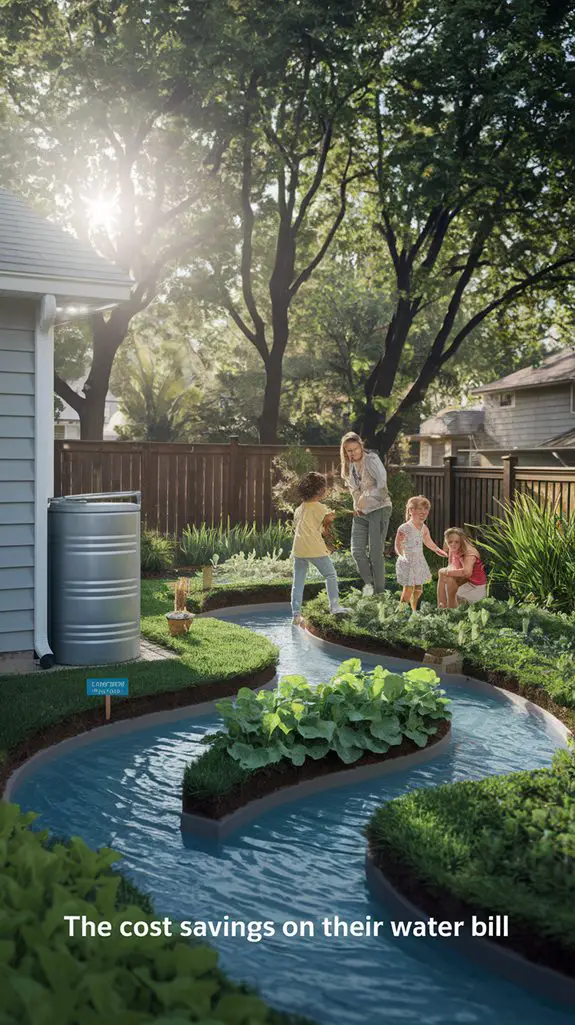
Although homeowners often focus on ecological advantages of rainwater management, implementing backyard water conservation systems delivers measurable financial returns.
Using collected rainwater for irrigation cuts your municipal water bill, which helps offset what you spent on the system.
Some cities and water utilities offer rebates for rain barrels and permeable surfaces, so check with yours before you buy.
Keeping runoff away from the house also lowers the risk of costly erosion and foundation repairs.
During drought restrictions, stored water can keep established plants alive that would otherwise need replacing. Additionally, implementing maximum efficiency rainwater systems can further enhance your cost savings by ensuring optimal use of harvested water.
DIY Rainwater Collection Systems for Any Budget
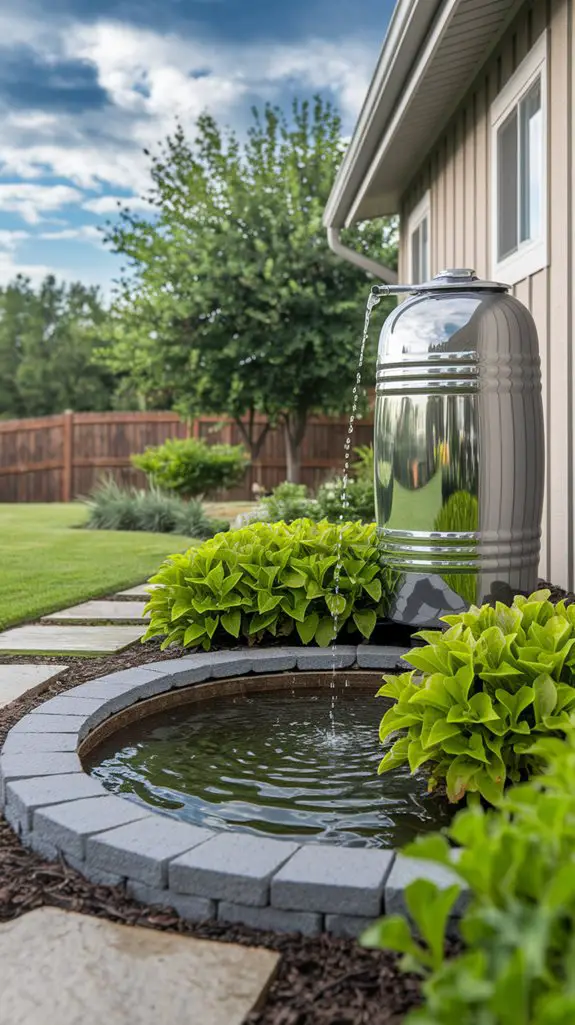
Because rainwater collection systems can be implemented at various price points, homeowners don’t need extensive budgets to begin harvesting precipitation.
Entry-level setups utilizing a 55-gallon barrel connected to downspouts cost approximately $35-50, while mid-tier systems incorporating multiple interconnected containers range from $100-250.
For peak efficiency, install 1st-flush diverters ($15-30) to prevent debris contamination and mesh filters ($5-15) at collection points.
Your catchment potential equals roof area (ft²) × rainfall (in) × 0.623. A 1,500 ft² roof can collect 935 gallons from a 1-inch rainfall event.
Advanced systems featuring pumps ($75-200), automated filtration ($150+), and underground cisterns ($500+) offer expanded capacity but require technical knowledge for installation.
Consider UV stabilized containers for outdoor durability and implement overflow mechanisms to prevent foundation damage during heavy precipitation events. Additionally, understanding rainwater harvesting can significantly enhance your system’s effectiveness and sustainability.
Transforming Water Challenges Into Garden Opportunities
Collecting rainwater represents only the first step in thorough water management; putting that captured resource to ideal use transforms suburban challenges into ecological assets.
You’ll maximize this resource by implementing bioswales that filter pollutants while directing water to vegetation zones requiring higher moisture.
Consider integrating rain gardens with native species that tolerate both periodic inundation and drought conditions. These systems reduce runoff compared to traditional landscapes.
Strategic placement of permeable hardscapes allows infiltration at 50-300 inches/hour, replenishing groundwater while mitigating erosion.
You can further optimize water distribution through gravity-fed drip irrigation, which wastes far less water than conventional sprinklers. Additionally, incorporating sustainable outdoor water features can enhance the aesthetic appeal of your garden while utilizing harvested rainwater effectively.
Smart Technology Integration for Optimal Water Management
Smart technologies can make rainwater management more efficient than conventional methods.
These systems utilize real-time soil moisture sensors that transmit data at 5-minute intervals, allowing automatic adjustment of water distribution based on saturation levels.
You’ll find smart controllers particularly valuable—they integrate with weather forecasting services to anticipate rain.
By deploying these controllers, you’re reducing unnecessary irrigation by accessing hyperlocal meteorological data within a 1-2 mile radius of your property.
Additionally, flow meters can detect usage anomalies as small as 0.5 gallons/hour, alerting you to potential leaks.
Modern systems store collected rainwater data in cloud platforms, enabling analysis of seasonal patterns and optimization of collection strategies based on historical precipitation metrics. Furthermore, rainwater systems for drought resistance can offer significant benefits to both environmental sustainability and economic savings for homeowners.
Regulatory Considerations and Neighborhood Benefits
While implementing residential rainwater systems, you’ll need to navigate a complex regulatory framework that varies greatly by jurisdiction. Most municipalities require permits for cisterns exceeding specific volumes (typically 1,000 gallons), and some restrict harvesting methods.
Check local building codes, HOA regulations, and watershed protection ordinances before installation.
Your rainwater management efforts extend benefits beyond property lines. When many homes in a neighborhood capture their rainwater, it adds up to less stormwater runoff during heavy rain. This decreases municipal infrastructure strain and mitigates flooding risks.
Coordinated neighborhood rainwater management also keeps nitrogen, phosphorus and sediment out of local waterways, which helps the whole watershed. Additionally, integrating innovative rainwater systems can further enhance sustainability and efficiency in managing water resources.
Seasonal Maintenance Strategies for Sustainable Systems
To maintain ideal functionality of your rainwater management system throughout the year, seasonal maintenance must be performed according to a structured schedule that addresses changing environmental conditions.
In spring, clear debris from gutters and downspouts while inspecting for winter damage.
Summer requires monitoring overflow pathways and sediment buildup, since blockages during heavy rain are a common cause of system failures.
Fall maintenance focuses on leaf removal from collection surfaces and filters, preventing decomposition that fouls the stored water.
Winter preparation includes insulating exposed pipes where temperatures drop below 32°F and disconnecting certain components in freeze-prone regions.
In addition, consider implementing compact rainwater systems that are specifically designed to maximize efficiency in smaller suburban backyards.
Document your maintenance with photographs to track system changes over time, as consistent upkeep helps a system last longer than reactively maintained installations.
Conclusion
By optimizing your backyard’s rainwater management, you’re creating a measurable defense against the extra runoff that roofs and pavement create in suburban developments. Visualize each drop captured—keeping nitrogen and phosphorus out of local watersheds. Your integrated system isn’t just aesthetically pleasing; it reduces the stormwater leaving your yard during moderate rainfall while lowering your water bills.
