
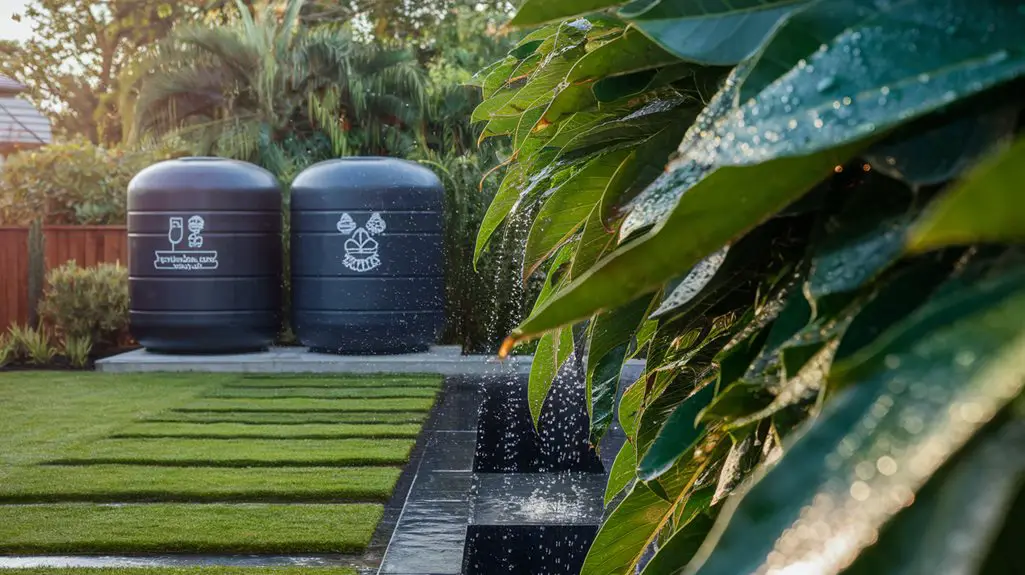
While rainwater harvesting might seem like a straightforward backyard project, you’ll face a complex regulatory landscape that varies dramatically by location. You need to navigate state water rights laws, local ordinances, building codes, and health regulations before installing your first barrel.
Without proper permits, you risk fines and could be forced to dismantle your system. The good news? Understanding these five regulatory areas will help you create a fully compliant and sustainable collection system.
On this page
Understanding State and Local Rainwater Collection Laws
While rainwater harvesting offers sustainable water management solutions, traversing the legal landscape governing this practice requires careful attention to both state and municipal regulations.
You’ll find significant variation across jurisdictions—some states actively encourage harvesting through incentives and streamlined permitting, while others impose volume restrictions or water quality standards.
Begin by consulting your state’s water resources department for specific statutes.
Don’t overlook local ordinances, which often contain more detailed requirements than state laws. These may address system design, overflow management, mosquito prevention, and setback requirements from property lines.
Homeowners associations might impose additional restrictions through covenants.
Before installation, verify compliance at all regulatory levels to avoid potential fines or remediation costs.
Permit Requirements for Residential Harvesting Systems
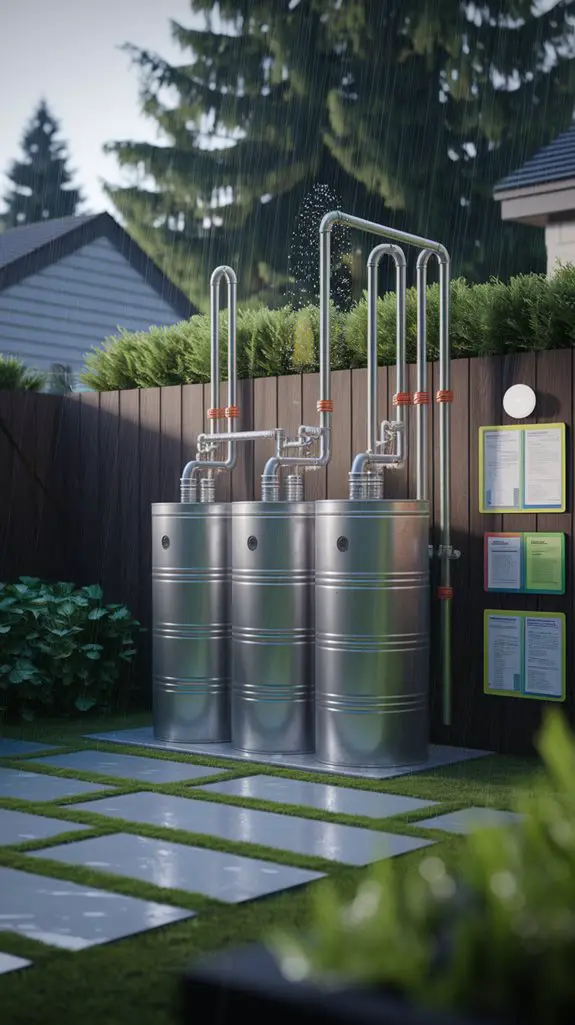
Although requirements vary considerably by jurisdiction, most residential rainwater harvesting systems require permits before installation can begin.
You’ll typically need to submit detailed plans showing system components, capacities, and overflow management. Contact your local building department or water authority before purchasing any equipment.
Common permit requirements include:
- Site plan showing catchment areas, tank locations, and overflow pathways
- Engineered drawings for systems exceeding certain capacities (often 5,000 gallons)
- Cross-connection control documentation ensuring separation from potable water systems
Costs range from $50-500 depending on system complexity and jurisdiction.
Many municipalities expedite rainwater harvesting permits as part of conservation initiatives. Some offer fee waivers if your system meets specific environmental standards.
Check if your jurisdiction requires professional installation or allows DIY implementation with appropriate inspections.
Water Rights Considerations in Western States
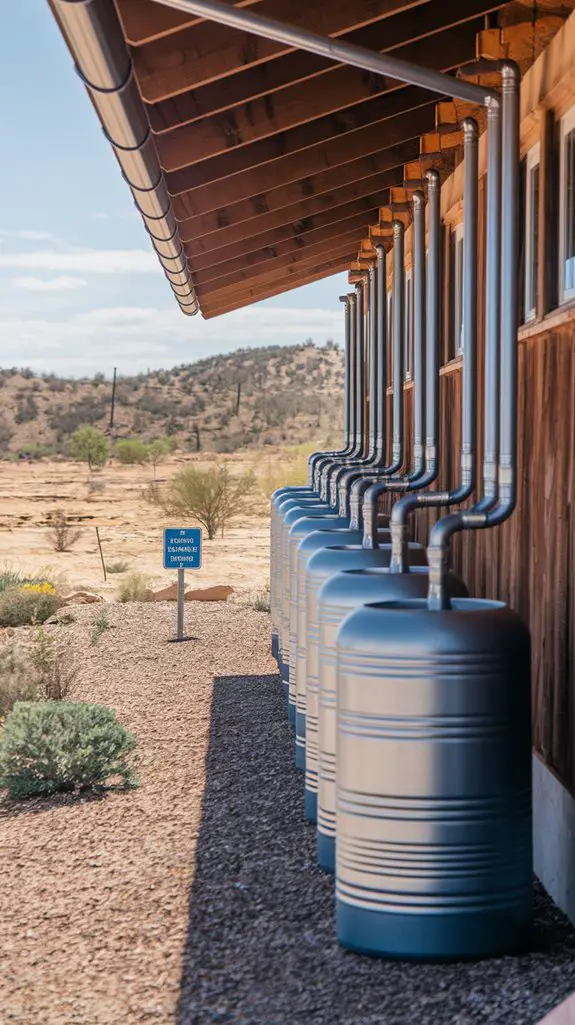
Unlike permit requirements which focus on construction standards, water rights present an entirely different legal framework for rainwater harvesting in Western states. The prior appropriation doctrine (“first in time, first in right”) governs water allocation in most Western states, potentially affecting your ability to collect rainwater.
Colorado, Utah, and Washington have enacted specific legislation clarifying rainwater harvesting rights. In Colorado, you’re limited to two rain barrels totaling 110 gallons if you don’t own your water rights.
Utah allows collection up to 2,500 gallons with simple online registration. Washington permits “de minimis” harvesting without a water right.
Before installing a system, check your state’s current regulations and storage limitations. Some states require you to demonstrate that your harvesting won’t impair senior water rights downstream—a critical legal consideration in drought-prone regions.
Health and Safety Regulations for Stored Rainwater
Beyond construction permits and water rights complications, health and safety regulations form a critical third dimension of rainwater harvesting compliance requirements.
You’ll need to guarantee your stored rainwater meets applicable standards, particularly if you’re planning to use it for potable purposes.
Most jurisdictions require:
- First-flush diversion systems to prevent contaminants from entering your storage
- Mosquito barriers or treatments to prevent breeding in storage tanks
- Backflow prevention devices if connecting to municipal water systems
If you intend to use harvested water for drinking, additional purification measures including filtration, UV treatment, or chlorination are typically mandated. Implementing rainwater systems can also enhance your backyard’s sustainability and efficiency.
Check with your local health department regarding testing requirements and treatment protocols. Some areas require professional inspection of systems intended for indoor use, while outdoor-only applications face less stringent oversight.
Non-compliance can result in citations or mandatory system decommissioning.
System Size Limitations and Property Restrictions
While health regulations govern water quality standards, many jurisdictions impose specific limitations on the physical dimensions and placement of rainwater harvesting systems. You’ll need to verify your local ordinances regarding maximum tank capacity, height restrictions, and setback requirements.
| Restriction Type | Common Limitations | Compliance Strategy |
|---|---|---|
| Tank Capacity | 50-5,000 gallons | Install multiple smaller tanks |
| Height | 6-8 feet above grade | Consider underground systems |
| Setbacks | 5-10 feet from property lines | Place near downspouts |
| Screening | Visual barriers required | Use fencing or landscaping |
Some HOAs and historic districts enforce additional aesthetic requirements that exceed municipal codes. To avoid violations, obtain written approval before installation and consider submitting detailed schematics showing both functional elements and visual impact mitigation measures. Most jurisdictions offer variance procedures if your property can’t accommodate standard restrictions.
Tax Incentives and Rebates for Compliant Systems
To offset the initial investment in rainwater harvesting infrastructure, many jurisdictions offer financial incentives for properly permitted and code-compliant systems.
You’ll find various forms of financial relief available, though eligibility criteria may differ considerably between locations.
Three common incentive types include:
- Property tax reductions that decrease your annual tax liability based on system capacity or investment amount.
- State tax breaks in some places, such as Texas’s sales tax exemption on rainwater harvesting equipment; there is no federal tax credit for these systems.
- Direct rebates through municipal water authorities that provide immediate reimbursement for approved components.
Documentation requirements typically include proof of professional installation, system specifications, and inspection certificates.
These incentives may be stackable, allowing you to combine federal, state, and local benefits to maximize your return on investment.
Annual filing deadlines vary by jurisdiction.
Building Codes for Rain Barrel and Cistern Installation
Building codes governing rainwater harvesting systems establish critical safety, structural, and public health requirements you must meet when installing rain barrels or cisterns on your property.
These codes typically mandate proper overflow mechanisms, mosquito screens, and structural supports for your system.
For above-ground installations, you’ll need to place barrels on level, stable platforms capable of supporting fully loaded weights (water weighs 8.34 pounds per gallon).
Underground cisterns require professional engineering to prevent collapse and contamination.
Your system must include backflow prevention devices to protect municipal water supplies from cross-contamination.
Many jurisdictions also require clear labeling indicating “non-potable water” on all access points and spigots.
Before installation, obtain necessary permits from your local building department, as non-compliant systems may trigger fines or removal orders.
Environmental Impact Assessment Requirements
Environmental impact assessments may be required for large-scale rainwater harvesting systems, particularly those exceeding specific collection thresholds or located in environmentally sensitive areas.
You’ll need to evaluate whether your planned system triggers these requirements based on your jurisdiction’s regulations.
Most assessments examine:
- Hydrological impacts on local watersheds and groundwater recharge
- Potential habitat disruption for aquatic species or wetland ecosystems
- Downstream water availability effects on both human users and natural systems
For residential systems under 5,000 gallons, you’re typically exempt from formal assessments.
However, properties in protected watersheds, flood-prone areas, or regions with endangered species may face stricter scrutiny regardless of system size.
Contact your local environmental agency to determine applicable thresholds and obtain necessary assessment protocols before installation.
Conclusion
You’ll need to weave through a tapestry of regulations when installing your backyard rainwater system. Check your state’s specific statutes, secure required permits, and adhere to health codes—especially for potable use. Don’t overlook size limitations and property restrictions.
Remember, compliant systems may qualify for tax incentives while avoiding legal complications. Your diligent regulatory compliance today guarantees sustainable harvesting tomorrow.
