
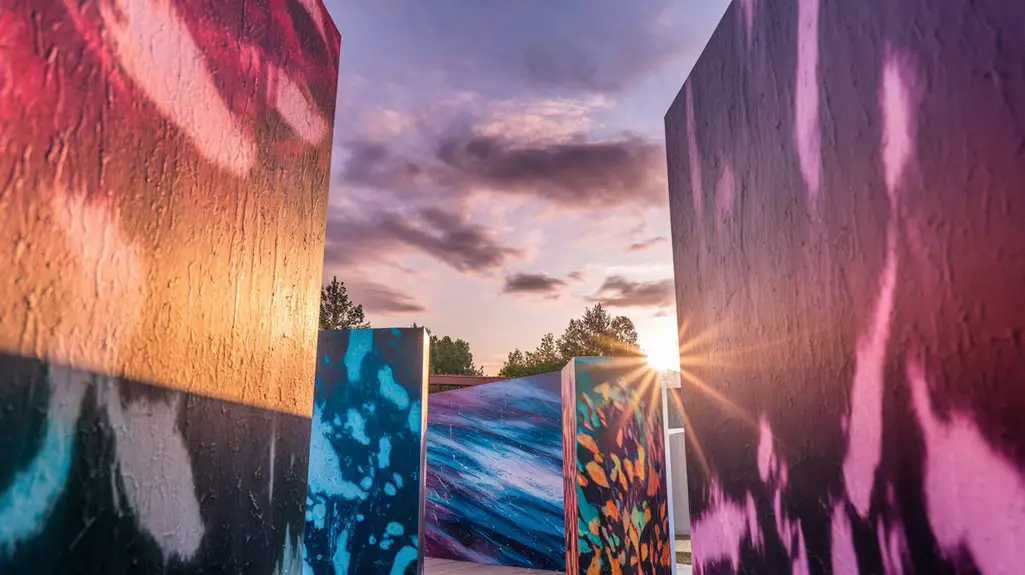
Just as a masterful frame completes a painting, proper illumination breathes life into outdoor art. You’ll find that lighting transforms static sculptures and installations into dynamic experiences that change with the angle and quality of light.
The best approach combines functional illumination with artistic intent, using specific techniques to highlight textures, shapes, and colors. Whether you’re showcasing a garden sculpture or a large installation, the right lighting strategy will determine how your artwork communicates after dark.
On this page
Understanding Different Types of Outdoor Lighting for Art
When showcasing outdoor art, selecting the appropriate illumination becomes essential to enhancing its aesthetic appeal and visual impact.
You’ll need to evaluate several lighting types, each serving distinct purposes. Floodlights provide broad coverage for larger sculptures, while spotlights create dramatic focal points with concentrated beams. For delicate pieces, think about wash lighting that gently bathes the surface with soft illumination.
Solar-powered fixtures offer eco-friendly solutions without requiring complex wiring. LED systems deliver energy efficiency and versatility with adjustable color temperatures (2700K-4000K). Color-changing RGB options can transform your art’s appearance for special occasions.
In-ground uplights create dramatic shadows and textures, particularly effective for textured sculptures. Don’t overlook ambient lighting—pathway lights or wall sconces—which guides viewers toward your art while ensuring safe navigation through your outdoor gallery. Transforming your garden with strategic lighting can create an enchanting atmosphere that complements your outdoor art.
Solar-Powered Solutions for Illuminating Garden Sculptures
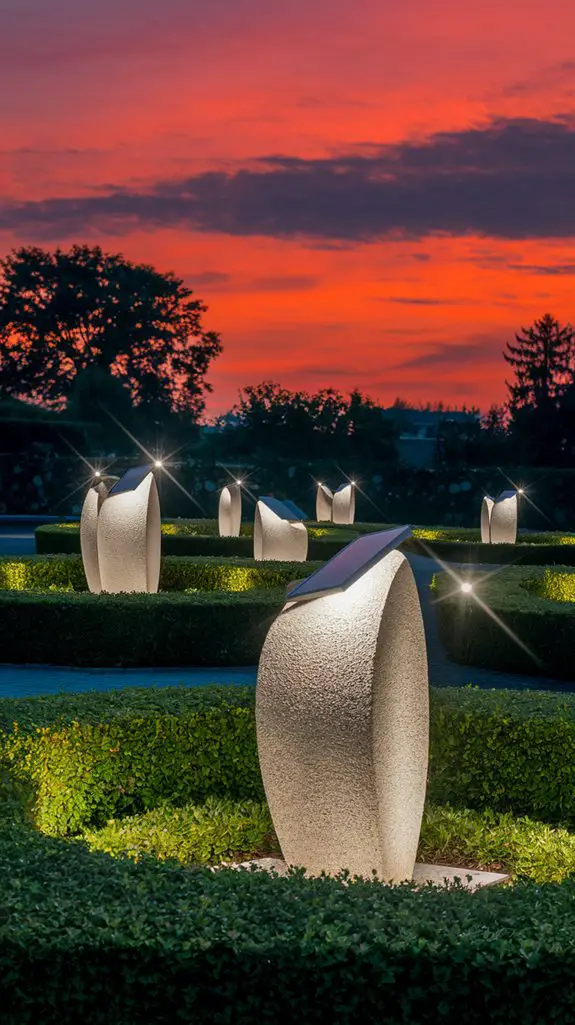
Although traditional wired lighting systems offer consistent illumination, solar-powered fixtures represent an increasingly sophisticated alternative for garden sculpture displays. You’ll find today’s solar options deliver improved photovoltaic efficiency and longer illumination periods, even during cloudy conditions. Using eco-friendly materials in your garden features can enhance the overall sustainability of your outdoor space.
| Feature | Benefit |
|---|---|
| Integrated batteries | 8-12 hours runtime |
| Adjustable LED temperature | Customizable warm/cool lighting |
| Motion sensors | Energy conservation |
| Spotlights (3-5W) | Focused sculpture highlighting |
| Diffused path lights | Subtle contextual illumination |
Select fixtures with IP65+ waterproof ratings for durability. Position solar panels to maximize southern exposure, ensuring peak charging.
For larger installations, consider hybrid systems that combine solar collection with minimal wiring, allowing you to illuminate substantial pieces while maintaining energy efficiency. Many contemporary options include smartphone controls for remote adjustment of intensity and timing.
LED Options That Enhance Outdoor Art Colors and Textures
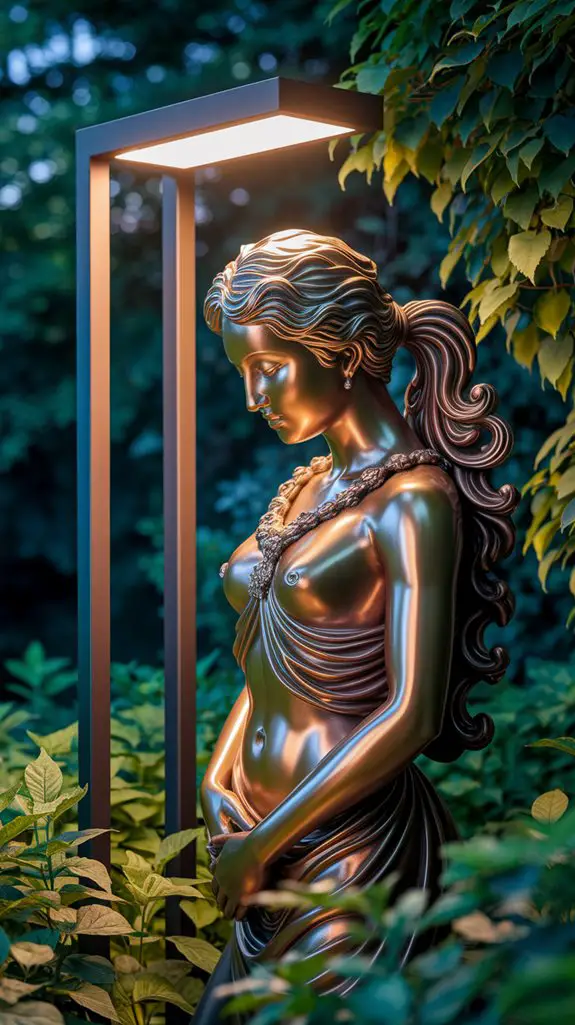
LED technology offers unparalleled versatility for enhancing outdoor art, providing precise control over color rendering and textural emphasis.
You’ll find that high-CRI (Color Rendering Index) LEDs, particularly those rated 90+ CRI, reveal true colors in paintings and sculptures that standard lighting often misses.
For textured pieces, consider adjustable beam spread options: narrow spotlights (10-15°) accentuate deep relief while medium floods (25-40°) highlight broader textural elements.
RGB+W systems allow you to program color temperature shifts from warm (2700K) to cool (5000K), adapting to seasonal changes or curatorial preferences.
Install in-ground well lights for dramatic upward illumination of vertical pieces, or use adjustable accent fixtures mounted 4-6 feet away to minimize hotspots.
Dimmable drivers let you fine-tune brightness levels, preventing overillumination that can wash out subtle details.
Spotlights and Directional Lighting Techniques for Dramatic Effects
Spotlights create the architectural framework of your outdoor art lighting strategy, defining focal points and sculptural dimensions through precise beam control. Position narrow-beam fixtures at 45° angles to cast dramatic shadows that accentuate textures and contours.
| Technique | Beam Angle | Best Application |
|---|---|---|
| Cross-lighting | 15°-25° | Textured sculptures |
| Grazing | 10°-15° | Wall-mounted art |
| Silhouetting | 30°-60° | Free-standing pieces |
| Moonlighting | 25°-35° | Garden installations |
For three-dimensional works, deploy multiple spotlights with varying intensities to reveal depth. You’ll achieve maximum drama by combining high-contrast lighting ratios (8:1) between primary and fill sources.
Consider adjustable fixtures with glare shields to prevent viewer discomfort while maintaining the theatrical effect. Color temperature selection (2700K-4000K) dramatically influences how materials like bronze, steel, or glass present in the nighttime environment. Additionally, utilizing solar-powered lighting can enhance the sustainability of your outdoor art display while providing flexibility in placement.
Weather-Resistant Lighting Systems for Year-Round Displays
Selecting weather-resistant lighting systems becomes critical when exhibiting outdoor art exposed to nature’s extremes year-round.
You’ll need fixtures with appropriate IP (Ingress Protection) ratings that shield electrical components from moisture, dust, and temperature fluctuations.
When planning your installation, consider these weather-resistance factors:
- IP68-rated fixtures offer complete submersion protection, ideal for water features or flood-prone areas
- Marine-grade stainless steel or anodized aluminum housings resist corrosion in coastal environments
- Silicone gaskets outperform rubber in extreme temperature variations (-40°F to 212°F)
- UV-resistant lenses prevent yellowing and degradation from solar radiation
- GFCI protection circuits prevent electrical hazards during wet conditions
Incorporating backyard lighting solutions can enhance the visibility and beauty of your outdoor art displays during evening gatherings.
For maximum longevity, you’ll want to implement scheduled maintenance protocols.
Clean fixtures quarterly, inspect seals for degradation, and replace UV-damaged components before they compromise system integrity.
Energy-Efficient Lighting Strategies for Art Installations
When implementing outdoor art illumination, energy efficiency becomes paramount for both sustainability and operational cost control. You’ll find that LED systems offer the ideal balance—the U.S. Department of Energy says LEDs use at least 75% less energy than incandescent bulbs, halogens included, and high-CRI models deliver the color rendering essential for artistic integrity.
| Technology | Efficiency | Lifespan | Environmental Impact |
|---|---|---|---|
| LED | Excellent | 50,000+ hours | Minimal waste |
| Solar | Self-sustaining | 25,000+ hours | No grid power needed |
| Smart Controls | Runs lights only when needed | Extends system life | Reduces light pollution |
| Motion Sensors | On-demand operation | Reduces component wear | Preserves nighttime ecology |
Consider implementing programmable timers, photocells, and motion detectors to further enhance energy usage. These automation tools guarantee your installation illuminates only when necessary, maximizing conservation without compromising visibility or artistic impact.
Creating Ambiance: Combining Multiple Light Sources for Outdoor Galleries
The art of crafting immersive outdoor gallery experiences depends heavily on layering complementary light sources at varying intensities and positions.
You’ll achieve dimensional depth by combining ambient, accent, and feature lighting systems that interact harmoniously. Position your primary illumination to establish baseline visibility, then incorporate secondary fixtures to highlight textural elements and artistic details.
- Combine warm (2700K) and cool (4000K) temperature sources to create visual contrast
- Install adjustable fixtures with barn doors for precise light containment
- Implement programmable DMX systems for timed lighting shifts
- Utilize bollard lights for pathways and ground-mounted uplights for vertical surfaces
- Incorporate concealed LED strip lighting behind structural elements for atmospheric glow
Incorporating timeless backyard lighting options can enhance the overall aesthetic while ensuring that the artwork remains the focal point.
Remember to evaluate viewing angles and sightlines when positioning sources, ensuring illumination enhances rather than competes with the artwork’s intended visual impact.
Conclusion
When you’re selecting lighting for outdoor art, you’ll need a strategic combination of high-CRI LEDs, spotlights, and wash lighting to properly reveal depth and color authenticity. While you might worry about weatherproofing complicated setups, today’s IP67-rated fixtures withstand harsh environmental conditions without compromising illumination quality. By implementing cross-lighting at 45° angles and incorporating color temperature variation between 2700K-4000K, you’ll achieve both preservation and dramatic enhancement of your outdoor art collection.
