
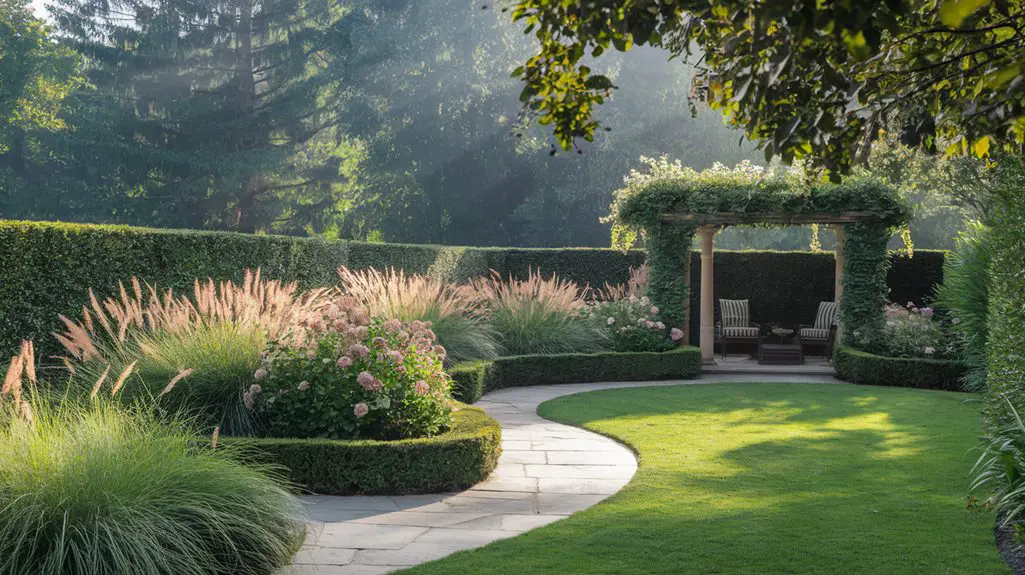
Ever wondered how to create your own secluded sanctuary without feeling boxed in by traditional fences? Your backyard’s potential for privacy starts with strategic lawn care decisions that blend form and function.
You’ll discover how to layer plantings, maintain natural screens, and design outdoor rooms that shield your space from prying eyes. The techniques we’ve developed combine immediate solutions with long-term privacy planning, transforming your exposed yard into a verdant retreat that grows more private with each passing season.
On this page
Strategic Planting for Natural Privacy Screens
When creating a private outdoor sanctuary, strategic planting serves as one of the most effective and aesthetically pleasing solutions.
Consider layering various plant heights to establish a complete visual barrier—tall evergreens as the backbone, mid-height shrubs for density, and ornamental grasses for texture.
For immediate privacy, fast-growing species like arborvitae, bamboo, and Leyland cypress provide quick results.
You’ll want to assess your climate zone and soil conditions before selecting plants to guarantee long-term viability.
Space saplings according to their mature width to prevent overcrowding while maintaining an unbroken screen.
Deciduous options like viburnum or hydrangea offer seasonal privacy with the benefit of changing visual interest throughout the year.
Don’t forget to incorporate flowering varieties that attract pollinators while simultaneously enhancing your secluded retreat. Additionally, consider incorporating colorful privacy fencing to complement your plantings and add a striking visual appeal to your garden.
Maintaining Hedges and Shrubs for Maximum Seclusion
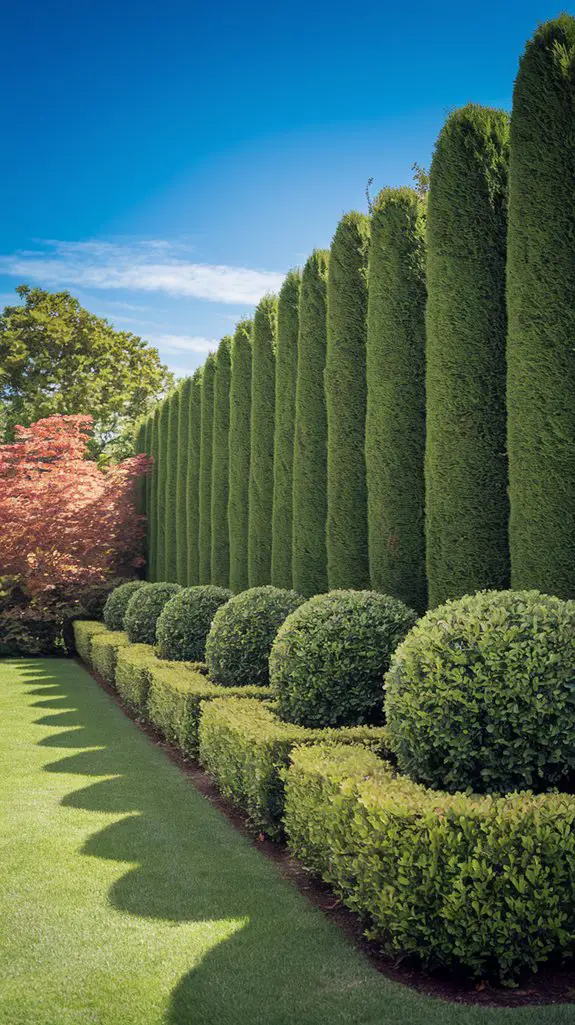
Once established, privacy hedges and screening shrubs require consistent maintenance to fulfill their seclusion purpose effectively. Schedule pruning sessions bi-annually—spring for shape restoration and fall for containment.
For evergreen varieties like arborvitae and juniper, maintain a slightly wider base than top to guarantee sunlight reaches lower branches, preventing unsightly bare spots.
When cutting formal hedges, use string lines as guides to achieve precise, level tops. For informal screens, adopt a selective pruning approach that preserves the plants’ natural architecture while controlling height and spread.
Apply slow-release fertilizer in early spring to support dense foliage development, and maintain a 2-3 inch mulch layer to suppress weeds competing for nutrients. Enhancing your outdoor space with well-maintained greenery contributes significantly to overall privacy.
Regular deep watering, especially during establishment years, promotes robust root systems essential for long-term screening performance.
Eco-Friendly Fencing Alternatives Using Garden Elements
Traditional fencing materials often come with significant environmental downsides, from the chemical treatments in pressure-treated lumber to the petroleum-based components in vinyl options.
Instead, consider strategic plantings that serve dual purposes. Bamboo creates impressive natural barriers with minimal environmental impact, reaching maturity in just 3-5 years.
For semi-permeable boundaries, install trellises with climbing vines like jasmine or clematis. These living walls provide privacy while supporting pollinators.
Reclaimed materials offer another sustainable approach. Repurpose old doors or windows into garden dividers, or stack locally-sourced stones into dry-stack walls that double as insect habitats.
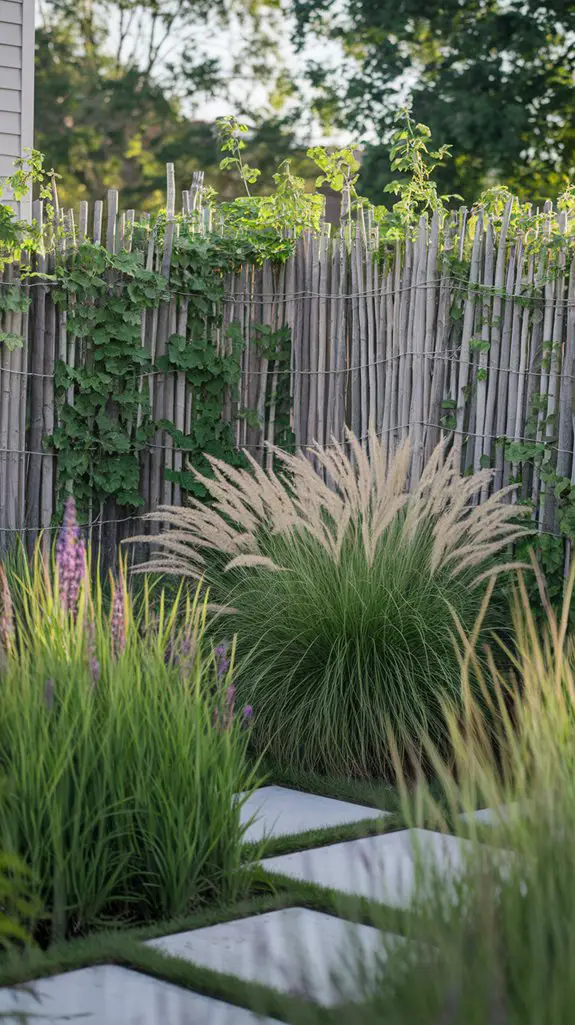
Living willow fencing combines structure with ecological benefits—weave fresh willow whips into desired patterns, and they’ll root and grow to form dense, green barriers within a season. Additionally, using native plants in your garden can enhance biodiversity and provide habitat for local wildlife.
Creating Privacy Zones With Layered Landscaping
Layered landscaping elevates privacy solutions beyond single-element approaches, offering both depth and functionality to your outdoor spaces.
By strategically combining plants of varying heights, textures, and densities, you’ll create natural privacy screens that evolve with the seasons while adding ecological value to your property.
- Position taller elements like ornamental trees at the rear layer, establishing your privacy foundation.
- Incorporate mid-height shrubs as a secondary barrier, using both deciduous and evergreen varieties for year-round coverage.
- Integrate ornamental grasses for movement, sound buffering, and textural contrast.
- Add flowering perennials at the front layer to attract pollinators while distracting from boundary lines.
- Utilize container plantings to define boundary zones and create movable privacy elements.
This multi-dimensional approach not only secures your outdoor sanctuary but creates visual interest through all seasons. Additionally, consider using sustainable landscaping ideas to enhance both the aesthetic and environmental impact of your garden.
Year-Round Care for Privacy-Focused Lawn Elements
Maintaining privacy-focused lawn elements requires consistent seasonal attention to guarantee your natural screens remain dense, healthy, and effective throughout the year.
Apply slow-release fertilizer to evergreen hedges and privacy trees in early spring and late fall to support robust growth. Prune deciduous privacy plantings in late winter, and shape evergreens in mid-spring after new growth appears.
During summer, deep water privacy barriers during dry spells, focusing on root zones rather than foliage. Install drip irrigation systems to maximize efficiency.
In autumn, mulch around privacy plantings with 2-3 inches of organic material to insulate roots and suppress weeds. For winter protection, shield sensitive evergreens from harsh winds and salt spray with burlap barriers.
Regularly inspect for pest infestations and disease, particularly in dense hedges where air circulation may be limited. Additionally, consider incorporating native plant species into your privacy garden, as they attract beneficial wildlife and enhance ecosystem health.
Conclusion
You’ve mastered all these privacy tactics, yet ironically, your stunning landscape will attract more attention than ever. Don’t worry—your strategically layered plantings, well-maintained hedges, and living screens create the sanctuary you crave.
While neighbors admire your design from afar, you’ll relax in secluded tranquility. Remember, the most effective privacy solutions aren’t walls that isolate, but thoughtful designs that both conceal and beautify your outdoor living space.
