
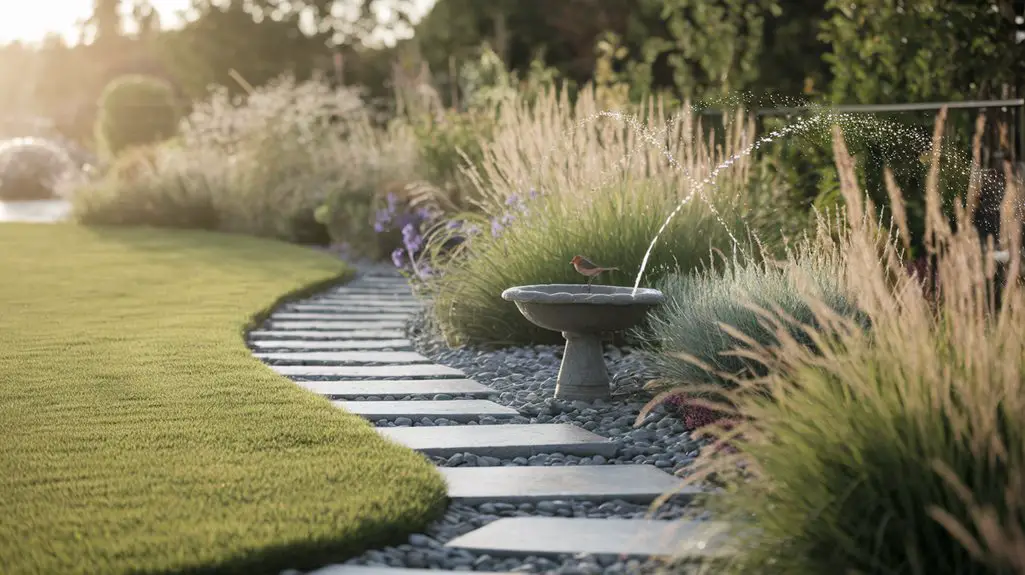
Is your backyard demanding too much of your precious time? You’re not alone. Today’s homeowners seek smart solutions that deliver beautiful outdoor spaces without constant upkeep.
By selecting drought-resistant grasses, implementing efficient watering systems, and adopting minimal mowing practices, you’ll reclaim your weekends while maintaining curb appeal. The secret to a truly low-maintenance yard, however, extends beyond these basics into thoughtful design choices that work with nature, not against it.
On this page
Choosing Drought-Resistant Grass Varieties
When establishing a low-maintenance lawn, selecting the right drought-resistant grass variety forms the foundation of your success.
Warm-season options like Bermuda, Zoysia, and Buffalo grass thrive in hot conditions with minimal water, developing deep root systems that access subsurface moisture.
For cooler regions, consider Fine Fescue or Tall Fescue varieties, which maintain color with less irrigation than Kentucky Bluegrass.
Examine your specific microclimate—noting sun exposure, soil type, and typical rainfall patterns—before making a selection.
Purchase grass seed labeled specifically as “drought-tolerant” or “water-wise” from reputable suppliers.
These specialized cultivars often feature waxy leaf coatings that minimize evaporation and need less water than conventional varieties while maintaining visual appeal throughout dry periods. Additionally, choosing drought-resistant grass varieties can significantly enhance your lawn’s resilience during dry spells, ensuring it remains lush and green for all your BBQ gatherings.
Smart Watering Systems and Conservation Methods
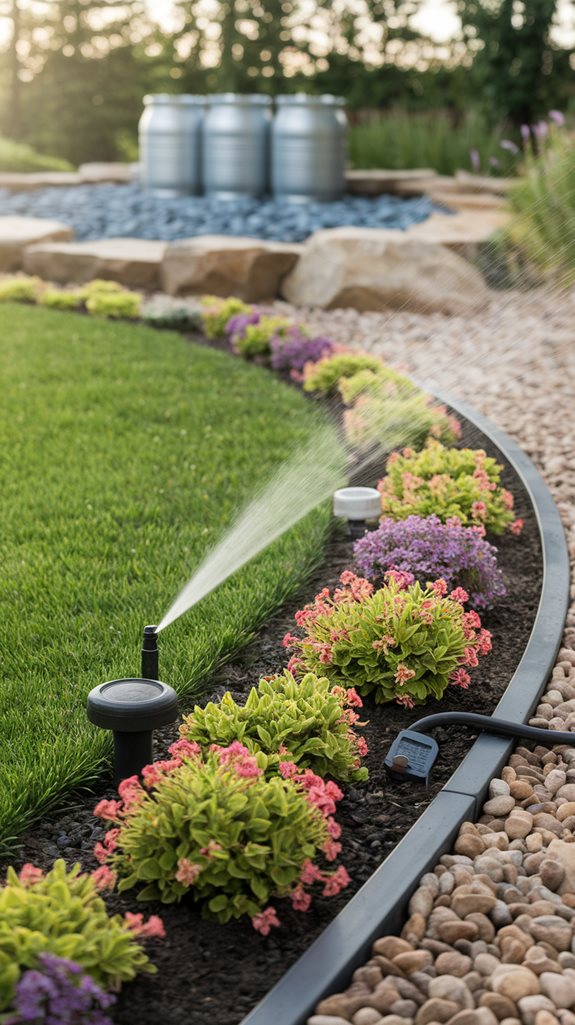
While traditional sprinklers waste significant amounts of water through evaporation and runoff, smart watering systems provide precise irrigation control that drastically reduces consumption.
Install a drip irrigation system that delivers water directly to plant roots, minimizing waste and preventing fungal diseases that thrive in wet foliage.
Consider adding a smart controller with moisture sensors and weather-tracking capabilities. These devices automatically adjust watering schedules based on real-time soil conditions and upcoming rainfall predictions.
You’ll conserve water when it rains and prevent drought stress during dry periods. Additionally, using rainwater harvesting techniques can further enhance your water conservation efforts.
Collect rainwater in barrels positioned under downspouts for supplemental irrigation during dry spells.
Apply a 2-3 inch layer of mulch around plants and trees to retain soil moisture, suppress weeds, and reduce how often you need to water.
Minimalist Mowing Strategies for Busy Homeowners

The traditional weekly mowing schedule can be abandoned in favor of smarter, more efficient approaches that save time and energy.
Set your mower blade higher—between 3-4 inches—to promote deeper root growth and natural weed suppression. Taller grass requires less frequent cutting, often extending intervals to 10-14 days.
Consider the “one-third rule”: never remove more than one-third of the grass height in a single mowing. This reduces stress on your lawn and minimizes clipping volume.
Leave these fine clippings on the lawn as natural fertilizer—a practice called grasscycling that returns valuable nutrients to the soil.
For extremely time-constrained homeowners, designated low-traffic areas can be converted to “micro-meadows” requiring only monthly mowing during growing season, creating habitat for beneficial insects while reducing maintenance demands.
Natural Alternatives to Chemical Fertilizers
Shifting away from synthetic products, natural fertilizers provide substantial benefits to your soil ecosystem while maintaining vibrant lawn health. You’ll find these organic alternatives create deeper root systems while reducing chemical runoff into local waterways. Additionally, incorporating natural pest control methods can further enhance the health and resilience of your garden ecosystem.
| Natural Option | Application Rate | Benefits |
|---|---|---|
| Compost | 1/4 inch layer, spring/fall | Improves soil structure, adds nutrients |
| Grass clippings | Leave after mowing | Adds nitrogen, reduces waste |
| Coffee grounds | 1/2 cup per shrub | Adds nitrogen, improves acidity |
| Bone meal | 10 lbs per 100 sq ft | Rich phosphorus source for root development |
| Worm castings | 1-3 lbs per 100 sq ft | Enhances microbial activity, adds micronutrients |
Consider rotating these options throughout the growing season for thorough nutrition without the chemical dependencies that can damage beneficial soil organisms.
Designing Lawn-Free Zones With Native Plants
Creating lawn-free zones with native plants offers a double advantage—you’ll dramatically reduce maintenance time while establishing resilient ecosystems in your yard.
Start by identifying sunny, shaded, or moist areas, then select native species adapted to those specific conditions.
Cluster plants with similar water requirements together and incorporate various heights for visual interest. Consider prairie flowers like coneflowers and black-eyed Susans for sunny spots, while woodland natives like ferns and wild ginger thrive in shade.
Leave 2-3 inches of mulch between plants to suppress weeds.
You’ll need minimal watering once established, typically after just one growing season.
Beyond beauty, these zones become wildlife magnets—attracting pollinators and birds while eliminating the constant cycle of mowing, fertilizing, and watering that traditional lawns demand. Additionally, incorporating eco-friendly practices can further enhance the sustainability of your garden.
Conclusion
You’ve invested in time-saving lawn strategies that actually require initial time to create. Ironic, isn’t it?
But your transformed yard now demands less from you while giving more back. As you sip coffee on weekend mornings—when you once would’ve been pushing a mower—you’ll appreciate how proper planning has turned your outdoor space into a self-sustaining ecosystem rather than an endless weekend chore.
