
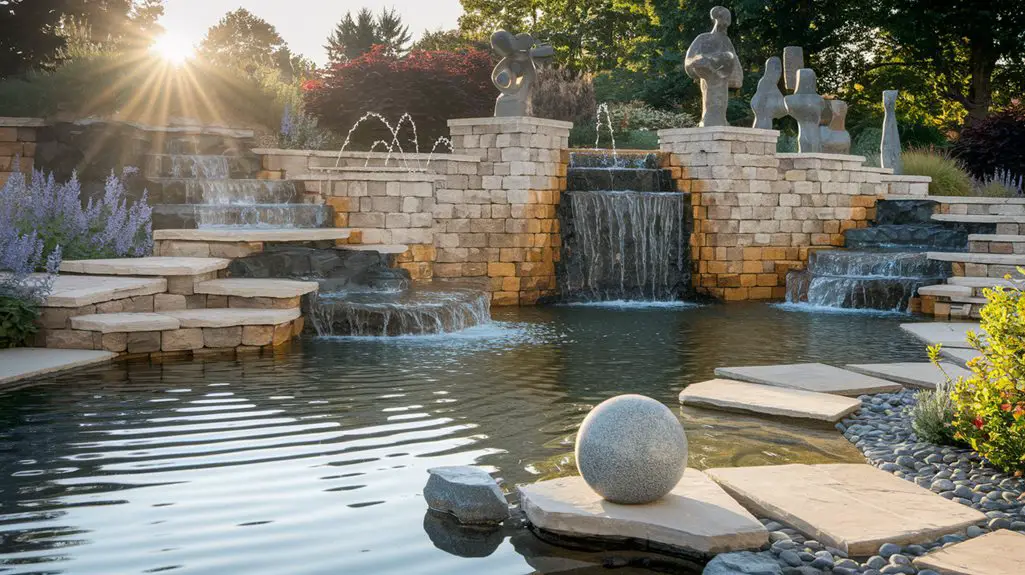
Water features can dramatically enhance outdoor art spaces through their multi-sensory appeal. You’ll find that combining flowing water with sculptural elements creates dynamic installations that evolve with changing light, wind, and seasons.
Beyond aesthetics, these features attract beneficial wildlife, improve air quality, and provide natural soundscapes that mask urban noise. The intersection of art and hydrology offers countless creative possibilities that transform ordinary gardens into extraordinary experiential environments.
On this page
Cascading Water Sculptures for Garden Focal Points
[Fountains and cascading water sculptures serve as enchanting focal points in garden landscapes, combining visual artistry with the soothing acoustics of flowing water.]
When selecting these features, you’ll need to take into account both aesthetic and technical requirements. Choose materials that withstand outdoor conditions—copper, stainless steel, or weather-resistant stone will guarantee longevity.
For installation, you’ll need a recirculating pump system that balances water flow with energy efficiency. Modern pumps with variable speeds allow you to adjust the cascade’s intensity while conserving electricity.
Incorporate LED lighting to illuminate water paths at night, transforming your sculpture into a 24-hour installation.
Position your water sculpture where it’s visible from key viewing areas. The sound of falling water masks ambient noise while supporting local ecosystems, attracting birds and beneficial insects to your garden space. Additionally, wildlife-friendly water features can enhance biodiversity, creating a vibrant habitat for various species.
Illuminated Water Walls for Evening Ambiance
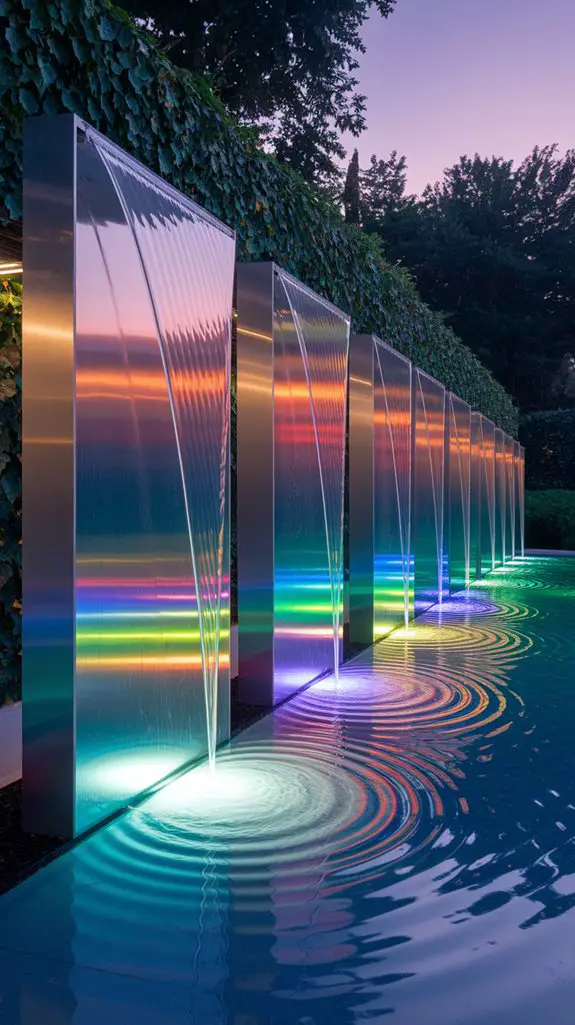
Extending the day-night functionality of water features, illuminated water walls offer a dramatic evening presence that transforms garden spaces after sunset. These installations combine the soothing sounds of flowing water with strategic lighting to create immersive sensory experiences. The addition of best plants around water features can enhance the overall aesthetic and health of your garden ecosystem.
| Lighting Type | Environmental Impact |
|---|---|
| LED | Low energy consumption |
| Solar-powered | Zero carbon footprint |
| RGB programmable | Customizable ambiance |
| Fiber optic | Minimal heat emission |
| Motion-sensitive | Reduced light pollution |
You’ll find illuminated water walls particularly effective when installed against textured surfaces like stone or brushed metal. For ideal sustainability, consider closed-loop systems that recirculate water through hidden reservoirs. Many contemporary designs incorporate smartphone controls, allowing you to adjust lighting intensity and color temperature to complement seasonal plantings or outdoor gatherings.
Solar-Powered Floating Art Installations
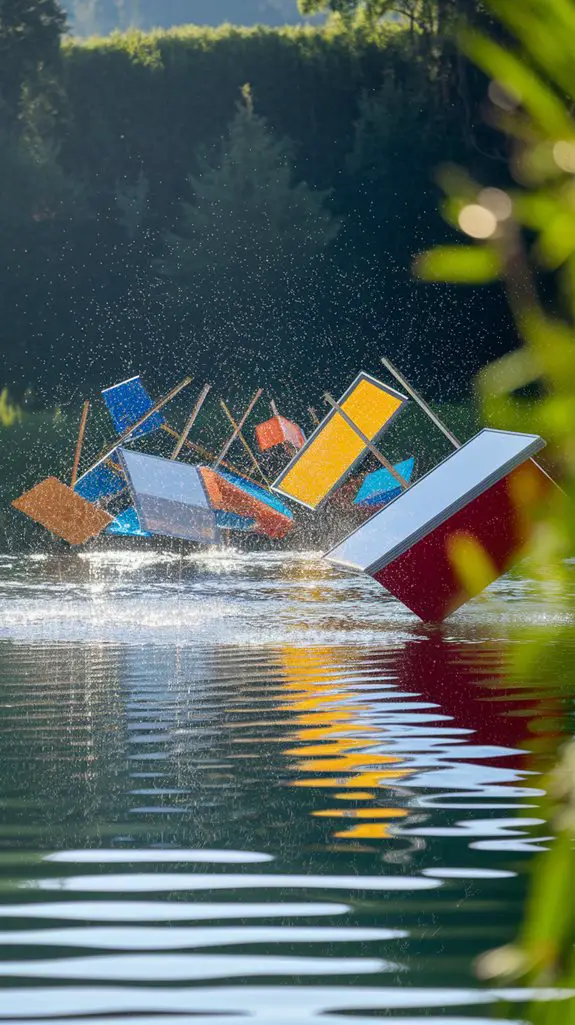
As renewable energy advances, solar-powered floating art installations have emerged as compelling ecological statements on bodies of water ranging from private ponds to public lakes.
These installations combine aesthetic appeal with environmental consciousness, creating dynamic sculptures powered entirely by the sun.
You’ll need photovoltaic panels, waterproof motors, and buoyant materials designed for aquatic environments.
Select components rated for outdoor use with IP68 waterproof certification.
Consider kinetic elements that respond to changing light conditions, creating evolving displays throughout the day.
For maximum impact, incorporate LED illumination that activates at dusk, transforming your daytime sculpture into a nighttime light show.
Design your installation to withstand variable water conditions and seasonal changes.
The best designs celebrate the relationship between sustainable technology and natural water ecosystems, drawing attention to water conservation principles.
Musical Water Features That Create Harmonic Sounds
Water itself can create extraordinary music when properly channeled through thoughtfully designed features that transform liquid motion into harmonic sound.
You’ll find these acoustic installations blend environmental art with natural acoustics, creating immersive sensory experiences in outdoor spaces.
- Tuned bamboo water chimes that produce distinct pentatonic scales as water fills and tips each chamber
- Hydraulophone sculptures with precisely calibrated apertures allowing visitors to control pitch through finger pressure
- Resonant basin systems that amplify water droplets falling at calculated intervals onto various materials
These musical features operate on sustainable principles, often requiring minimal energy input while generating complex soundscapes.
Many utilize recycled water systems to maintain ecological balance. Additionally, incorporating water features to attract wildlife can enhance the biodiversity of your backyard oasis.
When designing your own harmonic water feature, consider both the acoustic properties of materials and the environmental impact of your installation.
Kinetic Water Art That Responds to Wind Movement
When wind currents interact with water installations, they create mesmerizing displays of movement that blend natural forces into cohesive artistic expressions.
These dynamic sculptures harness air flow to generate ripples, sprays, and directional water movements without electrical components.
You’ll find various approaches to wind-responsive hydraulics, from wind-activated pumps to pivoting spouts that redirect water based on breeze direction.
Sailcloth collectors can funnel rainwater into basins where wind-driven paddles create splashing patterns.
Delicate copper weather vanes might control water valves that adjust flow intensity proportionally to wind speed.
For peak effect, position these installations in areas with consistent air movement.
Consider integration with rain collection systems to maintain ecological sustainability.
Most designs require minimal maintenance—simply clean filters seasonally and check mechanical components for weather damage.
Reflective Pools With Submerged Sculptural Elements
Reflective pools offer a different approach to water artistry, combining stillness with depth rather than movement.
You’ll find these installations create dramatic visual effects through light refraction and the interplay between water’s surface and submerged elements.
When designing reflective pools with underwater sculptures, consider:
- Material selection – use non-corrosive metals, treated stone, or aquatic-safe glass that withstand constant water exposure
- Lighting integration – install submersible LED systems to illuminate pieces from below, creating dramatic nighttime displays
- Depth variation – position elements at different levels to create visual complexity while maintaining ecological balance
The still water surface acts as nature’s mirror, doubling the visual impact of your installation while inviting contemplation. Additionally, water features can effectively reduce noise pollution, creating a serene environment.
This approach requires minimal energy consumption compared to dynamic water features, making it an environmentally conscious choice for outdoor art spaces.
Living Water Gardens With Aquatic Plants and Art
Living water gardens represent the perfect marriage between ecological function and artistic expression, creating dynamic ecosystems where aquatic plants and sculptural elements coexist in harmonious balance.
You’ll want to select aquatic plant species that complement your art installations—consider water lilies, lotus, and iris for their architectural forms and seasonal blooms.
Position ceramic vessels or weather-resistant sculptures among the vegetation, ensuring they’re anchored securely against water movement.
Incorporate recirculating pumps to maintain water quality and create gentle movement that animates both plants and art. The sound of flowing water adds an auditory dimension to the visual experience.
For ecological integrity, include submerged oxygenators like hornwort that maintain water clarity while supporting beneficial microorganisms.
This creates a self-sustaining system where art becomes integrated with living processes, changing throughout seasons as plants grow, bloom, and recede. Additionally, nature-inspired water features can enhance the overall aesthetic and ecological value of your outdoor space.
Upcycled Material Fountains for Eco-Friendly Displays
Transforming discarded objects into functional water features not only diverts materials from landfills but also creates uniquely expressive art installations with environmental narratives.
When designing upcycled fountains, you’ll need to take into account water circulation systems that complement your repurposed materials while ensuring structural integrity.
- Copper pipe remnants can be soldered into abstract vertical sculptures with water cascading through their interconnected pathways.
- Vintage watering cans, teapots, or industrial salvage create nostalgic water features when arranged in tiered configurations.
- Glass bottles in graduated colors produce mesmerizing light effects as water flows across their surfaces.
The most successful eco-friendly water displays maintain balance between artistic vision and sustainable function. Incorporating solar-powered backyard water features can enhance the sustainability of your design.
Select materials that weather appropriately in outdoor conditions and use solar-powered pumps to minimize environmental impact while maximizing your installation’s longevity.
Interactive Splash Features for Family-Friendly Yards
Interactive splash features transform ordinary backyards into engaging outdoor galleries where art and play seamlessly converge, inviting family participation rather than mere observation.
These installations combine motion-activated sprayers, programmable jets, and illuminated water paths to create dynamic, multisensory experiences.
Consider incorporating pressure-sensitive stepping stones that trigger gentle water arcs or installing musical water chimes that respond to touch with both melodic tones and synchronized water patterns.
For sustainability, implement closed-loop filtration systems that recirculate water while maintaining crystal clarity. Stone water features can enhance the aesthetic appeal and tranquility of these interactive installations.
You’ll want to select non-toxic, weather-resistant materials for all components, particularly those within children’s reach.
Design your splash features with adjustable flow settings to accommodate different age groups and conserve water during drought conditions.
These adaptable installations offer year-round artistic value while providing rejuvenating summer engagement.
Seasonal Ice Sculptures That Transform With Temperature
When winter temperatures plummet, your outdoor water features can evolve into stunning ephemeral ice sculptures that continually metamorphose with climate fluctuations.
By strategically designing your water installations with winter transformation in mind, you’ll extend their artistic value throughout all seasons.
- Install programmable LED lighting systems beneath potential freezing points to illuminate crystalline formations from within, creating dramatic nighttime displays as ice thickness varies.
- Incorporate metal or stone elements at varied heights to serve as freezing platforms, allowing natural precipitation to build intricate frozen cascades with changing thermal conditions.
- Utilize recirculating systems with adjustable flow rates to control ice accumulation patterns, enabling you to modify the sculptural development based on forecasted temperature shifts.
These ice formations serve as valuable ecological indicators, visually representing microclimatic conditions while providing winter habitat niches for resilient organisms. Additionally, integrating backyard water feature design can enhance the overall aesthetic appeal and tranquility of your outdoor space.
Conclusion
As you’ve discovered, water-based installations aren’t just artistic additions—they’re transformative ecological statements. You’ll find your garden evolving into a living canvas where sound, light, and motion converge.
What begins as a simple fountain might become a wildlife sanctuary, a family gathering spot, or a dynamic sculpture changing with the seasons. The question isn’t if you’ll add water to your outdoor art, but how dramatically it will reshape your relationship with nature.
