

You’ll find unexpected beauty in the way rainwater transforms a backyard landscape. Beyond conservation, these features add visual interest and tranquility to your outdoor space while supporting local ecosystems. Whether you’re drawn to the lush plantings of a rain garden, the elegant simplicity of copper rain chains, or the soothing sounds of a cascading fountain, sustainable water management can become a centerpiece of your garden design rather than an afterthought.
On this page
The Environmental Benefits of Rainwater Features
While traditional water features often consume precious resources, rainwater features provide numerous environmental advantages that benefit both your yard and the broader ecosystem.
By capturing precipitation that would otherwise become runoff, you’re reducing erosion and preventing contaminated water from entering local waterways.
These systems naturally filter pollutants through soil and plant material, returning cleaner water to the groundwater supply.
You’ll also reduce your dependence on municipal water sources, lowering your utility bills and decreasing pressure on community infrastructure during drought conditions.
Additionally, rainwater features create microhabitats for beneficial insects, birds, and amphibians, enhancing local biodiversity.
The collected water’s ambient temperature and natural mineral content make it ideal for garden irrigation, promoting healthier plants with deeper root systems and improved drought resistance. Moreover, implementing maximum efficiency rainwater systems can optimize the amount of water collected and utilized throughout your landscape.
Rain Gardens: Natural Filtration and Beauty
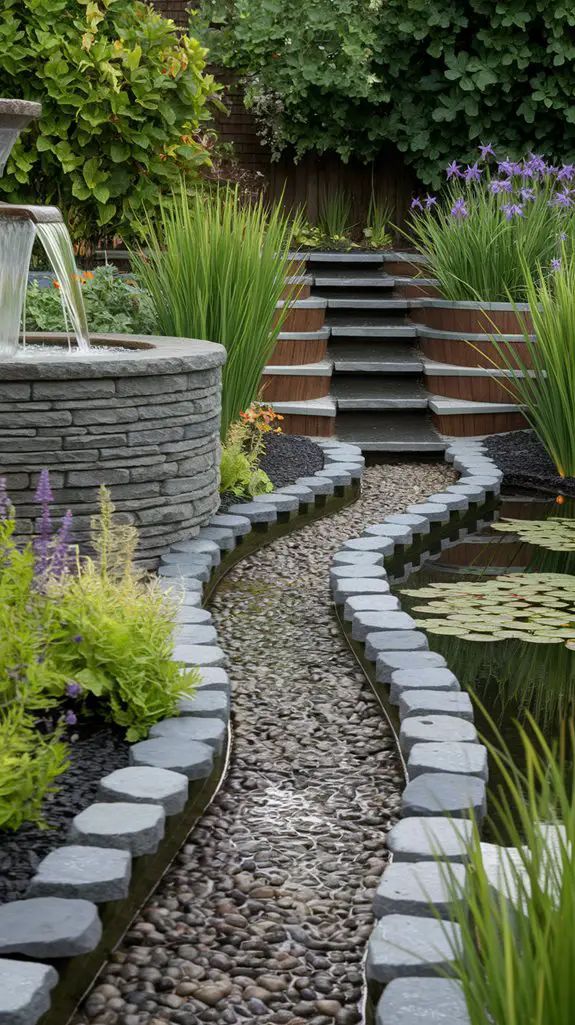
Among the most versatile and visually appealing rainwater features, rain gardens combine practical water management with aesthetic landscaping.
You’ll create a shallow depression in your yard that collects runoff, allowing it to be naturally filtered through layers of soil and plants.
Choose native plants with deep root systems that tolerate both wet and dry conditions.
Place water-loving species in the center and drought-resistant varieties along the edges. This strategically designed plant arrangement creates a natural filtration system that traps many pollutants from runoff.
Beyond their environmental benefits, rain gardens attract beneficial wildlife like butterflies and birds.
They’re relatively low-maintenance once established and can be scaled to fit any yard size—from small urban plots to expansive rural properties. Additionally, implementing compact rainwater systems can further enhance the efficiency of your backyard water management.
You’ll enjoy their changing seasonal appearance while knowing you’re protecting local watersheds.
Decorative Rain Chains and Collection Points
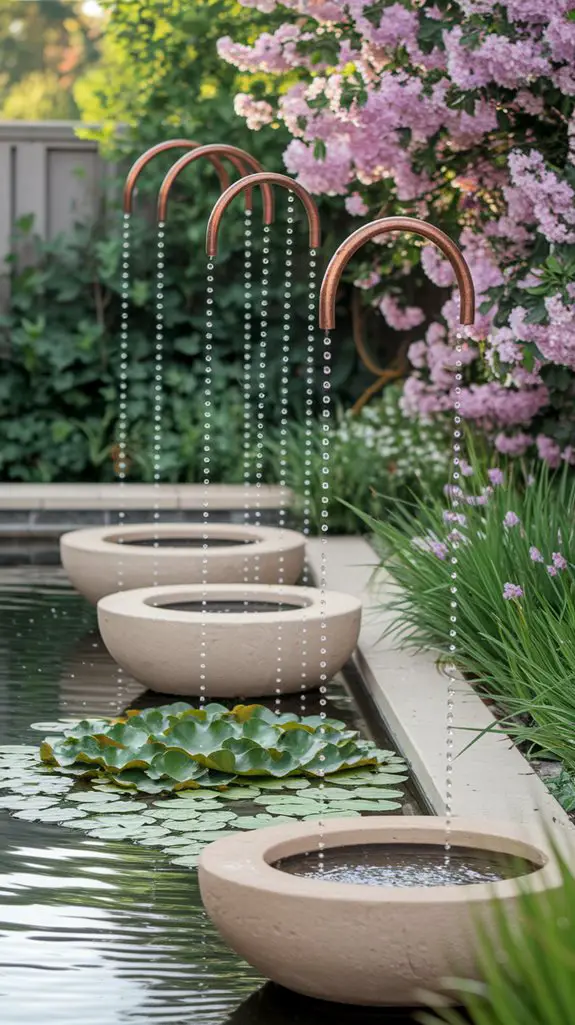
For homeowners who want rainwater features with both form and function, decorative rain chains offer an elegant alternative to traditional downspouts.
These architectural elements guide water from your gutters to collection points below, creating mesmerizing water displays during rainfall while serving practical purposes.
When incorporating rain chains into your landscape, consider these design elements:
- Material selection – copper, brass, and stainless steel provide durability while developing unique patinas over time
- Collection vessels – decorative bowls, ceramic pots, or small rock gardens can capture water at the chain’s end
- Integration options – connect chains to rain barrels or direct water to garden beds for immediate irrigation benefits
You’ll find rain chains work particularly well as focal points for meditation spaces or near windows where you can enjoy their soothing water music during storms. Additionally, they promote sustainable water management by efficiently utilizing natural resources.
They’re sustainable, beautiful, and remarkably effective water management tools.
Cascading Rainwater Fountains for Sensory Appeal
Cascading rainwater fountains transform ordinary backyard spaces into multisensory retreats where you’ll experience the therapeutic effects of flowing water. By positioning tiered catchment basins at varying heights, you’ll create both visual interest and the soothing sounds of gentle water movement.
Install these fountains near seating areas to maximize their calming effects while conserving water. Unlike traditional fountains, rainwater-fed systems reduce your ecological footprint by utilizing captured precipitation rather than drawing from municipal supplies.
You’ll need a small submersible pump connected to your rain barrel system to circulate water through your feature. Additionally, consider integrating DIY rainwater collection systems that allow for efficient harvesting of rainwater directly from your roof.
For enhanced sensory appeal, incorporate smooth river stones that amplify water sounds and add textural contrast. LED solar lighting can illuminate water pathways after sunset, extending your enjoyment of these sustainable features into evening hours.
Sustainable Pond Systems Fed by Rainfall
Creating sustainable pond systems that depend entirely on rainfall offers an elegant solution for eco-conscious homeowners seeking to enhance biodiversity while managing water resources. These natural systems mimic wetland ecosystems by collecting, filtering, and slowly releasing precipitation.
To establish your own rainfall-fed pond:
- Install a gently sloped collection area with impermeable liner and strategic overflow pathways to direct excess water during heavy storms.
- Incorporate native aquatic plants like water lilies and rushes that naturally filter contaminants and provide habitat for beneficial insects.
- Add smooth stones and varied depths (8-24 inches) to create microhabitats for amphibians and beneficial bacteria colonies.
You’ll find that these self-sustaining ecosystems require minimal maintenance while providing year-round visual interest and supporting local wildlife. The natural cycles of filling and slight evaporation actually enhance the pond’s ecological functioning. Additionally, these systems contribute to sustainable water management by optimizing the use of available resources and reducing reliance on municipal water supplies.
Creating Musical Rain Features With Chimes and Drums
Rain transforms into a multisensory experience when you incorporate musical elements that respond to falling water in your backyard landscape. Strategic placement of water chimes, copper tubes, and bamboo knockers creates melodic tones with each raindrop.
Install metal rain chains that guide water from gutters while producing gentle tinkling sounds. Position hollow bamboo tubes of varying lengths to create different pitches as rainwater flows through them. For more dramatic effects, consider ceramic rain drums that amplify the percussive quality of falling water.
These musical features work wonderfully alongside rainwater collection systems, combining utility with sensory pleasure. They’re especially effective in meditation gardens or near patios where you’ll fully appreciate the impromptu concerts during rainfall. Additionally, incorporating eco-friendly water features ensures that your garden remains sustainable while enhancing its beauty.
The natural rhythm of precipitation becomes your backyard’s unique soundtrack—sustainable, beautiful, and endlessly changing.
Japanese-Inspired Tsukubai Water Basins
Traditional Japanese garden aesthetics find perfect expression through tsukubai water basins, which collect rainwater in elegantly minimalist stone vessels. Originally designed for ritual hand washing before tea ceremonies, these sustainable features create peaceful focal points while utilizing natural precipitation.
You’ll find tsukubai installations particularly effective when:
- Positioned near garden entrances where their gentle water sounds welcome visitors
- Surrounded by moss, smooth river stones, and dwarf evergreens for authentic styling
- Placed under roof downspouts to maximize rainwater capture
Contemporary versions often incorporate recirculating pumps for water conservation during dry periods, though purists may prefer the traditional passive collection method. Additionally, incorporating rainwater harvesting systems can enhance the function of these basins, ensuring a steady supply of water even in arid conditions.
The basin’s simple form—typically a hollowed natural stone—represents wabi-sabi principles celebrating imperfection and transience, making each rainfall a renewal of both water and spirit.
Integrating Rainwater Features With Existing Landscaping
Successful integration of rainwater features with your existing landscape begins with thoughtful placement that complements your garden’s established flow and visual harmony.
Consider your yard’s natural drainage patterns, identifying low points that already collect water during rainfall events.
Choose materials that match or purposefully contrast with your current hardscaping elements. Natural stone works beautifully with cottage gardens, while sleek metal channels complement modern designs.
Position rainwater chains or small cascades where they’ll capture maximum rainfall from roof runoff.
Add native plants around your water feature to create connection zones that blur boundaries between the new addition and established plantings.
Moisture-loving sedges, rushes, and irises thrive in these environments while providing natural filtration. Incorporating rainwater collection techniques can enhance the sustainability and efficiency of your landscape.
You’ll create a cohesive design that appears to have evolved naturally rather than being artificially imposed.
Maintenance and Seasonal Care for Rainwater Elements
Although rainwater features add sustainable beauty to your landscape, they require specific maintenance routines that change with the seasons to function properly and remain aesthetically pleasing.
During spring and summer, regularly clear debris from collection points and check for algae growth, treating as needed with eco-friendly solutions. Implementing water-saving irrigation systems can also enhance the efficiency of your garden while utilizing rainwater features.
As seasons shift, your maintenance approach should adapt:
- Fall – Clear fallen leaves daily from collection surfaces and gutters to prevent clogging and water contamination.
- Winter – Drain exposed components in freezing climates to prevent cracking; consider installing covers for delicate features.
- Spring – Clean filters thoroughly and inspect for winter damage; replace deteriorated parts before heavy rain seasons.
For all seasons, monitor water quality monthly—this guarantees your rainwater features remain both functional and environmentally responsible throughout the year.
Conclusion
You’ve discovered how these heavenly moisture features can transform your outdoor sanctuary while embracing nature’s cycles. Whether you’ve chosen a vibrant rain garden, elegant water chains, or a soothing cascade, you’re not just creating beauty—you’re participating in Earth’s renewal process. By implementing these ideas, you’ll reduce your environmental footprint while creating a space where tranquility flows as freely as the rainwater you’re thoughtfully stewarding.
