
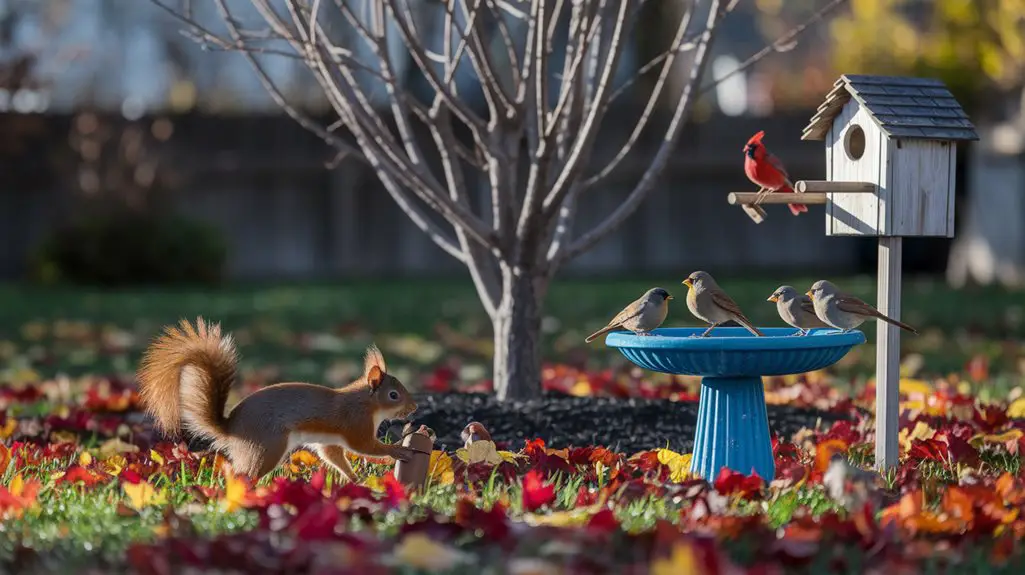
As you examine your backyard, observe how seasonal changes dictate wildlife behavior and survival tactics. In spring, the blossoming of native plants attracts migratory birds and pollinators, enhancing biodiversity.
Summer sees longer days and higher temperatures, spurring plant growth and supporting nesting birds and foraging mammals with plentiful nutrition. With autumn's approach, notice how animals like squirrels intensify their resource-caching efforts while birds prepare for migration. Curious about how your backyard adapts to each season?
On this page
Spring Awakening: The Return of Migratory Birds and Blooming Flora
As the first warm breezes of spring break the chill of winter, your backyard becomes a bustling hub of activity.
You observe the arrival of migratory birds such as the American Robin and the Eastern Bluebird.
These birds are drawn to the emergent flora: blossoms appear with temperatures rising above 10°C, as noted by phenological records.
Crocuses and daffodils push up through the soil as the lengthening days bring more sunlight to fuel photosynthesis.
Birdsong's acoustic diversity expands, with dawn choruses showcasing frequencies ranging from 1.5 kHz to 8 kHz, enhancing the auditory complexity of the environment. Additionally, incorporating native plants in your garden can further attract a variety of wildlife, enriching the ecosystem.
Summer Vibrancy: Abundant Food Sources and Active Nesting
With summer's arrival, your backyard transforms into a vibrant ecosystem teeming with life. Increased daylight and temperatures stimulate plant growth, providing rich sustenance for varied species. Nectar-heavy flowers attract pollinators.
Meanwhile, foliage and seeds offer essential nutrients for birds and small mammals. Nesting activity peaks, with avian species such as robins and sparrows building nests, driven by longer photoperiods enhancing reproductive behaviors. Lepidoptera species, butterflies and moths, are particularly active now.
- Food Availability: Longer days bring more seeds and foliage.
- Pollinators: Bees and butterflies become more active.
- Nesting Patterns: Increased photoperiods result in elevated bird nesting activities.
- Reproductive Behavior: Triggered in species due to favorable environmental conditions.
- Mammalian Foraging: Squirrels and chipmunks become more active.
Additionally, providing native plants in your garden can further enhance the habitat's capacity to support diverse wildlife.
Fall Transition: Preparing for Hibernation and Migration
Though temperatures begin to cool, preparations amongst backyard wildlife for the impending winter are unmistakable. Observe animals gathering resources and seeking shelter. Squirrels intensify nut caching, while avian species initiate migratory patterns.
You might notice changes like thicker fur in mammals signaling hibernation prep. It's vital to maintain wildlife-friendly environments during fall to support these behaviors.
By creating thriving wildlife habitats, you'll enhance the chances of local species thriving through seasonal transitions. Let's look at some common indicators:
| Wildlife Behavior | Observations |
|---|---|
| Squirrels | Increased food storage activity |
| Birds | Formation of migratory flocks |
| Frogs | Frogs burrow beneath ground |
Each species follows distinct patterns based on available resources and physiological needs. By modifying yard structures—such as leaving leaf piles—you'll support these essential cycles of hibernation and migration.
Conclusion
You might notice, by coincidence, the heightened activity in your backyard as each season unfolds. It's no accident that spring's blossoming flora invites migratory birds back, nor that summer's lengthy days furnish food aplenty for nesting creatures.
Fall, too, aligns perfectly with nature's clock, prompting squirrels to hide nuts and birds to flock together as if on cue. By understanding these patterns, you can effectively enhance your backyard to support wildlife through each seasonal change.
