
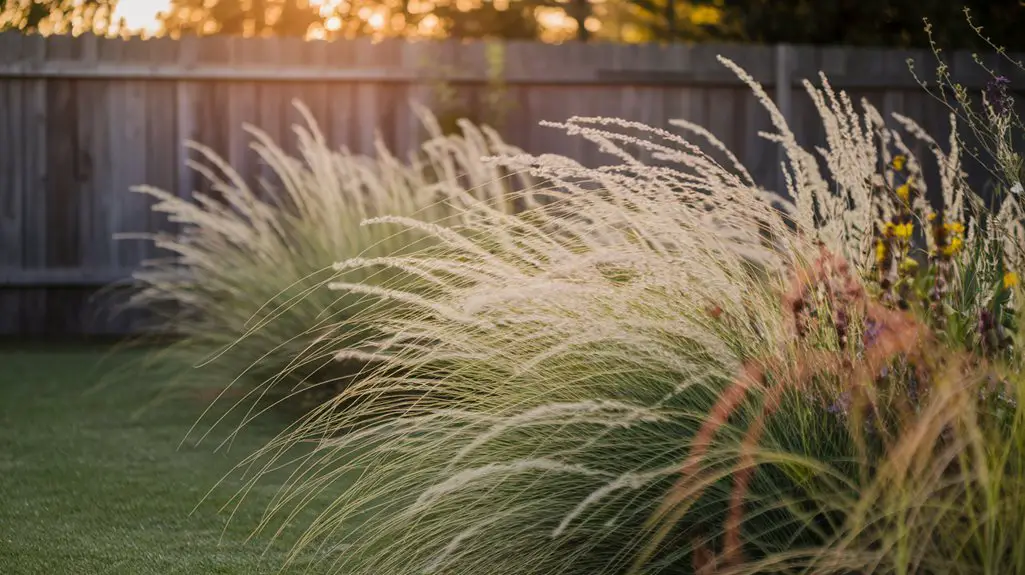
Using native grasses blends aesthetic elegance with environmental resilience. You should start by evaluating your yard's unique climate and soil conditions; these are critical for selecting compatible grass species.
Incorporating grasses with varying root depths can enhance soil stability and assist with water retention. By planning for seasonal changes, you'll guarantee visual interest throughout the year. Balanced design and sustainable practices await exploration, offering a more harmonious outdoor space.
On this page
Choose the Right Native Grass Species
When you're planning a sustainable landscape, selecting the right native grass species is crucial for optimizing ecological benefits. You need to assess the ecological compatibility of each native grass species within your landscape's ecosystem.
Focus on species that support biodiversity, enhance soil health, and provide habitat for local fauna. Employ principles of ecological design by integrating a mix of grasses that contribute to functionality, such as erosion control and water infiltration.
Native grasses, with their deep rooting systems, increase soil organic matter, reduce land degradation, and demand less irrigation. Prioritize species that align with your landscape's design intent, promoting resilience and sustainability.
Make certain your selected grasses uphold ecological balance, amplifying the long-term health of your native landscape installation.
Consider Your Yard's Climate and Soil Conditions
To guarantee your native grass planting thrives, first evaluate the climate and soil conditions of your yard.
Understanding these variables will ensure you select grasses compatible with your environmental context, maximizing sustainability and ecological balance.
- Soil Composition: Conduct a soil test to determine pH levels and nutrient composition.
- Drainage Capacity: Assess whether your soil retains water too heavily or drains excessively.
- Hardiness Zone: Verify your region's USDA hardiness zone for selecting suitable grass species.
- Sun Exposure: Record the amount of daily sun your yard receives to match it with light requirements of specific grasses.
- Microclimate Variations: Identify any unique areas, like windbreaks or shaded zones, that might affect growth.
Integrate these factors into your yard design, promoting resilient and thriving native grass installations.
Plan for Seasonal Changes and Growth Patterns
As you plan your native grass garden, consider how seasonal changes and growth patterns will influence your landscape design. Native grasses exhibit distinct phenological stages, impacting both aesthetics and ecological functions across different seasons.
By comprehending their cyclical nature, you'll enhance sustainability and adaptability in your garden. To design effectively, consider establishing a diverse plant palette.
This practice not only uplifts visual appeal but also maximizes ecosystem services such as soil stabilization and carbon sequestration. Reference the table below to identify growth periods and dormancy stages, aiding strategic design decisions.
| Season | Grass Activity |
|---|---|
| Spring | Active growth |
| Summer | Peak aesthetics |
| Fall | Seed production |
| Winter | Dormancy phase |
| Year-round | Root establishment |
Understanding these patterns guides the creation of resilient landscapes.
Integrate Native Grasses With Existing Landscaping
Effectively integrating native grasses with your existing landscaping involves understanding both the ecological interactions and visual harmony between plant species.
You'll want to reflect on the symbiosis between native grasses and surrounding flora. Embrace design principles that prioritize texture, color, and scale, ensuring your landscape maintains ecological balance while enhancing aesthetic appeal.
Sustainability should drive your choices, focusing on biodiversity preservation.
Here are some key reflections:
- Competition: Assess how grasses compete for resources with other plants.
- Microhabitats: Identify areas where grasses and local plants thrive together.
- Visual Composition: Arrange in layers for depth—foreground, mid-ground, and background.
- Seasonality: Choose grasses that complement the seasonal transformations of other greenery.
- Maintenance: Opt for species with low water and nutrient requirements to promote sustainable practices.
Additionally, consider selecting native plants that work synergistically with your grasses to enhance ecological resilience.
Utilize Grasses for Erosion Control and Water Management
When strategically incorporating native grasses into your landscape design, they can serve as powerful agents for erosion control and effective water management. Their deep root systems stabilize soil, reducing surface runoff and minimizing erosion on slopes or embankments.
By selecting drought-tolerant species, you're enhancing your garden's resilience against variable climate conditions. Native grasses increase soil permeability, facilitating better infiltration and aquifer recharge, ensuring your garden retains moisture efficiently.
Opt for a mix of bunchgrasses and sod-forming species to balance density and coverage. Plant along contour lines to maximize water retention and redirect excess precipitation.
Such sustainable design techniques not only mitigate flooding risks but also decrease reliance on artificial irrigation systems. Additionally, incorporating natural pest management practices alongside native grasses can further enhance the ecological balance of your garden. By prioritizing native grasses, you're contributing to a more sustainable and environmentally resilient landscape.
Design With Wildlife in Mind
Incorporating native grasses in your yard not only boosts erosion control and water management but also invites wildlife to thrive.
By designing with biodiversity in mind, your landscape becomes a habitat rather than just a garden. Additionally, native grasses provide essential food resources for various species, enhancing the ecological value of your garden.
Consider these design principles:
- Mixed Plant Stratification: Use multiple grass heights to mimic natural habitats.
- Diverse Grass Palette: Plant a variety of species to support various fauna.
- Connected Corridors: Create pathways for wildlife movement.
- Seasonal Dynamics: Choose grasses with different blooming periods for year-round resources.
- Shelter Spaces: Design areas where wildlife can find refuge.
Maintain and Manage Your Native Grass Areas
To maintain and manage your native grass areas effectively, begin by understanding the specific growth habits and ecological needs of the grass species in your landscape.
Regularly monitor their phenological cycles to optimize mowing and trimming schedules, aligning these tasks with your grasses' dormancy periods. Understand that strategic mowing not only prevents thatch accumulation but also encourages robust root development and sustainable biodiversity.
Incorporate integrated pest management practices to address potential invasive species; this supports ecological integrity without relying on synthetic chemicals.
Ascertain proper soil aeration to facilitate healthy root systems, thereby enhancing water infiltration and retention capabilities.
Consider implementing rainwater harvesting systems to irrigate efficiently.
Conclusion
Incorporating native grasses into your yard isn't just a groovy trend—it's a strategic move toward sustainable landscaping. By choosing suitable species and considering your yard's unique characteristics, you'll boost biodiversity and soil health.
Plan thoughtfully for seasonal variety and layer your landscape for visual richness. With erosion control and water management strategies, you'll optimize ecological function. Integrate these techniques with existing elements, and maintain wisely to create a habitat that's a real showstopper for wildlife.
