
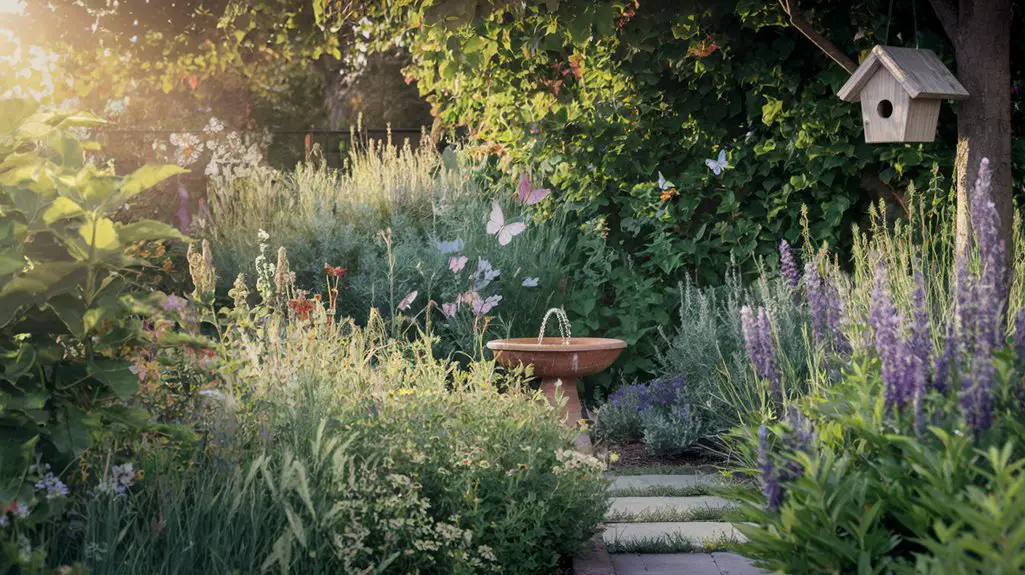
Just as a single wildflower can transform into a prairie over time, your backyard can evolve from a manicured lawn into a thriving ecosystem. You'll discover that creating a wildlife-friendly garden doesn't require vast acreage or expert knowledge—just thoughtful plant selection and habitat creation. By working with nature rather than against it, you're not only supporting local biodiversity but also crafting a more resilient, low-maintenance landscape that connects you to the seasonal rhythms of the natural world.
On this page
Selecting Native Plants to Attract Local Wildlife
When establishing a wildlife-friendly garden, native plants serve as the cornerstone of your ecosystem design. These indigenous species have co-evolved with local wildlife for thousands of years, creating mutually beneficial relationships that exotic plants simply can't replicate.
Research which plants naturally thrive in your region's soil and climate conditions. Focus on varieties that provide sequential blooming from spring through fall, ensuring year-round food sources for pollinators. Including native plants can significantly enhance the biodiversity of your garden.
Include structural diversity by combining groundcovers, shrubs, and trees that offer nesting sites and protective cover. Native oaks, willows, and maples support hundreds of caterpillar species, while milkweed is essential for monarch butterflies.
Don't forget berry-producing shrubs like elderberry or viburnum that feed birds through winter. Aim for at least 70% native plants: a 2018 Smithsonian and University of Delaware study (PNAS) found Carolina chickadees could only sustain their numbers in yards where natives made up at least 70% of the plant biomass.
Creating Water Sources for Birds and Beneficial Insects
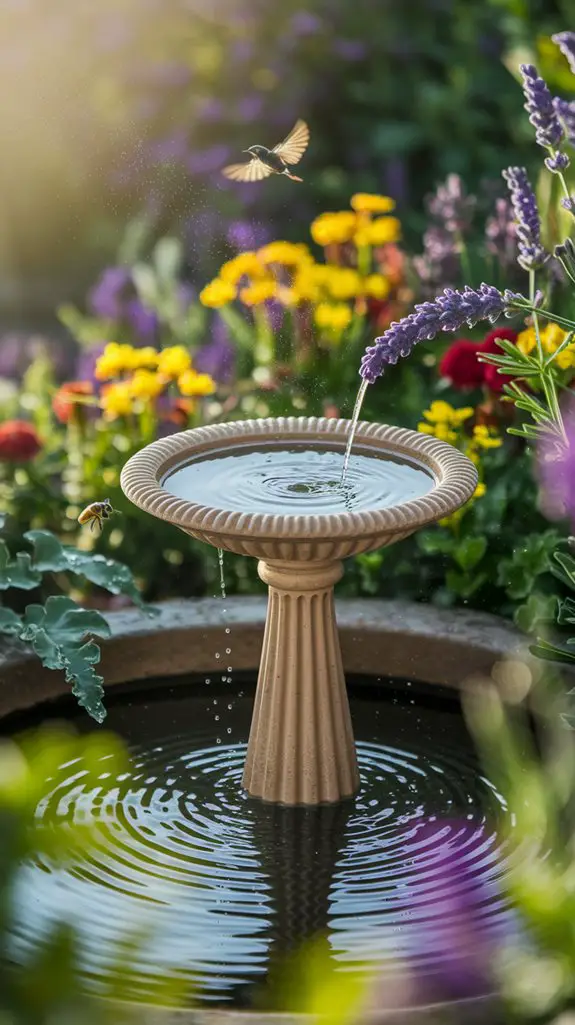
While plants provide essential food and shelter in your wildlife garden, water sources represent equally critical habitat elements that support diverse biological functions.
Water features attract beneficial insects like pollinators and natural pest controllers while providing birds with drinking and bathing opportunities that enhance their survival during hot or dry periods. Additionally, having a variety of water sources in your garden can significantly increase the number of wildlife species that visit.
Create effective wildlife water sources by:
- Installing shallow bird baths with rough-textured bottoms for better footing, placing them 2-4 feet above ground to protect birds from predators.
- Adding small stones or floating cork in deeper containers to create landing spots for butterflies, bees, and other insects that can't swim.
- Maintaining water quality by renewing sources every 2-3 days to prevent mosquito larvae development and algae growth.
Building Shelter Zones With Layered Vegetation
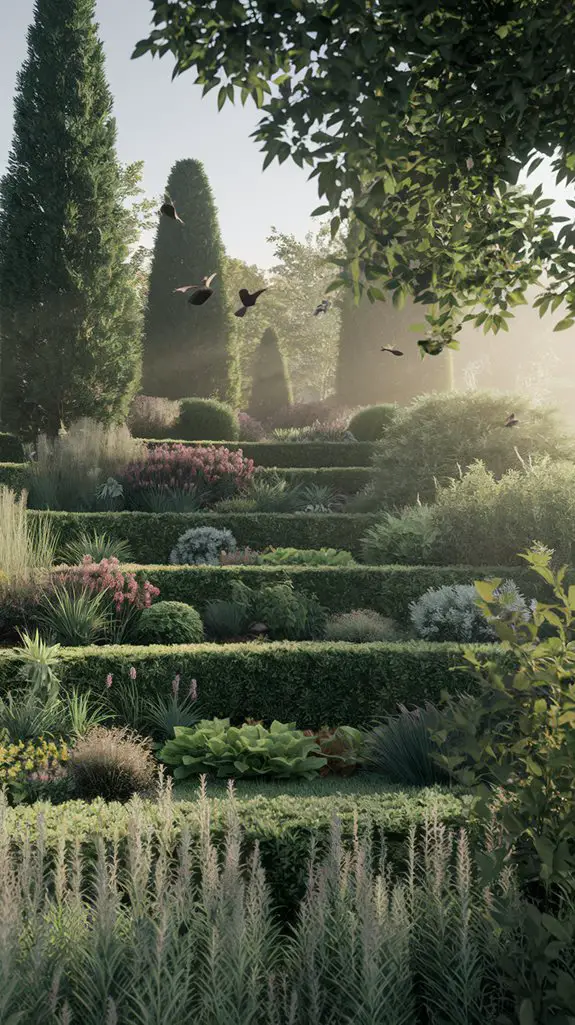
Beyond water features, the structural composition of your garden determines its wildlife hospitality value. Create vertical diversity by establishing distinct vegetation layers—canopy trees, understory shrubs, herbaceous plants, and ground covers—that mimic natural ecosystems.
This stratification provides multiple habitat niches where diverse species can nest, shelter, and forage. Position evergreen shrubs along garden edges to create wind buffers and winter refuges. Incorporate native grasses that provide essential cover for ground-dwelling creatures and nesting material for birds.
Don't over-prune! Allow some areas to remain slightly wild, with leaf litter intact and fallen branches positioned strategically as microhabitats for beetles, salamanders, and fungi. These microhabitats support biodiversity and contribute to a thriving ecosystem in your garden.
These decomposition zones become vital ecological engines, completing nutrient cycles and supporting detritivores that form the foundation of your garden's food web.
Eliminating Chemical Pesticides and Fertilizers
The widespread use of synthetic pesticides and fertilizers fundamentally disrupts the delicate ecological balance you're trying to establish in your wildlife garden.
These chemicals don't discriminate between beneficial insects and pests, often eliminating essential pollinators and natural predators that provide biological control.
Transition to organic methods by:
- Implementing companion planting with pest-repelling species like marigolds, nasturtiums, and herbs that naturally deter unwanted insects.
- Creating compost from yard waste and kitchen scraps to build soil fertility through nutrient-rich humus rather than synthetic fertilizers.
- Introducing beneficial insects such as ladybugs, lacewings, and predatory wasps that naturally control pest populations without chemical intervention.
You'll notice increased biodiversity within weeks as soil microorganisms flourish and wildlife returns to your chemical-free sanctuary. Additionally, using natural pest control methods can help you maintain a thriving garden ecosystem without the need for harmful chemicals.
Designing Pollinator Pathways Through Your Garden
Creating connected corridors of flowering plants establishes essential pollinator pathways through your garden, allowing bees, butterflies, and other beneficial insects to efficiently navigate between food sources.
Design these routes with sequential blooming patterns that provide continuous nectar from spring through fall. Position native flowering species in clusters rather than isolated plantings—pollinators expend less energy when similar flowers grow together.
Ensure pathways span at least three feet wide and incorporate varying plant heights to accommodate different pollinator flight patterns. Include critical "rest stops" of shallow water sources and undisturbed areas where insects can shelter. Additionally, consider incorporating native flowering plants that are specifically adapted to your local ecosystem to maximize their effectiveness in attracting pollinators.
Connect your garden with neighboring green spaces whenever possible, extending these biodiverse highways beyond your property. These thoughtfully designed corridors don't just benefit wildlife; they'll increase your garden's productivity through improved pollination rates.
Incorporating Bird and Bat Houses in Your Landscape
When strategically placed throughout your landscape, bird and bat houses provide essential shelter for beneficial wildlife while enhancing your garden's natural pest control systems. These structures support biodiversity and create microcosms of ecological balance right in your backyard. For maximum effectiveness in your garden ecosystem:
- Mount bat houses 12-20 feet high on poles or buildings with 6-8 hours of direct sunlight, ideally facing south or southeast to maintain ideal internal temperatures.
- Install bird houses specific to native species in your region, positioning them away from prevailing winds at heights appropriate for target species (5-30 feet depending on species).
- Avoid chemical treatments on houses; instead, use untreated cedar or cypress which naturally resist decay while remaining non-toxic to wildlife. Additionally, consider including native plants in your garden to further attract and support pollinators and other wildlife.
Establishing Year-Round Food Sources for Wildlife
Beyond shelter, wildlife visitors require consistent nourishment throughout all seasons to truly establish residence in your garden ecosystem.
Select native plants that produce seeds, berries, and fruits at different times of the year—serviceberry and elderberry for summer, coneflowers and black-eyed Susans for fall, and holly and winterberry for colder months.
Supplement natural food sources with strategic feeders. Fill tube feeders with black oil sunflower seeds for chickadees and finches, while offering suet blocks during winter when insects are scarce.
Don't forget water—essential for digestion and hydration. Install shallow dishes with pebbles for insects and small birds, and deeper baths for larger species.
Allow fallen leaves to decompose naturally, creating microhabitats for invertebrates that become food for birds, amphibians, and small mammals. Additionally, consider using kitchen scraps to enrich your garden soil, providing nutrients that support plant growth and attract wildlife.
Managing Dead Plants and Leaves as Habitat Resources
Though gardeners often feel compelled to tidy away spent plants and fallen leaves, these seemingly "messy" materials serve as critical habitat resources for countless wildlife species.
When you leave these natural elements in place, you're providing essential overwintering sites for beneficial insects and microorganisms that sustain your garden's ecological web.
- Hollow stems of perennials like coneflower and bee balm house solitary bee larvae through winter, so cut these back in spring rather than fall.
- Leaf litter creates a protective microhabitat where butterfly pupae, moth cocoons, and beneficial beetles shelter during cold months.
- Dead wood from fallen branches provides nesting sites for cavity-dwelling bees and serves as foraging grounds for insectivorous birds seeking hibernating arthropods.
Additionally, incorporating a wildlife-friendly compost area can further enhance the habitat by attracting diverse species and enriching the soil.
Balancing Human Recreation With Wildlife Needs
Creating a wildlife-friendly garden doesn't mean you can't enjoy your outdoor space; rather, it invites thoughtful consideration of how human activities and wildlife needs can coexist harmoniously.
Design designated human zones—patios, seating areas, play spaces—surrounded by wildlife-supporting vegetation that creates natural boundaries.
Time your outdoor activities strategically. Many pollinators are most active midday, while birds feed heavily in morning and evening hours.
Your afternoon gardening might minimize disruption to their critical feeding periods.
Choose noise-minimizing equipment when maintaining your garden. Electric or manual tools produce considerably less noise pollution than gas-powered alternatives, reducing stress for sound-sensitive species like birds.
Install wildlife viewing spots—benches near butterfly gardens or bird-friendly shrubs—that let you observe without disturbing natural behaviors, enhancing your connection with nature while respecting wildlife's space. Additionally, incorporating backyard wildlife into your garden design can enhance natural pest control solutions, reducing the need for chemical interventions.
Conclusion
Your wildlife-friendly garden isn't just beautiful—it's essential habitat. Home gardens with native plants tend to draw more kinds of birds and butterflies than conventional landscapes.
By creating diverse microhabitats, you're building resilience in local ecosystems. As climate change intensifies, these garden refuges become increasingly critical stepping stones, connecting fragmented wild spaces and supporting biodiversity right where you live.
