
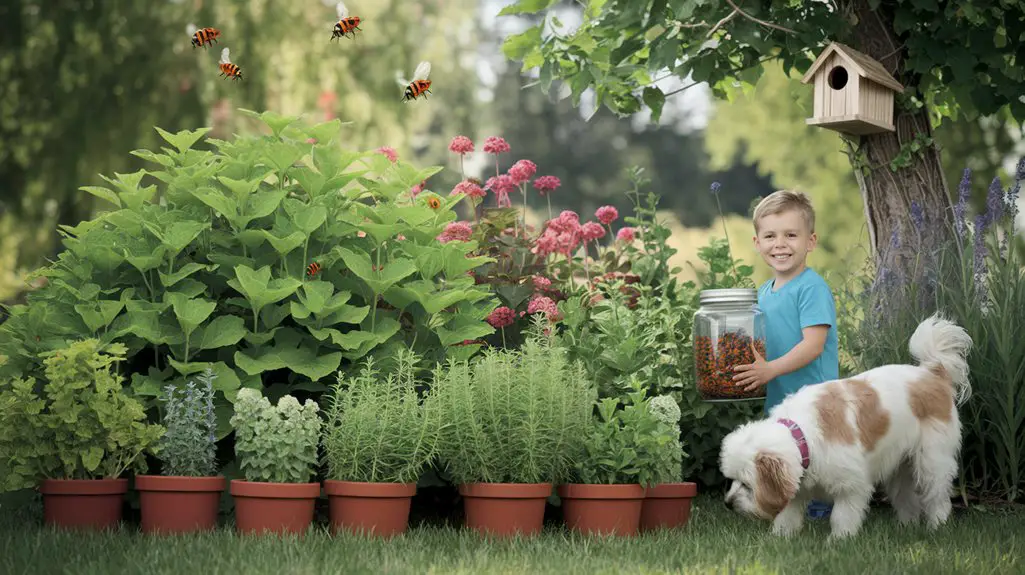
When you’re sharing your home with children and furry companions, you’ll face a dilemma with pest control. Traditional pesticides contain harsh chemicals that can harm your family’s most vulnerable members.
You need solutions that eliminate unwanted visitors without introducing new dangers. From your kitchen pantry to your garden beds, effective alternatives exist that protect both your loved ones and your living space. These five approaches will transform how you tackle pest problems without compromising safety.
On this page
Natural Deterrents Using Kitchen Ingredients
While conventional pest control products often contain harmful chemicals, your kitchen likely houses several safe, natural deterrents that effectively repel common household pests.
Vinegar-water solutions (1:1 ratio) deter ants when sprayed along entry points and countertops. Diatomaceous earth, sprinkled in dry areas, dehydrates crawling insects without harming mammals.
Create a citrus repellent by boiling orange or lemon peels, then cooling and straining the liquid for use around windows and doorways. Cucumber slices effectively repel cockroaches when placed near potential entry points.
For flying insects, combine dish soap with water in a spray bottle to immobilize them on contact. Additionally, using natural deterrents like essential oils can enhance the effectiveness of your pest control efforts.
Always store these natural solutions in clearly labeled containers out of children’s reach, and test on inconspicuous areas before widespread application.
Pet and Child-Friendly Barrier Methods

Physical barriers represent the safest long-term pest control strategy for households with children and pets. They create mechanical separation between pests and your living spaces without introducing toxins into your environment.
Install fine mesh screens (20-mesh or smaller) on windows, door sweeps on exterior entrances, and seal cracks with child-safe caulk to prevent entry. Implementing chemical-free pest solutions can complement these barriers for an even safer environment.
| Barrier Type | Protection Level | Implementation Difficulty |
|---|---|---|
| Mesh Screens | High – Keeps out most flying insects | Easy – DIY installation |
| Door Sweeps | Moderate – Prevents crawling pests | Easy – Requires basic tools |
| Caulk Sealing | High – Blocks foundation access points | Moderate – Requires thorough inspection |
Consider installing removable magnetic screens for doorways that children use frequently, ensuring barrier protection remains intact even during high-traffic times.
Non-Toxic Traps for Common Household Pests

Non-toxic traps offer an effective second line of defense after establishing physical barriers around your home.
For rodents, consider snap traps enclosed in tamper-resistant stations that prevent curious fingers and paws from accessing the mechanism. Place these in corners and along walls where pets and children can’t reach.
For crawling insects, sticky traps with non-poisonous adhesive can monitor and reduce populations. Position these under appliances and behind furniture.
Pheromone traps for moths and pantry pests disrupt breeding cycles without chemicals.
Electric light traps for flying insects use UV attraction rather than chemicals. Mount these high on walls, away from food preparation areas and children’s reach.
Always check traps daily to prevent odors from decomposing pests and to maintain efficacy.
Remove and dispose of captured pests promptly in sealed containers.
Safe Landscaping Strategies to Repel Insects
Creating a pest-resistant landscape around your home serves as your first line of defense against unwanted insects. Select plants with natural repellent properties and maintain proper spacing to reduce pest habitats while preserving beneficial insect populations. Additionally, incorporating diverse plant species can enhance your landscape’s resilience against pests.
| Plant Type | Repels | Placement |
|---|---|---|
| Lavender | Mosquitoes, Flies | Borders, Entryways |
| Marigolds | Aphids, Nematodes | Garden Perimeters |
| Mint | Ants, Roaches | Containers Only |
Eliminate standing water sources where mosquitoes breed. Maintain a 2-foot gravel barrier between mulch and your foundation to discourage termites.
Prune branches that touch your house to remove pest highways. For maximum effectiveness, combine these landscaping techniques with proper home maintenance to create a thorough barrier against insect infestations without exposing children or pets to toxic chemicals.
Essential Oil Solutions for Pest Management
Essential oils provide a powerful alternative to chemical pesticides when you’re seeking child and pet-friendly pest management solutions.
When properly diluted and applied, these concentrated plant extracts repel insects while minimizing exposure to harmful toxins found in conventional products. Additionally, using natural pest management techniques can further enhance your backyard’s ecosystem.
- Create a peppermint spray by adding 15-20 drops to water in a 16oz spray bottle to deter ants, spiders, and mosquitoes from doorways and windowsills.
- Place cedar oil-soaked cotton balls in closets and drawers to protect clothing from moths while keeping curious hands safe.
- Diffuse citronella or lemongrass oil during outdoor gatherings to repel flying insects within a 6-foot radius.
- For fleas, ask your vet first: many essential oils, lavender and tea tree included, are toxic to cats.
Always test oils in small areas first to ascertain safety.
Conclusion
By implementing these pet and child-friendly pest management techniques, you’ll create a protective shield around your loved ones while addressing unwanted visitors. Don’t compromise family safety with harsh chemicals when these natural alternatives effectively discourage pest activity.
Remember, proper barrier methods combined with strategic plantings and natural repellents create an all-encompassing defense system. Consistently applying these practices guarantees your home remains a sanctuary—free from both pests and harmful substances.
