

Contrary to popular belief, you don't need elaborate décor to create a stunning spring backyard. Embrace minimalism by incorporating weathered stone paths, untreated wooden elements, and a carefully curated selection of hardy plants like ornamental grasses and structural succulents.
Position low-profile seating in neutral tones to frame views of your blooming flora while maintaining intentional negative space. The thoughtful balance of simplicity and natural beauty will transform your outdoor sanctuary in ways that excess never could.
On this page
Essential Principles of Minimalist Backyard Design
When approaching minimalist backyard design, focus first on establishing a cohesive spatial framework that honors negative space as much as the elements you introduce. Your yard's emptiness isn't a void to fill but a canvas that breathes meaning into each carefully selected item.
Choose materials that complement your home's architecture—natural stone, untreated wood, or brushed metal create harmony without visual noise. Limit your plant palette to three or four species that thrive with minimal intervention; consider ornamental grasses, structural succulents, or native perennials.
Remember that functionality trumps decoration. Each element should serve a purpose: a concrete bench doubles as a visual anchor, a gravel path provides texture and drainage. Incorporating eco-friendly options for pathways can enhance both sustainability and aesthetics.
Your spring design should reveal your backyard's inherent character rather than impose unnecessary complexity.
Natural Elements for Spring Minimalism
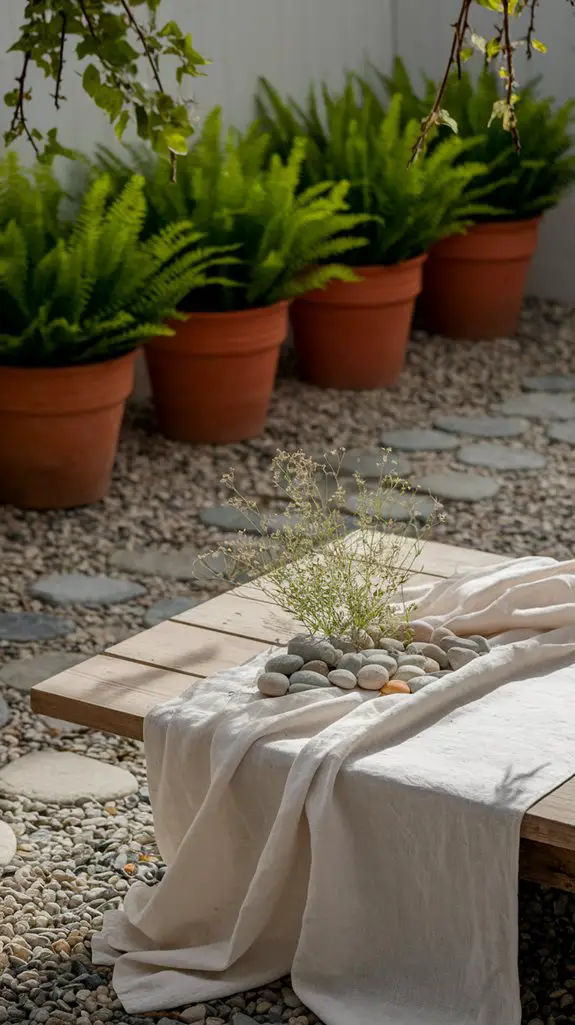
As spring unfolds across your landscape, incorporate elements that echo nature's own minimalist tendencies rather than competing with them.
Select materials with intentional restraint—stone pathways that weather gracefully, untreated wood that silvers with age, and native plants that require minimal intervention while providing seasonal interest.
- Position weathered stone basins to collect rainwater, creating ephemeral reflecting pools that change with the light.
- Introduce single-species plantings in defined areas—a grove of birch saplings or a carpet of creeping thyme—for visual impact through repetition.
- Arrange locally sourced boulders or fallen timber as both sculptural elements and functional seating, eliminating the need for manufactured furniture.
These natural elements create a serene backdrop that celebrates spring's renewal without unnecessary embellishment. Additionally, consider incorporating eco-friendly water features to enhance the tranquility of your garden space.
Streamlined Seating and Dining Areas
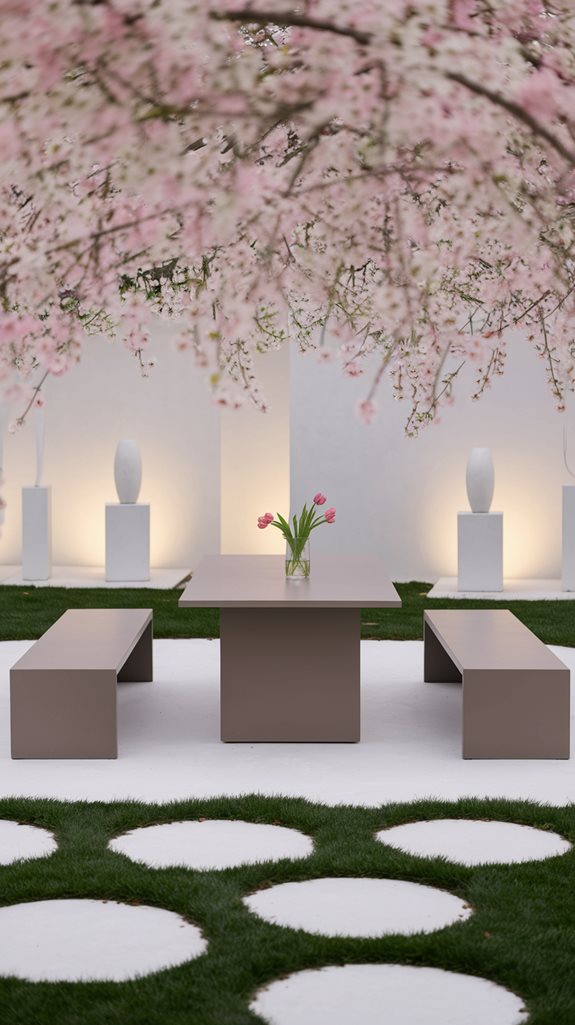
The outdoor gathering space transforms most elegantly when pared down to essential forms that harmonize with your garden's natural geometry.
Select low-profile dining sets with clean lines—teak or powder-coated steel frames maintain minimalist integrity while withstanding weather fluctuations. Consider bench seating for unobstructed sightlines across your landscape.
Arrange conversation areas around a focal point—perhaps a simple fire bowl or unadorned water feature. Limit cushions to neutral tones that echo spring's subtle palette: sage, stone, or muted terra cotta.
For dining surfaces, choose materials that age gracefully: concrete, sustainably harvested wood, or recycled composite.
Remember that negative space enhances visual flow. Position seating to frame views of spring's emerging blooms rather than competing with them.
The discipline of restraint creates a backdrop where seasonal beauty becomes the centerpiece. Incorporating elements of Chic Bohemian Outdoor Seating can add an inviting layer to your minimalist design without overwhelming the space.
Monochromatic Plant Selections for Visual Calm
Embracing a single color family throughout your garden beds creates immediate visual harmony without sacrificing botanical interest.
Consider green-on-green layering, where varied textures and leaf shapes provide depth while maintaining a serene palette. Position plants with similar water requirements together to simplify maintenance while creating purposeful negative space between groupings.
- Silver-blue specimens like lavender, Russian sage, and blue fescue create a cooling effect that expands spatial perception.
- All-white flowering plants (hydrangeas, candytuft, white cosmos) reflect evening light, extending your garden's visual presence after sunset.
- Gradient green arrangements using hostas, ferns, and ornamental grasses provide textural contrast while maintaining chromatic restraint.
For maximum impact, limit your selection to three plant varieties per visible sightline, allowing each specimen adequate breathing room. Additionally, incorporating native plants can enhance biodiversity and resilience in your minimalist garden design.
Simple Water Features That Enhance Tranquility
Water elements invite meditative moments into minimalist backyards without requiring elaborate installations or maintenance commitments.
Position a shallow ceramic bowl fountain on your patio table, where sunlight can animate the water's gentle movements. The subtle soundtrack of trickling water creates an acoustic boundary against urban noise.
Consider sleek, freestanding basalt columns that release thin water streams over polished stone surfaces. These vertical elements occupy minimal square footage while drawing the eye upward.
For zero-maintenance options, arrange rain chains that transform spring showers into kinetic sculptures.
Solar-powered floating orbs eliminate cords and complex filtration systems, while illuminating evening gatherings with subdued ambiance.
Select vessels with clean lines and natural materials—concrete, stone, or matte-finished metals—that weather gracefully and complement surrounding plantings without competing for visual attention. Additionally, incorporating eco-friendly materials in your water feature can enhance sustainability in your backyard design.
Mindful Lighting for Evening Ambiance
Light transforms minimalist backyards from daytime retreats into evening sanctuaries where shadows play against clean surfaces and plant silhouettes gain dramatic presence.
When selecting evening illumination, prioritize fixtures that complement your space's clean lines while providing functionality. Choose lighting that casts intentional patterns rather than flooding the area with harsh brightness.
- String bistro lights suspended in geometric patterns create depth without visual clutter
- Solar-powered path markers eliminate cords while defining walkways with subtle light pools
- Recessed LED spotlights highlight specimen plants and architectural features without dominating the landscape
Incorporating backyard lighting can further enhance the allure of your outdoor space, creating a magical atmosphere that draws you outside long after sunset.
Decluttering Your Outdoor Space for Spring
As winter recedes, your backyard likely harbors accumulated debris and forgotten items that disrupt the clean, intentional aesthetic of minimalist design.
Begin your spring renewal by systematically removing fallen branches, dead foliage, and weathered decorations that no longer serve visual or functional purposes.
Evaluate each element in your outdoor space with critical discernment. Store seasonal items in designated containers beneath benches or in weather-resistant cabinets.
Consider vertical storage solutions that maintain ground-level openness while maximizing spatial efficiency.
Prune overgrown shrubs to reveal their essential forms, allowing breathing room between plantings.
Replace multiple small containers with fewer, larger vessels that create visual anchors without fragmentation.
Remember that negative space isn't emptiness but rather a deliberate compositional element that allows your carefully selected features to command attention. Incorporating stylish seating arrangements can enhance both comfort and aesthetics during gatherings.
Weather-Resistant Décor With Clean Lines
When selecting outdoor décor for minimalist spring spaces, prioritize materials engineered to withstand seasonal changes while maintaining their architectural integrity.
Look for powder-coated aluminum furniture with straight edges that won't rust or fade during spring showers. Position concrete planters with geometric silhouettes strategically to create visual anchors within your yard's negative spaces.
- Opt for weather-treated teak or sustainable bamboo seating with removable canvas cushions that balance comfort with clean architectural lines.
- Install low-voltage LED pathway lighting in matte black finishes that create subtle ground-level illumination without visual clutter.
- Choose sculptural drought-resistant plants like agave or horsetail reed that maintain their structural form while requiring minimal maintenance. Adding charming shade solutions can enhance the comfort of your minimalist outdoor space.
Remember that restraint is your ally—a few carefully selected, high-quality elements will create more impact than numerous decorative items competing for attention.
Creating Intentional Negative Space in Garden Design
Negative space serves as the silent foundation of minimalist garden design, allowing carefully selected elements to breathe and command attention. When planning your spring backyard, resist the urge to fill every corner.
Instead, deliberately create empty areas that frame your focal points. Position statement plants—perhaps a single Japanese maple or architectural agave—with ample surrounding space. This intentional emptiness highlights form and texture while creating visual pathways through your garden.
You'll find these unoccupied zones aren't truly empty but filled with possibility and contemplation. For hardscaping, incorporate negative space through simple gravel sections or clean concrete pads between planting beds. One eco-friendly option for creating paths is using sustainable materials like reclaimed wood or permeable paving, which can enhance the minimalist aesthetic while being kind to the environment.
The contrast between planted and unplanted areas creates rhythm and balance. Remember, in minimalist design, what you leave out often matters more than what you include.
Conclusion
Your minimalist spring backyard isn't just a space—it's a carefully curated breathing room where every element serves a purpose. Like Mies van der Rohe's Barcelona Pavilion, you're creating harmony through deliberate absence.
You'll find that negative space frames your botanical selections, while clean-lined furniture anchors visual flow. As evening descends, your thoughtful lighting transforms the landscape, allowing nature's subtle spring palette to speak its quiet poetry.
