
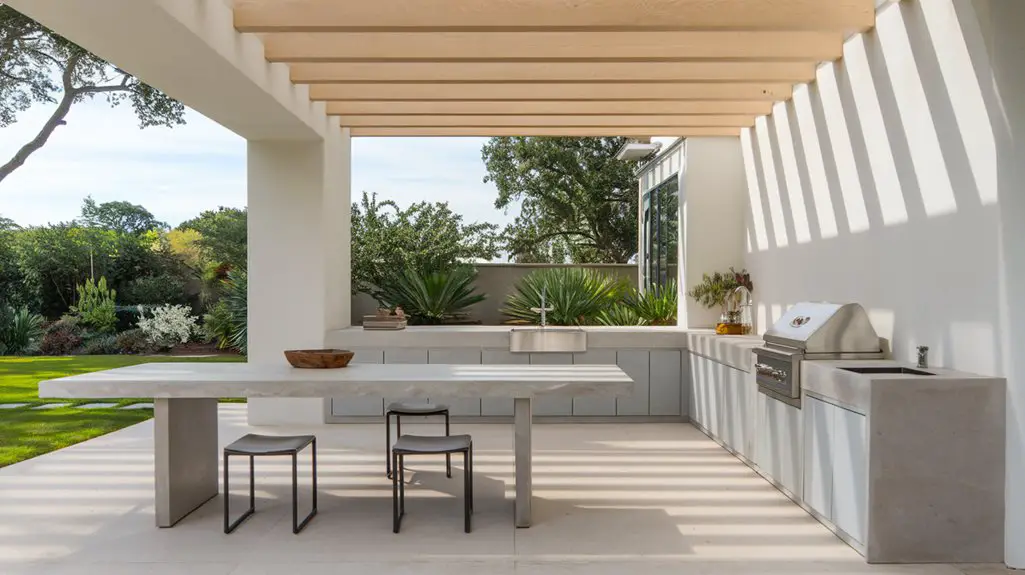
Did you know that a minimalist outdoor kitchen can actually enhance your cooking experience and social interactions? By focusing on simplicity and functionality, you can create a space that feels open and inviting.
Imagine a compact layout that fosters conversation while keeping everything you need within reach. So, what are the essential elements to reflect upon when designing your perfect outdoor oasis? Let's explore seven tips that can transform your vision into reality.
On this page
Choose a Compact Layout
When you're designing a minimalist outdoor kitchen, choosing a compact layout can make all the difference. It's all about maximizing functionality while maintaining a clean aesthetic.
Start by selecting a central focal point, like a small grill or a compact island, that invites conversation and cooking simultaneously. Arrange your appliances and prep areas in a triangular layout to streamline movement, ensuring you're not running back and forth.
Consider integrating built-in storage to hide away utensils and ingredients, keeping surfaces uncluttered. Use vertical space creatively; shelves or hanging racks can hold essentials without taking up precious ground area. Additionally, explore modern outdoor kitchen concepts that can inspire your design while ensuring efficiency and style.
Finally, think about flow—position dining areas close to cooking zones to create an inviting, cohesive space that feels effortlessly connected.
Opt for Simple Materials
A compact layout sets the stage for your minimalist outdoor kitchen, but the materials you choose can elevate the entire look and feel. Opt for materials that speak simplicity and elegance—think smooth concrete countertops paired with sleek stainless steel appliances.
Natural stone or reclaimed wood can add warmth without overwhelming your space. Choose a weather-resistant option like aluminum for furniture, ensuring durability while keeping a clean aesthetic.
This doesn't mean sacrificing style; instead, it enhances the overall vibe. Additionally, consider using sustainable materials that not only complement your design but also contribute to an eco-friendly environment.
Limit Decorative Elements
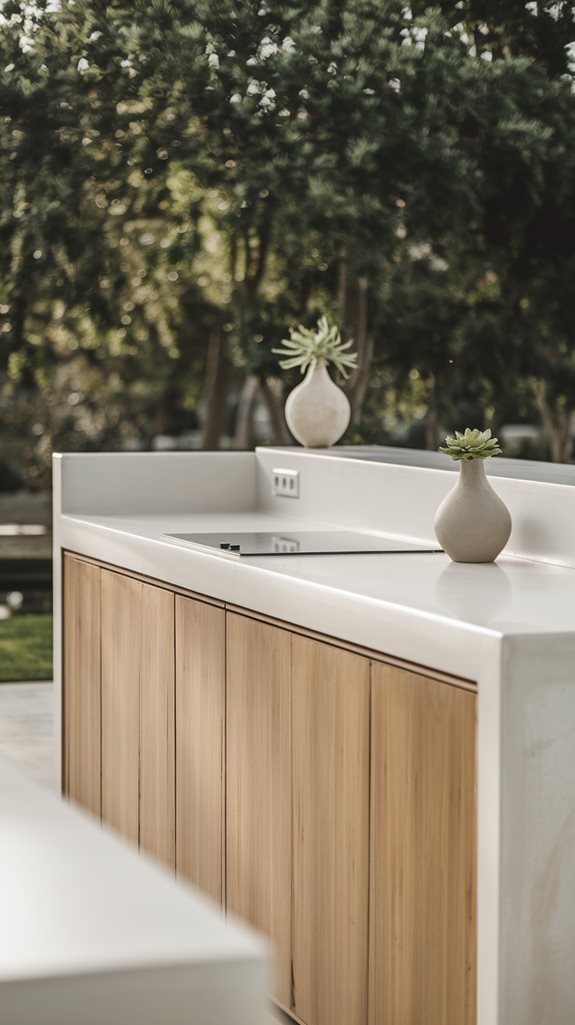
While it might be tempting to adorn your minimalist outdoor kitchen with various decorative elements, keeping things simple can often yield a more striking impact. Focus on functional pieces that complement your space without overwhelming it.
Instead of cluttering, choose a few significant accents that resonate with your style. Incorporating functional outdoor kitchen designs can enhance your cooking experience while maintaining a clean aesthetic.
| Element | Impact |
|---|---|
| A single statement plant | Adds life and color |
| Artisan utensils | Introduces texture |
| Simple lighting | Enhances ambiance |
| Neutral color palette | Creates harmony |
Incorporate Multi-Functional Furniture
Creating a minimalist outdoor kitchen invites you to explore the beauty of simplicity, and incorporating multi-functional furniture can elevate your design even further.
Think about a sleek dining table that doubles as a prep station, or benches with built-in storage for utensils and outdoor gear. Look for foldable chairs that tuck away easily, maintaining an uncluttered space while providing seating when needed.
A bar cart can serve as both a serving station and a mobile workspace for food prep or drinks. By choosing pieces that serve multiple purposes, you not only save space but also enhance the functionality of your kitchen. Consider integrating stylish outdoor storage solutions to keep your space organized and visually appealing.
Embrace versatility, and let your furniture reflect the minimalist ethos while maximizing your outdoor experience.
Focus on Essential Appliances
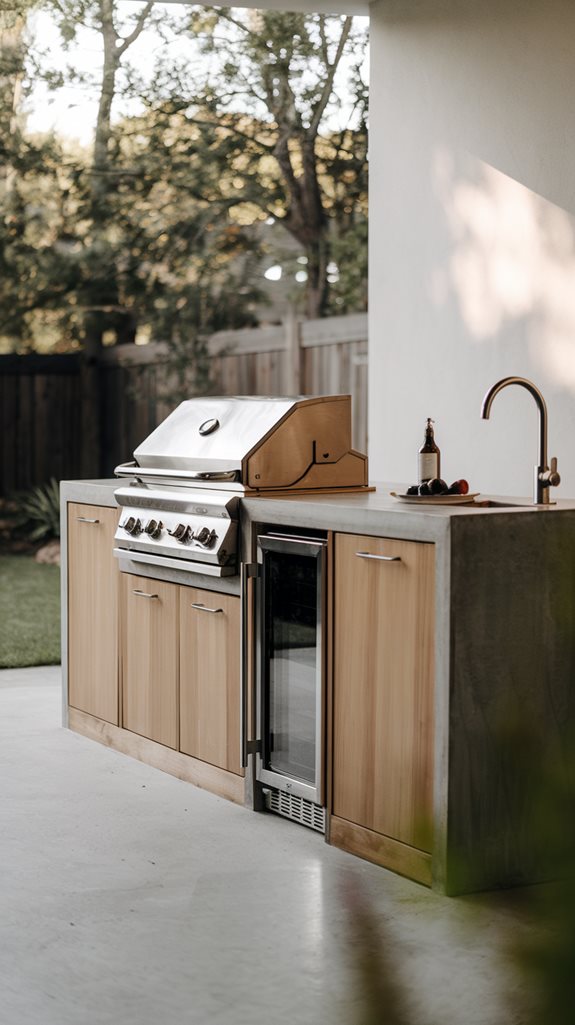
To achieve a truly minimalist outdoor kitchen, it's essential to focus on important appliances that streamline your cooking experience without overwhelming the space.
By selecting the right tools, you'll create a functional and inviting area. Here are three must-have appliances to take into account:
- Compact Grill – A versatile option for grilling, smoking, and even baking, perfect for small spaces.
- Mini Fridge – Keep drinks and ingredients close at hand while maintaining a clean aesthetic.
- Portable Burner – Ideal for quick meals or side dishes, this appliance offers flexibility without sacrificing style.
Additionally, consider incorporating year-round use features to ensure your outdoor kitchen is comfortable and functional in any season.
Use Natural Lighting Effectively
Choosing the right appliances is just the start of crafting your minimalist outdoor kitchen; natural lighting plays an essential role in enhancing the overall atmosphere.
To maximize this, position your kitchen away from tall structures and trees that block sunlight. Use large windows or open layouts to invite the outside in, creating a seamless connection with nature.
Consider installing skylights or pergolas that filter soft, diffused light throughout the day, giving an inviting glow. You might also incorporate reflective surfaces, like sleek countertops, to amplify natural brightness. Additionally, integrating natural shade solutions, such as planting trees or using outdoor curtains, can enhance your outdoor cooking experience while providing comfort during warmer months.
Don't forget to think about the time of day—plan your cooking and dining activities around when the sun casts its warmest light. Embrace this natural element; it's a game changer for your outdoor space.
Embrace Open Spaces
While you might think an outdoor kitchen requires a defined structure, embracing open spaces can transform your cooking and dining experience.
By letting your kitchen breathe, you create a relaxed atmosphere that invites creativity. Incorporating sustainable landscaping into your outdoor kitchen design can enhance both functionality and eco-friendliness.
Here are three ways to make the most of open spaces:
- Flexible Furniture: Use lightweight, movable furniture that can adapt to different gatherings or dining styles.
- Natural Elements: Integrate landscaping, like a garden or stone pathways, to connect the kitchen with nature seamlessly.
- Defined Zones: Create distinct cooking, dining, and lounging areas using rugs or plants to guide movement without enclosing the space.
Embracing open spaces not only enhances aesthetics but also fosters connection with nature and the people around you.
Conclusion
As you step back and admire your minimalist outdoor kitchen, you can almost feel the warmth of gatherings yet to come. Picture the laughter, the sizzling grill, and the aroma of fresh meals wafting through the air.
You've carefully crafted a space that invites connection and culinary creativity without the clutter. But wait—what's that hidden corner waiting for a tiny herb garden? With just a few final touches, your serene retreat can transform into the ultimate culinary escape.
