
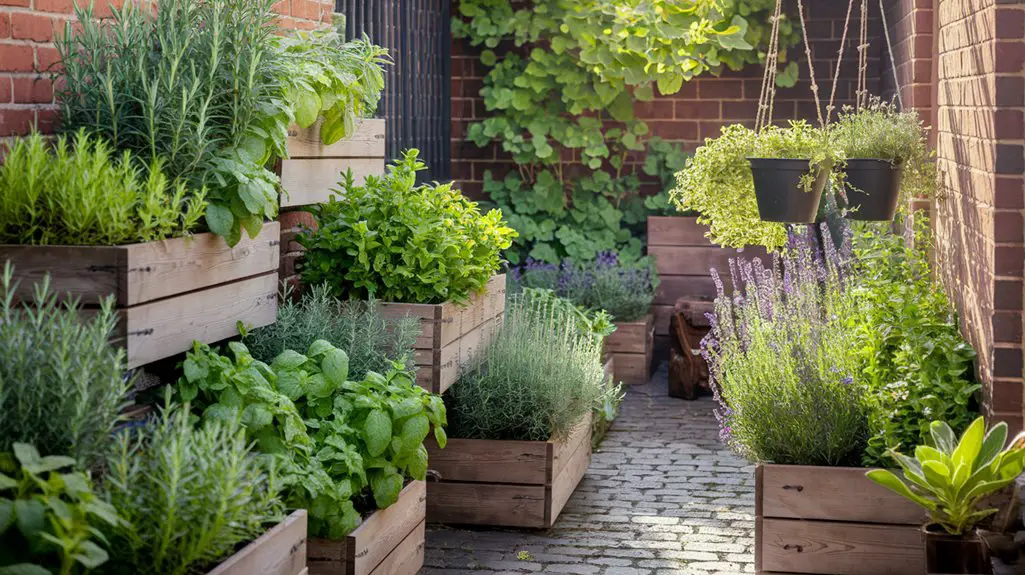
You don't need sprawling space to grow your own fresh herbs. Urban backyards, no matter how compact, can transform into productive herb gardens with the right approach.
Whether you're working with a tiny patio, bare windowsill, or vertical wall space, you'll find creative solutions that maximize every inch while maintaining sustainability. Let's explore seven innovative herb garden ideas that'll bring the joy of fresh basil, mint, and rosemary into your urban lifestyle without compromising on space or style.
On this page
Vertical Herb Gardens for Small Spaces
Vertical herb gardens transform even the tiniest urban spaces into productive green havens. By growing upward instead of outward, you'll maximize your limited square footage while keeping fresh herbs within arm's reach.
Try mounting wooden pallets to a sunny wall, installing tiered planters on a balcony railing, or hanging pocket organizers from a fence.
Choose herbs based on your wall's sun exposure – mint, parsley, and cilantro thrive in partial shade, while basil, rosemary, and thyme need direct sunlight.
Repurpose everyday items like mason jars, rain gutters, or shoe organizers into planters. Guarantee proper drainage by adding holes to containers and using quality potting mix.
Additionally, consider incorporating small herb garden ideas that suit your apartment living style for even more variety.
Water thoroughly but less frequently, allowing soil to dry slightly between waterings. Your vertical herb garden will soon provide fresh flavors while beautifying your urban oasis.
Container Herb Gardens for Urban Patios
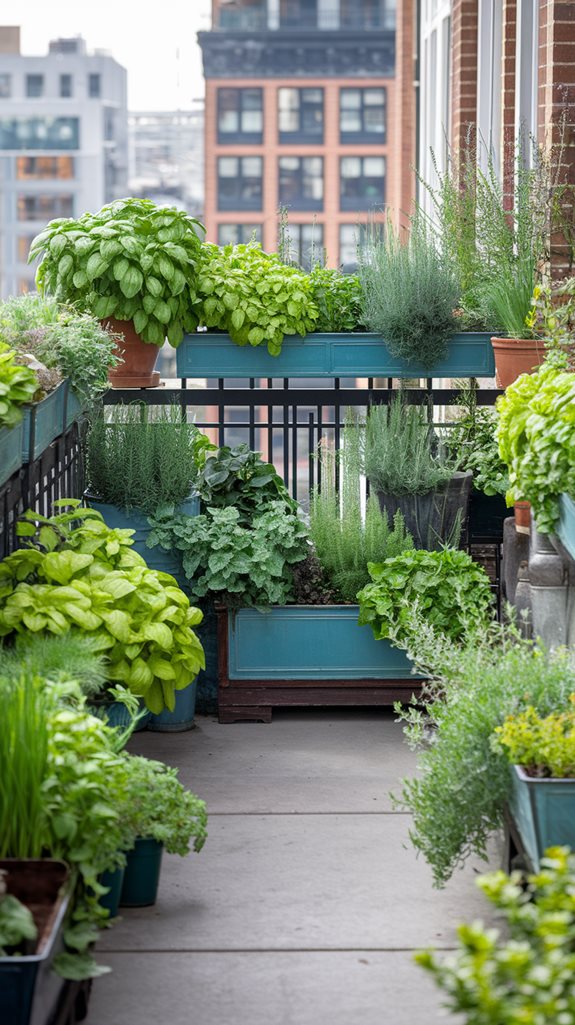
Container herb gardens offer the ideal solution for urban dwellers who've patio space but lack traditional garden beds.
You'll need weatherproof containers with drainage holes—recycled buckets, wooden crates, or terra cotta pots all work beautifully. Choose containers at least 6 inches deep for most herbs.
Group plants with similar water needs: Mediterranean herbs like rosemary, thyme, and sage prefer drier conditions, while basil, mint, and parsley thrive with consistent moisture.
Use a high-quality potting mix specifically formulated for containers rather than garden soil, which compacts easily.
Don't forget to position your herbs according to sun requirements. Most culinary herbs need 6+ hours of sunlight daily.
For year-round access, place containers on wheeled platforms so you can move them to capture ideal light as seasons change. Additionally, container vegetable gardening allows you to maximize space while growing a variety of fresh herbs and vegetables in limited areas.
Windowsill Herb Gardens for Fresh Cooking
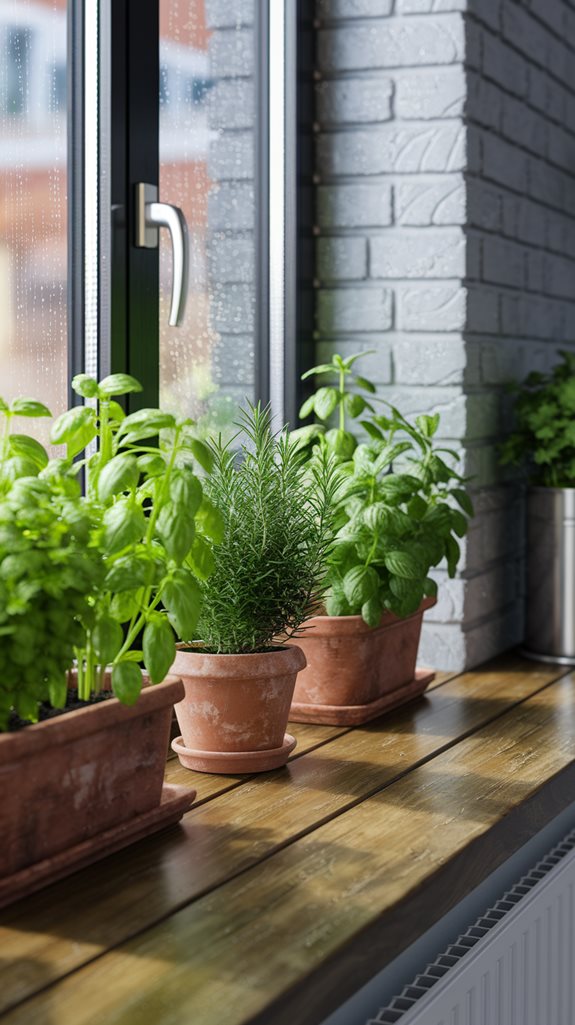
When kitchen space is limited, windowsill herb gardens offer the perfect solution for maintaining fresh cooking ingredients year-round. You'll need just a sunny window and a few small containers to create a thriving mini garden that's both functional and beautiful. Additionally, creative herb garden ideas can be tailored to suit any urban setting, making it easy to enjoy fresh herbs no matter the size of your space.
| Herb | Light Needs | Watering |
|---|---|---|
| Basil | Full sun | Keep moist |
| Mint | Partial sun | Regular water |
| Thyme | Bright light | Allow to dry |
Choose containers with drainage holes to prevent root rot, and use quality potting soil specifically formulated for herbs. Rotate your plants occasionally to guarantee even growth, as herbs naturally lean toward light sources.
Harvest regularly by snipping leaves from the top to encourage bushier growth and prevent flowering, which can make herbs bitter. For maximum flavor, pick herbs in the morning when essential oils are most concentrated.
Raised Bed Herb Gardens for Limited Backyards
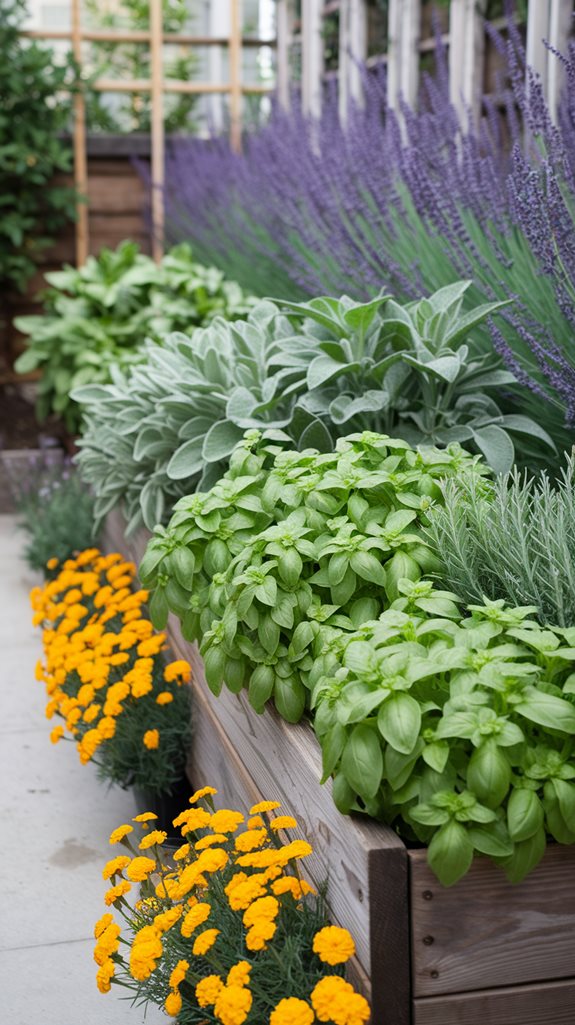
Urban dwellers with limited outdoor space can maximize herb production through strategically designed raised beds. These structures allow you to control soil quality while creating defined growing areas that prevent herbs from spreading aggressively.
Build beds 12-18 inches high to accommodate deep root systems of perennial herbs like rosemary and lavender. Consider L-shaped or tiered designs to fit awkward corners.
Position taller herbs like dill and fennel on the north side to prevent shading smaller varieties.
For maximum efficiency, group herbs with similar water needs together. Mediterranean herbs like thyme and oregano thrive in one section, while moisture-loving cilantro and mint can share another.
Add vertical elements like trellises for climbing varieties such as nasturtium to further maximize your limited footprint. Additionally, incorporating edible landscaping ideas can enhance the aesthetic value of your herb garden while providing a functional food source.
Hanging Herb Gardens for Aesthetic Appeal
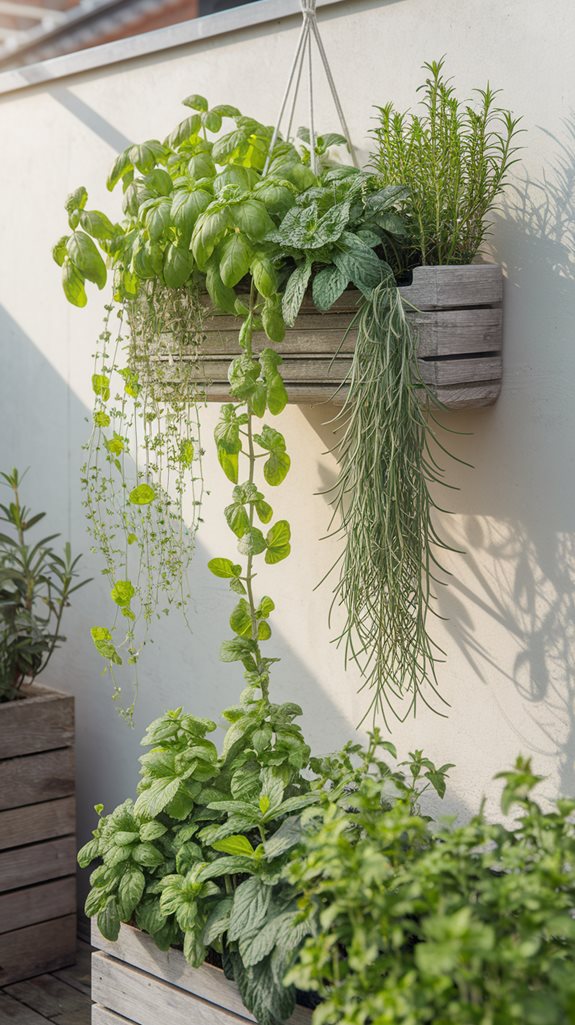
Beyond the ground level, hanging herb gardens offer a stunning way to maximize your urban growing space while adding visual interest to bare walls, fences, and overhead areas.
Consider repurposing mason jars, metal buckets, or macramé plant hangers to create vertical herb displays that draw the eye upward. Choose trailing herbs like creeping thyme, oregano, and mint for the lowest containers, allowing their tendrils to cascade downward. For maximum sunlight exposure, arrange your hanging garden so that taller containers won't shade smaller ones.
Install a simple pulley system for hard-to-reach hanging planters, making watering and harvesting effortless. Additionally, incorporating plants from culinary-inspired herb garden themes can enhance both flavor and aesthetic appeal in your hanging garden.
Don't forget to drill drainage holes in containers and use lightweight potting mix to prevent waterlogging and reduce weight on mounting hardware.
Your vertical herb garden will serve as both a functional food source and living artwork.
Tiered Herb Gardens for Maximizing Space
For city dwellers with limited square footage, tiered herb gardens offer an ingenious solution that multiplies your growing area while creating visual interest. By stacking plants vertically, you'll transform a small footprint into a productive herb haven. Additionally, incorporating pollinator-friendly herbs can enhance your garden by attracting beneficial insects.
| Tier Level | Best Herbs | Space-Saving Benefit |
|---|---|---|
| Top | Thyme, Oregano | Sun-loving herbs thrive |
| Upper-Mid | Basil, Cilantro | Easy harvesting zone |
| Middle | Parsley, Chives | Perfect visibility |
| Lower-Mid | Mint, Lemon Balm | Contains spreading herbs |
| Bottom | Sage, Rosemary | Anchors the structure |
You can build tiers using repurposed pallets, stacked containers, or purpose-built planters. Guarantee proper drainage between levels and position your structure against a sunny wall. Consider installing a simple drip irrigation system—water will cascade naturally downward, nourishing multiple plants with minimal waste.
Upcycled Material Herb Gardens for Sustainable Growing
Embracing sustainability in your herb gardening transforms ordinary household items into extraordinary growing vessels. Repurpose old teacups for compact herbs like thyme, or convert wooden pallets into vertical gardens that maximize wall space.
Coffee tins make perfect containers for mint or basil—just punch drainage holes in the bottom. Don't overlook gutters mounted horizontally on fence panels for shallow-rooted herbs like chives and cilantro.
Wine bottles can become self-watering planters when cut and inverted, while mesh colanders serve as ready-made drainage systems for oregano or sage. Additionally, using raised garden beds can enhance your organic gardening experience by improving soil quality and drainage.
You'll save money while reducing landfill waste, and these upcycled containers often provide better drainage than conventional pots.
Look around your home—that broken dresser drawer or chipped mixing bowl could become your most productive herb garden component.
Conclusion
With these urban herb garden ideas, you'll transform limited spaces into lush havens, convert unused items into plant homes, and turn vertical planes into green canvases. Whether you're planting in hanging baskets, arranging herbs on windowsills, or building tiered displays, you're creating sustainable food sources while beautifying your surroundings. Start small, grow smart, and watch your urban oasis flourish—one aromatic leaf at a time.
