
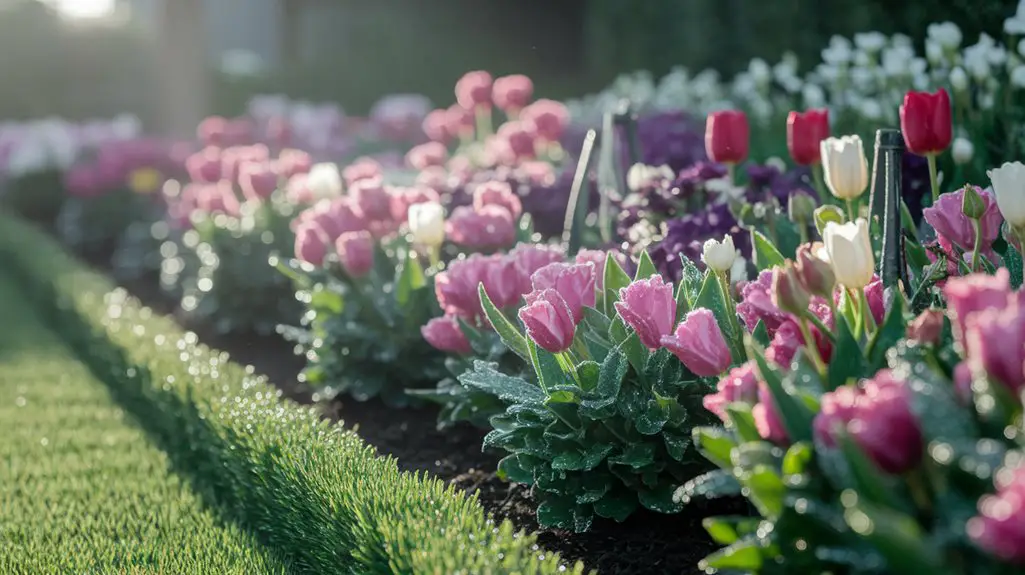
You’re about to discover how proper lawn care can dramatically enhance your flower beds’ health and appearance. When you integrate strategic mowing techniques with appropriate watering schedules, your blooms will respond with vibrant colors and extended flowering periods.
The relationship between your lawn and flower areas isn’t merely aesthetic—it’s a balanced ecosystem requiring specific attention to soil composition, pest management, and seasonal maintenance. The difference between average gardens and spectacular floral displays often lies in these critical but frequently overlooked lawn care practices.
On this page
Soil Preparation and Enhancement for Flower Beds
Before establishing flower beds in your lawn, proper soil preparation is essential for promoting robust root development and ideal flowering.
Begin by testing your soil’s pH level; most flowers thrive in slightly acidic soil (6.0-7.0). Remove existing vegetation, debris, and rocks from the bed area, then till to a depth of 8-12 inches to break compaction.
Incorporate 2-4 inches of organic matter such as compost, aged manure, or leaf mold to improve soil structure and nutrient content.
For clay soils, add coarse sand to enhance drainage; for sandy soils, increase organic material to improve water retention.
Apply a balanced slow-release fertilizer (10-10-10) at 1 pound per 100 square feet, gently working it into the top 3 inches of soil.
Consider adding mycorrhizal fungi to encourage symbiotic root relationships and enhanced nutrient uptake.
Strategically Mowing Around Flower Areas
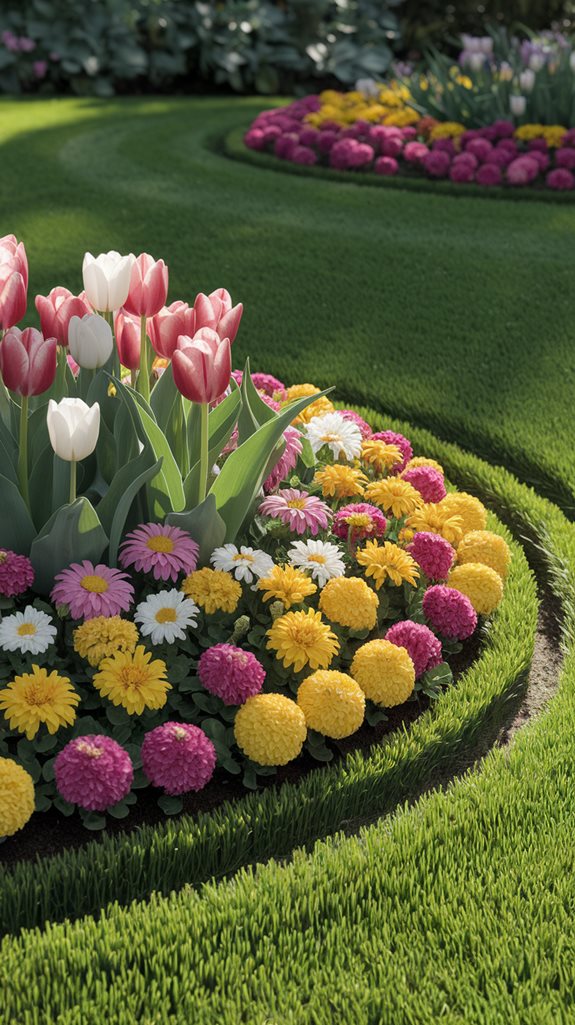
Thoughtful mowing practices around flower beds greatly impact both lawn health and floral display quality. When approaching flower areas, reduce your mower’s height setting to 2.5-3 inches, creating a gradual shift zone that prevents scalping while reducing competition for nutrients at the border interface.
| Mowing Strategy | Benefit | Impact |
|---|---|---|
| 45° approach angle | Reduces wheel damage | Preserves flower bed edges |
| Counter-clockwise circulation | Directs clippings away | Maintains visual clarity |
| Variable height shift | Creates habitat gradient | Supports pollinator activity |
Utilize string trimmers cautiously at bed edges, maintaining a 15° angle to create clean delineation without damaging shallow-rooted specimens. For irregularly shaped beds, consider installing mowing strips of stone or composite material, establishing a definitive boundary that eliminates the need for precision trimming while creating a visually appealing threshold. Additionally, proper lawn care techniques can help minimize weed growth around flower beds, ensuring that your flowers thrive without competition.
Watering Techniques That Benefit Both Lawn and Flowers
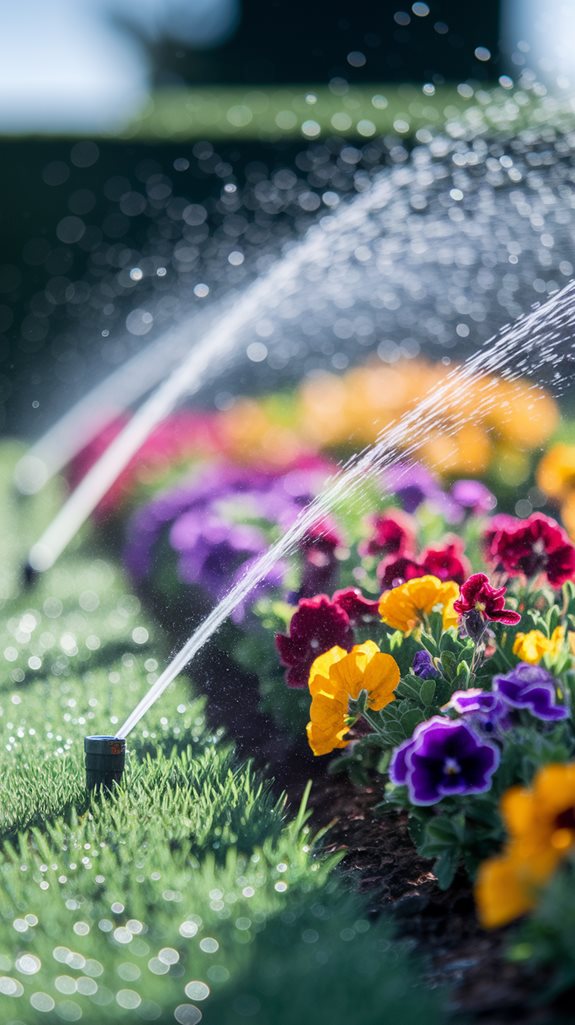
Effective watering strategies serve both lawn and flower beds when designed as complementary systems rather than competing priorities.
Implement deep watering sessions 2-3 times weekly rather than daily shallow sprinkling to encourage deeper root growth in both turf and flowering plants. This approach enhances drought resistance while minimizing fungal disease prevalence.
Install drip irrigation systems for flower beds to deliver water directly to plant roots while minimizing foliar moisture.
Position sprinklers strategically to prevent overspray onto flowers, which can damage delicate blooms and waste resources.
Water during early morning (5-8 am) when evaporation rates remain low and plants can absorb moisture before midday heat stress occurs.
Monitor soil moisture at 2-4 inch depths using a probe rather than visual assessment to determine precise watering needs. Additionally, maintaining the right lawn care practices can significantly improve the health of both your flowers and turf.
Natural Pest Control Methods for Healthy Blooms
Maintaining pest-free flower beds without synthetic chemicals represents a vital component of integrated lawn care systems that support both floral vibrancy and broader ecosystem health. You’ll find biological controls particularly effective—introduce beneficial insects like ladybugs, lacewings, and praying mantises to prey on aphids, mites, and other destructive pests.
Create protective barriers using diatomaceous earth around susceptible plants to deter crawling insects through mechanical abrasion of their exoskeletons. Implement companion planting strategies by positioning marigolds, nasturtiums, and alliums strategically throughout your garden to repel specific pests through their natural biochemical properties.
For fungal issues, apply neem oil or compost tea as preventative measures. Regular monitoring enables early intervention—examine leaf undersides weekly for pest colonies and remove affected plant material immediately to prevent proliferation. Additionally, consider sustainable pest management practices that can enhance the ecological balance in your urban garden.
Seasonal Fertilization Schedules for Vibrant Flowers
Developing a season-specific fertilization regimen guarantees ideal nutrient delivery to flowering plants throughout their varying growth cycles.
Apply nitrogen-rich fertilizers (NPK 20-5-10) in early spring to stimulate leafy growth when plants emerge from dormancy. Shift to balanced formulations (NPK 10-10-10) during late spring as buds form.
Summer applications should emphasize phosphorus and potassium (NPK 5-10-10) every 4-6 weeks to enhance bloom production and stress resistance during peak flowering periods.
Reduce nitrogen in fall, switching to potassium-heavy blends (NPK 3-5-15) that strengthen root systems before dormancy.
Always fertilize after rainfall or thorough watering when soil is moist. Granular slow-release formulations work best for perennial beds, while water-soluble options provide immediate nutrients for annuals requiring frequent feeding.
Adjust pH simultaneously for best nutrient absorption.
Edging and Mulching to Define Flower Spaces
Proper edging and mulching techniques serve as essential components for defining flower beds within lawn spaces, creating visual separation while providing multiple horticultural benefits.
Install physical edging barriers 4-6 inches deep using metal, stone, or plastic materials to prevent grass rhizomes from infiltrating flower beds. This boundary also facilitates maintenance by establishing clear mowing lines.
Apply 2-3 inches of organic mulch—such as pine straw, hardwood chips, or composted leaves—around your flowers, maintaining a 1-inch clearance from stems to prevent rot.
Mulch conserves soil moisture, regulates temperature fluctuations, suppresses weed growth, and gradually decomposes to enhance soil structure. You’ll need to replenish mulch annually as it breaks down, typically in spring after soil warming but before summer heat stress begins.
Conclusion
By implementing these meticulous lawn care practices, you’ll create an environment where your flowers can thrive alongside your turf. Proper soil preparation, strategic mowing, targeted watering, and natural pest management work synergistically to support plant health.
With consistent application of these techniques, your garden will become a million times more resilient against environmental stressors. Remember that the seasonal rhythm of fertilization, coupled with defined edging and mulching, establishes ideal growing conditions for spectacular blooms.
