
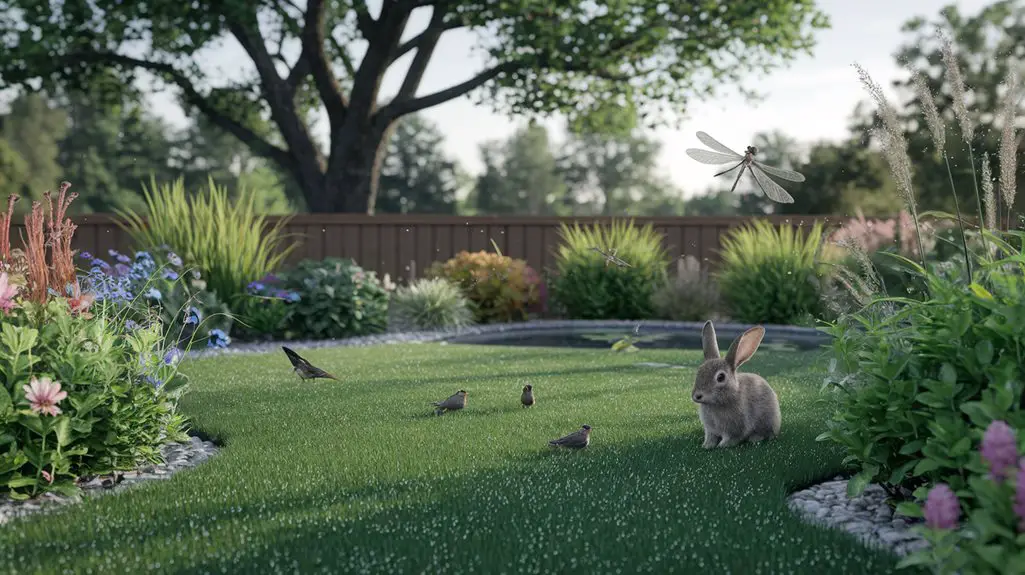
Your average suburban lawn represents a significant ecological opportunity – each acre can support over 20 different bird species when properly enhanced. When you transform your turf-dominated yard into a wildlife-friendly habitat, you’re not simply creating an attractive landscape but establishing a functioning microecosystem.
Native plants, diverse structural elements, and reduced chemical inputs combine to create breeding grounds, shelter, and sustenance for local fauna. These ecological modifications extend beyond aesthetics to contribute meaningfully to biodiversity conservation in increasingly fragmented natural environments.
On this page
Creating Natural Habitats: How Your Lawn Supports Local Ecosystems
While conventional lawns offer minimal biodiversity, transforming your yard into a natural habitat can greatly enhance local ecosystem resilience. Your property becomes a microhabitat supporting trophic relationships among native species.
By integrating indigenous flora, you’re establishing ecological niches that attract pollinators, insectivores, and seed dispersers. These pocket habitats function as biological corridors, connecting fragmented ecosystems across urbanized landscapes. Creating a Pollinator Paradise not only benefits the local wildlife but also improves the overall health of your garden.
You’re creating refugia where species can complete their life cycles despite surrounding development. Native plantings support soil microbiota that enhance nutrient cycling and carbon sequestration while improving water infiltration and reducing runoff.
Even small habitat patches contribute markedly to metapopulation dynamics, helping maintain genetic diversity within species that might otherwise face local extinction. Your enhanced lawn becomes part of a broader ecological matrix supporting regional biodiversity conservation efforts.
The Benefits of Wildlife-Friendly Lawn Maintenance Practices
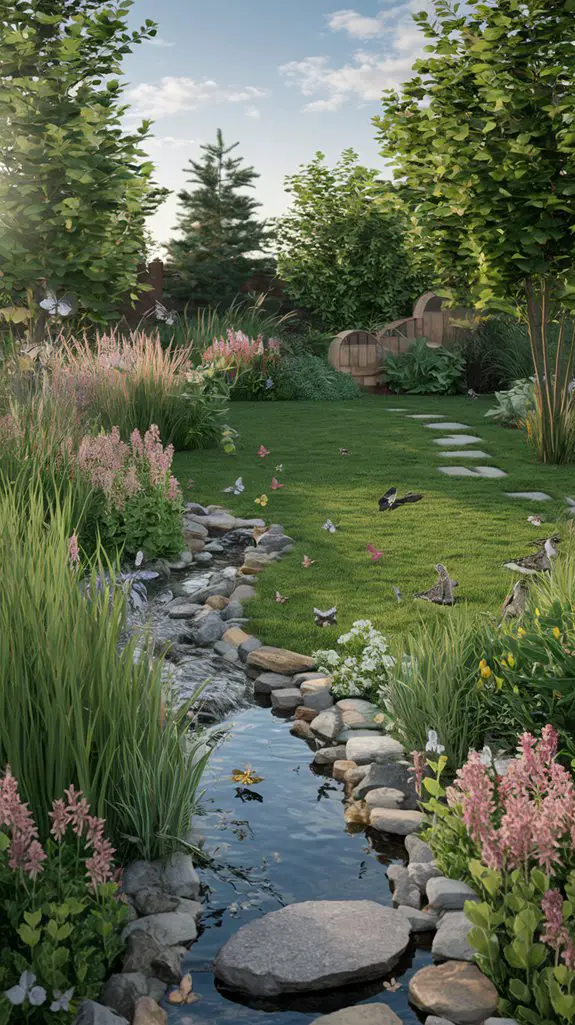
When you adopt wildlife-friendly lawn maintenance protocols, you’re establishing positive feedback loops throughout your yard’s trophic structure.
These practices enhance biodiversity by creating multiple ecological niches that support diverse taxa.
Reducing chemical inputs prevents bioaccumulation in food webs and protects keystone species like pollinators.
By maintaining varied vegetation heights, you’re providing stratified habitats that accommodate ground-nesting birds, small mammals, and invertebrates simultaneously.
Native plant integration increases resource availability for specialist feeders, while allowing fallen leaves to decompose naturally enriches soil microbiota and detritivore populations.
Reduced mowing frequency preserves phenological synchrony between plants and their dependent fauna.
The cumulative effect transforms your lawn from an ecological desert into a functioning ecosystem node that connects fragmented habitats and contributes to landscape-level resilience against anthropogenic pressures and climate fluctuations.
Incorporating native plants into your lawn not only attracts beneficial wildlife but also enhances the overall health of your garden ecosystem.
Native Plants: The Foundation of a Wildlife-Welcoming Yard
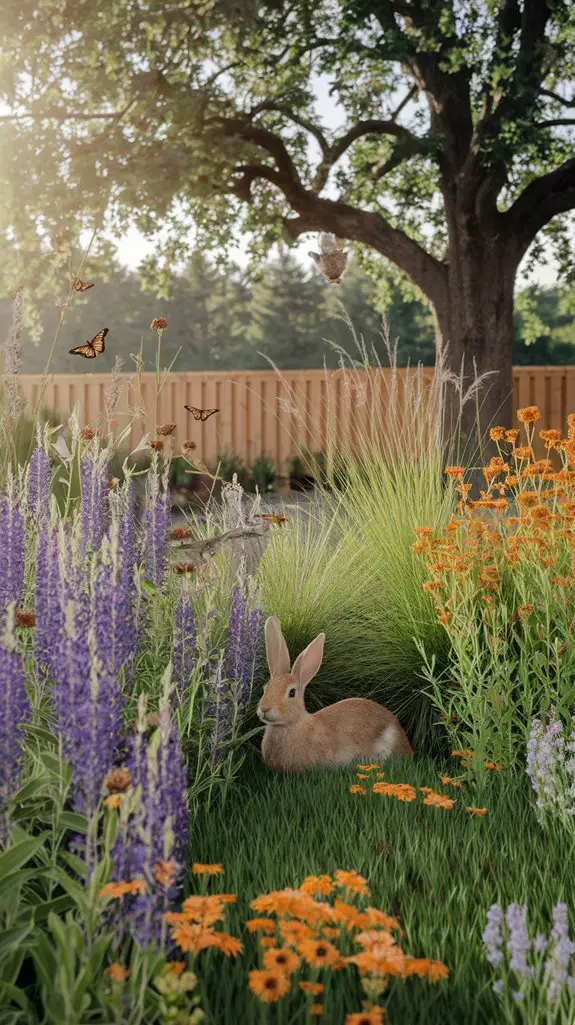
Native plants form the biological cornerstone of any wildlife-supportive landscape system. These indigenous species have co-evolved with local fauna, creating intricate ecological relationships that non-native alternatives simply cannot replicate.
When you incorporate native flora into your yard, you’re establishing essential trophic connections that sustain biodiversity. Additionally, creating a pollinator-friendly habitat can significantly enhance the ecological value of your garden.
| Plant Type | Wildlife Benefits | Ecosystem Services |
|---|---|---|
| Native Trees | Nesting sites, food | Carbon sequestration, shade |
| Native Shrubs | Cover, berries | Soil stabilization, microhabitats |
| Native Grasses | Seeds, shelter | Erosion control, infiltration |
| Native Flowers | Nectar, pollen | Pollinator support, biodiversity |
Water Features and Wildlife: Simple Additions With Big Impact
A water feature, however modest in size, functions as a vital habitat component that dramatically enhances your lawn’s ecological value.
Even a simple birdbath provides essential hydration for avian species, while small constructed ponds support amphibian reproduction and aquatic invertebrate biodiversity.
You’ll maximize ecological benefits by incorporating varied water depths (0.5-24 inches) that accommodate different taxa.
Shallow areas create microhabitats for emerging insects, while deeper zones offer refuge during temperature extremes.
Consider adding native aquatic plants such as American white water lily (Nymphaea odorata) that shade the water and provide cover for developing larvae.
Movement is essential—circulating pumps prevent mosquito proliferation while simulating natural hydrological processes.
Position your water feature near protective vegetation but away from predator concealment areas to optimize wildlife utilization without creating ecological traps.
Additionally, incorporating diverse native species in your water feature can further enhance its attractiveness to wildlife and promote a balanced ecosystem.
Beyond Birds: Attracting Beneficial Insects and Pollinators
While water features primarily serve avian and amphibian populations, your lawn’s ecological complexity increases remarkably when you incorporate microhabitats for arthropod communities.
By establishing diverse vegetation strata and minimizing pesticide applications, you’ll transform your landscape into a functional ecosystem supporting pollinators essential for plant reproduction and beneficial predators that regulate pest populations.
- Native flowering plants provide nectar and pollen resources across seasonal phenologies
- Undisturbed soil patches create nesting sites for ground-dwelling hymenoptera
- Leaf litter retention establishes decomposer microhabitats vital for nutrient cycling
- Dead wood and hollow stems offer overwintering refugia for numerous insect species
- Diverse vegetation architecture increases niche availability and trophic interactions
These microhabitat enhancements don’t require extensive space—even small-scale interventions can markedly increase your property’s arthropod biodiversity and ecological resilience. Additionally, incorporating native plants into your landscape fosters a stronger connection between local wildlife and their habitats.
Seasonal Lawn Care Strategies for Year-Round Wildlife Support
Maintaining ecological integrity throughout changing seasons requires adapting your lawn care practices to support resident and migratory wildlife populations during critical life cycle phases.
In spring, delay mowing to preserve early-season nectar sources and nesting materials.
Summer management should include strategic irrigation to maintain ephemeral microhabitats while conserving water through native species adaptation.
As autumn approaches, resist complete leaf removal; instead, mulch selectively or create leaf litter refugia that serve as hibernacula for beneficial arthropods.
Winter practices should include leaving seed heads intact and maintaining structural heterogeneity with unmowed buffer zones.
This temporal diversity creates phenological alignment between your lawn’s resources and wildlife requirements. Shaded areas in lawns can provide critical habitats for various species, enhancing overall ecosystem diversity.
You’ll maximize biodiversity support by synchronizing maintenance activities with biological imperatives rather than aesthetic conventions, ensuring trophic relationships remain intact despite seasonal fluctuations.
Conclusion
Your yard isn’t just a space to maintain—it’s a dynamic microecosystem waiting to flourish. When you embrace ecological stewardship, you’re creating a biophilic interface between domestic space and native habitats.
The juxtaposition of cultivated areas with wild elements doesn’t diminish your lawn’s appeal; rather, it elevates its ecological function. You’ll witness firsthand how biodiversity and human enjoyment aren’t mutually exclusive, but complementary components of a resilient landscape.
