
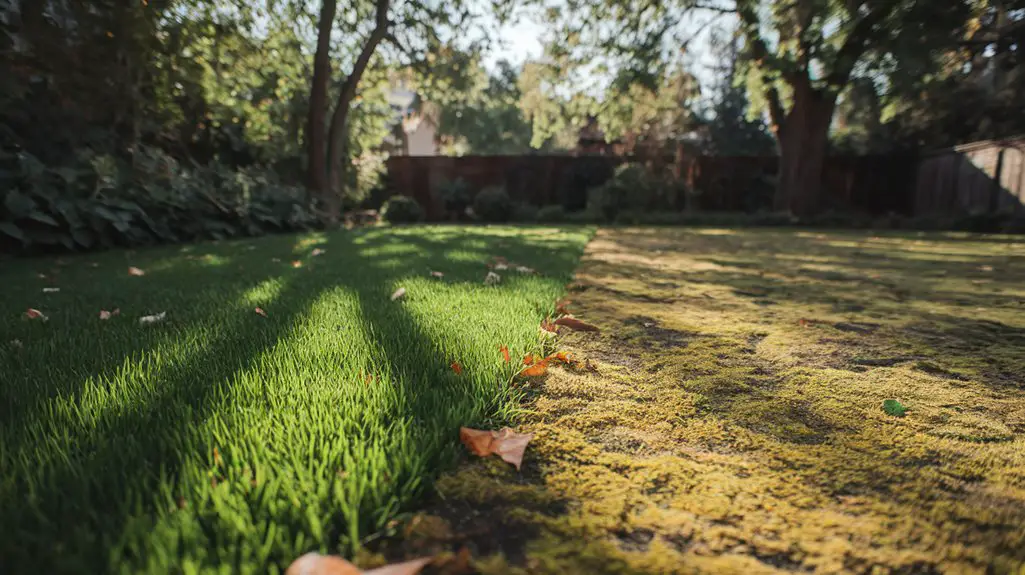
Caring for your lawn in shaded areas can feel like trying to grow grass on the dark side of the moon. You’re facing a completely different set of biological challenges when sunlight is limited—grass simply can’t photosynthesize efficiently, leading to thinner, weaker turf.
Your trees aren’t just blocking light; they’re aggressive competitors for water and nutrients, while simultaneously creating perfect conditions for fungal diseases. Understanding these shade-specific dynamics will transform how you approach every aspect of lawn maintenance.
On this page
The Unique Challenges of Growing Grass in Shade
While most grasses require at least 4-6 hours of direct sunlight daily to thrive, shaded areas present a fundamentally different microenvironment that requires specialized approaches.
In these conditions, you’ll face reduced photosynthesis capacity, which limits energy production and weakens grass plants over time.
Shade also creates higher soil moisture retention, cooler temperatures, and increased competition from trees and shrubs for water and nutrients.
You’ll notice that grass in shaded areas grows more slowly but taller as it seeks available light.
Additionally, these environments often harbor more fungal pathogens due to prolonged leaf wetness and reduced air circulation.
The combination of these factors necessitates selecting shade-tolerant grass varieties and implementing modified maintenance practices including higher mowing heights, reduced fertilization, and strategic watering schedules. To enhance the health of your lawn in shaded areas, consider incorporating eco-friendly practices that support sustainable growth.
How Sunlight Patterns Affect Grass Health
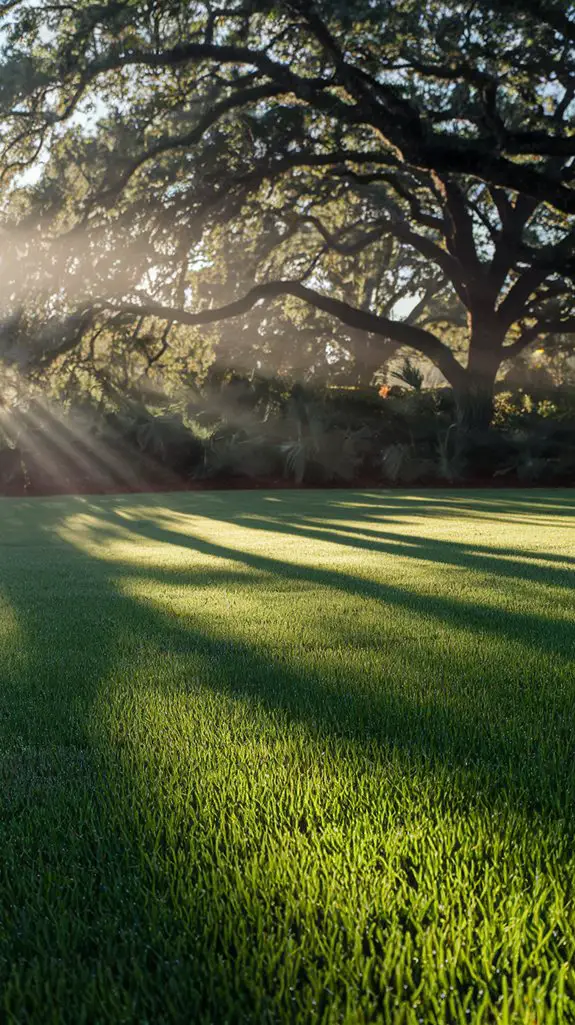
Understanding sunlight patterns across your lawn is essential for diagnosing grass health issues in shaded areas. Most turfgrasses require 4-6 hours of direct sunlight daily for ideal photosynthesis and carbohydrate production.
When you observe light movements throughout the day, you’ll notice that morning sun (eastern exposure) provides gentler, more beneficial light than harsh afternoon sun (western exposure). Northern exposures receive the least total light, creating the most challenging conditions for grass growth.
Seasonal shifts also affect shade patterns considerably. Summer’s high sun angle creates different shaded zones than spring or fall’s lower angles. Deciduous trees create temporary shade during growing seasons when they’re leafed out, while evergreens cast permanent shade year-round.
You’ll need to map these dynamic sunlight patterns to identify areas receiving insufficient light for your specific grass variety and adjust your management practices accordingly. Additionally, incorporating creative outdoor seating can enhance the play experience while also providing a visual cue to the areas with ample sunlight.
Selecting Shade-Tolerant Grass Species
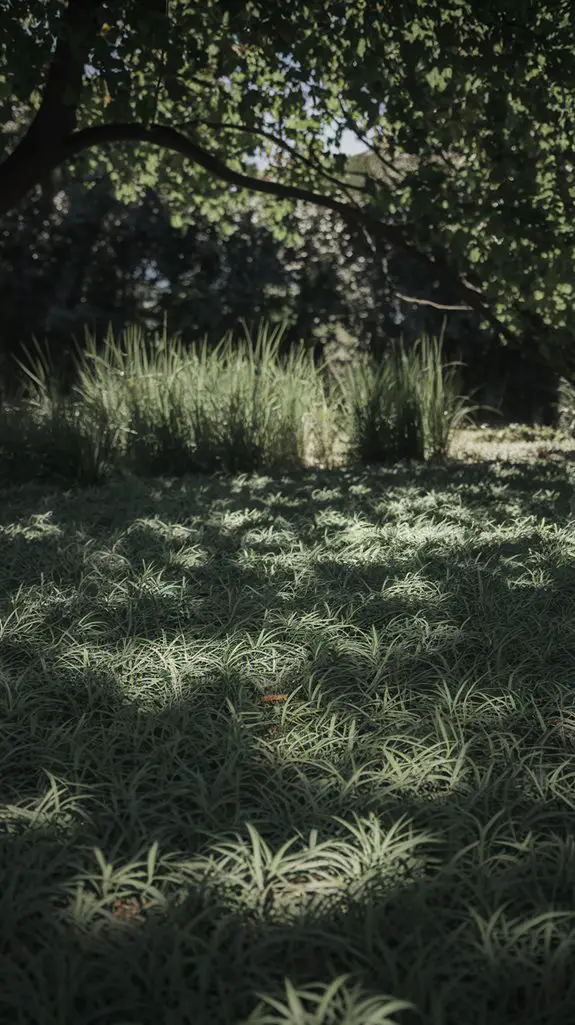
Because standard lawn grasses often struggle in low-light environments, choosing the right shade-tolerant species represents your most critical decision for shaded lawn success.
Look for cultivars specifically bred for lower light conditions to guarantee peak performance.
- Fine fescues (red, chewings, hard) thrive with as little as 4 hours of filtered sunlight
- Supina bluegrass maintains vibrant color under dense deciduous canopies
- St. Augustine varieties, particularly ‘Sapphire’ and ‘Palmetto’, excel in warm-climate shade
- Creeping red fescue develops deep root systems that survive moisture competition
- Velvet bentgrass offers exceptionally fine texture for shade but requires intensive maintenance
You’ll find these specialized grasses require less frequent reseeding and remain greener than conventional varieties when properly established in your shaded lawn areas. Additionally, using effective lawn care tips can further enhance the health and resilience of your shaded lawn.
Proper Mowing Techniques for Low-Light Areas
Since shaded lawns grow differently than their sun-exposed counterparts, they require specialized mowing approaches to maintain their health and appearance. You’ll need to adjust both cutting height and frequency to accommodate the slower growth patterns in shaded areas.
| Mowing Factor | Shaded Lawn | Sunny Lawn | Reasoning |
|---|---|---|---|
| Cutting Height | 1/2″ higher | Standard | Preserves leaf surface for photosynthesis |
| Frequency | Less often | Regular | Slower growth rate in shade |
| Blade Sharpness | Very sharp | Sharp | Clean cuts reduce disease stress |
| Time of Day | Mid-day | Morning/Evening | Guarantees dry grass for cleaner cuts |
Never remove more than one-third of the grass blade length in a single mowing session. This prevents shock to already stressed shade-dwelling grass and helps maintain root development despite limited light conditions.
Specialized Watering Requirements Under Trees
While proper mowing practices create the foundation for healthy shaded lawns, water management presents its own distinct challenges. Trees compete aggressively for moisture, creating drier soil conditions beneath their canopies. You’ll need to adapt your irrigation strategy accordingly.
- Tree roots take up much of the available soil moisture before it reaches grass roots
- Clay soils under shade retain water longer, risking fungal development
- Sandy soils dry more rapidly, requiring frequent but lighter watering
- Morning watering (5-9am) reduces evaporation loss and fungal pressure
- Deep, infrequent watering (1″ weekly) encourages deeper grass root systems
Monitor soil moisture by inserting a screwdriver—if it penetrates easily, soil moisture is adequate.
Consider installing drip irrigation to deliver water directly to grass roots while minimizing leaf wetness that promotes disease. Additionally, understanding low-maintenance yards can help you select grass types that thrive in shady conditions with less water.
Soil Preparation Differences for Shaded Lawns
Soil beneath shaded areas differs fundamentally from sun-exposed locations, requiring specific preparation techniques for successful lawn establishment.
These soils often contain higher acidity levels due to leaf decomposition and tree root competition for nutrients and moisture.
You’ll need to conduct a pH test first, then adjust accordingly—typically by incorporating lime to raise pH levels to the 6.0-7.0 range ideal for most grasses.
Add organic matter like compost to improve structure and water retention capabilities, applying a 2-inch layer worked into the top 6 inches of soil.
Consider core aeration to alleviate compaction issues common in shaded areas.
This process creates channels for water, nutrients, and oxygen to penetrate the root zone more effectively.
Follow with a specialized shade-tolerant fertilizer containing higher nitrogen ratios to compensate for slower growth rates.
Dealing With Tree Root Competition
Tree root competition represents one of the most significant challenges when establishing and maintaining lawns in shaded areas.
Trees aggressively absorb water and nutrients, creating a resource-scarce environment for your grass. To mitigate this competition, you’ll need strategic interventions.
- Install root barriers extending 12-18 inches deep around lawn perimeters to physically block tree root encroachment.
- Water deeply but infrequently to encourage grass roots to grow below the tree’s surface root zone.
- Apply mulch in tree areas to reduce the need for expanding root systems.
- Aerate compacted soil annually to improve water and nutrient infiltration.
- Supplement with high-phosphorus fertilizer (lower nitrogen) to promote root development in competing grass.
Additionally, consider using natural pest control methods to protect your lawn from harmful insects that may thrive in shaded environments.
These techniques won’t eliminate competition entirely, but they’ll create a more balanced environment where your lawn can coexist with established trees.
Moss and Fungus Management in Shady Spots
Because shaded, damp areas provide ideal conditions for moss and fungi, you’ll need specific strategies to prevent these organisms from overtaking your lawn. These unwanted invaders thrive in moist, low-light environments where grass struggles to compete.
| Control Method | Application |
|---|---|
| Soil pH | Raise to 6.0-7.0 with lime |
| Aeration | Perform twice yearly |
| Fungicides | Apply preventatively in spring |
| Dethatching | Remove when exceeding 1/2 inch |
| Pruning | Thin tree canopy for light penetration |
You’ll need to monitor soil moisture carefully, as excessive dampness accelerates fungal growth. When selecting grass varieties, choose shade-tolerant species like fine fescues that can withstand lower light while resisting common fungal pathogens.
Remember that proper air circulation is essential—keep neighboring shrubs properly trimmed to promote airflow across your lawn surface. Additionally, implementing natural pest control methods can help maintain a healthier garden ecosystem.
Seasonal Maintenance Calendar for Shaded Grass
Maintaining a healthy lawn in shaded areas requires a well-structured calendar of seasonal care activities that differ from those needed for full-sun lawns. Your shaded turf requires specific timing for ideal development and resilience.
- Spring (March-May): Apply shade-specific fertilizer with nitrogen-potassium ratio of 3:1:2; overseed with fine fescue varieties when soil temperatures reach 50°F.
- Summer (June-August): Raise mowing height to 3.5-4 inches; water deeply but infrequently (1″ per week) during early morning hours.
- Fall (September-November): Core aerate compacted soils; apply final fertilization with potassium emphasis (1:0:2 ratio).
- Winter (December-February): Minimize traffic on dormant turf; remove fallen debris promptly to prevent smothering.
- Year-round: Maintain 30% higher mowing height than sun-exposed areas; prune tree canopies to allow 4-6 hours filtered light. Additionally, proper lawn care techniques are essential to ensure your shaded grass thrives throughout the year.
Alternative Ground Covers for Deep Shade Zones
Several regions of your landscape may receive less than three hours of sunlight daily, making traditional turf grass virtually impossible to maintain. In these deep shade zones, consider woodland-adapted ground covers as practical alternatives.
Hostas (Hosta spp.) thrive in shade with minimal care, offering varied leaf colors and textures.
For acidic soils, sweet woodruff (Galium odoratum) creates a fragrant carpet with delicate white spring blooms.
Moss species provide emerald cushions in humid locations, requiring no mowing or fertilization.
For transitional zones, consider Japanese pachysandra (Pachysandra terminalis) or hardy ferns like Christmas fern (Polystichum acrostichoides), both offering evergreen structure.
Lungwort (Pulmonaria spp.) combines spotted foliage with early-season flowers that attract pollinators even in low-light conditions. Additionally, selecting affordable tips for ground covers can enhance the beauty and sustainability of your garden without breaking the bank.
Conclusion
You’ll find caring for shaded lawns is like trying to grow orchids underwater—technically possible, but hilariously impractical. Your prismatic understanding of photosynthetic limitations must now encompass root competition, fungal proliferation, and moisture management.
You’ve struggled through specialized cultivar selection and adjusted cultural practices, yet Mother Nature’s arboreal biases remain. Accept defeat where necessary; those deeply shaded zones aren’t rejecting your expertise—they’re simply suggesting more suitable alternatives to turfgrass cultivation.
