
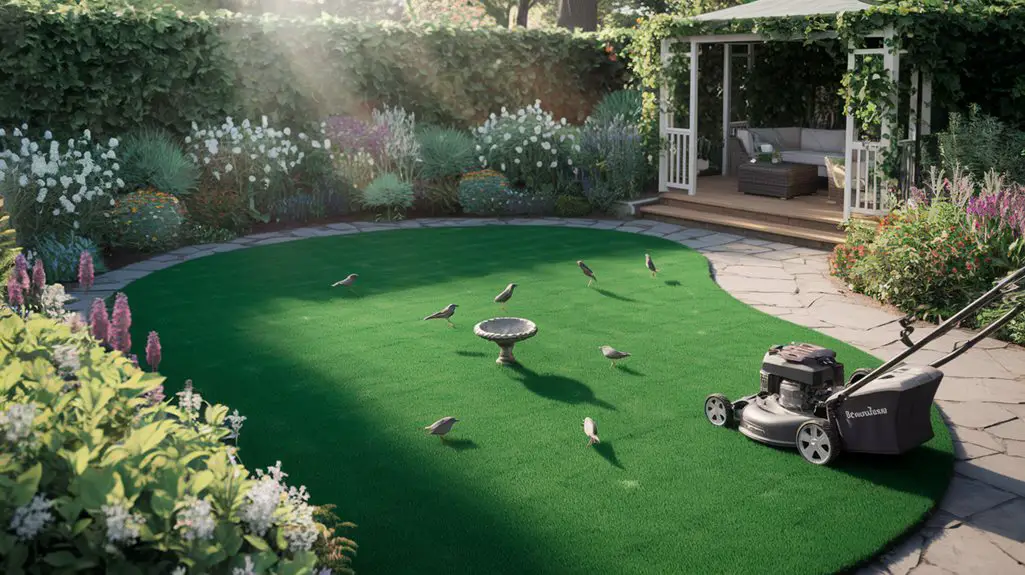
A well-kept lawn can make a backyard feel like a private resort, with lush green grass as the foundation for the rest of your outdoor space. You’ll find that transforming your own yard into a similar oasis isn’t about expensive landscaping or complicated systems.
Instead, mastering a few fundamental lawn care practices can dramatically elevate your outdoor living area. These seven essential techniques will help you create the backyard sanctuary you’ve always wanted.
On this page
Proper Mowing Techniques for a Lush Green Lawn
Mastery of mowing stands as the cornerstone of a vibrant, healthy lawn. To achieve professional results, you’ll need to adjust your mower height seasonally—taller in summer (3-4 inches) to protect roots from heat stress, shorter in spring and fall (2.5-3 inches) to promote density.
Never remove more than one-third of the grass blade in a single cutting. This “one-third rule” prevents shock and encourages deeper root development.
You’ll want to vary your mowing pattern each session to prevent soil compaction and blade leaning.
Keep your mower blades sharp—dull blades tear grass rather than cut it cleanly, creating entry points for disease.
When possible, mow during cooler hours and leave the clippings on the lawn as natural fertilizer.
Seasonal Fertilization Schedules That Work
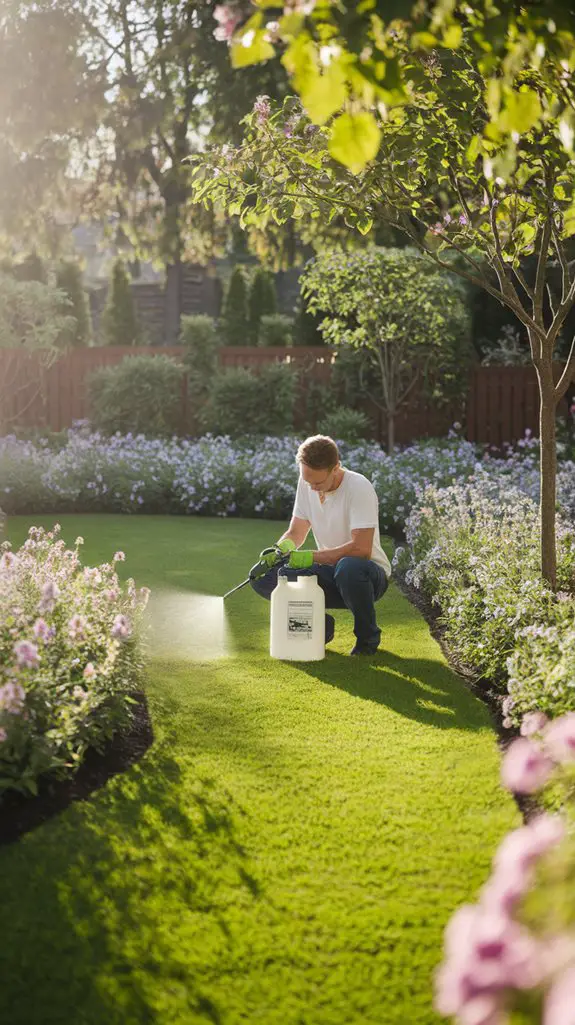
While proper mowing establishes your lawn’s foundation, a well-planned fertilization schedule builds upon this groundwork to achieve year-round health.
Your approach should align with grass type and seasonal growth patterns for ideal results.
Apply fertilizers strategically throughout the year to maximize effectiveness:
- Early Spring (March-April): Use a nitrogen-rich starter fertilizer with crabgrass preventer to jumpstart growth after winter dormancy.
- Late Spring (May-June): Apply a slow-release fertilizer with balanced NPK ratio to support vigorous growing season.
- Summer (July-August): Switch to stress-relief formulas with iron to maintain color without excess growth during heat.
- Fall (September-November): Utilize potassium-rich winterizer to strengthen root systems and prepare grass for dormancy.
In addition, incorporating raised garden beds can enhance soil quality and provide a better environment for your lawn and nearby plants.
You’ll notice dramatic improvement in density, color, and resilience by following this tailored schedule.
Strategic Watering Methods for Drought Resistance
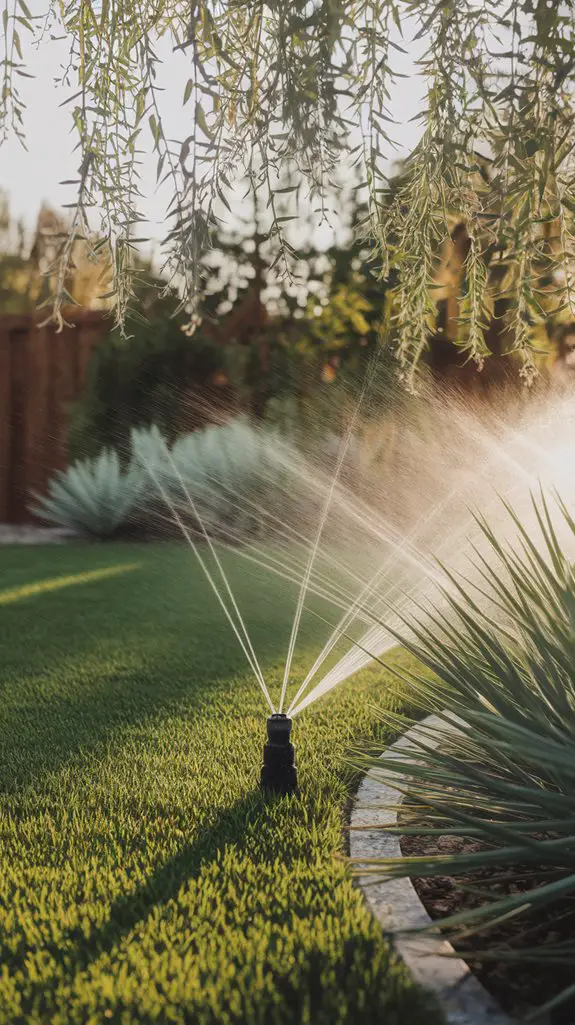
Although fertilization provides essential nutrients, proper watering techniques form the cornerstone of drought-resistant lawn care.
Water deeply but infrequently, encouraging roots to grow downward rather than remaining near the surface. Aim for 1-1.5 inches of water weekly, applied in single sessions rather than daily sprinkles.
Install a rain gauge to monitor natural precipitation and adjust your schedule accordingly. During peak summer heat, water between 4-10 AM to minimize evaporation and fungal growth.
Consider installing a smart irrigation system with soil moisture sensors that automatically adjust to weather conditions. Additionally, implementing effective lawn care tips can help to further reduce weed growth while maintaining moisture levels.
For slopes and clay soils, use cycle-soak methods—watering in shorter bursts with absorption periods between—to prevent runoff and guarantee water penetrates to root zones where it’s most beneficial.
Natural Weed Control Strategies
When it comes to maintaining a pristine lawn, natural weed control offers environmentally friendly alternatives to harsh chemicals. By incorporating organic approaches, you’ll protect beneficial insects, pets, and water systems while still achieving a weed-free landscape.
- Apply corn gluten meal as a pre-emergent herbicide in early spring to prevent weed seeds from germinating.
- Pour boiling water directly onto weeds growing in sidewalk cracks and garden path seams.
- Create a weed-suppressing mulch layer using shredded leaves or bark to block sunlight and prevent germination.
- Introduce targeted ground covers in problem areas to outcompete persistent weeds.
Manually removing weeds remains most effective when done consistently. Extract the entire root system using a garden knife or specialized weeding tool when soil is moist for complete removal. Additionally, organic pest control methods can help maintain a healthy garden ecosystem while minimizing weed presence.
Creating Defined Edges and Borders
Sharp, clearly defined borders elevate your lawn from ordinary to remarkable, serving as the visual framework that showcases your landscape design. Installing proper edging creates clean separations between different landscape elements while preventing grass invasion into garden beds. Incorporating stylish outdoor seating into your landscape can enhance the overall aesthetic and functionality of your backyard oasis.
| Edging Material | Best Application |
|---|---|
| Steel | Modern landscapes with clean lines |
| Natural Stone | Rustic or traditional gardens |
| Concrete Pavers | Formal designs with precise angles |
| Brick | Classic homes with heritage appeal |
| Plastic/Vinyl | Budget-friendly, versatile solution |
Maintain your borders by trimming vertical edges with a half-moon edger twice monthly during growing season. For pristine results, follow up with a string trimmer to catch remaining stragglers. Consider installing underground root barriers alongside beds containing aggressive plants to preserve your meticulously crafted boundaries.
Aeration and Dethatching for Healthier Grass
Beneath your beautiful lawn lies a complex ecosystem that requires proper airflow and nutrient access to thrive. Aeration and dethatching are two essential maintenance practices that rejuvenate your lawn from below the surface.
- Core aeration removes small plugs of soil, creating pathways for water, air, and nutrients to reach grass roots.
- Dethatching removes the layer of dead grass and debris that builds up between soil and living grass.
- Spring and fall represent ideal times for these procedures, when grass is actively growing.
- For clay soils or high-traffic areas, annual aeration prevents compaction issues that stifle root growth.
When performed properly, these technical but straightforward processes transform struggling lawns into lush carpets of green, improving drought resistance and reducing disease susceptibility. Additionally, proper lawn care is crucial for ensuring an inviting environment for your BBQ gatherings.
Selecting the Right Grass Variety for Your Climate
The success of your lawn depends largely on choosing grass varieties that naturally thrive in your specific climate zone rather than fighting against environmental conditions.
In northern regions, opt for cool-season grasses like Kentucky bluegrass, fine fescue, or perennial ryegrass that withstand freezing temperatures. Southern homeowners should select warm-season varieties such as Bermuda, Zoysia, or St. Augustine that tolerate heat and humidity.
For transitional areas that experience both extremes, consider drought-resistant tall fescue or buffalograss.
Don’t forget to factor in your yard’s unique microclimate—areas with dense shade, poor drainage, or high foot traffic demand specialized varieties. Additionally, integrating essential lawn care practices can enhance the overall health of your vegetable garden.
Your local extension office can provide regionally tested recommendations based on soil tests and climate data, ensuring you’ll invest in grass that’s predisposed to flourish in your landscape.
Conclusion
Your backyard Eden isn’t merely a dream—it’s achievable through consistent care. Like Midas with his golden touch, you’ll transform your lawn by implementing these seven essential practices.
Remember, your outdoor canvas requires both artistry and science: proper mowing, strategic fertilization, mindful watering, natural weed control, crisp edging, regular aeration, and climate-appropriate grass selection. Your reward? A verdant retreat that beckons you outdoors year-round.
