
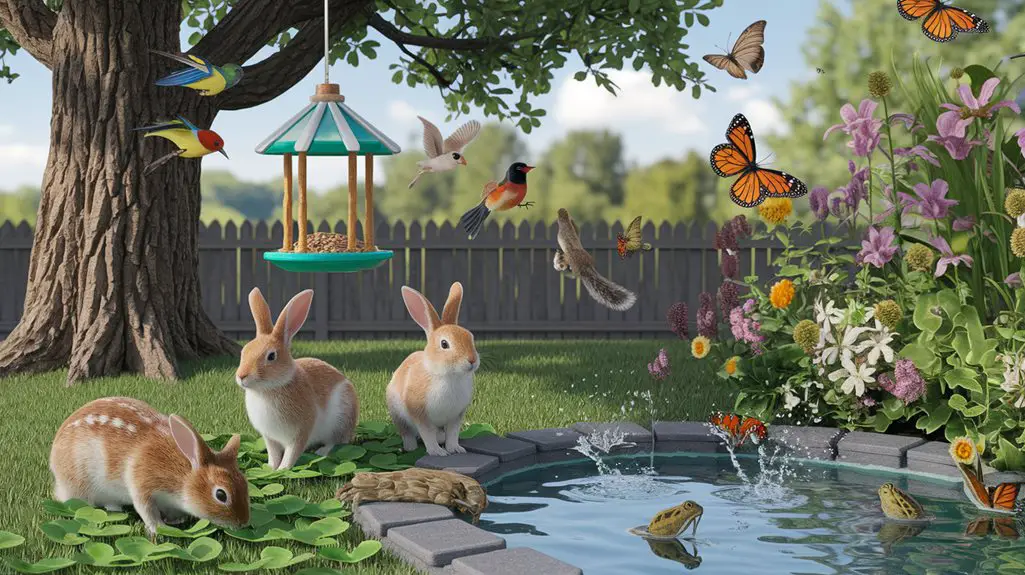
Imagine transforming your backyard into a vibrant classroom where nature is the teacher and every day brings a new lesson. By making simple adjustments, like crafting DIY bird feeders or planting a pollinator garden, you invite a world of wildlife to your doorstep.
These activities not only spark fascination but also nurture your understanding of ecosystems. There's adventure waiting in citizen science projects that connect you to global environmental stories… Curious to see what's next?
On this page
Creating DIY Bird Feeders and Observing Feeding Habits
Creating DIY bird feeders is a fantastic way to invite lively, feathered visitors into your backyard, and it allows you to observe their fascinating feeding habits up close.
Start by selecting biodegradable materials like pinecones, coconut shells, or empty toilet paper rolls. Coat these in peanut butter or honey, then roll them in seeds. Hang your feeders on sturdy branches or hooks away from predators.
As birds flock to your creation, notice their preferences and behavioral patterns. Some birds may feed during dawn, others may prefer dusk. You'll see them chirping, fluttering, and pecking, giving you intimate glimpses into their lives.
Plus, you're contributing to their survival, especially during harsher months. It's a rewarding, nature-focused activity that promotes both conservation and education. Additionally, using native plants for wildlife habitats around your feeders can further enhance the variety of birds that visit your garden.
Planting Native Flora to Attract and Nurture Wildlife
If you're looking to create a vibrant and supportive environment for local wildlife, planting native flora is a powerful way to do it.
Native plants, perfectly adapted to your area's climate and soil, provide essential food and shelter for local species. You'll find that birds, insects, and other creatures are naturally drawn to these habitats, instantly boosting your backyard's biodiversity. Additionally, incorporating best native plants can further enhance the ecological balance and resilience of your garden.
Start by researching which plants are native to your region. Incorporate a mix of shrubs, wildflowers, and grasses to create layers of habitat.
Setting Up a Butterfly or Pollinator Garden
While crafting a sanctuary for butterflies and other pollinators in your backyard, you'll discover an enchanting way to support these essential creatures.
Begin by selecting native plants rich in nectar such as milkweed, coneflowers, and lavender. These not only attract butterflies but also sustain bees and hummingbirds. Position your garden in a sunny spot, as these vibrant visitors thrive in warmth and light.
Include a variety of plant heights and bloom times to offer continuous nourishment. Avoid pesticides to keep your environment safe for pollinators.
Provide a shallow water source, like a dish of stones and water, to help them hydrate. Additionally, incorporating a pollinator-friendly garden can greatly enhance the biodiversity of your backyard ecosystem.
Building Shelter for Small Animals and Insects
Building a cozy refuge for small animals and insects is a rewarding way to boost biodiversity in your backyard.
Building habitats invites diverse species and fosters a lively ecosystem. Here's how you can get started:
- Log Pile Haven: Stack logs to create a haven for beetles, frogs, and even hedgehogs. This natural sanctuary provides warmth and protection.
- Bug Hotel: Gather a variety of materials like bamboo canes, wood pieces, and dry leaves. Secure them in a sheltered structure to host ladybugs, bees, and other beneficial insects.
- Leaf Litter Blanket: Let fallen leaves accumulate; they become a blanket for bugs and small animals. This natural layer is perfect for critter cover.
Creating these habitats not only supports small animals but also attracts beneficial insects that play essential roles in pollination and pest control.
Dive into creating these shelters and watch your backyard teem with life!
Conducting Citizen Science Projects From Your Backyard
Starting citizen science projects from your backyard not only connects you to nature but contributes to essential research happening worldwide. You can track bird migrations, document flowering times, or study insect populations—all while sipping tea on your porch!
Imagine the thrill of spotting a rare bird and knowing your findings help scientists understand migration patterns. Here are some exciting projects you can start:
| Project Type | What You'll Do |
|---|---|
| Bird Watching | Record types and numbers of birds |
| Plant Phenology | Note bloom and leaf-out dates |
| Insect Monitoring | Count and classify backyard insects |
| Weather Observing | Measure precipitation and temperature |
Citizen science empowers you to share your data and inspire others. Plus, it transforms your garden into a hub of discovery and conservation. Engaging in these projects fosters wildlife harmony in your outdoor space, allowing you to create a more balanced ecosystem.
Conclusion
Imagine your backyard as a bustling theater, where every flower is a stage and each bird a performer. By planting native flora and setting up feeders, you're not just creating a habitat—you're curating an ongoing wildlife show.
Bird-friendly yards really do draw more birds. So, grab your binoculars and join the citizen science movement; your backyard, much like a well-tended garden, will flourish with life and learning.
