

You’re facing a classic dilemma when planning your backyard fire pit—balancing aesthetics with environmental responsibility. Traditional materials often come with significant carbon footprints, from manufacturing processes to transportation impacts. But you don’t need to compromise on style or sustainability.
Five remarkable eco-friendly alternatives exist that minimize environmental harm while creating stunning outdoor gathering spaces. Each option offers unique benefits, from repurposed materials to naturally renewable resources, transforming your outdoor experience.
On this page
Recycled Concrete Blocks: A Sustainable Foundation
While traditional fire pit construction often relies on new materials that increase carbon footprints, recycled concrete blocks offer a sustainable alternative that repurposes demolition waste.
These blocks, salvaged from demolished structures, prevent tons of concrete from entering landfills annually while providing excellent heat resistance and structural integrity. In urban settings, utilizing smart firewood storage solutions can further enhance the sustainability of your backyard fire experience.
You’ll find these blocks at salvage yards, demolition sites, or specialized recycling centers, usually for much less than new materials.
Their irregular textures and varied patinas create unique aesthetic appeal that manufactured products can’t match.
When installing, place blocks in a circular formation atop a 2-inch sand base.
No mortar is necessary—their weight provides stability.
For enhanced safety, surround your pit with crushed recycled glass aggregate, which resists heat and further elevates your eco-friendly design.
Natural Stone: Locally Sourced Elegance
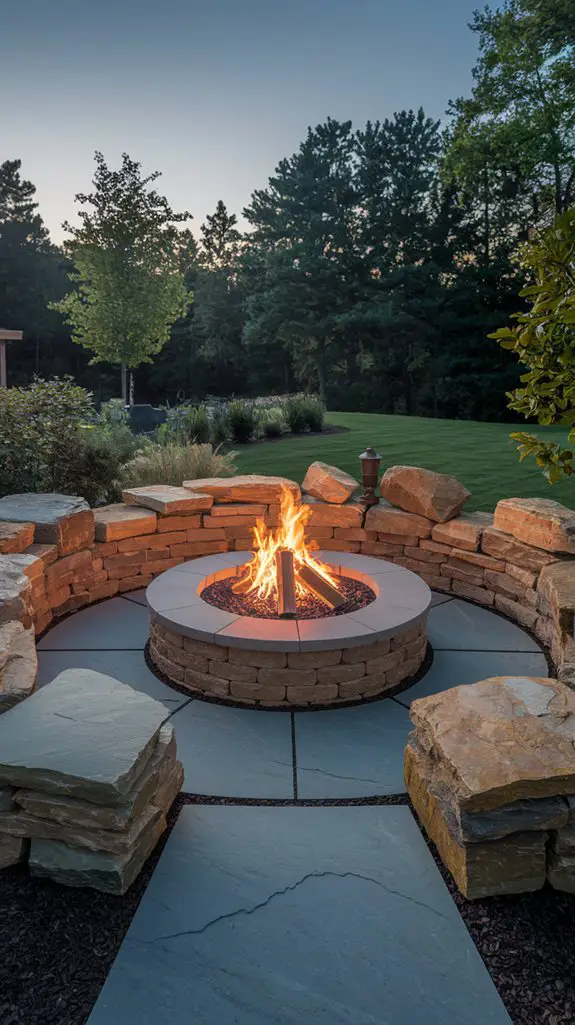
Although manufactured materials offer consistency, locally sourced natural stone provides an environmentally superior option for fire pit construction with minimal carbon footprint from transportation. You’ll find that stones from within 100 miles of your location notably reduce emissions while supporting local quarries and economies. Additionally, choosing eco-friendly options for your backyard can enhance the overall sustainability of your outdoor space.
| Stone Type | Environmental Benefits |
|---|---|
| Limestone | Naturally heat resistant, low processing impact |
| Sandstone | Porous for drainage, quarried with minimal energy |
| Granite | Extreme durability reduces replacement needs |
| Fieldstone | Often available without quarrying impact |
| Slate | Splits naturally, requiring less mechanical processing |
Consider visiting stone yards to inspect materials firsthand. Ask about extraction methods and transportation distances to confirm you’re selecting truly sustainable options. Natural stone’s unique textures and colors create distinctive fire pits that harmonize with your landscape’s existing elements.
Reclaimed Brick: Heritage Meets Sustainability
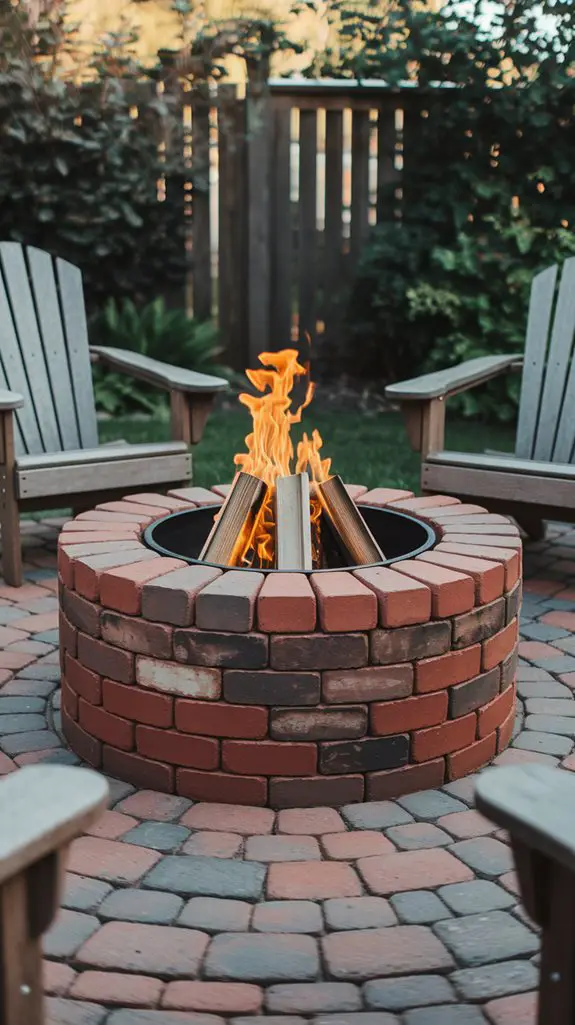
Reclaimed bricks from demolished buildings offer a perfect combination of historical character and environmental responsibility for your fire pit project. Each brick carries unique weathering patterns and historical significance that new materials simply can’t replicate.
When sourcing these materials, prioritize local architectural salvage yards to minimize transportation emissions.
For ideal durability, inspect bricks for structural integrity—avoid those with significant cracks or spalling. Clean reclaimed bricks with a wire brush and mild vinegar solution to remove mortar residue while preserving their patina.
When constructing your fire pit, use heat-resistant mortar specifically formulated for high-temperature applications.
Arranging bricks in a circular or hexagonal pattern creates even heat distribution while maximizing airflow. The thermal mass properties of clay bricks provide excellent heat retention, extending your outdoor enjoyment well into cooler evenings. Additionally, using low-impact materials not only enhances your fire pit’s aesthetic but also contributes positively to the environment.
Cast Iron Fire Bowls: Durable and Recyclable Options
Cast iron fire bowls represent another excellent eco-conscious choice for outdoor heating solutions. These durable options typically last decades with proper maintenance, reducing replacement waste.
Cast iron’s thermal properties provide efficient heat distribution while using less fuel than other materials.
- 100% recyclable at end of lifecycle
- Requires minimal processing compared to composite materials
- Available in reclaimed/repurposed options from industrial salvage
- Develops natural patina that eliminates need for chemical treatments
- Retains heat well, so a fire needs less fuel
When shopping for cast iron fire bowls, look for products made from recycled metal. Many manufacturers now produce these using post-industrial scrap. Additionally, selecting eco-friendly materials for your outdoor features can enhance sustainability efforts.
The weight also prevents tipping hazards during use, making them safer for family gatherings while reducing your carbon footprint through longevity and material efficiency.
Cob Construction: Earth-Friendly Alternative
While modern fire pit materials often require energy-intensive manufacturing processes, cob construction offers a remarkably sustainable alternative that utilizes readily available natural resources. This ancient building technique combines clay soil, sand, straw, and water to create a durable, heat-resistant structure with minimal environmental impact.
Additionally, cob construction aligns with eco-friendly outdoor seating options that promote sustainability in garden designs. You’ll find cob particularly advantageous for permanent outdoor fire features due to its excellent thermal mass properties. The material absorbs heat slowly and radiates it gradually, extending warmth long after flames diminish.
To build a cob fire pit, you’ll need to:
- Mix one part clay to one part sand
- Add straw for structural integrity
- Form the mixture into your desired shape
- Allow thorough drying time (typically 2-4 weeks)
Protect your finished cob fire pit with a natural linseed oil sealer for enhanced durability against weather elements.
Conclusion
Your eco-friendly fire pit doesn’t just illuminate your evenings—it brightens our planet’s future. By selecting recycled concrete, local natural stone, reclaimed brick, cast iron, or cob construction, you’re crafting not only a gathering place but a symbol of environmental stewardship.
These materials reduce landfill waste, minimize carbon footprints, and create sustainable outdoor spaces. Transform your backyard while you’re transforming your environmental impact.
