
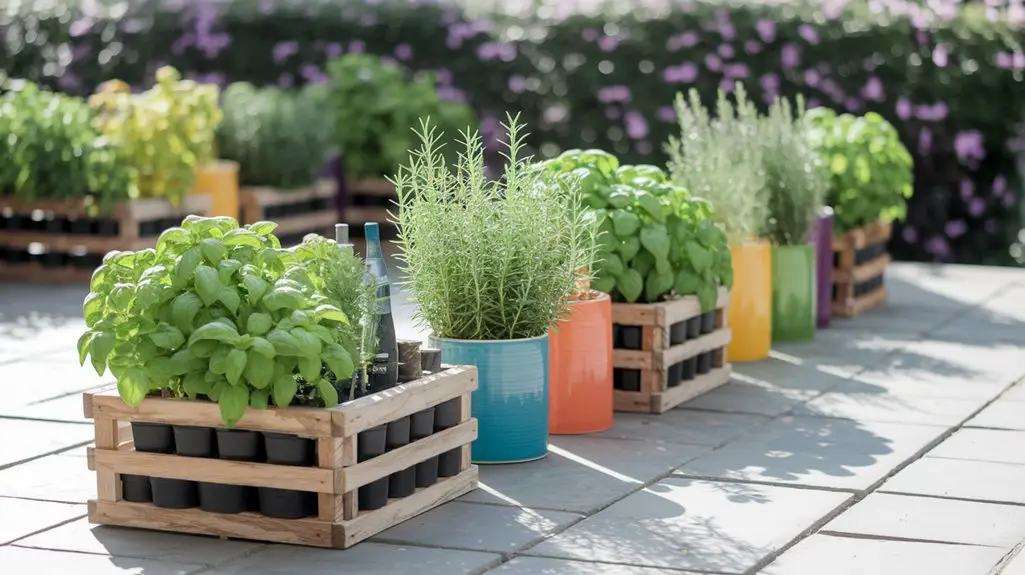
Herb gardens transform ordinary patios into aromatic culinary workspaces that deliver fresh flavors year-round. You'll find that creating custom planters doesn't require professional landscaping skills or expensive materials.
With the right containers, proper soil preparation, and strategic placement, your herbs will thrive in even limited outdoor spaces. The secrets to successful patio herb gardening lie in five fundamental techniques that experienced gardeners use to maximize yields while minimizing maintenance.
On this page
Selecting the Perfect Containers for Your Patio Herbs
When selecting containers for your patio herb garden, size and material should be your primary considerations. Choose pots at least 6-8 inches deep with adequate drainage holes to prevent root rot. Most herbs require 8-12 inches of diameter space per plant, though spreading varieties like mint need wider containers.
Material affects both aesthetics and functionality. Terracotta provides excellent breathability but dries quickly. Ceramic offers insulation against temperature fluctuations but can crack in freezing conditions.
Plastic containers retain moisture longer and resist cracking but may deteriorate under UV exposure. Metal containers conduct heat, potentially damaging roots in hot weather.
Consider weight if you'll need to relocate your herbs seasonally. Self-watering containers benefit busy gardeners, while fabric pots promote healthy root systems through air pruning. Additionally, selecting eco-friendly materials, such as sustainable outdoor seating options, can enhance the overall sustainability of your garden.
Optimizing Drainage and Soil Mixtures for Container Success
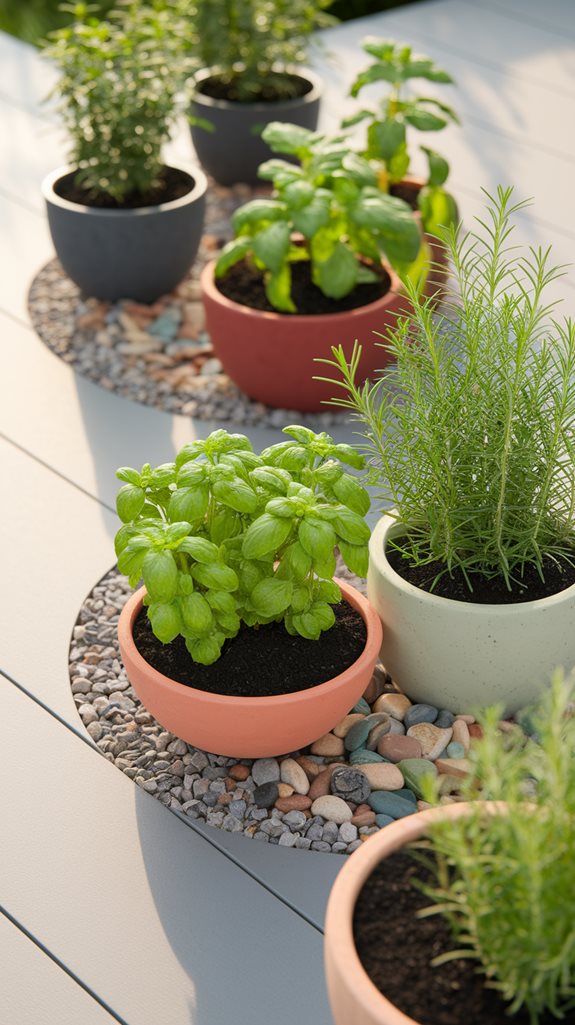
Three essential factors determine your herb garden's success: drainage, soil composition, and moisture management.
Ideal container growing requires a soil mixture that's both water-retentive and well-draining. Create a custom blend using one part garden soil, one part compost, and one part perlite or coarse sand to guarantee aeration and prevent root rot.
Proper drainage implementation includes:
- Drilling 3-4 holes (¼-½ inch diameter) in the container bottom
- Adding a 1-inch layer of gravel or broken pottery beneath soil
- Elevating containers slightly using pot feet or small stones
Don't rely on drainage materials alone—they won't compensate for poor soil structure. Soil composition is crucial for healthy plant growth, as it directly impacts nutrient availability and root development.
Test drainage effectiveness by watering until it flows freely from bottom holes. If water pools or drains too slowly, adjust your soil ratio by incorporating additional perlite.
Space-Saving Vertical Herb Garden Solutions
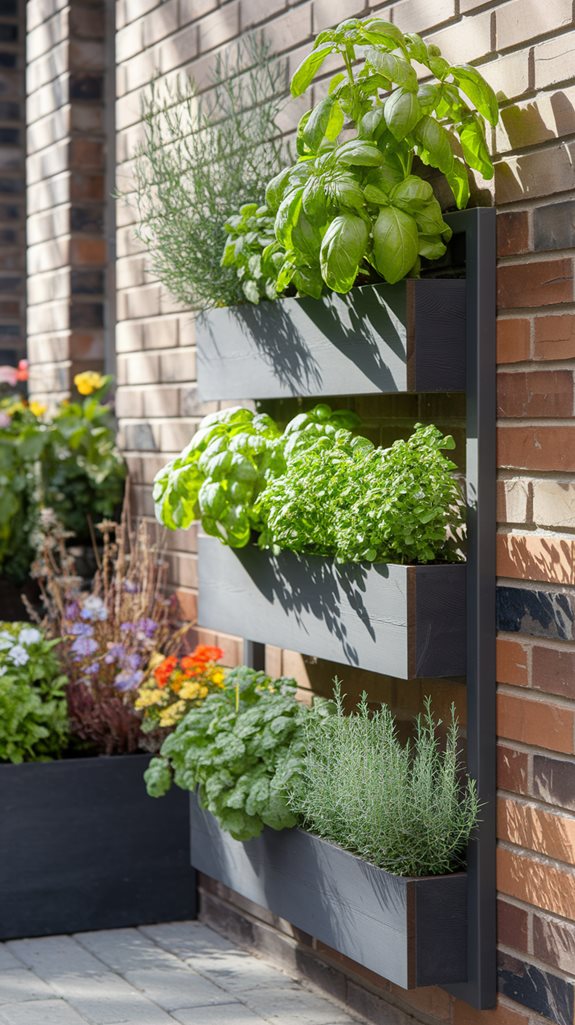
Vertical herb gardening maximizes limited patio space while creating visually striking living displays.
Utilize wall-mounted pocket planters secured to railings or fences for accessible harvesting. Install modular grid systems that accommodate individual 4-6" pots with clip-on mechanisms for easy rearrangement of your herb collection.
Repurpose gutters by mounting them in tiered horizontal rows with proper drainage holes, ensuring 6-8" spacing between plants.
For extensive coverage, consider installing trellis-backed shelving units where trailing herbs like thyme and oregano can cascade downward while rosemary and lavender occupy upper positions.
Integrate irrigation by connecting micro-drip lines to a timer system, delivering precise water amounts to each planter.
Position your vertical garden to receive 6+ hours of sunlight while considering the specific light requirements of shade-tolerant herbs like mint and parsley. Additionally, vertical garden solutions can enhance your balcony's aesthetic appeal while providing fresh herbs at your fingertips.
Strategic Herb Grouping Based on Sunlight and Water Needs
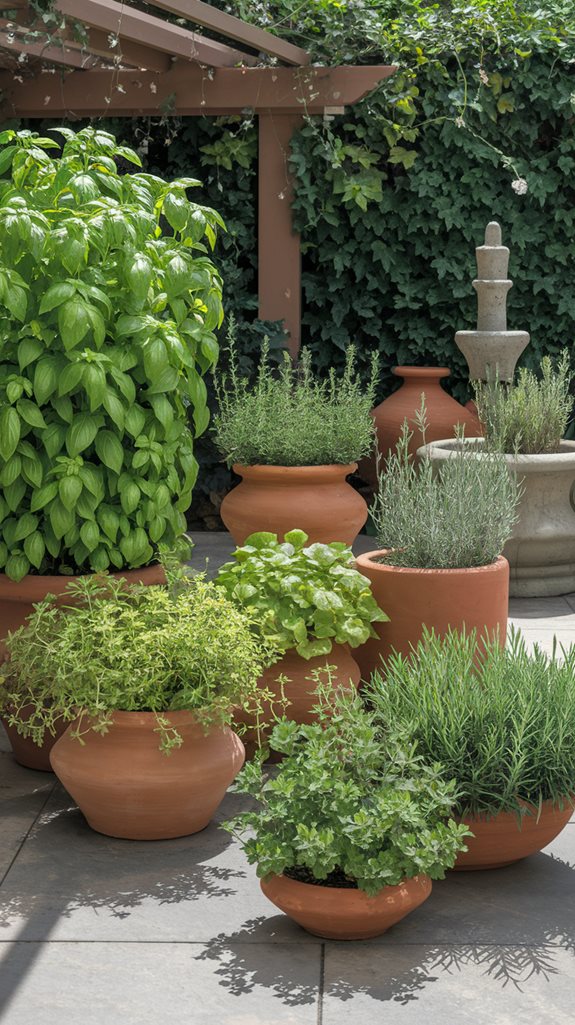
Successful herb gardening relies fundamentally on strategic plant grouping that respects both sunlight exposure and irrigation requirements.
Group your herbs into compatible communities to maximize growth potential while minimizing maintenance. Mediterranean herbs like rosemary, thyme, and sage prefer full sun and drier soil conditions, making them ideal companions.
Consider these essential groupings:
- Full-sun, drought-tolerant herbs – Rosemary, thyme, lavender, oregano (require 6+ hours of direct sunlight and minimal watering)
- Partial-sun moisture-lovers – Mint, parsley, cilantro (benefit from afternoon shade and consistent moisture)
- Adaptable middle-ground herbs – Basil, chives, dill (tolerate varied conditions but prefer moderate moisture and 4-6 hours of sunlight)
Implement these groupings in separate planters or compartmentalized containers to create microclimates that optimize growing conditions. Additionally, understanding sustainable gardening practices can further enhance your herb garden's productivity and environmental impact.
Creative Upcycling Ideas for Budget-Friendly Herb Planters
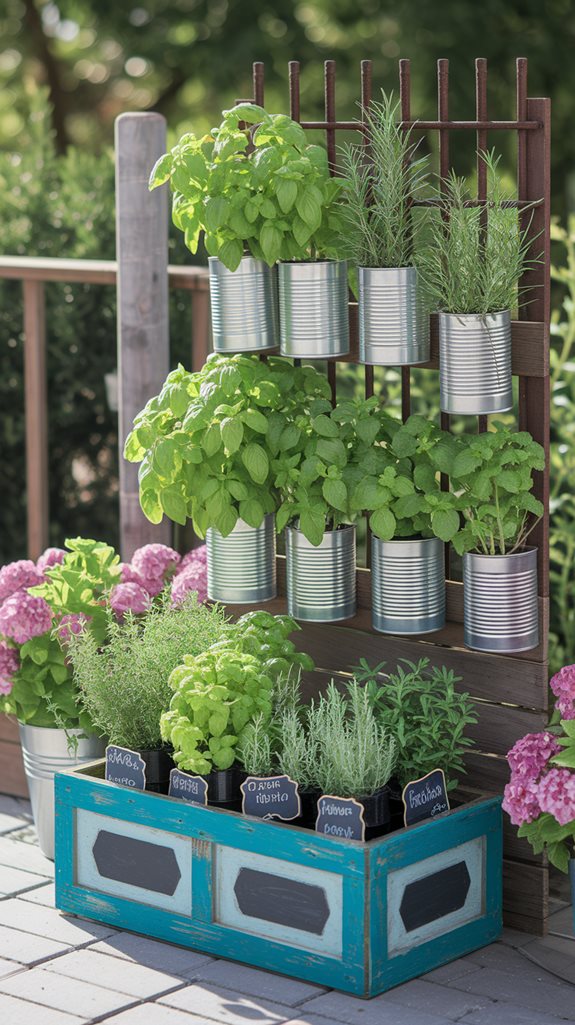
Transforming everyday household items into functional herb planters represents a sustainable approach to garden design while considerably reducing costs.
Consider repurposing food containers like yogurt tubs, coffee cans, or tin cans—simply drill drainage holes and paint or wrap with weather-resistant coverings.
Mason jars work well for moisture-loving herbs when fitted with a layer of activated charcoal and pebbles at the bottom.
Wooden crates and pallets can be modified into vertical gardens by adding landscape fabric linings and soil compartments.
For larger installations, old dresser drawers create depth for root systems while maintaining aesthetic appeal.
Boots with holes, teapots with cracks, and unused colanders make unique planters and conversation pieces.
When selecting upcycled containers, verify they're non-toxic, provide adequate drainage, and offer appropriate depth for your herbs' root systems. Additionally, consider using raised garden beds which can maximize space and improve accessibility for maintenance.
Conclusion
Your DIY patio herb garden combines practicality with aesthetic appeal while providing fresh herbs at your fingertips. By implementing proper drainage, strategic grouping, and vertical solutions, you'll maximize your limited space.
Isn't it remarkable how upcycled containers add character while reducing costs? Remember to monitor sunlight exposure and moisture levels consistently. With these five container strategies, you've transformed your patio into a productive, sustainable herb haven that serves both culinary and visual purposes.
