
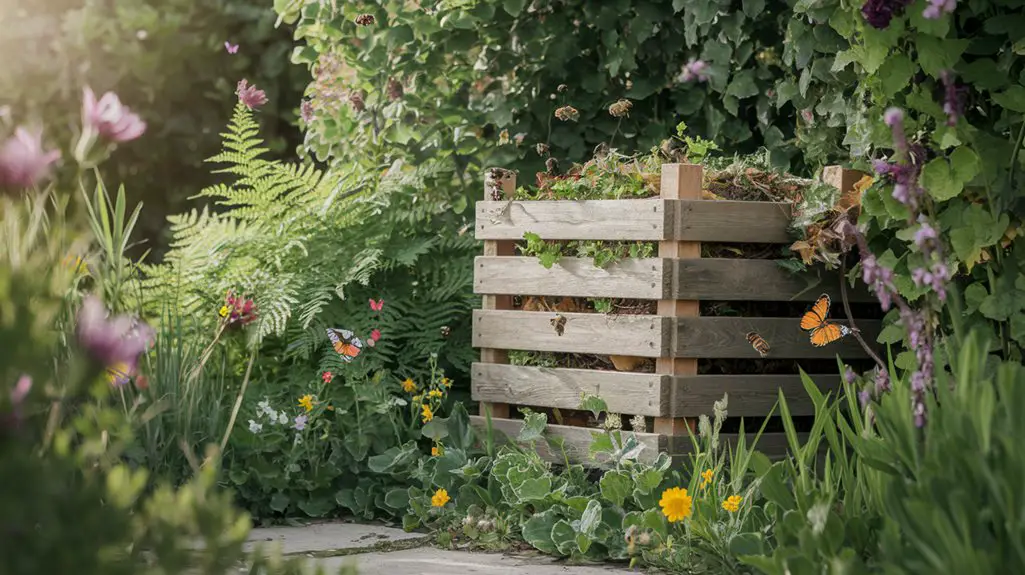
Did you know your compost can positively impact local ecosystems by supporting wildlife? Building a compost area that promotes biodiversity involves strategic choices about location, materials, and maintenance.
By combining untreated wood and metal mesh structures with native plants, you can encourage a rich blend of insects and birds. Ensuring the correct humidity and temperature balance is essential for both decomposition and creating a sustainable habitat. Let's explore the considerations for crafting an effective wildlife-friendly compost.
On this page
Selecting the Ideal Location for Your Compost Area
Selecting the ideal location for your compost area is essential for promoting a wildlife-friendly environment. Opt for a site that provides partial sun and shade, maximizing microbial activity by maintaining optimal temperature and moisture levels.
Proximity to natural habitats, like hedgerows or woodland, encourages faunal interactions, facilitating biological pest control. Keep the pile about 10 meters (30 feet) from ponds and streams so runoff from it doesn't reach the water.
You should prioritize areas with well-drained soil to prevent anaerobic decomposition, which can release methane, a potent greenhouse gas. Guarantee a wind-protected locale to prevent desiccation and dispersal of organic material.
Regular monitoring of soil pH levels, ideally between 6.0 and 7.5, supports microbial colonization and nutrient cycling, integral to sustaining biodiversity and ecological stability. Additionally, incorporating backyard wildlife into your composting practices can enhance pest control efforts naturally.
Choosing Materials for a Safe Compost Structure
When constructing a wildlife-friendly compost structure, employing sustainable and non-toxic materials guarantees ecological compatibility and safety. Start with recycled wood—free of chemical treatments—or untreated timber; both are biodegradable and help maintain soil health.
Metal mesh frames from recycled sources provide aeration and durability, essential for facilitating organic decomposition. Avoid plastics due to their potential to leach harmful substances, disrupting the ecosystem. Additionally, integrating eco-friendly gardening techniques can enhance the overall health of your compost area.
Material Options
| Material | Environmental Benefit |
|---|---|
| Recycled Wood | Biodegradable, non-toxic |
| Untreated Timber | Supports microbial processes |
| Recycled Metal Mesh | Durable, enhances aeration |
| Natural Stones | Provides habitat for small wildlife |
Choose materials with minimal ecological impact, ensuring they're locally sourced to reduce carbon footprint. The biological integrity of the compost area thrives on using these environmentally sound materials.
Incorporating Native Plants Around the Compost Area
To enhance biodiversity and support the ecosystem, strategically plant native species around your compost area. Selecting indigenous flora such as Solidago spp. (Goldenrod) or Asclepias tuberosa (Butterfly Weed) increases habitat heterogeneity.
Native plants, evolved in local conditions, provide essential resources for endemic pollinators and are well-adapted to existing soil profiles, reducing the need for artificial fertilizers.
Additionally, wildlife-friendly landscaping practices encourage a diverse array of beneficial organisms that further enhance soil health and ecosystem resilience.
Prioritize species with staggered blooming periods to guarantee year-round ecological benefits.
Ensuring Proper Ventilation and Drainage
Although often overlooked, guaranteeing proper ventilation and drainage in your compost area is essential for maintaining an efficient decomposition process and reducing potential environmental impacts.
Oxygen flows facilitate aerobic respiration, accelerating organic matter breakdown. Without proper drainage, anaerobic conditions may develop, producing methane—a greenhouse gas the EPA says traps 27 to 30 times more heat than carbon dioxide over 100 years.
To enhance conditions, consider these scientific guidelines:
- Use perforated bins for maximum airflow, promoting a balanced aerobic environment.
- Layer organic matter strategically, alternating nitrogen-rich and carbon-rich layers to create ideal compost matrix porosity.
- Implement drainage systems, such as gravel layers, to prevent waterlogging.
- Turn the compost regularly to enhance aeration and promote even decomposition.
- Monitor moisture levels closely, ideal at 40-60%, preventing anaerobic zones.
Incorporating natural pest control methods can also help deter unwanted insects while composting.
Maximizing ventilation and drainage guarantees a sustainable, eco-friendly compost system.
Attracting Beneficial Insects and Wildlife
An effective wildlife-friendly compost area not only benefits from proper ventilation and drainage but also serves as a haven for beneficial insects and wildlife that enhance the composting process.
By attracting key species like earthworms (Lumbricus terrestris) and beetles, you can increase your compost's decomposition rate.
Introduce native plants around the compost to attract pollinators and predatory insects that help control pests. Maintain a moisture content between 40-60% to optimize microbial activity and support diverse organisms. Additionally, incorporating nurturing nature principles will further enhance the habitat for these beneficial species.
Habitat features such as small water dishes and bark provide essential hydration and shelter. By fostering this biodiverse microecosystem, you not only enrich your compost but also contribute to ecological balance.
Creating Layers With Wildlife-Friendly Materials
When constructing a wildlife-friendly compost area, consider layering organic materials that naturally support local ecosystems. Such materials improve biodiversity and support soil microfauna essential for decomposition.
Use diverse components to cultivate balanced habitats while providing nourishment for soil organisms. Aim for a carbon-to-nitrogen ratio of around 30:1, facilitating microbial activity and ideal nutrient cycling.
Here's a biodiverse-focused list:
- Dried Leaves: High in carbon, essential for maintaining the right balance in the decomposition process.
- Grass Clippings: A source of nitrogen, enriching microbial growth.
- Wood Chips: Long-term decomposition aids in fungal colonization and habitat formation.
- Eggshells: Enhance calcium levels critical for detritivores.
- Fruit Scraps: Attract beneficial scavengers, enhancing compositional turnover.
Additionally, incorporating native plants in proximity to your compost area can further enhance the habitat for local wildlife. Choosing these materials guarantees you're creating a compost heap that truly supports wildlife.
Monitoring and Maintaining Your Compost for Wildlife
To guarantee your compost is both effective and wildlife-friendly, frequently monitor its moisture, temperature, and aeration levels. Ideal moisture content should range between 40-60%, promoting microbial activity while maintaining a hospitable environment for local wildlife.
Utilize a compost thermometer to verify temperatures stay within 55-65°C, which aids organic decomposition yet prevents detrimental impacts on surrounding fauna. Regularly turn the compost pile to enhance aeration, maintaining oxygenation vital for aerobic microbes and minimizing anaerobic conditions harmful to wildlife habitats.
Well-aerated compost gives off less methane and provides essential nutrients to local ecosystems. Additionally, incorporating natural insecticides can help protect your compost from pests while preserving beneficial wildlife.
Implement a balanced green-to-brown ratio to deter unwanted critters while attracting beneficial organisms. By scientifically monitoring these parameters, you maintain a dynamic compost system, supporting biodiversity and fostering ecological stability.
Protecting Wildlife While Managing Compost Pests
Although drawing wildlife to your compost is beneficial, it's crucial to manage pests to protect both your compost and local wildlife.
Pests, such as rats and raccoons, can disrupt the ecological balance and pose a threat to biodiversity. Implement integrated pest management (IPM) strategies focusing on habitat modification and biological means.
Consider these data-driven tips:
- Secure your compost: Use predator-proof lids to minimize accessibility to unwanted pests.
- Balance greens and browns: Maintain a carbon to nitrogen ratio of 30:1 to reduce odor that attracts pests.
- Introduce natural predators: Encourage birds and beneficial insects, which can control pest populations.
- Avoid composting meats and dairy: These increase pest propensity.
- Monitor frequently: Use motion-sensing cameras to gather data on pest activity and address issues promptly. Additionally, incorporating natural pest control methods can further enhance the health of your compost area while deterring unwanted visitors.
Conclusion
By creating a wildlife-friendly compost area, you're joining a movement that greatly impacts biodiversity—compost feeds the soil life that so much else depends on. Choose locations wisely, use untreated materials, and surround your pile with native plants to invite beneficial insects.
Keep track of moisture and temperature to nurture this micro-ecosystem. As you engage in this sustainable practice, remember that each compost heap acts as a small sanctuary, supporting local wildlife and promoting environmental health.
