
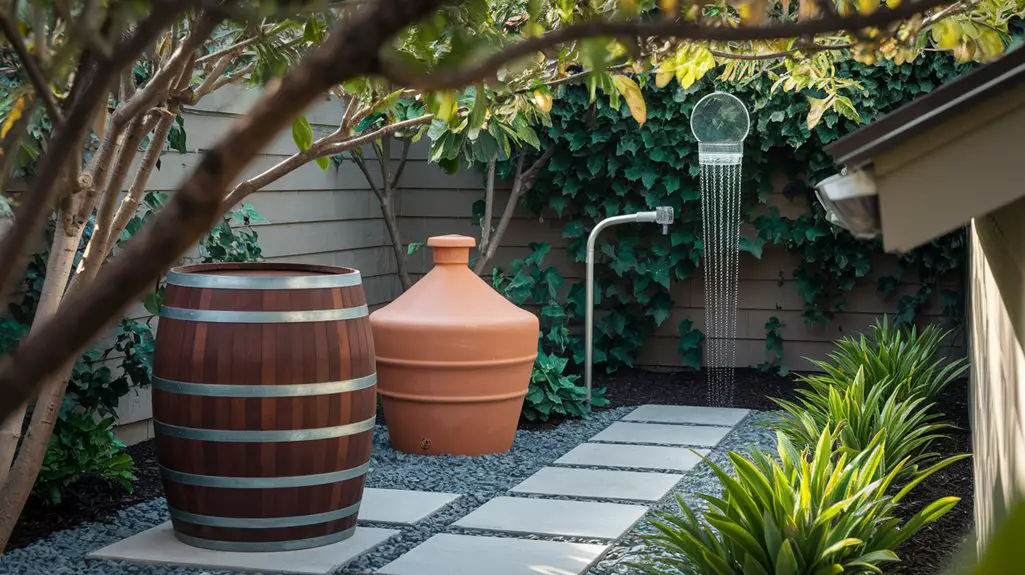
You’re likely wasting hundreds of gallons of water during each rainfall. A 1,000-square-foot roof sheds about 600 gallons from just one inch of rain.
With the right harvesting system, you’ll capture this free resource while cutting the tap water you use outdoors. Three specific backyard systems can transform your property’s sustainability profile—each offering distinct advantages based on your space constraints, budget, and water needs.
On this page
Barrel Collection Systems: Affordable DIY Solutions
When considering rainwater harvesting options, barrel collection systems stand out as the most accessible entry point for homeowners.
These systems typically consist of a 55-gallon barrel positioned beneath downspouts, capturing rainfall that would otherwise flow into storm drains.
A standard barrel system costs between $50-120 and can be assembled in under two hours using basic tools.
Each inch of rainfall on a 1,000 sq. ft. roof yields approximately 600 gallons of water, meaning even modest systems can collect significant volumes during wet seasons.
For ideal functionality, install a first-flush diverter to prevent contaminants from entering your barrel.
Multiple barrels can be linked via overflow pipes, creating scalable storage capacity of 100+ gallons.
How quickly they pay for themselves depends on your water rates and rainfall. Additionally, rainwater harvesting can significantly contribute to water conservation efforts, making it an environmentally friendly choice for homeowners.
Underground Cistern Systems for Maximum Storage Capacity
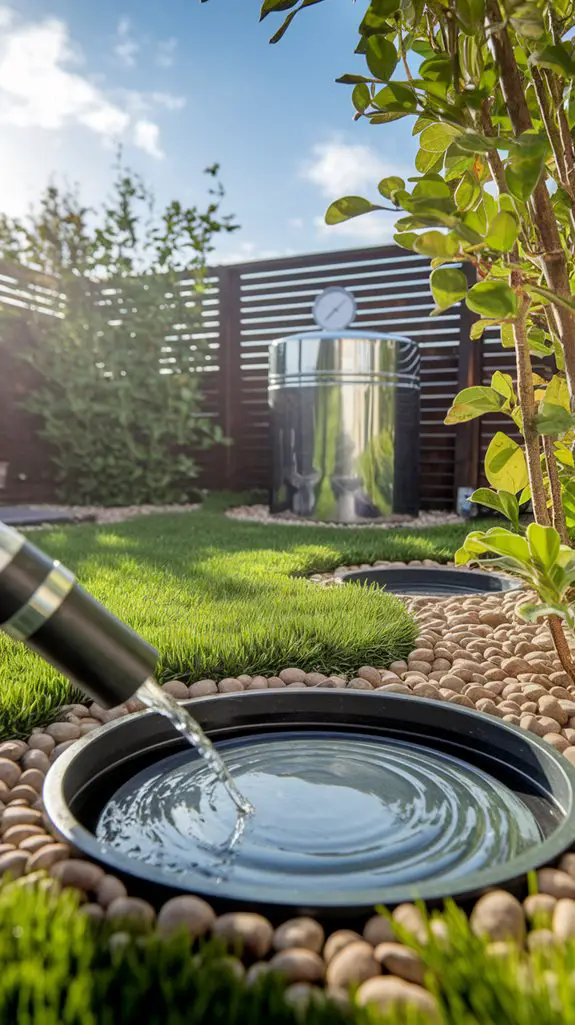
While barrel systems offer easy entry into rainwater collection, underground cisterns provide substantially greater capacity for homeowners seeking extensive water independence.
These systems typically store 1,500-10,000+ gallons, capturing rainfall from your entire roof surface.
- Cisterns require professional installation with excavation costs ranging from $2,000-$8,000
- Systems include pre-filtration components removing debris before water enters storage
- Submersible pumps (1/2-1HP) deliver consistent water pressure throughout your property
- Modern cisterns feature real-time monitoring, tracking water levels via smartphone apps
- Properly sized systems can cover much of your outdoor watering, depending on regional rainfall
You may need permits for installation, and the payback depends on your water rates and how much you irrigate. Additionally, implementing a rainwater filtration system can enhance the quality of the harvested water, making it suitable for various domestic uses.
Decorative Rain Chains and Designer Collection Features
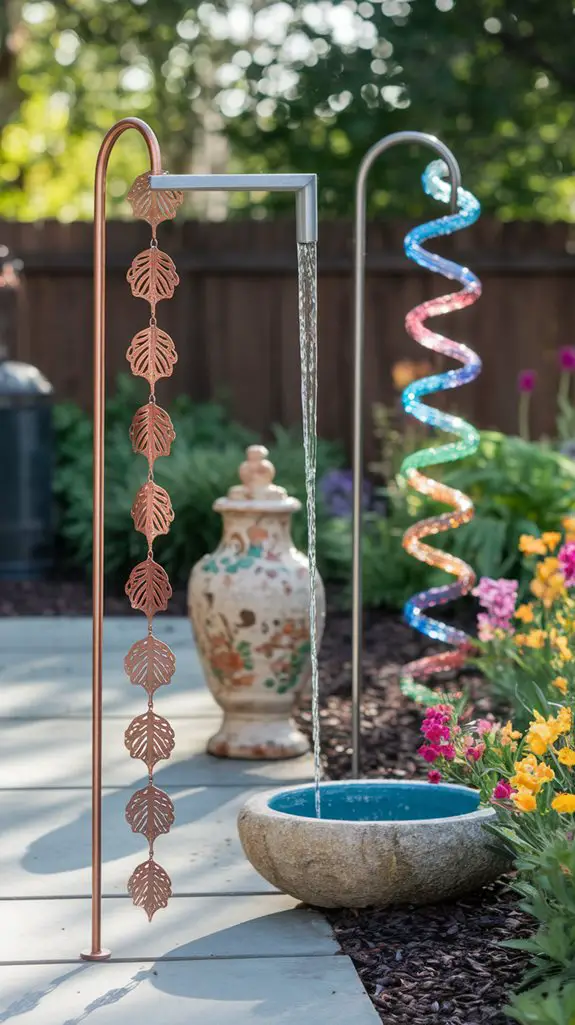
Aesthetics merge with functionality in rainwater harvesting through decorative rain chains and designer collection features. These elements transform utilitarian systems into landscape focal points while still collecting the water.
Copper rain chains, which develop distinctive patinas over time, slow and break up the flow, though they splash more than closed downspouts in heavy rain. Japanese-inspired designs feature cups or links that create mesmerizing water movements and a gentle sound of running water.
Designer collection barrels now include terracotta urns (50-75 gallon capacity), contemporary modular stackable systems (up to 200 gallons), and faux stone reservoirs with integrated planters. Additionally, incorporating a rainwater irrigation system can significantly reduce water bills and promote sustainable gardening practices.
Most premium designs include UV protection, offering 10-15 years of service life—double that of conventional systems—while maintaining water quality for irrigation purposes.
Conclusion
You’ve explored three exceptional rainwater harvesting systems, yet you’re still watering your garden with treated municipal water. Ironic, isn’t it?
According to the EPA, a single rain barrel saves most homeowners about 1,300 gallons of water during the peak summer months. Underground cisterns can hold 5,000 gallons or more, while filtration systems clean the water for other uses. Don’t let another raindrop go to waste—your garden and wallet will thank you.
