
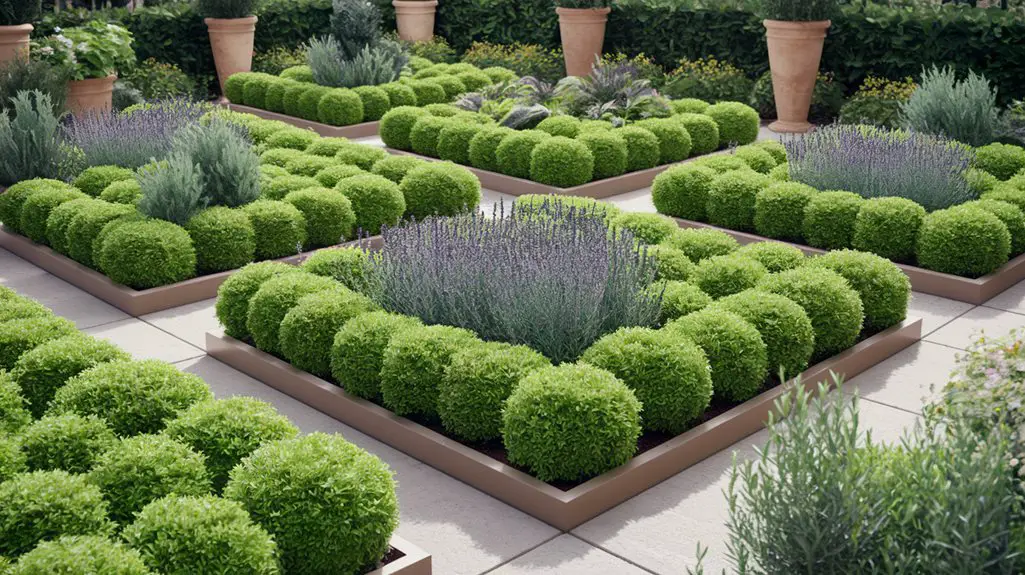
Fragrant mint leaves and purple spikes of lavender dance in the summer breeze, transforming your outdoor space into a sensory haven. You'll find that herb gardens aren't just utilitarian plots but stylish entertainment enhancements providing both beauty and function.
Whether you're hosting intimate dinners or lavish cocktail parties, thoughtfully designed herb displays elevate your gathering's ambiance while offering guests immediate access to fresh flavors. The secrets to creating these elegant botanical features lie in their artistic arrangement.
On this page
Vertical Herb Wall Gardens for Space-Saving Elegance
When space constraints threaten to limit your culinary herb collection, vertical herb wall gardens offer a brilliant solution that transforms bare walls into living tapestries of texture and fragrance.
Mount a grid of weatherproof planters or repurpose wooden pallets to create structured arrangements that climb upward rather than sprawl outward.
Position your vertical garden strategically—south-facing walls provide ideal light for Mediterranean herbs like rosemary and thyme, while partially shaded areas suit mint and parsley.
Install a simple drip irrigation system with adjustable flow rates to accommodate each herb's moisture requirements. Incorporating sustainable vertical gardens can enhance the eco-friendliness of your outdoor space.
Beyond functionality, these installations serve as dynamic focal points for outdoor entertaining spaces.
Arrange herbs in deliberate color gradients or geometric patterns for visual impact, inviting guests to both admire and harvest fresh snippings for their cocktails and plates.
Mediterranean-Inspired Potted Herb Displays
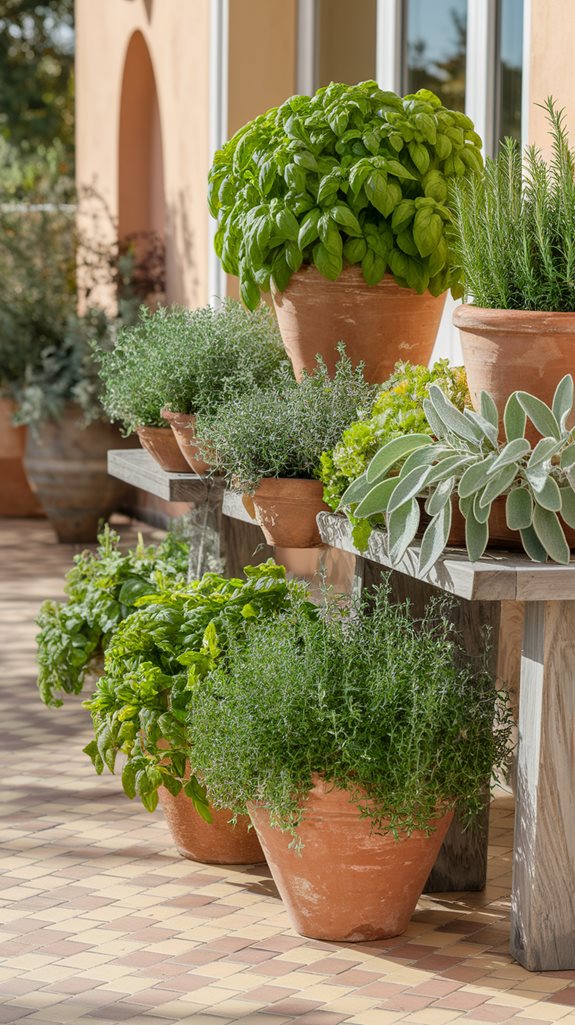
Channeling the sun-drenched coastlines of Greece and Italy, Mediterranean-inspired potted herb displays transform ordinary terraces and patios into sensory retreats of culinary possibility.
Arrange terracotta pots in asymmetrical clusters at varying heights, creating visual rhythm while maximizing sunlight exposure for each plant.
Select drought-tolerant classics like rosemary, thyme, and oregano as your foundation, interspersed with silver-leafed sage and lavender for textural contrast.
You'll want to incorporate authentic elements—weathered olive oil urns, azure ceramic accents, or limestone fragments—to enhance the Mediterranean aesthetic.
For maximum impact, position your herb collection near dining areas where their fragrance will perfume evening gatherings.
Remember to group plants with similar water requirements together, ensuring both visual harmony and practical maintenance.
Additionally, consider vegetable gardening in containers to expand your gardening experience and enjoy fresh herbs alongside other homegrown produce.
This thoughtful arrangement celebrates the Mediterranean's timeless integration of beauty and utility.
Tiered Planter Designs for Visual Impact
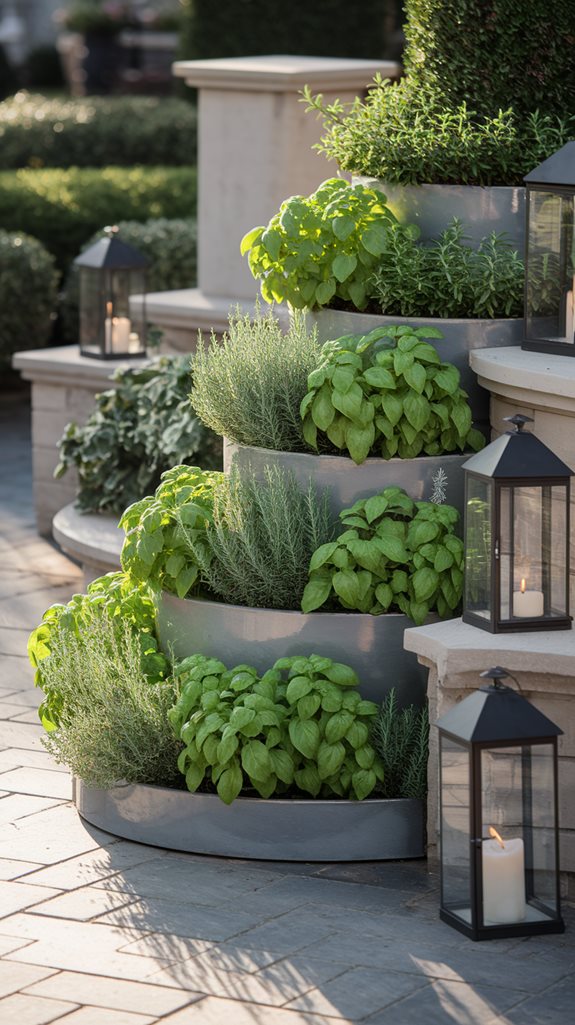
Elevating both your herb collection and visual interest, tiered planters transform limited gardening spaces into dynamic vertical showcases.
Position these architectural elements where sunlight gradients naturally occur, allowing sun-loving basil and rosemary to occupy top tiers while shade-tolerant mint thrives below.
Consider material harmony—weathered terra cotta creates rustic elegance, while galvanized metal introduces industrial sophistication.
Arrange herbs by height progression: cascading thyme at lower levels, upright lavender centermost, and sculptural sage as crown elements.
For maximum impact, stagger plant densities across levels. Dense plantings on bottom tiers establish a solid foundation, while sparser arrangements up top preserve visual breathing room.
Incorporate small-scale decorative elements—miniature garden stakes or polished river stones—between plantings to punctuate green expanses and draw the eye through your carefully composed vertical garden. Additionally, attracting beneficial insects can enhance the health and productivity of your herb garden.
Cocktail Garden Arrangements for Garden-to-Glass Entertaining
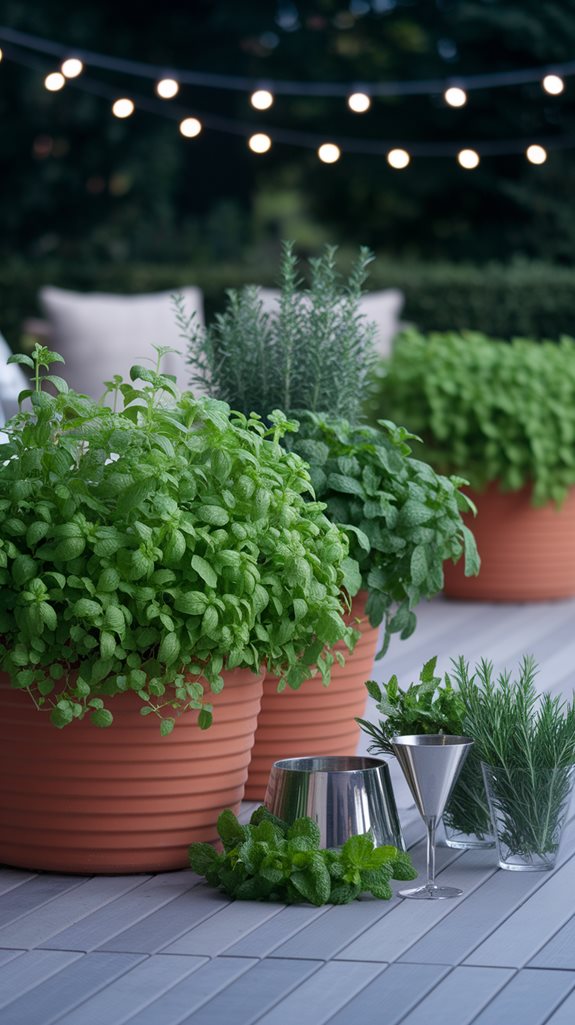
Designed for sophisticated outdoor gatherings, a cocktail herb garden arrangement transforms your terrace or patio into an interactive mixology station.
Position mint, basil, rosemary, and thyme in sleek containers at varying heights around your entertaining space, ensuring guests can pluck fresh garnishes with ease.
Arrange complementary plants in clusters—mint near mojito supplies, rosemary alongside gin fixings.
Consider copper or matte black planters for modern appeal, or vintage crystal decanters repurposed as herb vessels for eclectic charm.
Integrate edible flowers like nasturtiums or pansies for colorful cocktail garnishes.
For maximum impact, install subtle lighting that illuminates your herbs after sunset, extending the garden-to-glass experience into evening hours while highlighting the textural qualities of each botanical element. Additionally, creating a raised bed herb garden can enhance the aesthetic and functionality of your outdoor space.
Aromatic Pathway Borders for Guest Experience
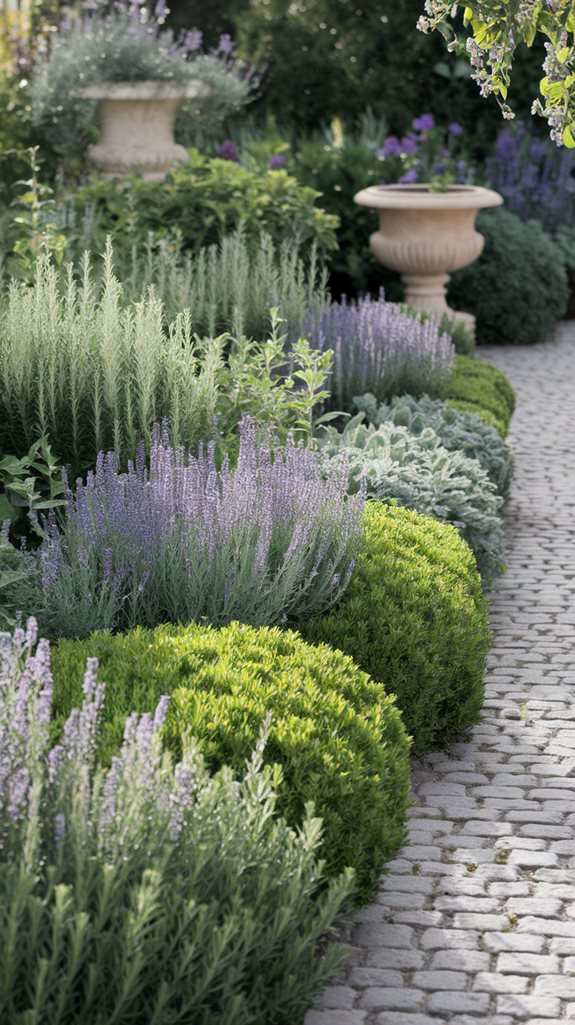
While cocktail gardens create focal points for gathering, aromatic pathway borders transform the journey through your garden into a multisensory experience.
Position low-growing lavender, creeping thyme, and chamomile along pathways where guests' movement releases their fragrance. Alternate heights and textures by placing taller rosemary or sage behind shorter varieties, creating depth that draws the eye forward while defining the path's edges.
- The whisper of brushed lemon balm against a guest's ankle, releasing citrus notes that brighten their arrival
- Moonlit sage leaves reflecting silver beneath evening lighting, guiding visitors through darkness with both scent and subtle illumination
- Crushed thyme releasing its earthy perfume underfoot, marking moments of change between garden rooms
Consider varying aromatic intensity to create rhythm and prevent sensory fatigue as guests traverse your space. Additionally, incorporating pollinator-friendly herbs will enhance both the beauty and ecological impact of your garden.
Repurposed Container Gardens With Vintage Charm
The charm of yesteryear breathes new life into herb gardens when you repurpose vintage containers as elegant growing vessels. Antique wooden crates, distressed metal watering cans, and weathered ceramic pitchers offer both character and functionality for culinary herbs.
Arrange these treasures strategically—position taller vessels at the back, graduating to smaller pieces in front. Guarantee proper drainage by adding holes to delicate containers or using the cache-pot method: place herbs in standard pots inside drainage-free antiques.
Pair complementary herbs with fitting vessels: lavender in enamelware pots, trailing thyme in hanging tin buckets, and robust rosemary in sturdy wooden boxes.
The patina of aged containers creates a compelling visual contrast against vibrant green foliage, infusing your garden space with curated nostalgia that delights both the eye and palate. Incorporating edible landscaping ideas can further enhance your garden's appeal and productivity.
Conclusion
Like an artist's masterful brushstrokes, your herb garden transforms outdoor gatherings into sensory symphonies. You've crafted more than plants—you've designed conversation pieces, flavor laboratories, and scented journeys.
Each carefully positioned leaf and bloom creates spatial harmony that guests intuitively navigate. Your garden isn't simply decoration; it's a living extension of your entertaining philosophy, where beauty and function dance together in perfectly calibrated elegance.
