
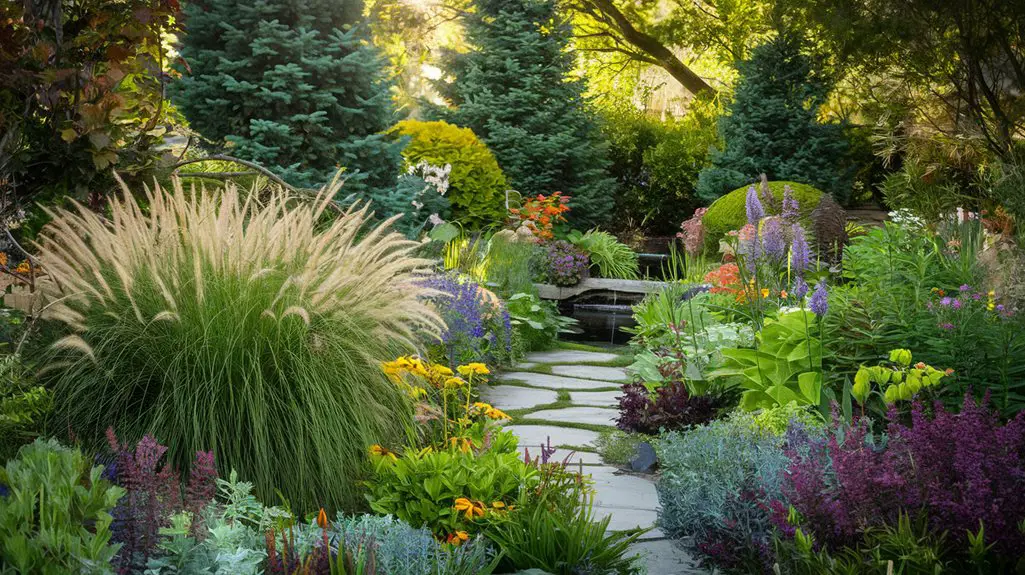
Imagine a garden that bursts with color in spring, thrives under summer sun, dazzles with autumn hues, and withstands winter's chill. Achieving this year-round beauty requires careful planning and thoughtful plant selection.
You can create a landscape that captivates every season. But how do you balance seasonal blooms with evergreen stability? Let's explore the strategies that can transform your garden into a vibrant, living tapestry all year long.
On this page
Spring Planting Strategies for Vibrant Blooms
As spring awakens the garden from its winter slumber, you can harness this vibrant season to create a stunning floral display.
Begin by selecting bulbs and perennials that thrive in your climate; think tulips, daffodils, and hyacinths for early color.
Prepare your soil by loosening it with a spade, ensuring good drainage and aeration. Amending with compost enriches nutrients, promoting healthy growth.
When planting, follow depth guidelines on seed packets and space your plants appropriately to prevent overcrowding. Water thoroughly after planting, but avoid oversaturation to deter root rot.
Consider companion planting to enhance blooms and deter pests. Utilizing raised garden beds can also improve soil quality and drainage, providing a more conducive environment for your flowers.
With careful planning and attention, your garden will burst forth with life, beckoning the warmth of summer.
Summer Landscape Maintenance Tips
To keep your garden thriving during the heat of summer, regular maintenance is essential.
Start by watering early in the morning or late in the evening to reduce evaporation. Aim for deep, infrequent watering to encourage strong root growth.
Next, mulch around your plants to retain moisture and suppress weeds. Prune your flowering shrubs to promote healthy growth, removing any dead or diseased branches.
Keep an eye out for pests; consider organic treatments if you spot any infestations. Fertilize your garden with slow-release nutrients to guarantee your plants stay nourished during the long, hot days. Incorporating raised garden beds can also enhance your herb and vegetable growth, making maintenance easier.
Finally, stay vigilant for signs of stress in your plants—yellowing leaves or drooping stems can indicate they need immediate attention.
Fall Foliage: Transitioning Your Garden
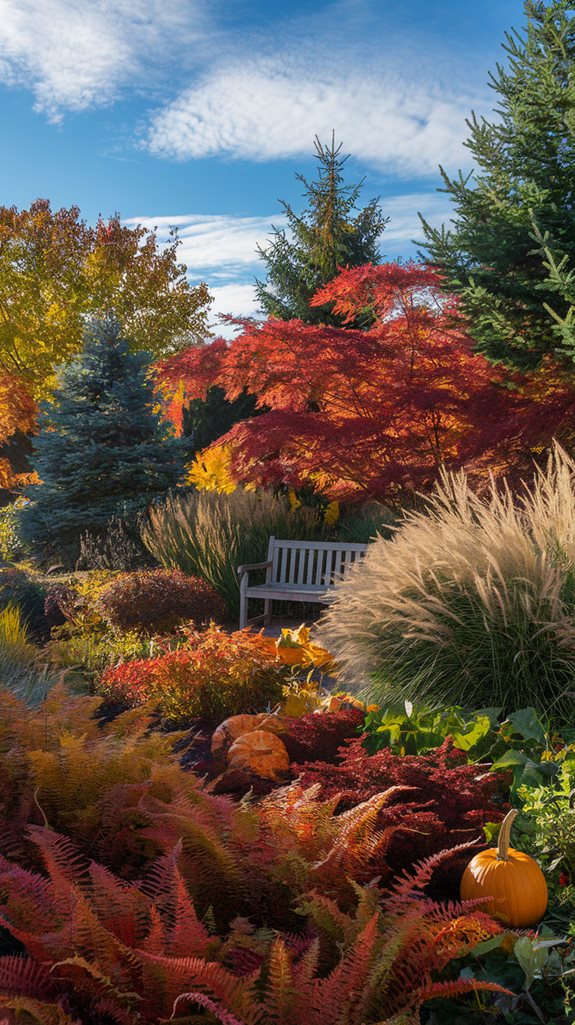
With summer's heat fading and cooler breezes ushering in autumn, your garden needs a shift in focus. Now's the time to embrace fall foliage and alter your landscape. Start by selecting plants that showcase vibrant autumn colors.
Consider adding ornamental grasses for texture and movement. Incorporating colorful flower garden landscaping can enhance the overall autumn aesthetic.
| Plant Type | Color Change | Maintenance Level |
|---|---|---|
| Maple Trees | Bright reds and oranges | Low |
| Burning Bush | Fiery red | Medium |
| Japanese Maples | Varied hues | High |
| Chrysanthemums | Bold yellows and purples | Low |
Incorporate seasonal decorations, like pumpkins, to enhance the autumn atmosphere. As you prepare for winter, enjoy the stunning transformation your garden undergoes.
Winter Hardiness: Protecting Your Plants
Although winter brings a serene beauty to your garden, it also poses significant challenges for your plants. To protect them, start by mulching around their bases. A thick layer of organic mulch insulates roots, conserving moisture and regulating temperature.
Wrap tender shrubs with burlap to shield them from harsh winds and freezing temperatures. If you have potted plants, consider moving them to a sheltered area or grouping them together for added warmth.
Water your plants adequately before the ground freezes; this guarantees they've enough moisture during dormancy. Keep an eye out for snow accumulation; gently brush it off branches to prevent breakage. To ensure your raised garden beds remain productive in the spring, maintaining them during winter is essential for healthy soil and plant resilience.
Incorporating Evergreens for Year-Round Interest
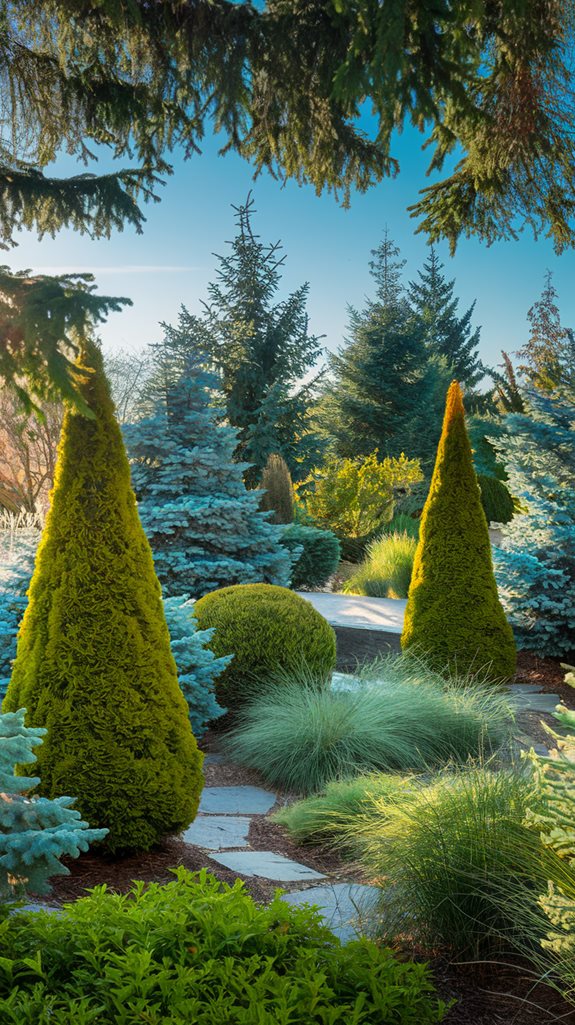
While many plants retreat into dormancy during the colder months, evergreens stand resilient, providing your garden with vibrant life year-round.
These stalwarts not only maintain their lush foliage but also offer structure and visual interest, regardless of the season. Incorporating evergreens into your landscape design guarantees a backdrop that complements seasonal blooms and adds depth to your garden. Additionally, selecting native evergreens can enhance biodiversity in your area, creating a more balanced and sustainable ecosystem.
Consider these evergreen options:
- Pine trees: Their towering presence brings height and majesty.
- Hollies: With glossy leaves and bright berries, they add festive charm.
- Junipers: Their varied textures and ground-hugging forms create visual contrast.
- Boxwoods: Perfect for shaping and hedging, they lend formality and elegance.
Seasonal Color Schemes for Your Garden
Creating a vibrant garden that reflects the changing seasons can elevate your outdoor space and enhance its visual appeal.
Start with spring's pastels—think soft pinks, yellows, and whites from tulips and daffodils. Shift into summer with bold colors like fiery reds, vibrant oranges, and deep purples from zinnias and sunflowers.
As autumn approaches, embrace warm hues such as golden yellows and rich burgundies with chrysanthemums and asters. Finally, for winter, focus on evergreens and plants with berries to maintain interest.
Consider layering plants to create depth and texture, and incorporate seasonal accessories like decorative pots or garden art to complement your color choices. Additionally, incorporating native plants can improve biodiversity and support local wildlife in your garden.
This thoughtful approach will guarantee your garden remains enchanting year-round.
Water Features and Their Seasonal Appeal
When you incorporate water features into your garden, you instantly elevate its aesthetic and sensory appeal, regardless of the season.
These elements bring life, sound, and movement to your landscape, creating a focal point that draws you in.
In spring, blooming flowers reflect beautifully in ponds; summer's warm days invite relaxation by bubbling fountains.
When autumn leaves fall, a gentle stream can create a serene atmosphere, while winter's chill may transform your waterfall into a stunning ice sculpture.
Consider these ideas for seasonal water features:
- Reflecting pools for spring blooms
- Fountains that create a cooling mist in summer
- Streams to enhance autumn's tranquility
- Ice sculptures formed by cascading water in winter
Additionally, nature-inspired water features can harmonize with your garden's ecosystem, attracting beneficial wildlife.
Hardscaping Ideas for All Seasons
Incorporating hardscaping elements into your garden design not only complements the natural beauty of water features but also provides structure and functionality throughout the year.
Consider installing stone pathways that guide visitors through your garden, giving them a sense of adventure. Use durable materials like pavers or gravel for low-maintenance options.
Create seating areas with benches or patios where you can relax and enjoy seasonal views. Retaining walls can add depth and prevent soil erosion, while raised beds enhance accessibility for planting.
Don't forget decorative elements like trellises or arbors, which provide vertical interest and support climbing plants. Additionally, incorporating stunning stone features can enhance the overall aesthetic and create a more cohesive garden design.
Creating Wildlife Habitats Throughout the Year
By transforming your garden into a wildlife habitat, you not only enhance its beauty but also support local ecosystems year-round.
Start by incorporating native plants that provide food and shelter for various species. Consider adding water sources like birdbaths or small ponds to attract thirsty creatures. In fact, wildlife-friendly water features can significantly increase the diversity of animals visiting your garden.
Create diverse layers in your garden, such as tall plants, shrubs, and ground cover, to offer different habitats. Don't forget to leave some areas wild, allowing for natural growth and nesting sites.
- Plant native flowers for pollinators
- Install birdhouses and feeders
- Create brush piles for shelter
- Add a small pond or water feature
Sustainable Practices for Year-Round Landscaping
Creating a wildlife habitat naturally aligns with sustainable landscaping practices that benefit both your garden and the environment.
Start by choosing native plants; they thrive in your local conditions and support local wildlife. Incorporate mulch to retain moisture and suppress weeds, reducing the need for chemical herbicides.
Collect rainwater in barrels for irrigation, promoting water conservation. Consider planting cover crops in off-seasons to enhance soil health.
If you have lawn areas, opt for electric mowers or manual tools to minimize fossil fuel use. Establish a compost system to recycle kitchen scraps, enriching your garden's soil naturally.
Finally, use organic fertilizers and pest control methods to maintain ecological balance, ensuring your garden flourishes sustainably all year round. Additionally, creating wildlife habitats can increase biodiversity and improve the resilience of your garden ecosystem.
Conclusion
As you begin your year-round landscaping journey, remember that each season holds secrets waiting to be uncovered. Will your spring blooms burst forth in vibrant color, or will the fall foliage take your breath away?
By incorporating evergreens and creating habitats for wildlife, your garden can become a living tapestry of life and beauty. Embrace these tips, and watch your outdoor space transform, revealing the hidden wonders that each season has to offer. The adventure awaits!
