
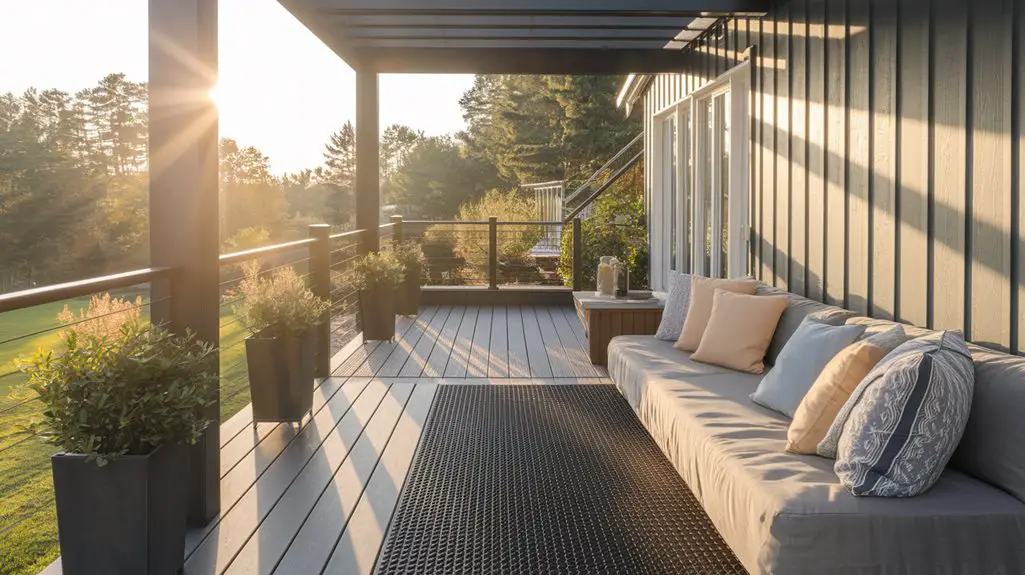
When designing a patio for your pets, material selection directly impacts their safety and comfort. You’ll need surfaces that withstand paw traffic while avoiding toxic chemicals, splinters, or excessive heat absorption.
The right materials prevent injuries from slips or falls, resist damage from claws, and maintain structural integrity despite exposure to animal urine. Beyond functionality, these choices determine whether your outdoor space becomes a welcoming haven or a potential hazard for your furry companions.
On this page
Natural Stone Options for Pet-Friendly Patios
When designing a patio that accommodates both your aesthetic preferences and your pet’s needs, natural stone emerges as an excellent foundational material due to its durability and safety profile.
Flagstone, slate, and granite offer non-toxic surfaces that won’t leach harmful chemicals into your pet’s paw pads or pose ingestion risks.
Select honed or thermal-finished stones rather than highly polished varieties to provide adequate traction for pets.
Sandstone and limestone, while attractive, require sealing with pet-safe products to prevent absorption of urine and stains.
Consider stone thickness of at least 1.5 inches for stability under active pets.
Install stones with minimal gaps (under ¼ inch) using pet-safe polymeric sand to prevent paw entrapment and weed growth that might harbor pests. Additionally, ensure that the patio design incorporates adequate shade solutions to protect your pets from overheating during hot weather.
Composite Decking Materials and Pet Safety
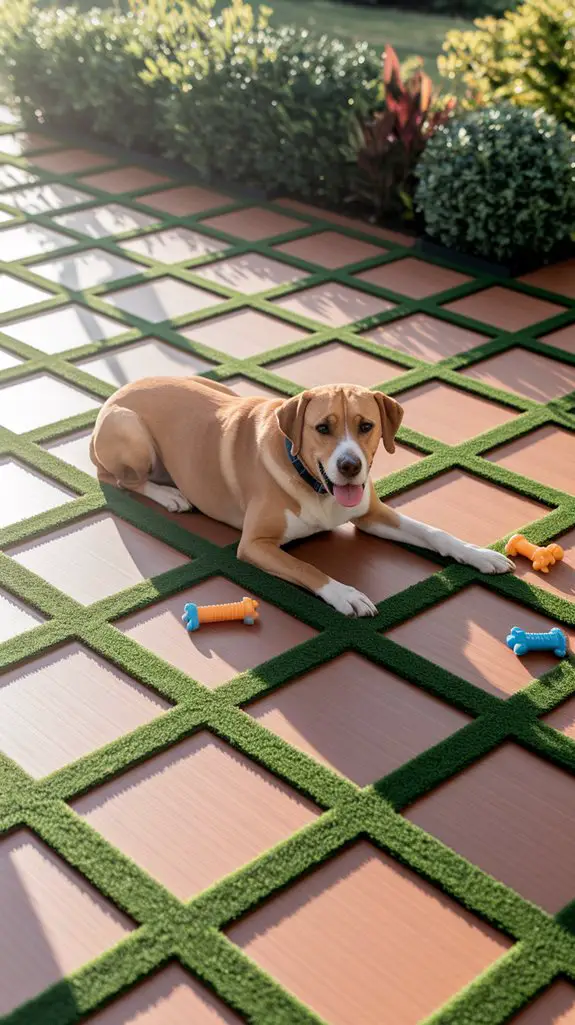
Composite decking materials have revolutionized outdoor living spaces by offering remarkable durability and minimal maintenance requirements while maintaining pet safety standards. These engineered products, typically comprising recycled plastic and wood fibers, resist scratching from pet claws and won’t splinter like traditional wood decking. Additionally, many composite materials are designed specifically for pet-friendly backyard landscaping, ensuring a safe and enjoyable environment for your furry friends.
| Feature | Pet Safety Benefit |
|---|---|
| Slip-resistant texturing | Prevents paw injuries on wet surfaces |
| Splinter-free composition | Eliminates risk of paw pad punctures |
| Heat-reflective technology | Reduces surface temperature for sensitive paws |
You’ll find most premium composite products are manufactured without toxic chemicals that could harm pets who chew on surfaces. When selecting composite decking, verify the product is free from formaldehyde-based adhesives and opt for brands specifically tested for pet safety compliance.
Pet-Safe Pavers and Bricks for Outdoor Spaces
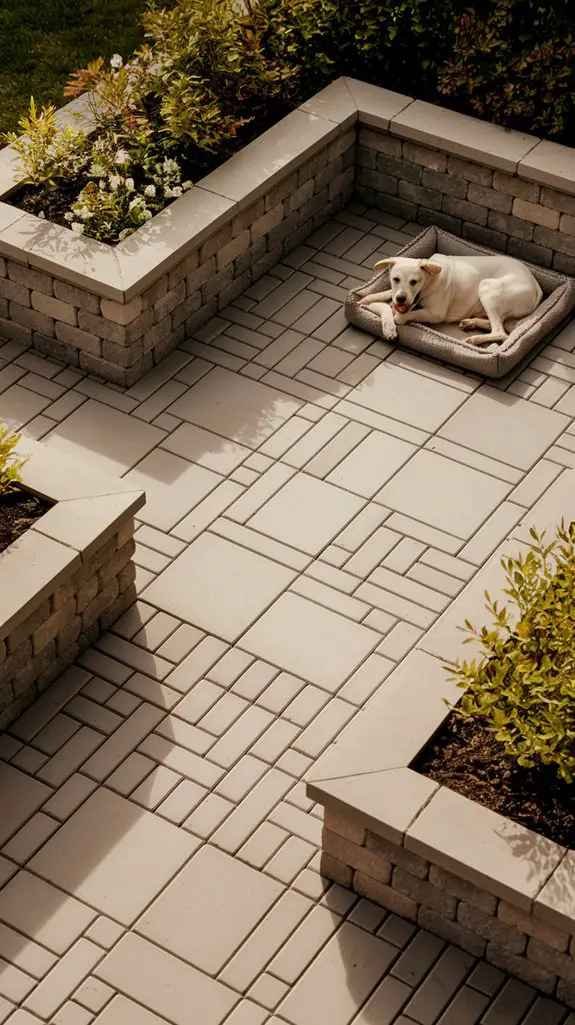
Pavers and bricks represent another excellent option for creating pet-friendly outdoor spaces that balance aesthetics with functionality. These materials offer superior durability against claw scratches and won’t splinter like wood.
Clay bricks provide excellent heat resistance, preventing paw burns during summer months, while concrete pavers offer versatility in design and color. When selecting pavers, opt for those with minimal gaps to prevent weed growth and reduce places where parasites might hide. Smooth-finished surfaces are gentler on paw pads compared to textured varieties.
For installation, use pet-safe polymeric sand between pavers rather than traditional sand, as it resists ant infestations and won’t wash away during cleaning. Additionally, selecting pavers with minimal gaps can further enhance the safety and comfort of your pet’s play area.
Sealed pavers resist urine staining and odor absorption, though you’ll need to select pet-safe sealants that become non-toxic once cured.
Artificial Turf and Synthetic Options for Pet Areas
Artificial turf has evolved considerably over the years to become an increasingly popular solution for pet owners seeking low-maintenance outdoor surfaces. Today’s synthetic grass options feature antimicrobial treatments that resist bacteria growth and enhanced drainage systems that quickly remove pet waste liquids, preventing odor buildup.
When selecting artificial turf for pet areas, prioritize products with non-toxic infill materials—avoid crumb rubber and choose alternatives like silica sand, acrylic-coated sand, or organic infill. Opt for shorter pile heights (1-1.5 inches) to prevent matting and bacterial harboring. The backing material should be perforated polyurethane rather than latex to guarantee superior drainage.
You’ll also want turf specifically engineered with stronger fibers that resist wear from paw traffic and maintain structural integrity despite your pet’s activities. Additionally, creative dog-friendly designs can further enhance the overall experience of your pet patio.
Wood Treatments and Sealants That Won’t Harm Pets
When treating wooden surfaces in pet-accessible areas, the chemicals you select demand careful consideration to guarantee your furry companions remain safe.
Look for water-based polyurethane sealants that contain low or zero VOCs (volatile organic compounds). These products dry quickly and create minimal toxic fumes compared to oil-based alternatives.
Several pet-safe options include t
Concrete Varieties and Finishes for Pet Durability
Although traditional concrete serves as a durable foundation material, specialized varieties and finishes can dramatically enhance your patio’s resilience against pet traffic and accidents. Polymer-reinforced concrete offers superior resistance to urine staining and claw scratches, while maintaining structural integrity during freeze-thaw cycles.
| Concrete Type | Pet Benefits | Maintenance Needs |
|---|---|---|
| Stamped | Texture hides scratches | Annual sealing |
| Exposed Aggregate | Superior traction | Pressure washing |
| Polished | Urine won’t penetrate | Quarterly buffing |
| Dyed/Stained | Masks stains | Biennial resealing |
You’ll want to apply a pet-safe penetrating sealer rather than film-forming options, which can become slippery when wet. For maximum durability, specify a concrete mix with fiber reinforcement and a compressive strength of at least 4,000 PSI.
Rubber Surfacing Benefits for Pets’ Joints and Paws
Rubber surfacing represents one of the most joint-friendly options available for pet patios, offering essential impact absorption that reduces stress on your dog’s skeletal system during play and daily activities.
Like concrete and stone, though, rubber can get hot enough in direct sun to burn sensitive paw pads in summer, especially in darker colors, so shade it and test the surface with your hand before letting pets out.
- Provides 1-2 inches of cushioning that’s easier on joints than concrete
- Features antimicrobial properties that inhibit bacteria growth within the porous structure
- Offers slip-resistant texture with coefficient of friction ratings between 0.6-0.8 when wet
- Available in EPDM, TPV, and recycled rubber compositions with 7-12 year lifespans under outdoor conditions
Additionally, rubber surfacing offers the versatility to be customized in various colors and designs, enhancing the aesthetic appeal of your pet’s outdoor space.
Non-Toxic Plants and Borders for Patio Perimeters
Creating safe perimeter plantings and borders for your pet patio requires careful selection of non-toxic species that withstand traffic while enhancing the space aesthetically.
Choose pet-friendly perennials like catnip, rosemary, or spider plants, which pose no ingestion hazards. Avoid toxic varieties such as lilies, azaleas, and sago palms that can cause severe reactions or death.
For borders, select natural stone edging over treated wood that may contain arsenic or creosote compounds. Cedar and redwood offer naturally resistant alternatives to chemically treated lumber.
Consider installing a sunken boundary of river rocks (2-3″ diameter minimum) to prevent digging while creating visual definition. These stones won’t leach chemicals and can’t be easily swallowed by pets.
Install firmly to prevent displacement that could create tripping hazards. Additionally, incorporating native plants can help support local wildlife while ensuring a safe environment for your pets.
Heat-Resistant Materials for Hot Climate Pet Patios
When selecting materials for pet patios in hot climates, you’ll need to prioritize surfaces that won’t scorch paws or retain excessive heat during intense sun exposure.
Evaluate thermal conductivity and surface temperature differentials to guarantee pets can comfortably navigate outdoor spaces even during peak solar radiation hours.
- Composite decking can get hotter than wood in direct sun, so choose light colors or heat-reflective lines and test the surface with your hand before letting pets out.
- Light-colored concrete pavers with sealed surfaces dissipate heat efficiently while providing durability against claw damage.
- Natural stone varieties like limestone and flagstone maintain cooler surface temperatures than manufactured alternatives.
- Artificial turf designed specifically for pets incorporates cooling fibers that minimize heat retention.
- Specialized rubber surfacing with thermal barriers maintains safe touch temperatures below 120°F even in direct sunlight.
Additionally, consider backyard enclosures for pets to enhance safety and comfort in your outdoor space.
Weather-Resistant Options That Stand Up to Pet Traffic
Durability becomes paramount when selecting materials that must withstand both environmental stressors and persistent pet activity. You’ll need surfaces that resist scratching, won’t absorb odors, and maintain structural integrity despite constant exposure to moisture and temperature fluctuations. Additionally, consider incorporating sustainable backyard designs that enhance the overall environment while being safe for your pets.
| Material | Weather Resistance | Pet Traffic Durability | Maintenance Requirements |
|---|---|---|---|
| Porcelain Tile | Excellent | High | Low |
| Composite Decking | Very Good | Medium-High | Low |
| Sealed Concrete | Excellent | Very High | Medium |
| Natural Stone | Good-Excellent | High | Medium-High |
Select porcelain tile for its impermeability to moisture and resistance to claw marks. Composite decking offers splinter-free surfaces that won’t warp with seasonal changes. Sealed concrete provides unmatched durability against heavy traffic and weather extremes, while natural stone delivers aesthetic appeal with proper sealing against stains and moisture infiltration.
Conclusion
Your pet-safe patio is within reach when you’re armed with the right materials. Choose natural stones, composite decking, or rubber surfacing that won’t turn into a minefield of hazards for your furry companions.
Don’t overlook heat-resistant options in warm climates, and always verify that sealants and treatments are non-toxic. With proper material selection, you’ll create a durable outdoor space where both you and your pets can thrive.
