

While chemical insecticides flood markets with synthetic formulations, nature provides us with effective alternatives for arthropod management. You’ll discover how Diatomaceous Earth (SiO₂·nH₂O) physically damages insect exoskeletons through microscopic diatom fragments, while Azadirachta indica extract disrupts ecdysone production in Lepidopteran species. These environmentally compatible control agents represent just the beginning of our examination into sustainable pest management protocols that maintain ecological equilibrium without compromising efficacy.
On this page
Diatomaceous Earth: Nature’s Microscopic Bug Barrier
Diatomaceous earth (DE), composed of fossilized diatoms from ancient aquatic organisms (Bacillariophyceae), functions as a highly effective mechanical insecticide through its microscopic silica exoskeletons.
When you apply DE to insect habitats, its mode of action doesn’t rely on chemical toxicity but rather physical abrasion. The microscopic particles (typically 1-100μm) adhere to arthropods’ cuticles, penetrating their epicuticular wax layer and causing fatal desiccation through exoskeleton abrasion.
It’s particularly efficacious against Coleoptera, Siphonaptera, and various Hymenoptera species.
You’ll find DE commercially available in two formulations: food-grade (amorphous silica, <0.5% crystalline content) and industrial-grade (higher crystalline concentration).
For entomological control, always select food-grade DE, which maintains efficacy while minimizing respiratory risks associated with crystalline silica inhalation (pneumoconiosis).
Essential Oils as Potent Insect Repellents

Essential oils, derived from various botanical families including Lamiaceae, Myrtaceae, and Rutaceae, represent a diverse class of volatile terpene compounds that demonstrate significant arthropod repellency.
These phytochemicals target insects’ olfactory receptors, disrupting host-seeking behaviors and feeding patterns.
You’ll find eucalyptus (Eucalyptus globulus) oil contains 1,8-cineole, which has shown repellent activity against Aedes aegypti mosquitoes; for personal protection, though, the CDC recommends EPA-registered repellents, including oil of lemon eucalyptus (a different product).
Similarly, thymol and carvacrol from thyme (Thymus vulgaris) exhibit potent activity against Blattodea and Coleoptera species.
Citronella (Cymbopogon nardus) oil’s geraniol and citronellal constituents provide 2-4 hours of protection against Dipteran pests.
For application, dilute oils to 2-5% concentration in carrier mediums.
Blends such as lemongrass with peppermint are popular, but keep concentrated oils away from pets: the ASPCA lists many essential oils as toxic to cats and dogs.
Beneficial Nematodes for Underground Pest Management
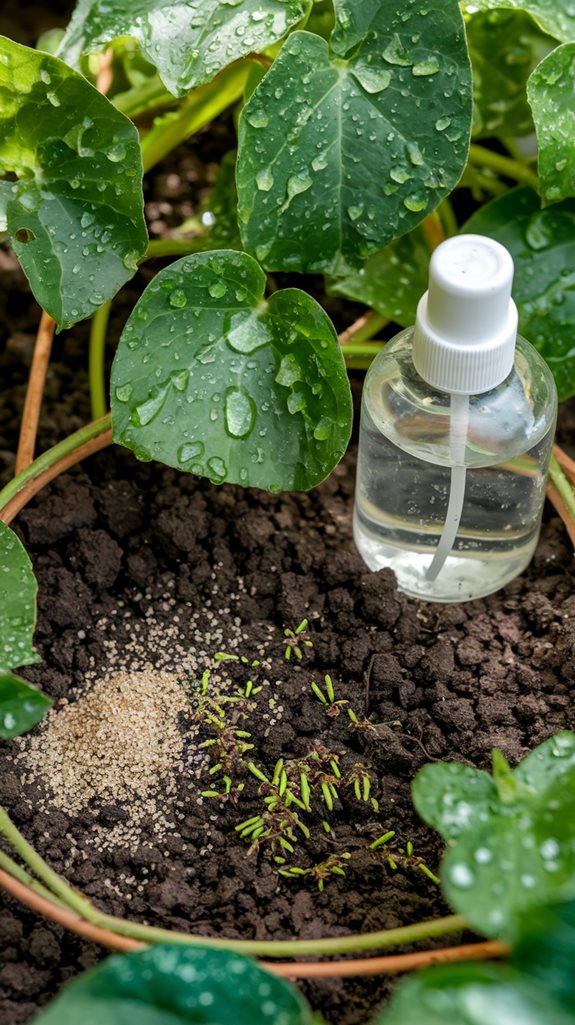
Microscopic but mighty in agricultural biocontrol applications, beneficial entomopathogenic nematodes (EPNs) from the Steinernematidae and Heterorhabditidae families provide exceptional management of subterranean insect pests.
These obligate parasites target soil-dwelling larvae including Coleoptera, Lepidoptera, and Diptera orders. You’ll find EPNs particularly efficacious against white grubs, cutworms, and root weevils.
When applied, these microscopic roundworms actively seek hosts, penetrate their body cavities, and release symbiotic bacteria (Xenorhabdus or Photorhabdus spp.) that rapidly kill targets within 24-48 hours.
For ideal efficacy, apply EPNs to moist soil at temperatures between 13-30°C. Unlike chemical pesticides, these organisms pose no threat to non-target species, have zero reentry intervals, and leave no residues.
Their self-perpetuating nature enables establishment of persistent populations following initial applications.
Cedar and Other Insect-Resistant Woods
For ideal efficacy, utilize these woods in closets, garden beds, or as mulch.
You can apply cedar oil (0.5-2% concentration) directly to problem areas.
Unlike synthetic pyrethroids, these terpene compounds don’t bioaccumulate and maintain efficacy for 3-6 months post-application.
Neem Oil: The Multi-Purpose Organic Pesticide
Neem oil (Azadirachta indica extract) represents one of nature’s most effective biopesticides, containing over 70 bioactive compounds including azadirachtin as its primary insecticidal constituent. This triterpenoid disrupts insect hormonal systems, preventing larvae from developing into adults while maintaining ecosystem balance.
When you apply neem oil, you’ll benefit from its:
- Broad-spectrum efficacy against Hemiptera, Lepidoptera, Diptera, and Coleoptera orders while preserving beneficial Hymenoptera.
- Systemic action that translocates through plant phloem to protect new growth for 14-21 days.
- Anti-oviposition properties that deter egg deposition on treated surfaces.
- Fungicidal activity against powdery mildew (Erysiphales) and other pathogenic fungi through inhibition of spore germination.
You’ll find neem most effective when applied as a 0.5-2% emulsion during early instar stages or at first sign of infestation.
Conclusion
You’ve now discovered the top five natural materials for controlling Arthropoda infestations while maintaining ecological balance. Neem oil’s azadirachtin discourages caterpillars from feeding and disrupts their growth. Implement these botanically-derived and mineralogical solutions as components of an integrated pest management strategy to minimize anthropogenic impacts on beneficial insect populations while effectively targeting pest species in your domestic or agricultural ecosystem.
