
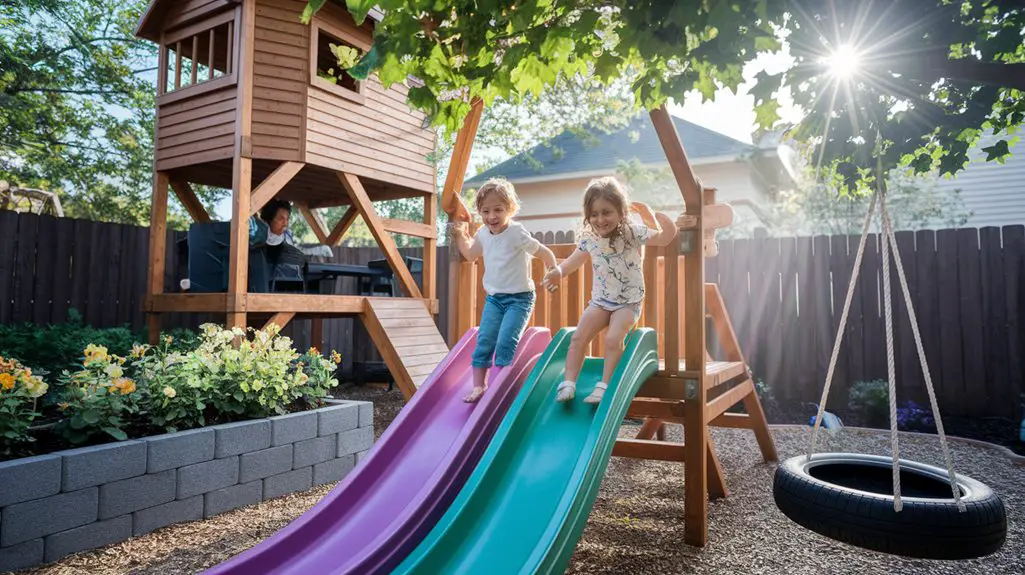
According to the National Wildlife Federation, children spend only about 4 to 7 minutes a day in unstructured outdoor play, yet this type of activity is essential for developing fundamental motor skills. Your backyard isn’t just empty space behind your home—it’s potentially the most valuable developmental environment you’ll provide for your children.
When you create thoughtfully designed play areas, you’re not simply entertaining your kids; you’re building their brains, bodies, and social capabilities. The benefits extend far beyond the obvious physical advantages.
On this page
The Physical Health Benefits of Outdoor Play Spaces
While childhood obesity rates continue to rise across the United States, backyard play areas offer a powerful antidote to this concerning trend.
When your children have access to outdoor play spaces, they naturally engage in cardiovascular activities like running, jumping, and climbing that strengthen their hearts and build endurance.
These active play sessions help children maintain healthy weight levels while developing essential gross motor skills. The CDC recommends that children and teens get at least 60 minutes of physical activity a day, which helps lower their risk of obesity, type 2 diabetes and high blood pressure.
Beyond cardio benefits, playground equipment provides opportunities for strength building as children pull themselves up, hang from bars, and navigate climbing structures—developing muscle tone that supports lifelong physical health. Additionally, creating backyard entertainment zones encourages social interaction and cooperative play, which are vital for emotional development.
Creating Safe Environments While Encouraging Risk-Taking

Although parents naturally want to protect their children from harm, creating truly beneficial play spaces requires balancing safety with appropriate risk-taking opportunities. Manageable risks in play help children develop resilience, judgment, and confidence.
You’ll want to establish basic safety parameters—soft landing surfaces, stable equipment, and regular maintenance—while deliberately incorporating graduated challenges. Consider varied climbing heights, stepping stones at increasing distances, or balance beams of different widths.
Avoid hovering when your child explores these features. Instead, stay nearby but allow them to problem-solve independently. This approach fosters intellectual and emotional growth alongside physical skills.
The goal isn’t to eliminate all risk but to create environments where children can test their abilities within reasonable boundaries, learning valuable life skills through play experiences. Additionally, incorporating backyard obstacle courses can provide exciting opportunities for children to engage in physical challenges while developing coordination and agility.
Fostering Creativity and Imagination Through Natural Elements

Natural elements offer something manufactured play equipment simply cannot—boundless possibilities for creative thinking. When you incorporate stones, logs, plants, and water features into your backyard play area, you’re providing open-ended materials that children can reimagine daily.
Natural play environments tend to spark more varied play and longer engagement.
- Loose materials like sticks, pinecones, and leaves become building tools, currency, or characters in imaginative scenarios.
- Water elements encourage scientific exploration as children observe how water flows, freezes, or evaporates.
- Natural terrain variations develop problem-solving skills as children navigate uneven surfaces.
- Gardens foster nurturing behaviors and teach patience as children track plant growth over time.
Incorporating wildlife-friendly features such as native plants can also enhance the ecological value of your garden while providing learning opportunities for children.
Try creating “zones” where natural elements intersect, creating jumping-off points for imaginative stories and adventures.
Encouraging Social Skills and Cooperative Play in Your Yard
Designing your backyard with social interaction in mind creates powerful opportunities for children to develop essential interpersonal skills.
Consider incorporating multi-person features like teeter-totters, two-person swings, or a small stage for performances that naturally encourage collaboration.
Shared play spaces give kids practice in negotiation, turn-taking, and conflict resolution.
Position benches in conversational arrangements or add a sandbox large enough for multiple children to foster natural dialogue and teamwork during play.
For older children, include problem-solving elements like water walls with movable components or garden projects that require cooperation to complete.
These activities build communication skills and empathy as children learn to work toward common goals.
The most effective social play spaces remain somewhat open-ended, allowing children to establish their own rules and games together. Additionally, incorporating exciting backyard games can further enhance interactions and keep kids actively engaged.
Weather-Proof Play Area Design for Year-Round Enjoyment
While social play spaces build important life skills, the usefulness of your backyard extends beyond fair-weather days when you implement thoughtful weather-proofing strategies.
Children benefit from outdoor play in every season, as long as they’re dressed for the weather. Additionally, providing a fun play area encourages creativity and physical activity, enhancing overall well-being.
Create year-round enjoyment with these weather-proof design elements:
- Install permeable surfaces like rubber mulch or artificial turf that drain effectively during wet conditions
- Build covered play areas with UV-protective awnings that shield from both sun and rain
- Incorporate windbreaks using strategic fencing, dense shrubs, or decorative panels
- Include thermal-comfortable seating with weather-resistant materials that don’t become too hot or cold
These thoughtful modifications guarantee your children maintain consistent outdoor engagement throughout seasonal changes, maximizing developmental benefits while respecting your region’s specific climate challenges.
Budget-Friendly Options for Creating Extraordinary Play Spaces
Creating extraordinary play spaces doesn’t require breaking the bank, since children tend to value creativity and engagement over expensive equipment. You’ll find that repurposed materials often spark the most imaginative play.
Consider using pallets to build climbing structures, old tires for obstacle courses, or fabric scraps for outdoor forts. Additionally, integrating features from backyard playhouses for imaginative children can enhance the overall experience and encourage more interactive play.
| Budget-Friendly Materials | Creative Play Value |
|---|---|
| Cardboard boxes | Versatile imaginative play |
| Natural elements (logs, rocks) | Sensory development |
| Repurposed household items | Problem-solving skills |
Community resources can further stretch your budget. Check local buy-nothing groups for gently used equipment, organize toy swaps with neighbors, or partner with other families to share costs. Remember, children’s developmental needs focus on exploration and challenge—qualities you can provide through thoughtful design rather than expensive purchases.
Conclusion
Your backyard play area is your child’s gateway to a world of development. You’re not just building swings and slides—you’re constructing the foundation for their physical, social, and emotional growth.
Like a garden nurturing young saplings, these spaces cultivate resilience and creativity while fostering essential life skills. By investing in well-designed outdoor play, you’re supporting your child’s development in ways that will bear fruit for years to come.
