
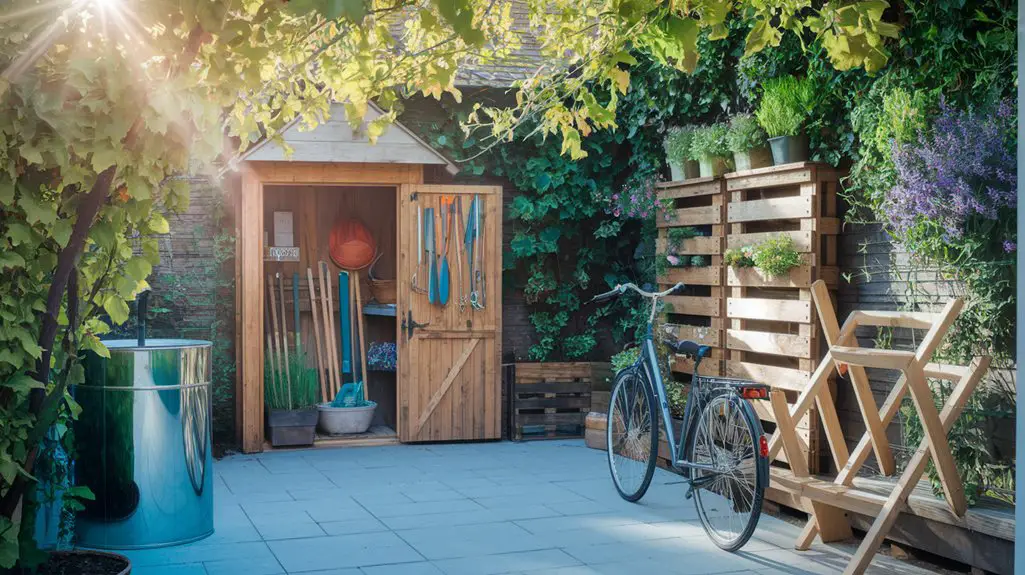
Like Noah needed his ark, you’ll need efficient storage solutions that respect our planet. When you’re organizing your backyard, consider eco-friendly options that reduce waste, minimize carbon footprints, and maximize resource efficiency.
Repurposed shipping containers, solar-powered units, and living green roofs offer sustainable alternatives to conventional sheds. These innovative approaches not only help preserve the environment but also provide distinctive design elements that can transform your outdoor space into a model of responsibility.
On this page
Repurposed Shipping Container Storage Sheds
While traditional backyard sheds consume new materials and contribute to environmental waste, repurposed shipping containers offer a sustainable alternative with remarkable durability.
These steel structures, originally built to withstand ocean transport, can endure decades of use in your backyard with minimal maintenance.
You’ll find containers in standard dimensions—most commonly 20′ or 40′ lengths—that you can modify to suit your storage needs.
Install windows, doors, ventilation, insulation, and shelving systems to transform these industrial boxes into functional spaces.
The environmental benefits are significant: each repurposed container prevents approximately 3,500kg of steel from entering the waste stream.
You’re also avoiding the carbon footprint associated with manufacturing new storage solutions, making containers one of the most eco-conscious choices available. Additionally, using low-impact materials in your modifications further enhances the sustainability of these structures.
Solar-Powered Garden Storage Units

When considering sustainable storage options, solar-powered garden units represent a significant advancement in eco-friendly design. These structures integrate photovoltaic panels to power internal lighting, security systems, and even climate control functions without drawing from the grid.
- Most units include 5-15W panels sufficient for LED lighting and basic electronics.
- Battery storage systems provide functionality during nighttime hours.
- Smart units offer app-controlled access and environmental monitoring.
- Modular designs allow for expansion as your storage needs grow.
- Premium models feature rainwater collection integration for garden irrigation.
You’ll find these units particularly valuable in remote garden areas without electrical access. Additionally, the use of eco-friendly gardening tools can further enhance your sustainable gardening efforts.
The initial investment typically offsets within 3-5 years through energy savings, while providing the practical benefit of illuminated, secure storage regardless of your property’s existing infrastructure.
Living Green Roof Storage Solutions

Living green roof storage structures transform ordinary garden sheds into biologically active systems that benefit both your storage needs and local ecosystem.
These roofs incorporate soil layers, drainage systems, and carefully selected vegetation that thrives in your climate zone.
You’ll need to verify your storage unit can support 80-150 pounds per square foot, depending on soil depth and moisture retention.
Install a waterproof membrane with root barrier before adding drainage layers and growing medium.
Select drought-resistant sedum varieties for minimal maintenance or native wildflowers to maximize biodiversity.
Benefits include extended roof lifespan (typically 40+ years), natural insulation reducing internal temperature fluctuations, improved stormwater management, and habitat creation for pollinators. Additionally, incorporating rainwater collection barrels can further enhance your eco-friendly efforts by providing a sustainable water source for your plants.
Many municipalities now offer incentives for green roof installations, potentially offsetting your initial investment.
Rainwater Harvesting Storage Systems
By integrating rainwater harvesting systems with your backyard storage, you’ll simultaneously address two critical needs: water conservation and storage space efficiency.
Modern designs combine functionality with aesthetic appeal, allowing your system to blend seamlessly with your landscape.
Consider these implementation options:
- Decorative rain barrels that double as garden features while storing 50-100 gallons
- Under-deck cistern systems that utilize otherwise wasted space
- Modular tanks that can expand as your needs grow
- Bench or seating solutions with integrated water storage
- In-ground systems that remain hidden while storing larger volumes (500+ gallons)
For maximum efficiency, install first-flush diverters and filtration components.
Position your system to capture runoff from your home’s largest roof surface, ensuring effective collection during even light rainfall events. Additionally, rainwater harvesting systems can significantly reduce your dependency on municipal water supplies.
Bamboo and Sustainable Wood Storage Options
Natural materials offer superior sustainability compared to synthetic alternatives, with bamboo and responsibly harvested woods leading the eco-friendly storage market.
Bamboo stands out for its rapid growth cycle—maturing in just 3-5 years—making it a highly renewable resource for outdoor storage solutions. Additionally, eco-friendly decking materials like bamboo can complement your outdoor storage by enhancing the overall sustainability of your backyard.
When selecting wooden storage, prioritize FSC-certified products that guarantee responsible forestry practices.
Cedar and redwood provide natural resistance to rot, insects, and moisture without chemical treatments. These woods develop a distinguished silver-gray patina over time, eliminating the need for toxic sealants.
For maximum sustainability, consider reclaimed wood options.
Repurposed barn wood, shipping pallets, and salvaged lumber reduce landfill waste while adding unique character to your backyard storage. These materials often require minimal processing, further reducing their environmental footprint.
Recycled Plastic Outdoor Storage Boxes
While natural materials offer excellent sustainability credentials, recycled plastic storage provides another eco-conscious option for durability in challenging outdoor conditions. These containers transform post-consumer waste into functional storage that withstands rain, snow, and UV exposure without degrading.
- Made from HDPE plastic diverted from landfills (typically milk jugs and detergent bottles)
- Requires no maintenance, painting, or waterproofing treatments
- Lasts 20+ years without cracking, warping, or fading
- Features antimicrobial properties that resist mold and mildew growth
- Often incorporates modular designs for expandability as storage needs change
When selecting recycled plastic storage, check for certification labels verifying recycled content percentages. Many manufacturers now make these boxes with high recycled content, maximizing their environmental benefit while delivering solid performance. Additionally, using natural materials in conjunction with recycled plastic can enhance the overall sustainability of your outdoor space.
Earth-Bermed and Underground Storage Spaces
Although often overlooked, earth-bermed and underground storage spaces represent some of the most energy-efficient and environmentally harmonious solutions for backyard storage.
These structures utilize the earth’s natural insulating properties to maintain consistent temperatures year-round without requiring additional energy inputs.
You’ll need to excavate an appropriate area, install proper waterproofing and drainage systems, and reinforce the structure to handle soil pressure.
Consider using recycled concrete or rammed earth for walls, and incorporate a living roof for additional insulation and habitat creation. These eco-friendly materials not only enhance the sustainability of the structure but also promote energy efficiency in your landscaping design.
The benefits extend beyond energy efficiency—these storage solutions blend seamlessly into landscapes, preserve valuable yard space, and protect stored items from extreme weather conditions.
They’re particularly effective for storing temperature-sensitive garden supplies, emergency provisions, and seasonal equipment without consuming above-ground real estate or disrupting your yard’s aesthetic appeal.
Upcycled Material Storage Benches and Containers
Moving from below-ground solutions to surface-level options, upcycled material storage benches and containers offer accessible eco-friendly alternatives that serve dual purposes in your backyard ecosystem.
By repurposing existing materials, you’ll reduce waste while creating functional storage. Consider these upcycling opportunities:
- Wooden pallets transformed into modular storage benches
- Vintage trunks or suitcases weatherproofed for garden tool storage
- Galvanized metal tubs converted into waterproof cushion containers
- Repurposed wooden cable spools as rolling storage tables
- Old dresser drawers mounted as wall storage for small items
These projects don’t just store your belongings—they become conversation pieces while extending the lifecycle of materials that would otherwise enter landfills. Additionally, stylish outdoor storage options can enhance the overall aesthetic of your patio while being environmentally friendly.
You’ll find the construction process straightforward with basic tools and weather-resistant sealants to guarantee durability throughout seasonal changes.
Biodegradable and Compostable Garden Storage
When considering truly sustainable backyard storage, biodegradable and compostable options represent the pinnacle of eco-friendly design. These solutions break down naturally at the end of their lifecycle, leaving minimal environmental impact.
| Material | Decomposition Time |
|---|---|
| Bamboo | 1-3 years |
| Hemp fabric | 1-2 years |
| Cork | 2-3 years |
| Mycelium composite | 30-90 days |
| Seagrass | 1-2 years |
You’ll find these materials incorporated into storage baskets, tool organizers, and seed containers. Their natural properties offer surprising durability while exposed to moderate weather conditions.
When selecting biodegradable storage, consider placement—partial shelter extends lifespan considerably. For items requiring more protection, look for beeswax-coated options that provide temporary water resistance while maintaining biodegradability.
Energy-Efficient Climate-Controlled Storage Solutions
While biodegradable options minimize end-of-life impact, certain items in your backyard require specific environmental conditions to maintain their integrity.
Energy-efficient climate-controlled storage solutions offer protection while minimizing your carbon footprint.
- Solar-powered ventilation systems prevent humidity buildup without drawing from the grid
- Thermal-insulated structures with reflective barriers keep interior temperatures more stable
- Smart temperature controllers allow remote monitoring and automatic adjustments via smartphone
- Phase-change materials in walls maintain consistent temperatures without continuous energy input
- Ground-source heat exchange systems utilize earth’s stable temperatures for efficient regulation
These systems work particularly well for storing garden chemicals, delicate tools, and seasonal furniture.
You’ll find the initial investment offset by reduced energy costs and extended lifespan of your stored items, making them economically viable long-term solutions.
Conclusion
You’ve now explored nine innovative eco-friendly storage solutions for your backyard. Each option reduces environmental impact while maintaining practical functionality. Isn’t it remarkable how sustainability and organization can seamlessly integrate?
By selecting materials and designs that prioritize resource efficiency, you’ll create storage that aligns with environmental values while meeting your specific needs. Implement these solutions to transform your outdoor space into a model of sustainable practicality.
