
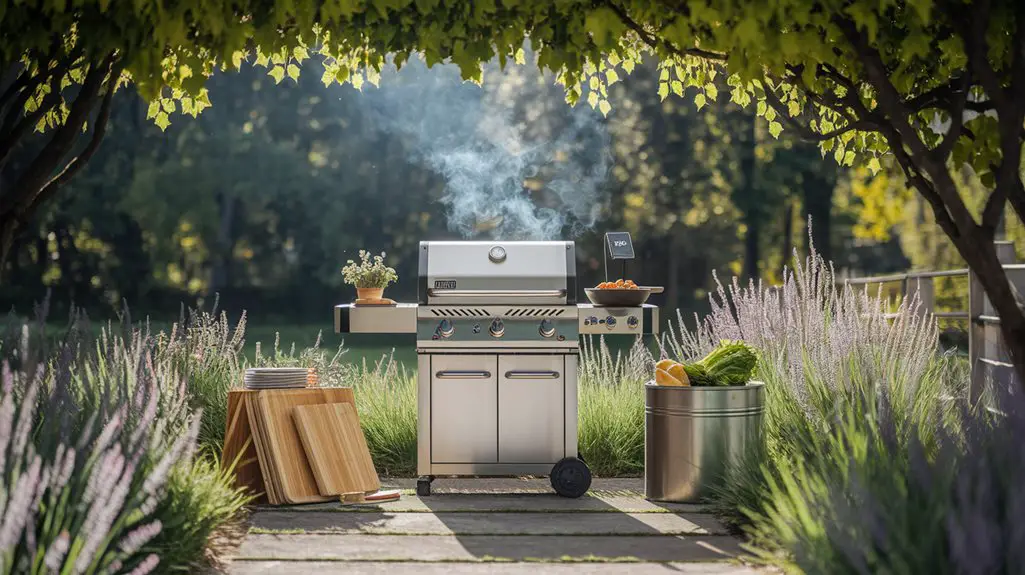
You’ve likely noticed the growing concern about traditional grilling’s environmental footprint. Your BBQ habits contribute to carbon emissions, from charcoal production’s deforestation to propane’s fossil fuel dependency.
Eco-friendly alternatives now offer good heat distribution with lower CO₂ output, and some can trim your long-term fuel costs. The question isn’t whether green grilling technology works, but which sustainable system best fits your outdoor cooking needs.
On this page
The Environmental Impact of Traditional Grilling Methods
While many people enjoy traditional grilling methods, they often overlook the significant environmental impact these practices create.
Charcoal grills generally produce more CO2 per cookout than propane models, and some charcoal production contributes to deforestation.
You’re also generating particulate matter when using traditional grills: charcoal smoke carries fine particles (PM2.5), so keep the grill away from open windows and where people sit.
Starter fluids contain volatile organic compounds (VOCs) that contribute to ground-level ozone formation.
Propane grills, while cleaner, still contribute to fossil fuel dependency, as they burn a non-renewable fuel. Furthermore, adopting eco-friendly fire pit designs can mitigate some of these harmful effects by providing a more sustainable alternative for outdoor cooking.
What Makes a BBQ Grill Truly Eco-Friendly?
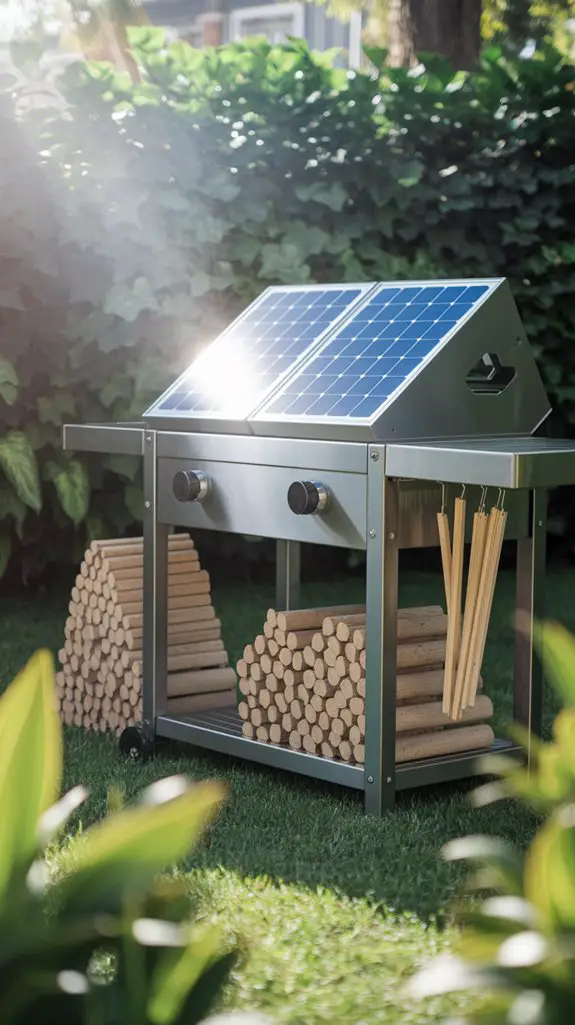
The definition of a truly eco-friendly BBQ grill extends beyond mere marketing claims to quantifiable metrics of sustainability.
When evaluating environmental credentials, you’ll need to analyze the grill’s complete lifecycle emissions, from manufacturing processes to operational efficiency and end-of-life recyclability.
- Published carbon-footprint data, ideally verified to a standard such as ISO 14067, rather than vague “green” claims.
- A high share of recycled or renewable materials, with the maker saying where they come from.
- Efficient burners and good insulation, so less fuel heats the cooking surface.
The manufacturing process bears equal importance—look for brands utilizing renewable energy in production facilities and implementing zero-waste policies.
Additionally, consider how functional outdoor kitchen designs can enhance your grilling experience while promoting sustainability.
Your eco-friendly grill investment should deliver quantifiable environmental benefits through scientifically verifiable metrics.
Top Renewable Energy Options for Modern Grilling
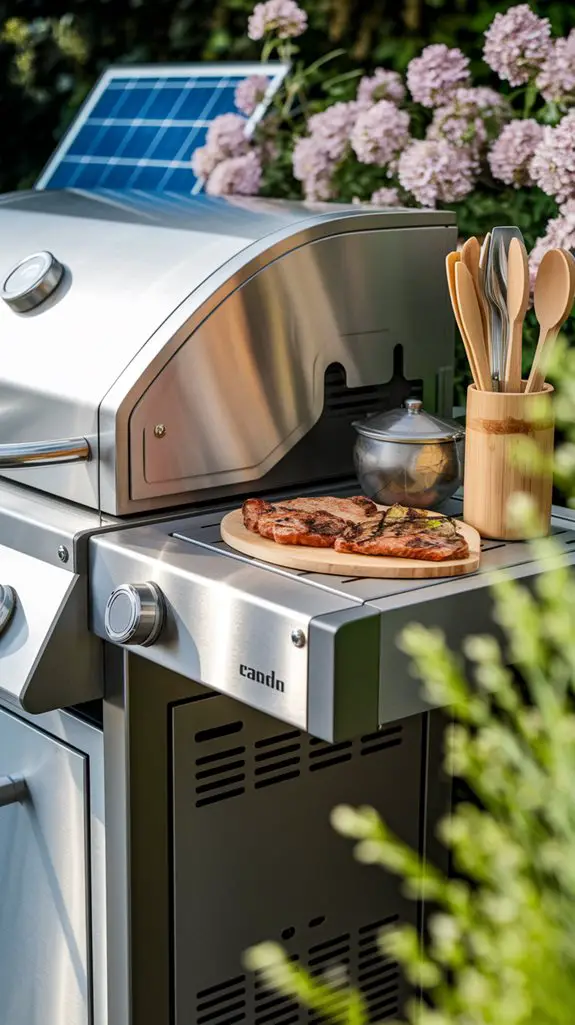
Modern grilling enthusiasts have five primary renewable energy alternatives that deliver significant environmental benefits while maintaining ideal cooking performance. Solar-powered grills utilize photovoltaic panels to generate electricity, while biogas systems convert food waste into combustible methane.
Electric grills paired with renewable energy sources offer zero direct emissions when cooking. Additionally, budget-friendly BBQ grill ideas can further enhance your outdoor cooking experience without breaking the bank.
| Energy Source | Emissions While Cooking | Setup Cost |
|---|---|---|
| Solar | None at the grill | $300-700 |
| Biogas | Burns captured methane | $200-450 |
| Wind-Electric | Depends on your power supply | $350-900 |
How hot these alternatives get varies a lot by model and, for solar cookers, by the weather, so check the maker’s temperature range before you buy. Lower fuel costs offset part of the initial investment ($200-900) over time.
Sustainable Materials in Eco-Friendly Grill Construction
Selecting appropriate materials for eco-friendly grill construction greatly impacts both environmental sustainability and cooking performance.
When evaluating options, you’ll find that stainless steel made largely from recycled scrap generally has a lower carbon footprint than steel made from new iron, with the same cooking performance.
Bamboo components, which regrow far faster than traditional hardwoods, provide sustainable alternatives for handles and preparation surfaces.
- Recycled aluminum takes about 95% less energy to produce than new aluminum, according to the Aluminum Association, and cuts the need for bauxite mining.
- Ceramic (kamado-style) bodies hold heat well and can last many years with care.
- FSC-certified wooden elements guarantee responsible forestry practices with complete supply chain verification.
Your grill’s material composition determines not only its environmental footprint but also its durability, heat management properties, and maintenance requirements. Additionally, incorporating sustainable materials into your outdoor kitchen design enhances both aesthetics and eco-friendliness.
Reducing Your Carbon Footprint While Still Enjoying Outdoor Cooking
Beyond material considerations, your grilling practices greatly affect environmental impact. Efficient fuel usage notably reduces emissions while maintaining cooking performance.
Cut your carbon output with these strategies. Additionally, consider using BBQ grill setups that enhance your outdoor movie night experience while being eco-friendly.
| Fuel Type | CO₂ Emissions | Efficiency Rating |
|---|---|---|
| Charcoal | Highest | Low |
| Propane | Lower | Medium |
| Electric | Depends on the power source* | High |
*Varies by power source; renewable energy reduces to near-zero emissions.
Implement these techniques: preheat only to necessary temperature, utilize aluminum heat reflectors to maximize efficiency, cook multiple items simultaneously, and maintain proper lid closure. These adjustments preserve traditional BBQ quality while using less fuel.
Economic Benefits of Switching to Green Grilling Solutions
Eco-friendly grilling can cost more up front, but it can save on fuel over time.
High-efficiency grills can cut fuel costs, as they use heat more effectively than traditional counterparts.
- Electric grills eliminate recurring propane purchases and trips to refill tanks.
- Solar-powered accessories such as lights run without grid electricity.
- Long-lasting materials mean replacing equipment less often.
Additionally, incorporating rainwater harvesting into your outdoor setup can further enhance the sustainability of your grilling experience.
These economic advantages compound annually, making eco-friendly grilling both environmentally and financially advantageous over conventional options.
Setting Up Your Backyard for a Complete Eco-Grilling Experience
Creating an integrated eco-friendly grilling space involves strategic layout planning and environmental optimization beyond the grill itself.
Position your station in the open, clear of overhanging branches, eaves and deck railings as the NFPA advises, where smoke can blow away from seating. Incorporate permeable surfaces that reduce runoff compared to concrete patios.
Install solar-powered LED lighting (3-5 watts per fixture) for evening grilling, which runs without grid power.
Consider rainwater collection systems with 50-gallon minimum capacity for cleaning and plant irrigation. Arrange your cooking workflow in a 120° arc to minimize movement and energy expenditure.
Complement your setup with locally sourced recycled furniture and native plants that need less water than many non-native species while attracting beneficial pollinators. A well-designed DIY BBQ grill setup can enhance your outdoor cooking experience while promoting sustainability.
Conclusion
By shifting to eco-friendly BBQ setups, you’re killing two birds with one stone—reducing environmental impact while optimizing operational costs. Your investment can trim fuel use year after year, so sustainable grilling pays off for the environment and, over time, your budget.
