

Most backyard gatherings fail not from lack of food or drinks, but from poor spatial planning that creates bottlenecks and uncomfortable guest experiences. You'll need to strategically map your outdoor space, creating distinct zones for dining, conversation, and activities while maintaining natural flow between areas.
Consider sun patterns throughout the day when positioning tables and seating areas. The techniques professional event planners use to maximize comfort and interaction will transform how you approach your next summer gathering.
On this page
Creating the Perfect Outdoor Dining Space
When designing your outdoor dining space, consider the fundamental aspects of spatial planning to maximize both functionality and comfort. Allocate 24-30 inches of table perimeter per guest and guarantee 36 inches of clearance behind seated diners for proper circulation.
Select weather-resistant materials like reclaimed teak, recycled plastic lumber, or sustainably harvested acacia for your dining set. These options provide longevity while minimizing environmental impact.
Incorporate multi-functional features—benches with storage, tables with adjustable heights, or modular seating—to adapt to various event sizes. Additionally, explore charming outdoor kitchen ideas that complement your dining area for a cohesive outdoor experience.
Position your dining area in a partially shaded location to mitigate direct sun exposure without sacrificing natural light. Install solar-powered LED string lights or lanterns to extend usability into evening hours.
For wind protection, consider retractable canvas screens or strategic plantings of native perennial shrubs.
Lighting Ideas to Set the Mood
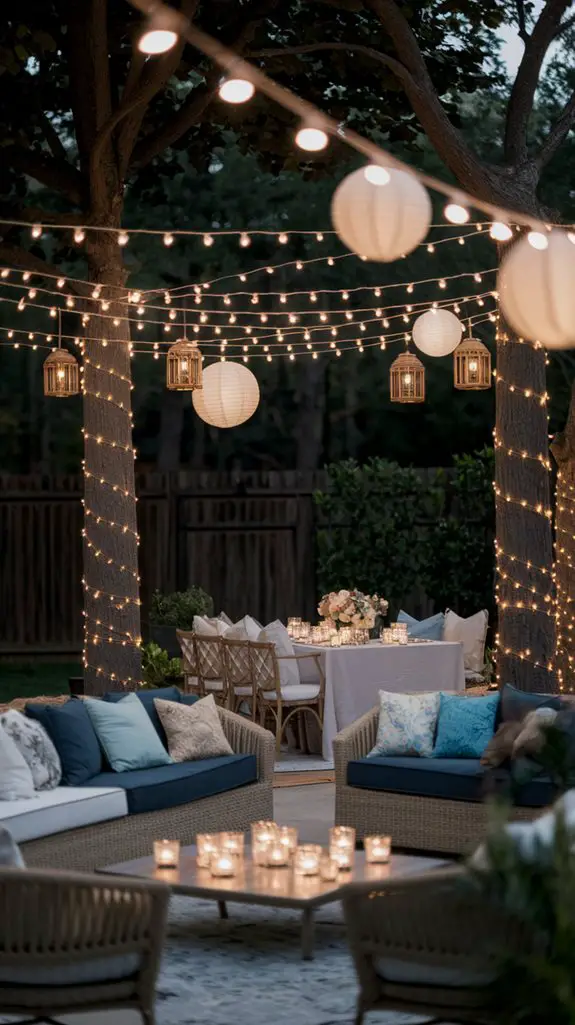
Because outdoor lighting serves as both functional illumination and atmospheric design, you'll need to consider how solar-powered lighting can enhance your garden's aesthetic while being environmentally friendly.
Essential Party Equipment and Furniture
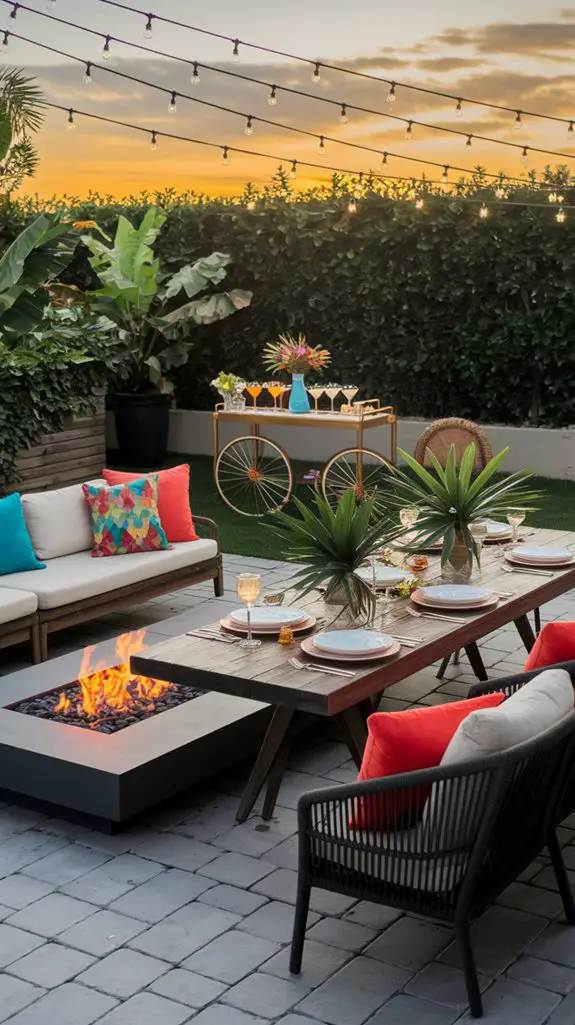
While lighting creates atmosphere, properly selected equipment and furniture form the functional backbone of any successful outdoor gathering. Invest in modular, weather-resistant seating that you can reconfigure based on party size and type.
Look for FSC-certified wooden furniture or recycled polymer options that withstand UV exposure while minimizing environmental impact.
For dining, select stackable tables with adjustable heights—ideal for both buffet service and seated meals. Consider a portable outdoor bar cart with integrated cooling storage to minimize trips indoors.
Complement with an energy-efficient outdoor refrigerator if your entertainment schedule justifies the investment.
Don't overlook shade structures; retractable awnings or umbrellas made from recycled PET fabrics offer UV protection while allowing airflow.
For extended evening use, portable propane or electric heaters extend your outdoor season considerably. Additionally, incorporating an entertainment zone can elevate your gatherings to a whole new level of enjoyment.
Weatherproofing Your Outdoor Entertainment Area
Equipping your outdoor space with the right furniture sets the stage, but Mother Nature frequently challenges even the best-planned gatherings. To guarantee all-season functionality, install a retractable awning system with UV-resistant fabric, and retract it in strong winds as the maker directs.
Implement proper drainage channels with a 1:48 slope ratio around your entertainment area to prevent water pooling. Composite decking with embedded moisture barriers offers superior resistance to warping compared to traditional lumber.
For electrical components, invest in IP65-rated fixtures designed to withstand direct water exposure.
Consider permeable pavers that reduce runoff while allowing groundwater recharge. Supplement with drought-resistant native plantings as natural windbreaks to enhance your outdoor comfort.
These weatherproofing strategies create a resilient outdoor space that's environmentally responsible and ready for unpredictable climate conditions.
DIY Backyard Games and Activities
Once your weatherproofed entertainment area stands ready, transform it into an interactive playground with custom-built games that engage guests across generations.
Construct an oversized Jenga tower using untreated cedar planks (2x4s cut into 10.5" lengths) for durability and minimal environmental impact. Sand edges thoroughly to prevent splinters.
Create cornhole boards from reclaimed plywood; apply marine-grade sealant for longevity. Fill bean bags with dried corn rather than synthetic materials for biodegradability.
For water-based entertainment, design a recycled PVC pipe sprinkler system that connects to your garden hose. Drill 1/8" holes at strategic intervals for ideal water distribution.
Install ground-flush solar LED lights to outline game boundaries for evening play, eliminating trip hazards while operating at zero energy cost. Additionally, consider incorporating fun outdoor games to encourage friendly competitions among guests.
Plant Arrangements and Garden Features
Strategic placement of native plant arrangements creates visual interest while serving multiple ecological functions in your entertainment space.
Install drought-resistant perennials in tiered containers to maximize vertical space while minimizing water consumption. Position pollinator-friendly species near seating areas for natural pest control and ambient fragrance.
Consider incorporating these sustainable garden features:
- Rainwater collection systems connected to drip irrigation for self-sufficient watering during summer drought periods
- Permeable hardscaping materials that reduce runoff while defining connecting zones between entertainment areas
- Solar-powered pathway lighting with downward-facing fixtures that minimize light pollution while highlighting architectural plantings
Layer different foliage textures—feathery grasses, broad-leafed shrubs, and trailing vines—to create depth without requiring excessive maintenance during peak entertaining season. Additionally, integrating eco-friendly rainwater harvesting systems can enhance your garden's sustainability and efficiency.
Budget-Friendly Decoration Hacks
Transforming your outdoor space needn't deplete your savings when you implement resourceful decoration techniques that maximize visual impact while minimizing environmental footprint.
Repurpose glass jars as hurricane lanterns by inserting tea lights or LED candles, then suspend them from branches using jute twine for ambient illumination.
Construct table centerpieces from foraged materials—pinecones, driftwood, or seasonal foliage—arranged on reclaimed wood slices.
For seating areas, stack wooden pallets recovered from local businesses to create modular furniture, topped with cushions fashioned from weather-resistant fabric remnants.
Convert tin cans into planters for herbs or succulents after removing labels and drilling drainage holes.
Paint them with non-toxic, water-based formulations in complementary hues.
Incorporating creative backyard storage ideas can further enhance your space, ensuring it remains both functional and inviting for summer gatherings.
These biodegradable alternatives to plastic decorations provide sustainability while delivering sophisticated aesthetic appeal.
Food and Drink Station Setups
Three well-designed food and drink stations form the backbone of successful summer gatherings, allowing guests to serve themselves while you focus on hosting.
Position stations strategically around your yard to prevent crowding and guarantee smooth traffic flow. Utilize repurposed wooden pallets or weathered tables draped with natural linens for an eco-conscious presentation.
For maximum functionality, incorporate these elements:
1. Hydration Hub – Install a galvanized tub with ice for beverages, ensuring guests stay refreshed while engaging in family-friendly BBQ grill setups that enhance the overall experience.
Conclusion
Your eco-conscious backyard transformation isn't just a party zone—it's a revolutionary outdoor living system. You've integrated sustainable materials, optimized solar-powered lighting arrays, and implemented water-efficient plant groupings that'll survive even record-breaking heat waves.
By balancing permeable surfaces with strategically positioned shade structures, you've created a microclimate that stays cooler than a bare concrete patio. This isn't just entertainment—it's environmental engineering at its finest.
