
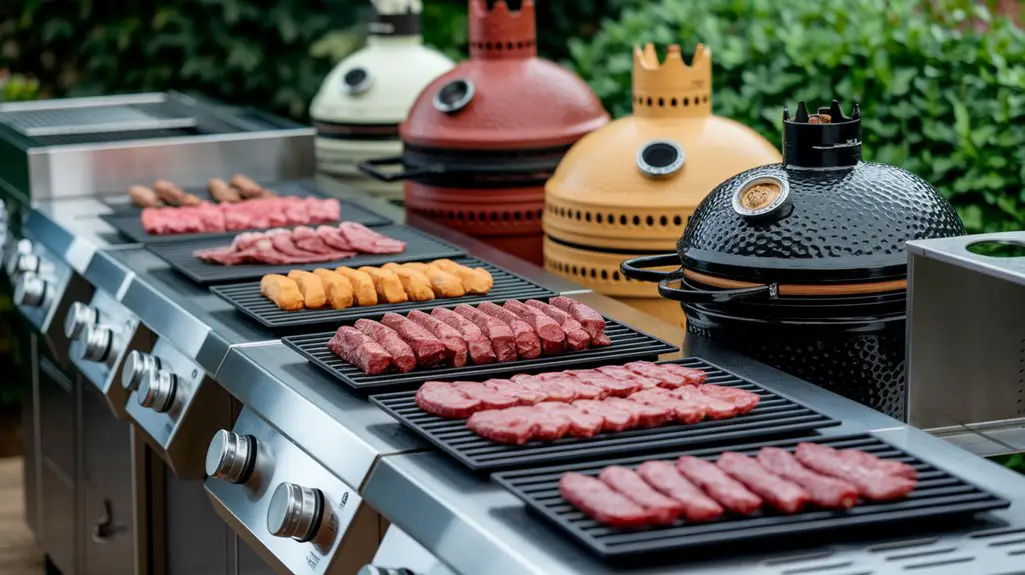
A standard gas grill can’t replicate the distinctive smoky char of authentic paella valenciana cooked over orange wood. You’ll find that your backyard BBQ setup likely needs specific modifications to achieve authentic global flavors. From Japanese konro grills for perfect yakitori to South American parrilla setups for asado, each culture’s grilling techniques demand purpose-built equipment that honors traditional cooking methods while enhancing ingredient-specific heat control.
On this page
American BBQ Station: Smokers and Offset Grills
When it comes to authentic American barbecue, smokers and offset grills stand as the cornerstone equipment for achieving those distinctive regional flavors.
These setups create the low-and-slow cooking environment essential for transforming tough cuts like brisket, pork shoulder, and ribs into tender, smoke-infused masterpieces.
Your offset smoker features a separate firebox that channels heat and smoke into the main cooking chamber, allowing for precise temperature control and minimal direct heat.
For Texas-style smoking, you’ll want a setup that maintains 225-275°F for extended periods. Vertical smokers excel at maintaining consistent temperatures while conserving space.
Don’t forget accessories like temperature gauges, water pans for humidity control, and hardwood chunks (hickory for Southern BBQ, mesquite for Southwestern).
With the right smoker setup, you’ll capture those iconic regional BBQ profiles from Carolina vinegar tang to Kansas City sweetness.
Mediterranean Grill Setup With Skewer Attachments
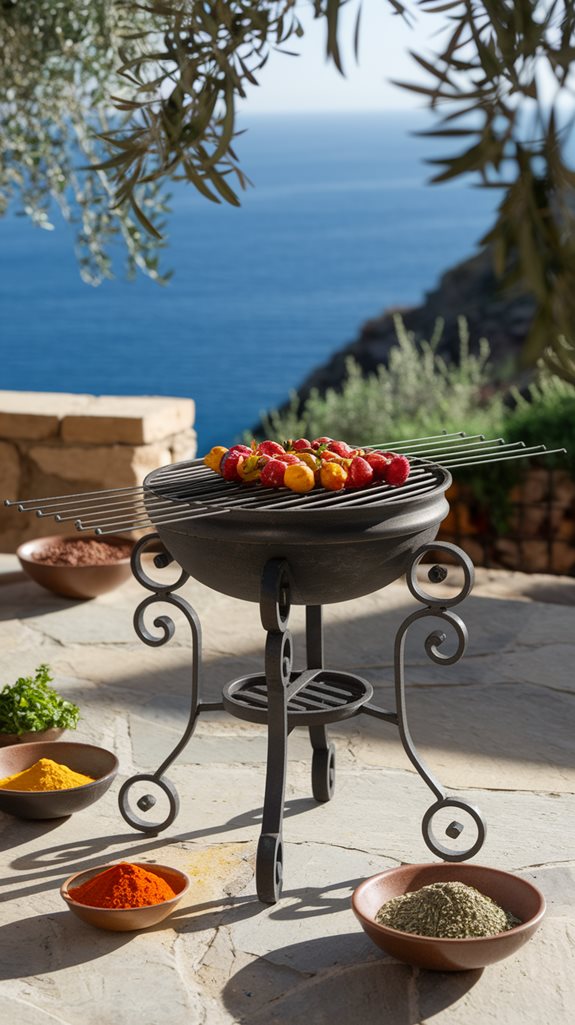
The versatile Mediterranean grill setup revolves around specialized skewer attachments that transform standard equipment into authentic kebab stations.
You’ll need a horizontal rod system that accommodates both flat metal skewers for kofta and thin round ones for souvlaki or shish kebab.
Look for adjustable-height brackets that allow you to control the cooking temperature with precision. Many quality setups include a drip tray for capturing aromatic fat drippings, perfect for basting or making savory sauces.
For true Mediterranean authenticity, add a small charcoal basket designed specifically for burning aromatic woods like olive or grape vine cuttings. These impart the distinctive smoky notes essential to dishes like Turkish şiş kebap or Greek arni souvlas.
The ideal setup integrates seamlessly with your existing grill while providing the specialized functionality these classic dishes demand.
Asian-Inspired BBQ Configurations for Wok and Steam Cooking
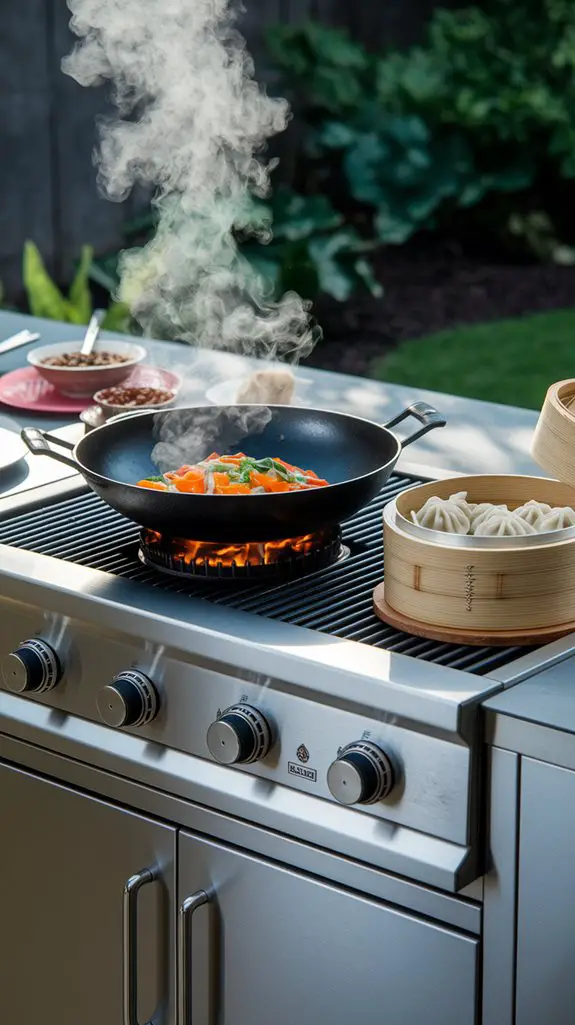
Asian-inspired BBQ configurations represent a fascinating shift from skewer-focused setups to systems that accommodate high-heat wok cooking and gentle steaming. You’ll need specialized attachments that transform your standard grill into a versatile Asian cooking station.
| Component | Function |
|---|---|
| Wok ring | Stabilizes round-bottomed woks |
| Bamboo steamers | Creates multi-level dim sum setups |
| Water tray | Maintains humidity for steaming |
| Side burner | Provides dedicated high-BTU cooking |
For authentic wok hei flavor, you’ll want a setup that reaches temperatures above 500°F. Consider installing a dedicated side burner with at least 50,000 BTUs to achieve proper stir-fry conditions. When configuring for steaming applications, place a water reservoir beneath your bamboo baskets, allowing the grill’s heat to generate consistent steam for dumplings, fish, and vegetables.
South American Asado: Creating an Authentic Setup
Unlike typical American BBQ setups, authentic South American asado configurations require specialized equipment that honors centuries-old cooking traditions.
You’ll need a proper parrilla—a grill with adjustable heights—and a cruceta cross-frame for whole animal cooking.
Position your setup to accommodate variable wind conditions, as Argentinian and Uruguayan asadores do.
Install a brasero (fire pit) separate from your cooking surface to generate clean-burning embers that you’ll shovel under the meat.
For authenticity, add a plancha—a cast iron surface for vegetables and smaller cuts.
Your wood choice matters tremendously: quebracho or mesquite provides the signature flavor profile that defines proper asado.
Remember to arrange seating around the grill, as asado isn’t just cooking—it’s a social ritual. Stylish seating arrangements can enhance the overall experience and comfort of your guests.
Traditional Japanese Yakitori and Hibachi Arrangements
Japanese yakitori and hibachi setups require fundamentally different design principles than Western grilling systems, focusing on precise heat control rather than smoke production.
For yakitori, you’ll need a narrow, rectangular grill with binchotan charcoal, Japan’s traditional white charcoal that burns at consistent temperatures with minimal smoke.
Your hibachi setup demands a flat, cast-iron cooking surface over an open flame. Position it at table height for the authentic experience where you’ll cook small, bite-sized portions directly in front of diners.
The key distinction is temperature zones—maintain one end of your yakitori grill at higher heat for searing, with cooler zones for gentle cooking of delicate items like chicken skin and vegetables.
Both systems rely on premium charcoal rather than gas for authentic flavor development.
Caribbean Jerk BBQ: Custom Heat Zones and Smoke Management
While Japanese grilling emphasizes clean heat with minimal smoke, authentic Caribbean jerk BBQ demands the opposite approach—robust smoke infusion and variable temperature control across your cooking surface. You’ll need to create distinct heat zones to properly execute jerk chicken or pork with its characteristic char and tenderness.
| Zone | Temperature | Ideal Use |
|---|---|---|
| Direct | 400-450°F | Initial searing |
| Indirect | 275-325°F | Slow cooking |
| Cool | Below 250°F | Resting meat |
| Smoke | Variable | Flavor infusion |
| Drip | N/A | Catching marinade |
Set your primary smoke source (pimento wood or allspice branches) at the edge of your indirect zone. This placement allows the meat to absorb the aromatic compounds without burning your spice rub. A water pan beneath the cooking grate helps regulate humidity and catches flavorful drippings.
Middle Eastern Kebab and Flatbread Grill Stations
How can you transform a standard backyard grill into an authentic Middle Eastern cooking station?
First, create a dual-zone setup with a blazing hot area (500°F+) for proper kebab char and a moderate zone (350°F) for flatbreads.
Install wide, flat skewers positioned horizontally above the grates to prevent meat rotation during cooking.
- Add a small cast iron surface for heating flatbreads and pita with that vital slight char.
- Install a mezze warming station using a heat-resistant rack at the cooler end of your grill.
- Consider soapstone inserts that retain heat beautifully for shawarma-style cooking.
- Mount a dedicated sumac, za’atar, and baharat spice caddy within arm’s reach.
Finish with a small water spritzer nearby—essential for controlling flare-ups from lamb fat and keeping flatbreads properly hydrated.
Indian Tandoor-Style Adaptations for Standard Grills
Though traditional tandoors reach temperatures of 900°F, you can recreate their distinctive cooking environment on a standard grill with the right modifications.
Start by placing a pizza stone or unglazed terracotta tiles on your grill grates to concentrate heat. Preheat your covered grill to maximum temperature for at least 30 minutes.
For naan and roti, you’ll need a custom setup: invert a large terracotta pot over the stone to trap heat. Stick dough directly on the interior walls using wet hands.
For tandoori chicken and proteins, marinate with yogurt, lemon, and spices, then thread onto metal skewers. Position them vertically near direct heat.
The key to authentic flavor is maintaining high, dry heat while allowing smoke circulation. Don’t forget to brush ghee on finished breads for that authentic shine. Additionally, using seasonal BBQ grill setups can enhance your cooking experience by adapting to different weather conditions and ingredients.
Conclusion
As you gather around your tailored global grill setup, you’re not just cooking—you’re crossing continents. Picture the sizzle of marinated shawarma on your Middle Eastern station, smell the sweet smoke from your Caribbean jerk drum, feel the intense heat from your hibachi coals.
Each flame-kissed creation tells a story of tradition, technique, and terroir. Your backyard’s now a culinary passport, where fire unites the world’s diverse flavor languages.
