

Shade installations have evolved from purely functional elements to defining features that transform architectural character and spatial experience. You’ll notice how these seven designs go beyond simply blocking sunlight—they create microclimates, sculpt light patterns, and establish distinctive outdoor rooms.
The interplay between material, form, and environmental conditions yields spaces that respond dynamically to changing seasons and times of day. From translucent fabrics that filter light to living structures that grow more beautiful with time, these installations offer compelling solutions to enhance your exterior spaces.
On this page
Sculptural Sail Canopies: Modern Art Meets Practical Shade
When design aesthetics converge with functional necessity, sculptural sail canopies emerge as the perfect embodiment of this union. These tensioned fabric installations transform ordinary spaces into dynamic environments where light, shadow, and form interact continuously throughout the day.
You’ll find these architectural elements crafted from high-density polyethylene or PVC-coated polyester fabrics that block 95-98% of UV rays while maintaining visual lightness. The triangular, rectangular, or custom geometric shapes can be installed at varying heights and angles to create microclimates beneath them.
Consider the mounting points carefully—structural posts, existing architecture, or trees must withstand tension forces of 900-1,500 pounds. The hardware components—turnbuckles, pad eyes, and marine-grade stainless steel cables—ensure longevity in harsh outdoor conditions while preserving the clean, floating aesthetic. Additionally, the versatility of creative shade structures allows for personalized designs that complement any outdoor decor style.
Living Green Pergolas With Climbing Plants
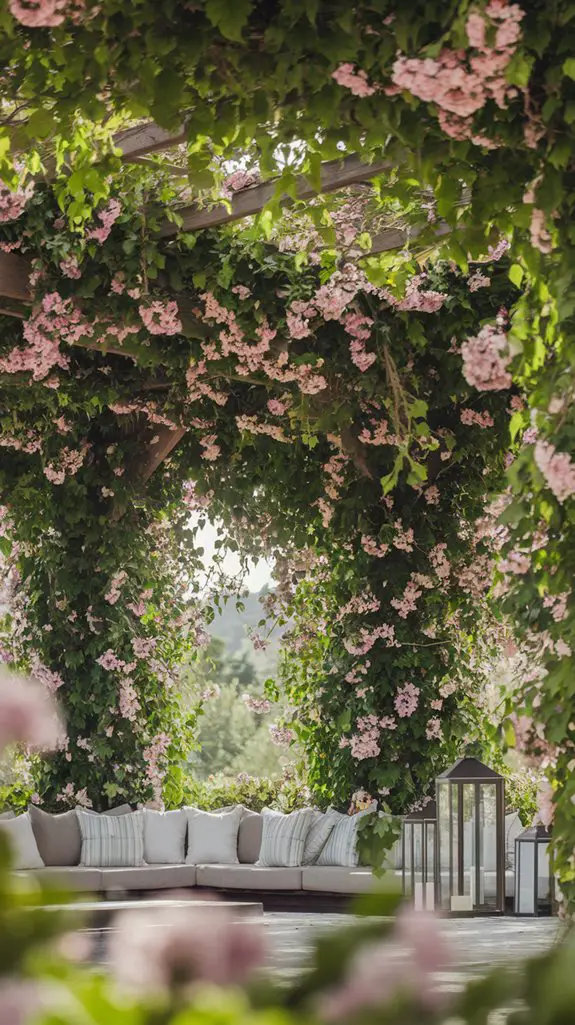
While traditional shade structures protect from the sun, living green pergolas elevate this functionality by creating dynamic ecosystems overhead.
You’ll establish this living architecture by selecting robust climbing plants like wisteria, jasmine, or grape vines that intertwine with the pergola’s framework.
Position your pergola to maximize both shade potential and plant health, considering the sun’s daily arc across your space.
Install proper support systems—steel cables, mesh panels, or threaded rods—that guide plant growth without compromising structural integrity.
Your pergola requires calculated seasonal maintenance: spring training of new shoots, summer pruning to manage density, and fall cutbacks to prepare for dormancy.
This living system evolves constantly, creating dappled light patterns that shift with growing foliage while naturally cooling the space through transpiration—transforming rigid structures into breathing canopies. Incorporating vertical gardening techniques can further enhance the aesthetic appeal and greenery of your outdoor space.
Retractable Fabric Awnings With Designer Patterns
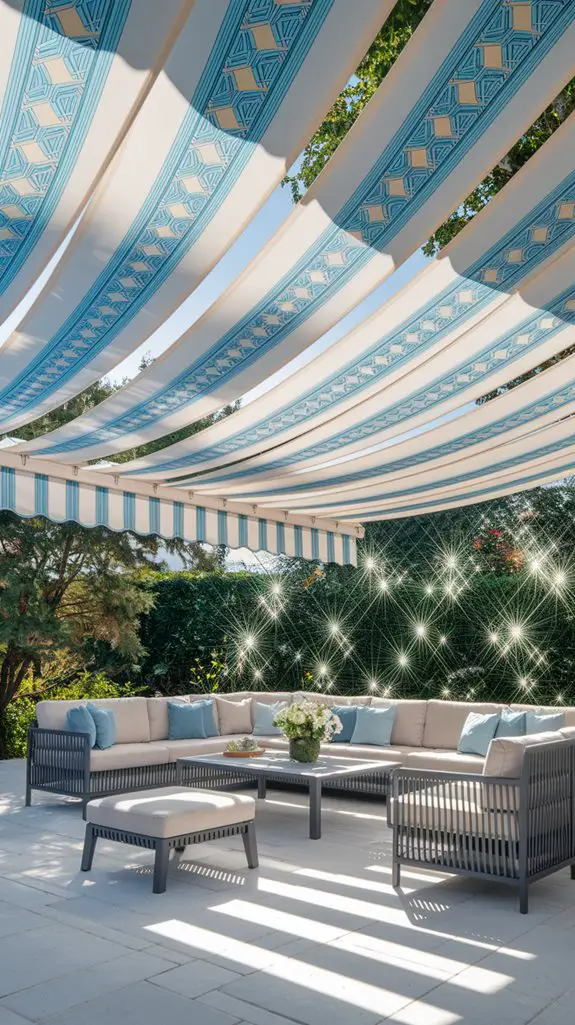
Versatility defines retractable fabric awnings, offering you precise control over outdoor light exposure while introducing visual dynamism to your exterior spaces.
Today’s designer patterns transcend mere functionality, serving as architectural statements that harmonize with your home’s aesthetic. You’ll find geometric motifs that create rhythm across extended surfaces, while botanical prints blur the boundary between structure and surrounding landscape.
Opt for fade-resistant acrylic fabrics in 500+ color combinations, ensuring 98% UV protection without sacrificing style. Incorporating eco-friendly materials in your outdoor projects can further enhance sustainability.
Modern motorized systems allow seamless deployment via smartphone integration, adjusting automatically to changing weather conditions through wind and sun sensors.
Consider semi-cassette designs that protect fabric when retracted, which helps your awning’s fabric last longer. For multi-level patios, vertical drop screens with transparent panels maintain views while blocking low-angle sunlight.
Floating Umbrella Gardens for Multi-Level Protection
Transforming conventional shade concepts, floating umbrella gardens create immersive three-dimensional canopies that provide overlapping protection across multiple height zones.
You’ll experience microclimate control as these suspended installations capture and redirect airflow while filtering sunlight through strategically positioned layers.
- Height-staggered deployment – Position smaller umbrellas at 7-8 feet with larger canopies at 9-12 feet to create cooling air corridors.
- Translucency gradient – Utilize darker fabrics above with progressively lighter materials below for ideal light diffusion.
- Hydration integration – Incorporate misting systems within umbrella ribs for evaporative cooling.
- Modular connectivity – Link umbrella clusters with tensile connectors to eliminate sun penetration gaps.
When engineered properly, your floating umbrella garden delivers solid UV protection while maintaining visual openness through calculated negative space between elements. Additionally, affordable patio shade ideas can enhance your outdoor space with budget-friendly options that complement these stunning installations.
Glass and Metal Pavilions: Architectural Statement Pieces
Unlike fabric-based solutions, glass and metal pavilions serve as permanent architectural focal points that merge form with sophisticated environmental control.
These statement pieces transform outdoor living through structural integrity and visual transparency, creating year-round havens that resist extreme weather while maintaining panoramic views.
You’ll find cutting-edge pavilions featuring electrochromic glass that adjusts opacity based on sunlight intensity, complemented by precision-engineered aluminum or steel frameworks.
The interplay between reflective metals and transparent planes creates dramatic shadow patterns across your landscape.
Consider positioning your pavilion where it’ll capture morning light while providing afternoon relief.
Many designs incorporate retractable panels and integrated drainage systems, allowing you to modulate airflow and temperature.
Additionally, choosing eco-friendly materials can enhance the sustainability of your outdoor space while ensuring durability.
The result is a sculptural sanctuary that doesn’t merely shade—it elevates your entire property’s architectural narrative.
Japanese-Inspired Bamboo Shade Structures
The ancient Japanese art of bamboo construction reimagines outdoor shade through an elegant fusion of structural integrity and ephemeral beauty.
You’ll find these structures bring zen-like tranquility while creating dappled light patterns that shift throughout the day. Additionally, incorporating stylish shade solutions can enhance the overall aesthetic of your outdoor space.
When incorporating bamboo shade elements, consider:
- Roof Pitch – Traditional 45° angles optimize rainfall runoff while creating visual height
- Joinery Techniques – Authentic bamboo lashing creates strength without metal fasteners
- Spatial Rhythm – Alternating thick and thin culms establishes visual cadence
- Seasonal Adaptability – Removable side panels allow customization as weather changes
Bamboo’s natural hollowness provides remarkable strength-to-weight ratio while its golden-honey patina develops naturally with age.
Unlike heavier materials, these structures create the illusion of floating overhead, transforming your outdoor space into a contemplative retreat.
Suspended Textile Art: Colorful Canvases Overhead
When vibrant textiles dance overhead, your outdoor space becomes a living gallery of color and movement. Suspend lightweight fabric panels at varying heights to create dimension while maintaining critical airflow. You’ll need UV-resistant sailcloth or weather-treated canvas to withstand outdoor conditions.
Position textiles to track the sun’s path, implementing strategic overlaps that shift shadow patterns throughout the day. Attachment points require reinforced grommets at 18-inch intervals to distribute tension evenly across the fabric’s surface.
For wind management, incorporate strategic cutouts or install with calibrated tension systems that allow controlled movement without structural compromise.
Consider seasonal palettes—cool blues and greens for summer heat reduction, warm oranges and reds to capture minimal winter warmth. You’re creating not just shade, but an ever-changing environmental art installation. Additionally, using modern garden landscaping ideas can further enhance the coziness and functionality of your outdoor spaces.
Conclusion
These seven shade installations transform your outdoor space like an artist’s brush on canvas, blending form with function in perfect harmony. You’ll create a microclimate that responds to your needs while adding architectural interest. Whether you prefer the organic flow of living structures or the clean lines of modern materials, there’s a shade solution that complements your landscape’s spatial composition and enhances its visual narrative.
