Nearly 67% of garden designers report that pathway design is the most overlooked element in creating authentic Zen gardens. You’ll find that a thoughtfully crafted path doesn’t merely connect spaces—it guides contemplation and creates a journey through carefully orchestrated moments of discovery. By mastering the balance between structure and openness, your garden pathway can transform an ordinary outdoor space into a sanctuary where each step brings deeper connection with the surrounding landscape.
The Mindful Use of Negative Space
While traditional garden design often emphasizes filling space, Zen pathway design begins with understanding emptiness.
You’ll need to intentionally create voids between stepping stones, allowing the eye to rest and the mind to contemplate. This negative space (ma) isn’t merely absence—it’s purposeful restraint.
When planning your pathway, map areas where nothing will exist. Establish a 60:40 ratio of open to occupied space.
Position stones at irregular intervals that still follow natural stride patterns (typically 24-30 inches apart). The intervening areas should feature fine gravel or sand that you’ll rake regularly.
Remember that negative space creates rhythm and balance. It’s where tension dissolves and meditation occurs. In addition, consider incorporating comfortable seating arrangements to enhance the overall experience of your outdoor space.
Your pathway becomes not merely a route but a journey through carefully crafted emptiness.
Balancing Hard and Soft Elements Along Pathways

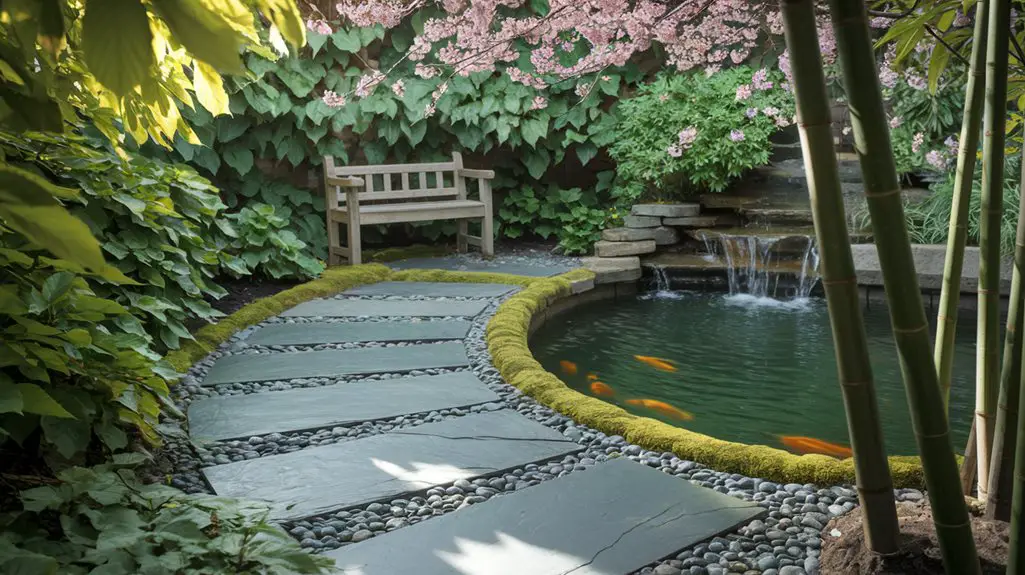
The essence of Zen pathway design emerges through the deliberate interplay between rigid materials and living elements. Your pathways should establish a harmonious dialogue between stone pavers and moss groundcover, creating tension that guides both eye and foot.
Position harder elements—granite stones, concrete pavers, or gravel—to define the path’s structure, while softer components—grasses, moss, or low-growing sedums—soften edges and introduce movement.
Consider the 60/40 ratio: allocate 60% to permanent materials and 40% to vegetation for ideal balance.
In high-traffic zones, increase durable materials while maintaining visual softness through adjacent plantings. Select plants that withstand seasonal changes while complementing your hardscape’s texture and color. Incorporating vertical gardens can also enhance the overall aesthetic in shaded areas along your pathway.
This balanced composition creates not just a physical journey but a contemplative experience that honors Zen’s reconciliation of opposites.
Incorporating Natural Stone Placement Techniques
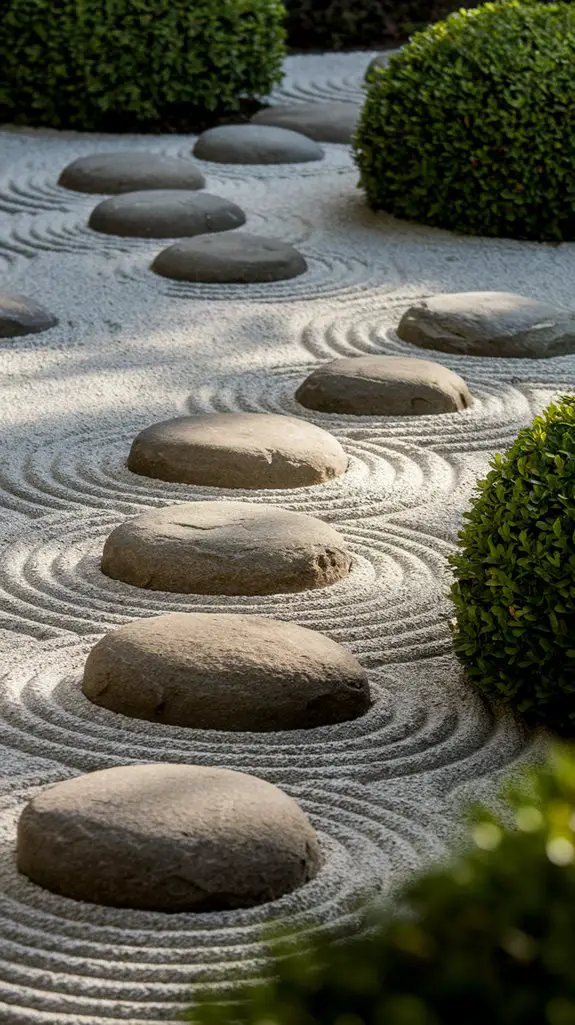
Natural stone placement forms the structural foundation of authentic Zen pathway design, where each element must be positioned with deliberate intention rather than random arrangement.
When selecting stones, consider their relationship to surrounding elements and the negative space they create. You’ll need to establish visual rhythm by varying stone sizes while maintaining proportional harmony.
- Position larger “anchor stones” first, creating focal points that guide the eye and movement along the pathway.
- Arrange stepping stones with 4-6″ gaps between them, allowing moss or gravel to fill interstices for proper drainage.
- Align stones with their natural bedding planes horizontal to prevent structural instability and maintain weathering patterns.
This technique, called ishigumi, requires you to honor each stone’s inherent character while creating a composition that appears naturally evolved rather than artificially constructed. Incorporating artistic garden pathway ideas can also enhance the overall aesthetic of your Zen garden.
Creating Rhythmic Flow With Curved Lines
Curved pathways in Zen garden design embody the principle of yugen—mysterious depth—by revealing the landscape gradually rather than all at once. You’ll create this rhythmic flow by incorporating gentle arcs that mirror natural formations found in rivers and wind-swept landscapes. When designing curves, maintain a 1:3 radius-to-width ratio for ideal visual balance and comfortable navigation. Position curves at critical change points to guide meditation and frame focal elements. Layer curved lines with varying materials—fine gravel shifting to stepping stones—to establish hierarchy and pace. Consider topographical contours when implementing curves, allowing pathways to respond organically to existing land features. This integrates your design with the site’s natural energy while minimizing erosion and unnecessary grading. The result: a garden experience that unfolds in harmonious, contemplative sequence. Incorporating eco-friendly materials can further enhance the sustainability of your garden paths.
Selecting Zen-Inspired Ground Materials
Traditional Zen aesthetics demand authentic materials that carry both symbolic meaning and practical functionality for your pathway design. Select elements like crushed granite, fine gravel, or raked sand to represent water’s flow and cultivate mindful walking experiences. Natural stone pavers create anchoring points amidst these fluid surfaces.
- Gravel compositions: Choose 6-8mm angular pebbles in neutral tones (alabaster, clay, or charcoal) to facilitate proper drainage while maintaining stability underfoot.
- Stepping stones: Incorporate flat basalt, slate, or limestone pieces at 60-70% of average stride length to encourage deliberate pacing.
- Border materials: Install recessed cedar, bamboo, or weathered steel edging to contain pathway materials while maintaining visual harmony with surrounding elements.
When selecting materials, prioritize local sourcing and permeable surfaces that support your garden’s ecological balance.
Strategic Placement of Lanterns and Focal Points
While designing your Zen garden pathway, you’ll need to carefully position lighting elements and focal points to establish rhythm and guide movement through the space. Place stone lanterns at key junctures where pathways curve or intersect, creating visual anchors that illuminate your journey.
| Element Type | Strategic Placement |
|---|---|
| Stone Lanterns | Path intersections, curves |
| Water Features | Viewable from rest areas |
| Bamboo Accents | Entry/exit thresholds |
| Standing Stones | Negative space markers |
| Moss Gardens | Shaded pathway edges |
Integrate focal points at approximately 3-5 meter intervals to create a measured cadence of discovery. Consider solar-powered fixtures for sustainable illumination that charges during daylight hours. Position each element to frame views that reveal themselves progressively, never exposing the entire composition simultaneously.
Harmonizing Water Features With Pathway Design
Water features serve as significant counterpoints to the structured elements of Zen pathway design, creating a dynamic balance between movement and stillness. When integrating water elements, position them at natural pathway shifts where visitors naturally pause to contemplate.
Design your paths to curve gently toward water features, establishing sight lines that reveal these elements gradually rather than all at once.
- Install small stepping stone paths across shallow water basins to create mindful crossing experiences.
- Position recirculating fountains at pathway junctions to mask ambient noise and enhance meditation.
- Incorporate permeable pathway materials adjacent to water features to manage drainage sustainably.
Consider how seasonal changes affect water feature visibility and accessibility from your pathways. This temporal dimension adds depth to your garden experience, rewarding return visits throughout the year. Additionally, incorporating stone water features can enhance the visual appeal and tranquility of your garden oasis.
Conclusion
Your zen garden pathway isn’t just a route through your space—it’s a journey for mindful reflection. By balancing negative space, integrating curved lines, and thoughtfully placing natural elements, you’ve created a sustainable sanctuary. Haven’t you noticed how strategic lantern placement transforms evening experiences? Remember that technical precision in material selection and spatial awareness in focal point positioning will guarantee your pathway maintains its tranquil harmony through every season.