
You’ll find few garden elements as enduring as a well-designed brick pathway. These timeless features merge functionality with aesthetic appeal, creating structure while guiding movement through your outdoor space.
Brick pathways come in various patterns—each with distinct visual impact and practical benefits. From the sophisticated diagonal weaves to simple running bonds, your choice of design affects not just appearance but also stability and longevity. Let’s examine the classic patterns that have stood the test of time.
On this page
Classic Herringbone Brick Patterns
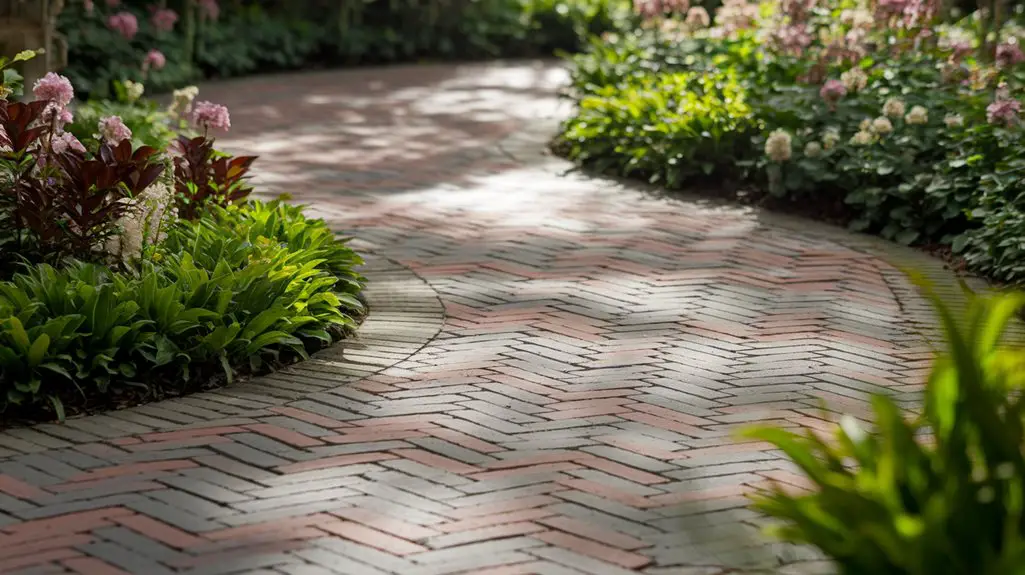
Among the myriad of brick patterns available, the Classic Herringbone design stands as the epitome of timeless sophistication for garden pathways. This intricate pattern arranges rectangular bricks at 45° or 90° angles, creating a zigzag effect that distributes weight evenly across the surface.
You’ll find herringbone offers superior structural integrity compared to linear layouts, reducing brick displacement and minimizing maintenance requirements. The interlocking arrangement prevents individual bricks from sinking, even in areas with high foot traffic or moisture fluctuations.
For ideal installation, use clay bricks with beveled edges and maintain consistent 3/8-inch jointing. You can enhance visual interest by incorporating contrasting brick colors or varying the scale between standard and miniature formats. Additionally, the creative garden pathway design ideas can provide inspiration for various styles and layouts to suit your garden’s aesthetic.
This versatile pattern complements both formal English gardens and contemporary landscape designs, providing enduring elegance that won’t succumb to fleeting trends.
Elegant Basket Weave Pathways

The Basket Weave pattern offers another distinguished option for garden pathways that rivals the structural benefits of herringbone while presenting a more orderly visual rhythm.
You’ll find this arrangement creates an interlocking grid where pairs of bricks alternate orientation, forming square units that repeat throughout the pathway.
For ideal basket weave implementation:
- Select rectangular bricks with a 2:1 length-to-width ratio to achieve the classic basket appearance.
- Create proper edge constraints using soldier course bricks to prevent pattern migration.
- Install over a compacted base with at least 1″ of sand for proper drainage and stability.
This pattern serves formal garden designs particularly well, complementing symmetrical layouts and structured plantings. Additionally, the creative pathways created by basket weave designs enhance the overall aesthetic of your backyard space.
Its repeating units distribute weight evenly, accommodating moderate foot traffic while maintaining visual interest through subtle shadow play.
Running Bond Designs for Straight Garden Walks
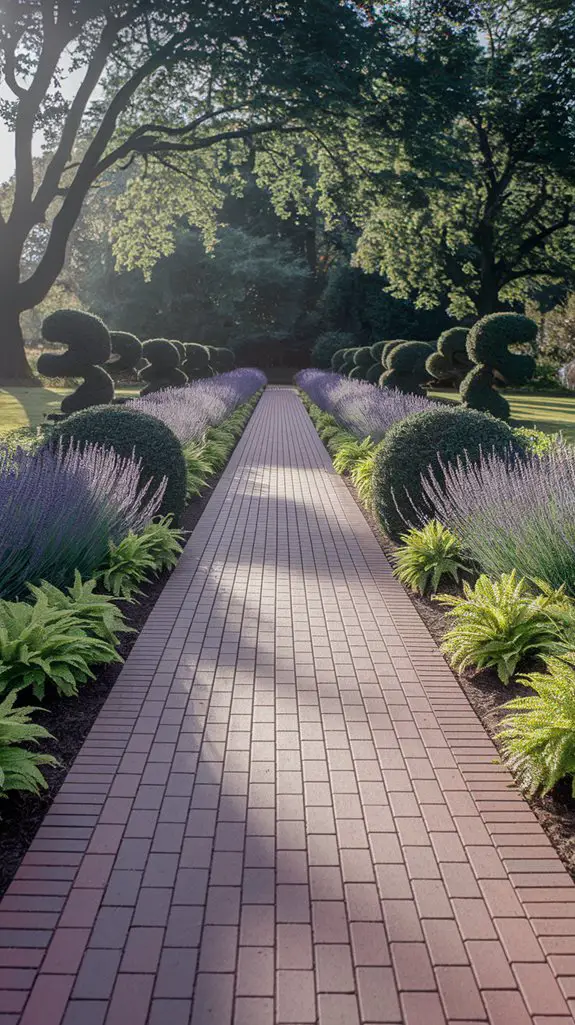
When planning straightforward garden pathways that balance simplicity with enduring structure, running bond patterns emerge as the quintessential choice for residential landscapes.
This classic arrangement—where each brick is offset by half a brick’s length in adjacent rows—creates visual flow while distributing weight evenly across the surface.
You’ll find running bond particularly effective for lengthy straight pathways where its uncomplicated repetition guides the eye forward. For ideal structural integrity, install edge restraints and maintain a consistent 1/8″ to 1/4″ joint spacing. Select complementary sand colors to enhance the brick’s natural hue.
The pattern’s versatility allows you to incorporate directional changes by creating strategic herringbone shifts at corners or adding soldier course borders to frame the pathway elegantly.
These subtle details elevate the design without compromising its timeless appeal.
Circular and Spiral Brick Arrangements
How dramatically your garden’s character transforms when you introduce curved brick pathways into the landscape.
Circular and spiral patterns create focal points while guiding visitors through deliberate journeys of discovery. These curved designs require precise cutting and arrangement of bricks to maintain consistent joints and structural integrity.
Three essential techniques for successful circular arrangements:
- Calculate the radius carefully—each concentric circle requires progressively more bricks with precise angular cuts.
- Use specialist brick spacers to maintain consistent mortar joints throughout the curve.
- Install rigid edge restraints to prevent lateral movement and pattern disruption over time.
For spiral designs, establish a central point and gradually increase the radius while maintaining consistent spacing.
The mathematical precision of these patterns creates visual harmony that complements both formal and naturalistic garden styles.
Brick and Stone Combination Pathways
Combining different materials in pathway design elevates your garden’s aesthetic appeal while offering practical advantages that single-material installations can’t match. By pairing bricks with flagstone, cobbles, or pea gravel, you’ll create textural contrast that defines spaces and guides movement through the landscape.
For maximum durability, install brick borders alongside limestone or granite centers—the brick edges prevent stone migration while providing structural integrity. Consider a brick herringbone pattern flanking central bluestone pavers for formal gardens, or irregular fieldstone with brick soldier courses for cottage aesthetics.
The material interchange points require precise installation; use steel or aluminum edging between different materials to prevent shifting.
During installation, maintain consistent foundation depth across materials to avoid uneven settling that would compromise both appearance and functionality.
Curved Walkways With Border Accents
Numerous garden designers consider curved brick walkways among the most versatile pathway options—offering aesthetic flow while maximizing usable garden space. You’ll find that gentle curves create visual interest while softening the landscape’s overall appearance. When installing curved brick paths, proper border accents become essential for structural integrity and design cohesion.
Consider these border accent options for your curved walkway:
- Soldier course edging – Bricks positioned vertically along the pathway edge provide clean definition and prevent lateral movement.
- Metal edging with ground lighting – Sleek aluminum or steel borders with integrated LED lighting illuminate your path’s curves after sunset.
- Contrasting material borders – Incorporating stone, concrete, or wood as border materials creates textural interest while reinforcing the path’s sculptural qualities. Additionally, rustic backyard garden pathways can enhance the overall charm and character of your outdoor space.
Reclaimed Brick Pathways With Weathered Character
Reclaimed bricks offer unparalleled historical depth and environmental benefits for garden pathways that new materials simply can’t replicate. Sourced from demolished buildings, these weathered units showcase distinctive patinas, worn edges, and sometimes original maker’s marks that create instant character in your landscape.
When installing reclaimed brick paths, you’ll need to sort by size and condition, as dimensions often vary slightly. Lay them in herringbone or basket weave patterns for maximum stability on uneven surfaces.
Create permeable pathways by setting bricks on a sand base with wider-than-standard joints (1/2 inch).
For authentic period gardens, select bricks matching your home’s era—Georgian structures pair well with red clay pavers, while Victorian gardens benefit from multicolored clinker bricks.
Apply a penetrating sealant to preserve character while preventing excessive deterioration from freeze-thaw cycles.
Conclusion
Timeless brick pathways aren’t merely functional—they’re garden cornerstones that mature like fine wine. You’ll find that a well-executed herringbone pattern locks the bricks together and spreads weight well, minimizing maintenance for decades. Whether you’re implementing a classic basket weave or incorporating reclaimed materials, these designs serve as architectural punctuation in your landscape’s narrative, defining spaces while withstanding both trends and time.
