
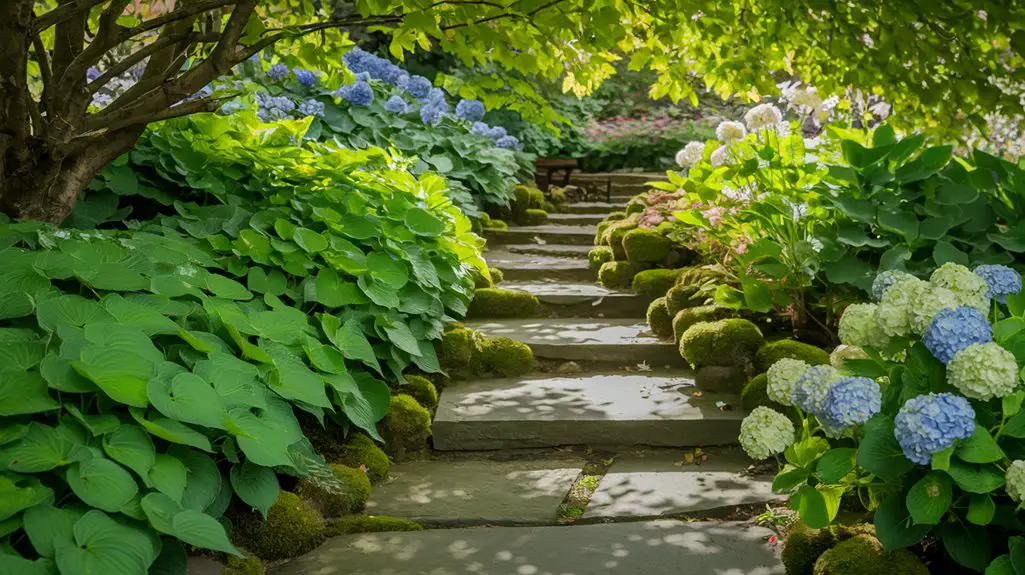
Shaded gardens are often the most challenging areas to design effectively. You’ll find that thoughtfully crafted pathways transform these tranquil spots from problematic to enchanting while solving practical access issues.
By integrating appropriate materials that withstand limited sunlight and moisture retention, your shaded garden paths can become distinctive features rather than mere thoroughfares. The secret lies in understanding how to harmonize functionality with the unique atmospheric qualities of shadowed landscapes.
On this page
Woodland Stone Pathways: Natural Elegance for Dappled Light
Dappled sunlight filters through the forest canopy, illuminating the perfect canvas for woodland stone pathways. You’ll find irregular flagstones or flat river rocks work best, positioned with 1-2″ gaps to allow mosses to colonize joints. These spaces create microclimates for shade-loving ground covers like Corsican mint or creeping thyme.
Position larger stones at pathway entrances as focal points, then shift to smaller 6-8″ specimens along the route. Embed stones 2″ deep in a sand-compost base for stability without disrupting root systems of nearby trees.
Align your path with existing topography, following natural contours rather than fighting them. For sustainable drainage, angle stones slightly to direct runoff toward moisture-loving ferns or hostas that’ll thrive in these conditions. Incorporating water features can further enhance the tranquil atmosphere of your shaded garden.
Moss-Lined Trails: Embracing Shade-Loving Ground Covers

Imagine where your footsteps could fall most softly—on a moss-lined trail that transforms shaded garden areas into enchanted passages.
Mosses thrive in zones 4-9 where dappled light creates the ideal microclimate for these ancient bryophytes.
Position stepping stones at 24-inch intervals, allowing 2-3 inches between them for moss establishment. Select species like Hypnum, Thuidium, or cushion moss for high traffic areas, as they’ll withstand occasional footfalls while maintaining structural integrity.
You’ll need to maintain soil pH between 5.0-6.0 for optimal growth. During establishment, mist pathways bi-weekly rather than overhead watering.
This sustainable approach eliminates mowing requirements, reduces erosion on slopes up to 20 degrees, and creates year-round texture when deciduous elements recede in winter. Incorporating low-maintenance designs can further enhance the appeal and functionality of your shaded pathways.
Illuminated Garden Routes: Lighting Solutions for Shaded Walks
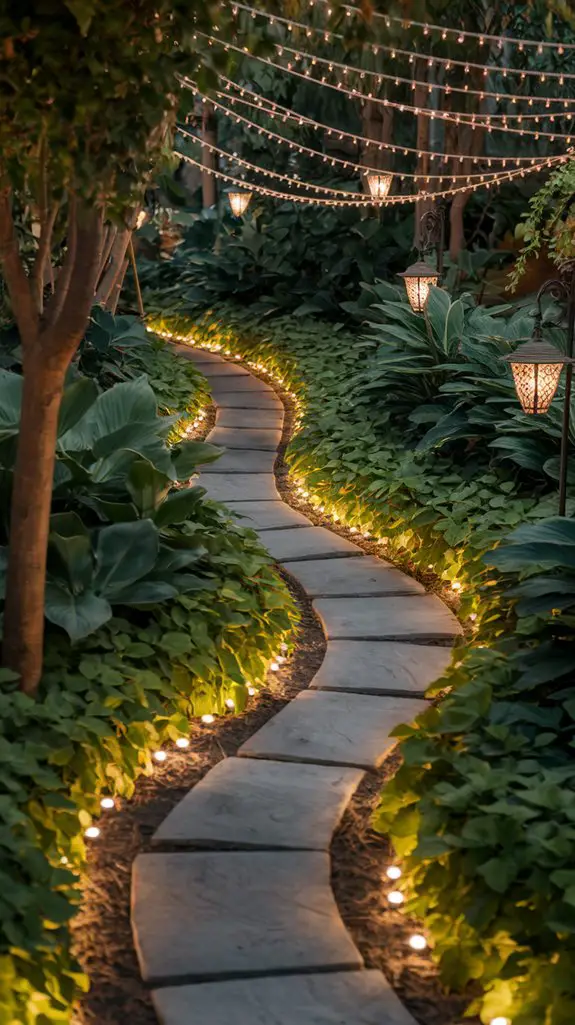
As twilight descends on your garden sanctuary, strategic illumination transforms shadowy pathways into navigable arteries that extend your outdoor enjoyment well beyond daylight hours.
Position low-voltage LED path lights 6-8 feet apart, angling fixtures downward to minimize light pollution while maximizing ground coverage.
For densely shaded corridors, consider installing copper or stainless steel bollards with 2700K warm-white bulbs—their 12-15 lumen output provides sufficient visibility without overwhelming natural darkness.
Solar-powered options require strategic placement where they’ll receive 4+ hours of indirect sunlight daily.
Integrate motion sensors at key junctions to conserve energy, automatically illuminating sections as you approach.
For sustainable ambiance, string weatherproof LED fairy lights through overhead branches at 8-foot heights, creating a celestial canopy that defines vertical space while preserving the intimate character of your woodland paths. Incorporating seasonal backyard lighting decor can further enhance the charm and functionality of your illuminated routes.
Stepping Stone Patterns for Cool, Sheltered Spaces
Shaded garden corridors provide ideal locations for stepping stone configurations that balance aesthetic appeal with practical navigation through cool, moisture-retentive environments.
You’ll find that circular patterns create focal points beneath tree canopies, while staggered rectangular stones offer directional clarity in denser shade.
For moisture management, elevate stones 1-2 inches above soil level using compacted sand bases.
Select porous materials like natural slate or limestone that resist algae growth while complementing the subdued lighting conditions. Additionally, consider incorporating solar-powered lighting to enhance visibility and charm during evening hours.
Mulched Meandering Paths: Organic Solutions for Tree-Canopied Areas
Beneath tree canopies where dappled light filters through foliage, mulched meandering paths provide an environmentally sound alternative to hardscaped walkways.
You’ll find these organic solutions protect sensitive tree roots while naturally deterring weed growth and retaining vital soil moisture.
When designing your mulched path, maintain a 3-4 inch depth using pine straw, shredded bark, or cocoa hulls—materials that decompose gradually and replenish soil nutrients.
Curve your pathway to follow natural contours, using fallen logs or native stones as subtle borders that prevent mulch migration.
This approach creates minimal soil compaction compared to concrete alternatives, allowing proper water infiltration to root systems.
Consider integrating low-profile shade perennials along edges to soften changes between path and surrounding woodland plantings. Additionally, using eco-friendly materials for your path not only enhances aesthetics but also supports local biodiversity.
Elevated Boardwalks: Navigating Moist Shade Gardens
In garden areas where persistent moisture prevents traditional pathway installation, elevated boardwalks offer an elegant solution that protects delicate root systems while providing year-round accessibility.
These structures float above sensitive terrain, creating minimal soil disturbance while allowing air circulation beneath.
You’ll want to position your boardwalk 8-12 inches above grade, using cedar or thermally modified pine for their natural rot resistance.
Install joists perpendicular to walking direction at 16-inch intervals for structural integrity.
Consider incorporating slight gaps (¼ inch) between decking boards to facilitate water drainage and prevent slippage.
For sustainable integration, anchor supports using minimally invasive helical piers rather than concrete footings.
This approach preserves soil ecology while ensuring your boardwalk remains stable through seasonal ground movement in perpetually damp environments. Additionally, curved path designs can enhance the visual appeal of your shaded garden, creating a more inviting atmosphere.
Fern-Bordered Walkways: Lush Green Margins for Shady Paths
Ferns, with their delicate fronds and remarkable shade tolerance, create magnificent borders that soften the rigid edges of garden pathways while thriving where many ornamentals cannot.
Position taller varieties like ostrich ferns (Matteuccia struthiopteris) at the back of borders, shifting to mid-sized lady ferns (Athyrium filix-femina) and finally to shorter specimens like Japanese painted ferns (Athyrium niponicum) nearest the path’s edge.
Space plants 12-18 inches apart initially, allowing room for their natural spread. Incorporate small-leaved hostas or wild ginger as companion plants to enhance textural contrast.
Guarantee pathway substrate remains separated from planting beds using flexible edging that permits moisture exchange. You’ll need minimal maintenance beyond spring’s removal of browned fronds and occasional division of expanding clumps every 3-4 years to maintain the walkway’s definition and accessibility.
Repurposed Material Pathways: Creative Designs for Low-Light Gardens
Transforming found objects into functional walkways offers a resourceful approach for gardens with limited sunlight exposure. Reclaimed brick, arranged in herringbone or basket-weave patterns, effectively disperses rainfall while preventing moss overgrowth in damp conditions.
You’ll find that salvaged slate provides excellent traction when positioned with 1/4-inch spacing to accommodate natural drainage patterns.
Consider integrating glass bottles — embedded upside-down in compacted sand — to create luminous borders that capture filtered light even on overcast days. For central path sections, repurposed timber sleepers, sealed with non-toxic preservatives, resist decay in perpetually moist environments.
When designing connections between materials, maintain consistent elevations to prevent trip hazards. Additionally, using eco-friendly materials not only enhances the sustainability of your garden path but also contributes to the overall health of the ecosystem.
Remember that low-light tolerant mosses will naturally colonize these pathways, softening edges and enhancing the garden’s cohesive aesthetic.
Water-Friendly Permeable Paths: Managing Drainage in Shaded Settings
Creating effective drainage systems becomes essential when designing paths for shadowy garden areas where moisture tends to linger. Permeable materials allow water to percolate naturally into the soil, preventing pooling and runoff while supporting your garden’s hydrological balance. Incorporating rustic outdoor seating ideas can enhance the overall aesthetic of your shaded pathways, blending functionality with charm.
| Material | Permeability | Installation | Durability | Eco-Impact |
|---|---|---|---|---|
| Gravel | Excellent | Simple | High | Minimal |
| Permeable Pavers | Very Good | Moderate | Very High | Low |
| Pine Needle Mulch | Good | Easy | Low | Beneficial |
| Pervious Concrete | Excellent | Complex | High | Moderate |
| Crushed Shells | Good | Simple | Medium | Recycled |
You’ll need to excavate slightly deeper for shaded pathways to accommodate extra drainage material. Install a geotextile membrane beneath your chosen surface to prevent weed growth while still allowing water infiltration. This approach maintains soil structure while reducing harmful garden runoff.
Conclusion
You’ll find that shaded garden pathways create visual harmony in your outdoor space. By positioning permeable materials with precise 2-3% drainage gradients away from structures, you’re ensuring sustainable water management. Integrate these pathway designs thoughtfully, balancing aesthetic appeal with ecological function, and you’ll transform your shaded garden into a cohesive system that works with nature rather than against it.
