
Our picks at a glance
- #1Processed Sand
- #2Processed Sand
- #3Kinetic Sand (Our Pick)
Kinetic Sand 3.25lb Beach Sand Amazon Exclusive (details below)
- #4Processed Sand
Safe Sand for Sandbox/Natural White Safety Tested Playsand 25 Pound Box (details below)
- #5Kinetic Sand
- #6Processed Sand
National Geographic Moon Sand 6 Lb. Sensory Play Set (details below)
The best sand for a sandpit should be less coarse, free from potentially dangerous contaminants. It should have a nontoxic and silica-free mix, ensuring that kids are safe while they play. You should also take into account whether or not there’s an appealing feature like assorted colors or if you want moldable kinetic sand instead because it won’t be as messy.
Sand is natural, and its existence is for many decades. It is composed of ground-down rocks.
However, when sold as play sand, several processes and checks certify it is safe for children. It is not just any type of sand that you should use to fill a child’s sandpit.
This article details various and commonly used sand in filling sandpits, including kinetic, natural, and processed sand. But before that, what should you consider when selecting the best sand for sandpits?
In a hurry?
If you don’t have much time please check the table below for quick access to our favorites. Detailed guide below.
Sandtastik Sparkling White Play Sand, 25 lb (11.3 kg)

Classic Sand and Play Sand for Sandbox, Table, Therapy, and Outdoor Use, 40 lb. Bag, Natur…

Kinetic Sand 3.25lb Beach Sand Amazon Exclusive, Sensory Toys, Ages 3+

| #1Processed Sand | #2Processed Sand | #3Kinetic Sand (Our Pick) | |
|---|---|---|---|
| Photo | | Popular on Amazon | Popular on Amazon |
| Product | Sandtastik Sparkling White Play Sand, 25 lb (11.3 kg) | Classic Sand and Play Sand for Sandbox, Table, Therapy, and Outdoor Use, 40 lb. Bag, Natur… | Kinetic Sand 3.25lb Beach Sand Amazon Exclusive, Sensory Toys, Ages 3+ |
| Buy | Check at Amazon | Check at Amazon | Check at Amazon |
Safe Sand for Sandbox/Natural White Safety Tested Playsand 25 Pound Box

Kinetic Sand Construction Zone, Moldable Play Sand Sensory Toys, Ages 3+

National Geographic Moon Sand 6 Lb. Sensory Play Set with Castle Molds

| #4Processed Sand | #5Kinetic Sand | #6Processed Sand | |
|---|---|---|---|
| Photo | Popular on Amazon | | Popular on Amazon |
| Product | Safe Sand for Sandbox/Natural White Safety Tested Playsand 25 Pound Box | Kinetic Sand Construction Zone, Moldable Play Sand Sensory Toys, Ages 3+ | National Geographic Moon Sand 6 Lb. Sensory Play Set with Castle Molds |
| Buy | Check at Amazon | Check at Amazon | Check at Amazon |
Looking for a Sandbox?
Why not create your own! Here is how to create a DIY Sandpit.
On this page
Factors to Consider When Choosing the Best Sand for Sandpits
When choosing the best product for cushioning the ground below or filling the sandpit, it is crucial to know various features. Whether it is the color, texture, or type of sand, you should have enough exposure and understanding on each.
That makes it easier for you in deciding the best option for sand filling your kids’ sandpit. Below is an insight into three factors to put into consideration.
Types of Sand
The commonly used types of sand in sandpits and sand tables include kinetic, natural, and processed sand.
- Kinetic Sand is polydimethylsiloxane coated, which is a silicone-based organic polymer, and non-toxic. The silicone base is a common component of soft clay products.
Additionally, the coating makes the sand stick together; thus, making molding activities easy without water use. Unfortunately, the kinetic sand is only available in small amounts, making it more expensive than any natural or processed sand.
Kinetic sand also doesn’t dry out and can be created if you rather go the DIY approach and save some money. - Natural Sand is harvested straight from the beach or desert. Its formation is a result of weathering or erosion of small rocks.
Due to its natural formation, the sand is usually coarser than the Kinetic or Processed sand. However, it undergoes a cleaning and filtering process to ensure only the finest particles are packaged for sale. - Processed Sand is extracted from quarries and gravel pits. Processed sand is then washed and filtered to ensure that it is clean and safe for kids to play with.
But some of the products might still contain silica dust which is harmful if inhaled in large quantities. Therefore, you are advised to avoid any of these products and choose silica-free sand for kids playtime.
Textures of Sand
There are various textures available in the three types of sand.
- Kinetic Sand undergoes several processes of removing contaminants and filtering. It also gets a polydimethylsiloxane coating that gives the sand a smooth, softer texture that is easy to mold, shape and cut without adding water.
- Natural Sand formation is under many years of erosion. The process is effective in producing coarser sand particles as compared to either kinetic or processed sand. The texture also makes it easy to clean when you need to add it to the sandpit.
- Processed Sand is made rather than naturally forming. The manufacturer will ideally choose the best level of processing for sandpit sand. Then the sand will undergo cleaning and rinsing until it is ready. These processes make the sand particles smooth and refined for molding by adding little water to the sandpit.
Color of Sand
Most buyers often overlook the color, for they think of sand having its natural classic tan appearance, so they do not go for anything different. But depending on various products, several color options are available, including blue, green, purple, yellow, and white, among others.
Therefore, it is advisable to consider and go by what the kids prefer. In case they do not have a specific color, consider picking a kit that comprises multiple colors.
When having a white sand selection, it appears fancy for a sandpit, and you can easily see feces, bugs, or debris out of the white background. You can easily keep it clean.
Top Picks Sand Products
The considered top picks below result from assorting the products according to color, texture, quality, and type. This will help shoppers get the best sand for sand fill and keep kids happy and healthy.
If you rather see the review, we have created a YouTube video.
1. Sandtastik Sparkling White Play Sand
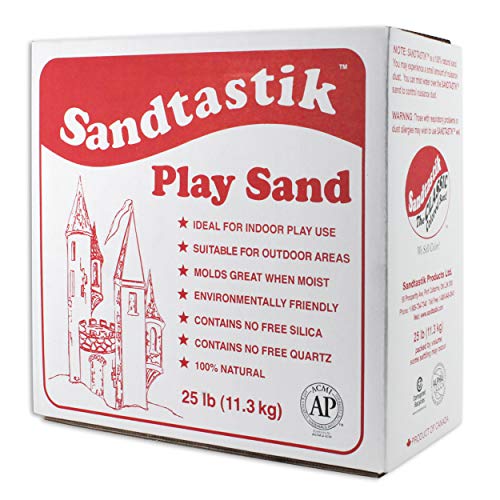
It is processed sand for sandpits and sand tables. Sandtastik is specifically designed for kids to play, and it has a fine texture on touching.
The main ingredient that gives the sand a sparkling white color is the feldspar rock.
Manufacturers have to grate and wash the silica-free product to remove potential contaminants before packaging the sand into sealed bags. Each bag holds about 25 pounds, enough for a sand table; a sandbox takes several bags.
Pouring the sand into a sandpit is fast when it is scorched but easy to mold when it is wet.
Its white color makes it easy to see grass, leaves, bugs, or any other debris that can land into the sandpit. Therefore, it is easy to clean up the sandpit and keep the kids safe.
2. Aneken To Classic Sand and Play Sand for Sandpit
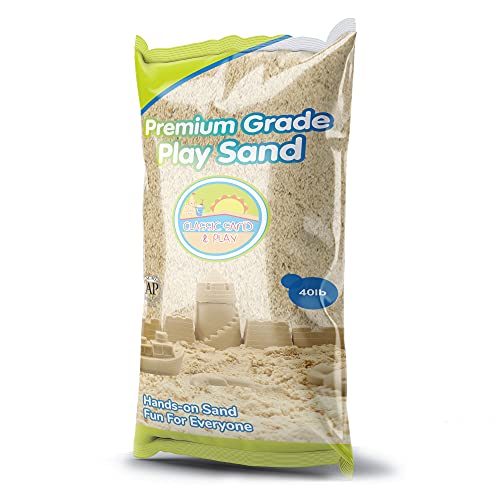
Classic Sand and Play Sand for Sandpit is natural sand available in 40-pound package bags. It performs perfectly in both wet and dry play.
However, when the sand is dried, it becomes hard to collect it with a shovel or a container. But when it is wet, it gets moldable for kids to construct structures.
Its appearance is classic tan in color and can perform more duties in gardening, landscaping, and crafting. Before packaging, the sand is grated and washed to remove any contaminants.
After the washing process, it is then dried to avoid mold from forming.
Classic Sand and Play Sand for Sandpit is non-toxic and free from dust particles. Therefore, it is safe for kids to play.
3. Kinetic sand, The Original Moldable Play Sand

Kinetic sand, 3.25 lbs. Beach Sand is the best in bringing the fun of a sandpit into your home. The 3.25-pound of kinetic sand appears in a polydimethylsiloxane coating and classic tan color.
The layer enables the sand to stick together, making it easier for kids to have fun in molding practices.
With its easy stickiness profile, you do not need to add water. The sand grains are more significant than natural sand grains, while the stickiness of its coating makes the kinetic sand achieve the same moldability as natural sand.
The polydimethylsiloxane coating and larger grains of the sand make it dustless during playing. It is safer and fun for children having breathing problems or being allergic to dusty air.
4. Safe Sand Natural White Play Sand, 25 lbs

Safe Sand is a fine, white play sand made for sandboxes and a good option for young kids. It is natural sand, not bleached or dyed, and it comes in a 25-pound box.
Children can quickly form various structures thanks to its fine texture. The molding and creative building with the sand must be in wet form.
The maker says it is low-dust and tested to be free of crystalline silica dust, lead and asbestos, and that it is less slippery underfoot than Caribbean or Bahamian play sand.
It works indoors in a sand table or outdoors in a sandpit. Keep the sandbox covered between play sessions, and have kids wash their hands after playing.
5. Kinetic Sand, Construction Zone Sandbox Playset

The type of sand comes with its sandbox, which works as a carrying case for sand and accessories. The package holds 1.75 pounds of Kinetic Sand in natural brown and black, the same moldable sand with a polydimethylsiloxane coating.
The coating adds a soft texture that sticks to itself. It is suitable for kids molding and sand arts. The accessories include a crane, a bulldozer, a paver for rolling out roads, a chainsaw tool that doubles as a shovel, and a mold tray, plus cardboard graphics and a sticker sheet.
Your kids can mold buildings, build walls and lay out roads for their construction site.
It is a fun product and creates innovative minds for kids. You can use it either indoors or outdoors without adding water, and Kinetic Sand lists it for ages 3 and up.
That minimizes the risks of making a massive mess inside your home or on the patio.
6. National Geographic Play Sand Combo Pack
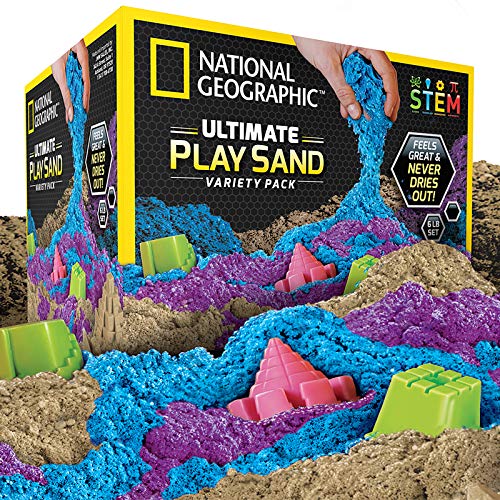
The natural geographic variety consists of kinetic play sand, which kids can create multi-colored sand art. They can also construct unique colored landscapes or structures.
The combo packs entail six pounds of kinetic sand. Its inclusive are two-pound each of blue, purple, and tan varieties.
You also get six molds to help your kids form shapes, castles, and pyramids without adding water. The sand texture feels smooth and soft to touch.
Kids can separately mold the three colors available or combine them to create colorful patterns.
National geographic sand has a polydimethylsiloxane coating that helps in sticking together without adding water. It is also non-toxic and does not dry out over time.
Therefore you do not have to pack it into sealed bags after kids are done playing.
Sand FAQ’s
Conclusion
Kids are naturally attracted to playing with sand, either in molding activities or having fun. Some of the benefits of having a sandpit are motor skills improvements, eye and hands coordination, imagination & creativity.
Keep the sandpit covered when it isn’t in use so animals can’t foul it, and rake out debris often. Start with washed play sand made for sandboxes, too, and check that the sand in the sandpit is clean before kids play.
If you have a kid with dust allergies or breathing problems, pick a dust-free play sand. Make sure to follow all the sandpit safety tips to avoid any health conflicts in the future.
Please be careful and use at your own risk
None of the authors, contributors, administrators, or anyone else connected with BestPlaygroundSets, in any way whatsoever, can be responsible for your use of the information contained in or linked from these web pages.
