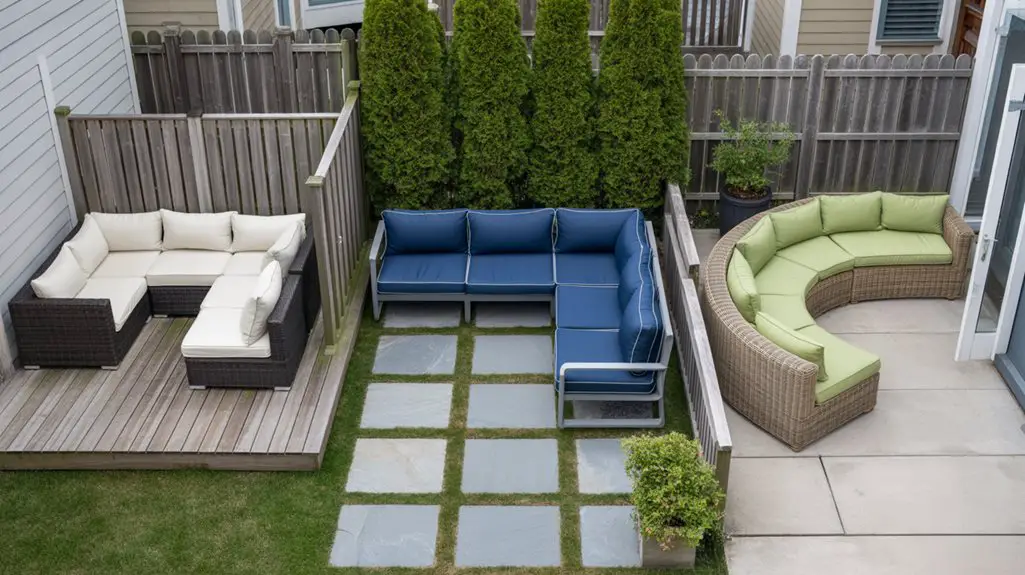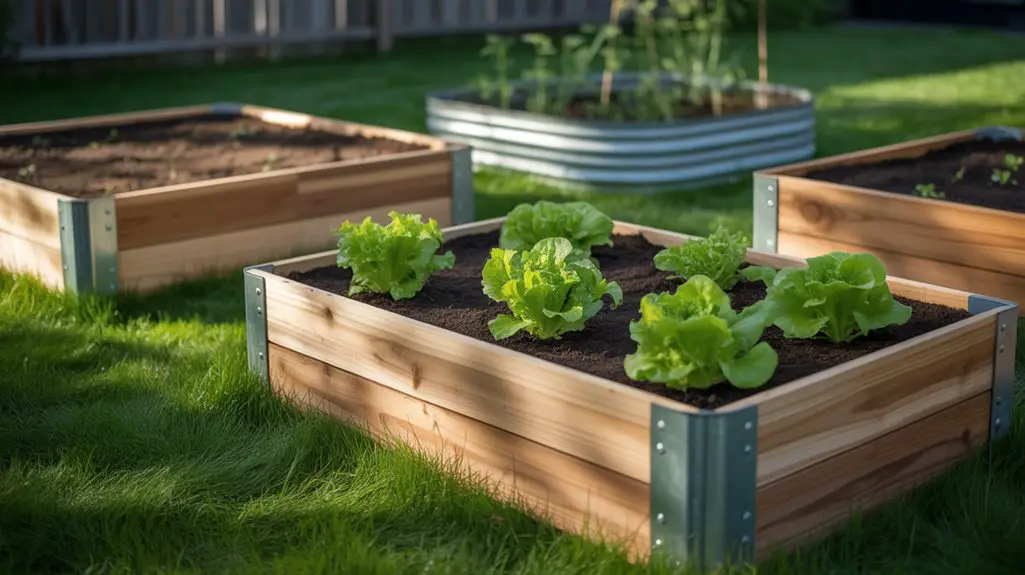
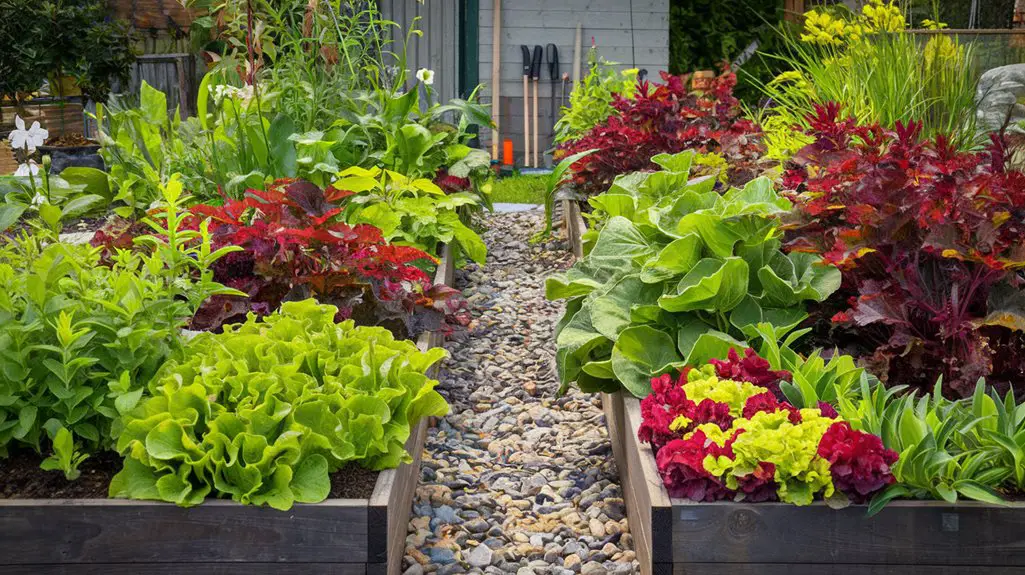
Have you ever considered how a well-planned garden can greatly impact your harvest? Planning your raised garden bed layout is vital for optimizing plant health and productivity. By evaluating factors like sunlight, soil quality, and accessibility, you can create a thriving environment tailored to your plants' needs. But what specific strategies can you employ to guarantee your garden flourishes while also looking appealing? Let's explore the essential elements that make a successful garden layout.
Understanding Your Garden Space
When you begin planning your raised garden bed, it's important to assess your garden space first. Observe the dimensions and shape of your area, noting any existing structures, trees, or paths.
Consider the soil quality and drainage, as these factors will influence your plant choices and overall success. Pay attention to sunlight patterns throughout the day; most vegetables thrive in at least six hours of direct sunlight.
Additionally, evaluate accessibility—ensure you can easily reach your garden bed for planting, watering, and maintenance without compacting the soil. Leveling your garden beds properly will also enhance drainage and soil health, leading to more productive plants.
Finally, think about how your garden fits into the surrounding landscape, balancing aesthetics with functionality. Understanding these elements will help you create a thriving and productive raised garden bed.
Selecting the Right Location
Choosing the right location for your raised garden bed is crucial to its success, as the site will directly impact your plants' growth and yield.
Start by evaluating soil quality; avoid areas with compacted or contaminated soil. Make certain the location is easily accessible for maintenance and harvesting, as convenience encourages regular care.
Consider drainage; raised beds should be placed where excess water can drain away to prevent root rot. Additionally, think about proximity to water sources, as you'll need to keep your plants hydrated.
Finally, observe traffic patterns in your garden. Keeping your raised bed away from high-traffic areas will help prevent accidental damage and allow you to enjoy your gardening space without interruptions. Furthermore, raised garden beds can improve soil quality and create better growing conditions for your plants.
Maximizing Sunlight Exposure
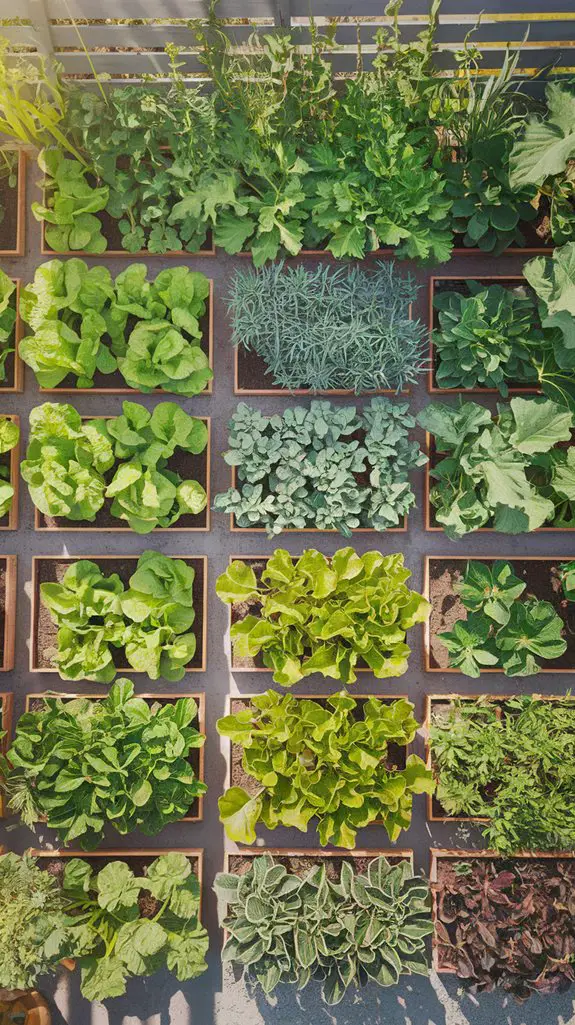
After selecting the right location for your raised garden bed, the next step is to maximize sunlight exposure, which plays a vital role in plant growth and productivity.
To achieve this, observe the sun's path throughout the day. Position your beds to receive at least six to eight hours of direct sunlight, especially for sun-loving plants like tomatoes and peppers.
Consider the height of surrounding structures and trees that may cast shadows. If possible, align your beds north to south; this orientation allows for even sunlight distribution.
Additionally, avoid overcrowding plants, as they can block each other's light. By carefully planning your layout for ideal sunlight, you'll enhance your garden's overall health and yield. Using recycled materials for raised beds can also help retain soil temperature, further promoting plant growth.
Choosing the Right Size and Shape
While determining the right size and shape for your raised garden bed, it's essential to contemplate both your available space and the types of plants you wish to grow.
A rectangular bed is often ideal for maximizing planting area, while square or circular beds can add visual interest. Consider the dimensions: a width of 4 feet allows easy access from both sides, while lengths can vary based on your space.
Tall plants need ample height and room to spread, whereas compact varieties can thrive in smaller areas. Make sure to account for pathways, ensuring you can reach your plants without stepping into the bed. Additionally, raised garden beds can help improve drainage and soil quality, leading to healthier plants.
Ultimately, your decisions should balance aesthetics, functionality, and the unique requirements of your chosen plants.
Planning for Accessibility
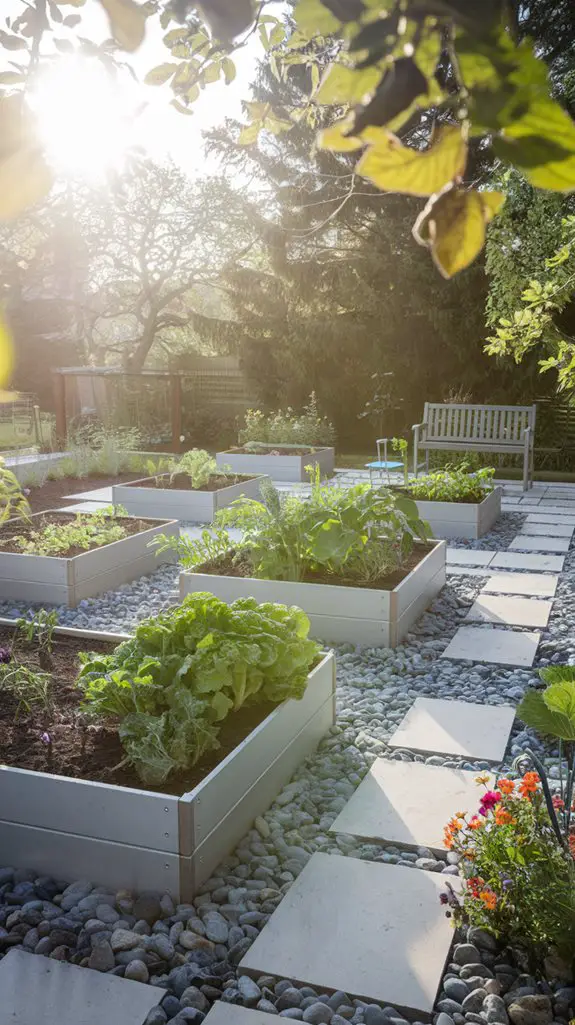
To guarantee your raised garden bed is both functional and enjoyable, it's important to plan for accessibility from the start.
Consider the height of your beds; they should be at a level that allows for easy reach without bending excessively. Confirm paths between beds are wide enough to accommodate wheelchairs or garden carts, ideally at least 36 inches.
When selecting materials, opt for non-slip surfaces to prevent accidents, and avoid sharp edges. If you garden with children or individuals with mobility challenges, incorporate raised beds that are lower to the ground.
Additionally, incorporating raised garden beds can significantly enhance the usability of your garden space, especially in smaller backyards.
Finally, think about the placement of your garden in relation to sun exposure and water sources, making sure everything is easily accessible to enhance your gardening experience.
Companion Planting Strategies
Planning for accessibility sets the stage for a productive garden, but it's equally important to contemplate how different plants interact with one another. Companion planting can enhance growth, deter pests, and maximize space.
For instance, pairing tomatoes with basil can improve flavor while repelling harmful insects. Similarly, planting marigolds alongside vegetables can attract beneficial pollinators and deter nematodes.
Consider the growth habits and nutrient needs of each plant; for example, deep-rooted plants like carrots can share space with shallow-rooted greens such as lettuce. By strategically arranging your plants, you'll create an ecosystem that supports mutual growth and reduces competition. Additionally, incorporating effective pest control methods can further protect your garden from unwanted invaders.
Research companion plant combinations that thrive in your climate, and you'll set your raised bed up for success.
Soil and Drainage Considerations
Ensuring your raised garden bed has the right soil and drainage is essential for plant health and productivity.
Start by selecting a quality soil mix, ideally a blend of topsoil, compost, and peat moss or coconut coir. This combination provides necessary nutrients and improves moisture retention.
Drainage is equally critical; without it, roots can suffocate or rot. To promote drainage, consider adding perlite or vermiculite to your soil mix. Furthermore, the right soil composition is crucial for fostering healthy plant growth.
Additionally, elevate your raised bed slightly or include drainage holes if it's constructed with wood or plastic.
Regularly check moisture levels to prevent overwatering, which can lead to root diseases.
Seasonal Planting Schedules
While you might be enthusiastic to plant as soon as the frost melts, understanding seasonal planting schedules is essential for optimizing your garden's yield.
Timing your plantings can considerably enhance growth and harvest. Here's how to structure your planting schedule effectively:
- Spring Planting: Start with cool-season crops like lettuce and peas as soon as the soil is workable.
- Early Summer: Shift to warm-season crops such as tomatoes and peppers after the last frost date.
- Late Summer: Consider planting fall crops like kale and carrots, which thrive in cooler temperatures.
- Winter Preparation: Use this time to plan for next year and consider cover crops to enrich the soil.
Incorporating seasonal planting techniques can also help you maximize your garden's productivity throughout the year.
Aesthetic and Design Elements
When you design your raised garden bed, aesthetic and design elements play an essential role in creating an inviting and functional space.
Consider the materials you choose; wood, stone, or metal can set the tone. A rustic cedar bed might evoke a cozy feel, while sleek metal offers a modern touch.
Additionally, think about the layout—symmetry can bring order, while a more organic shape can mimic nature's flow. Color also matters; vibrant flowers can contrast beautifully with earthy tones.
Incorporating paths or borders enhances accessibility and provides visual breaks. Using raised garden beds on concrete patios can also maximize your gardening space and create a more versatile environment.
Finally, integrating decorative elements like trellises or garden art can elevate the overall aesthetic, making your garden not just a growing space but a visual delight.
Long-term Maintenance Planning
To keep your raised garden bed thriving over the years, it's crucial to establish a long-term maintenance plan that addresses both plant health and structural integrity.
Regular upkeep not only sustains your plants but also prolongs the life of your garden bed. Here are four key aspects to reflect on:
- Soil Management: Routinely test and amend your soil to guarantee nutrient availability.
- Pest Control: Monitor for pests and diseases, implementing organic solutions as needed.
- Watering Schedule: Establish a consistent watering routine, adjusting for seasonal changes.
- Structural Checks: Inspect the bed's materials annually for signs of wear, reinforcing or replacing components as necessary. Additionally, consider essential tips for maintaining the overall health of your garden bed, which can enhance its longevity and productivity.
Conclusion
Planning your raised garden bed layout isn't just a good idea; it's vital for thriving plants. Did you know that gardens with well-thought-out layouts can yield up to 20% more produce than those without? By carefully considering sunlight, soil, and accessibility, you're not only maximizing your space but also enhancing your garden's beauty. Taking the time to strategize guarantees a lush, productive garden that can be a sustainable source of fresh food for you and your family.