
As winter approaches, it's essential to protect your raised garden beds from harsh conditions. Start by insulating the soil and plants to retain warmth and moisture. Choosing the right mulch can greatly impact your garden's health.
Additionally, consider covering your beds with cloth or plastic to shield them from chilling winds. Want to know how to set up cold frames or deter pests effectively? Let's explore these strategies further.
On this page
Insulating Your Raised Garden Beds
When winter rolls in, insulating your raised garden beds becomes essential to protect your plants from harsh temperatures.
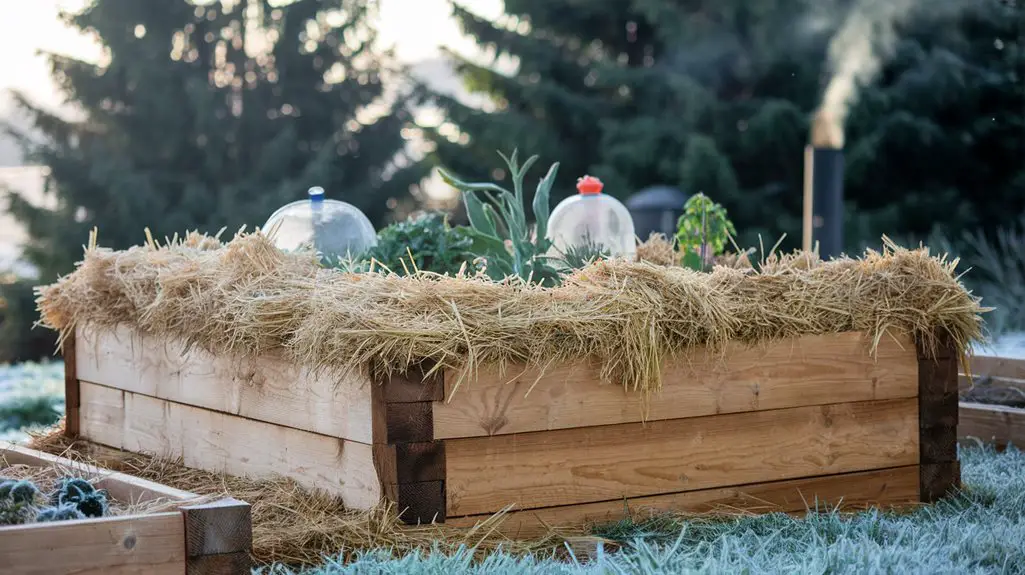
Start by adding a thick layer of organic mulch, like straw or shredded leaves, which helps retain warmth and moisture. You can also wrap the sides of your beds with burlap or frost cloth to shield them from chilling winds.
If you have the space, consider placing cold frames or cloches over your plants for extra protection. Additionally, you might want to plant cover crops that can help insulate the soil while adding nutrients. Vertical gardens can also benefit from similar insulating methods during winter.
Regularly monitor moisture levels, as winter rain can lead to waterlogged beds. By taking these steps, you'll guarantee your garden thrives when spring arrives.
Choosing the Right Mulch
Selecting the right mulch for your garden beds can make a significant difference in winter plant protection. Organic mulches, like straw, shredded leaves, or wood chips, not only insulate the soil but also improve its structure as they decompose.
Aim for a thickness of 2 to 4 inches to effectively retain moisture and regulate temperature. Avoid using grass clippings alone, as they can mat down and create a barrier that traps moisture, leading to rot.
Additionally, steer clear of synthetic mulches, which don't provide the same benefits as organic options. Remember to apply mulch after the first frost to protect your plants effectively while allowing them to acclimate to colder temperatures.
This thoughtful choice enhances your garden's resilience through winter.
Covering With Cloth or Plastic
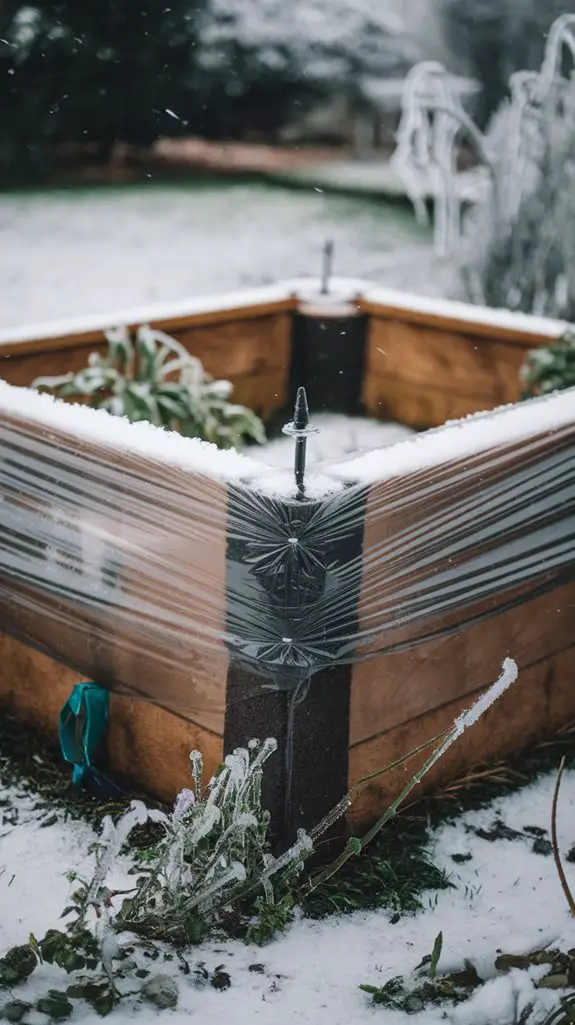
After applying the right mulch, consider additional methods to protect your garden beds during winter. Covering your plants with cloth or plastic can provide extra insulation against freezing temperatures.
Use lightweight row covers or frost cloths that allow sunlight and moisture to penetrate while trapping warmth. Make certain to secure the edges with rocks or soil to prevent the covers from blowing away.
If you opt for plastic, be cautious; it can trap moisture and create a humid environment, which might harm your plants. To mitigate this, lift the plastic on sunny days to allow for ventilation.
Regularly check your covers to verify they're intact and adjust as necessary to provide the best protection for your garden beds through the cold months.
Using Cold Frames for Extra Protection
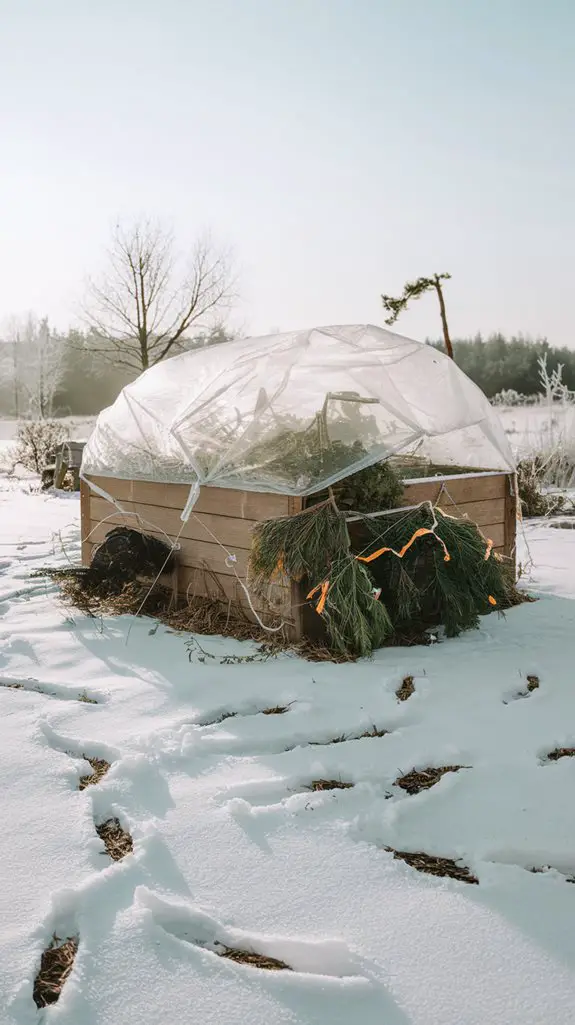
Utilizing cold frames can greatly enhance the protection of your garden beds during the winter months. These simple structures trap heat and shield plants from harsh weather, allowing for extended growing seasons. Position your cold frames in a sunny spot, ensuring they're easy to open for ventilation.
| Material | Benefits | Considerations |
|---|---|---|
| Glass | Excellent light transmission | Can break easily |
| Polycarbonate | Durable and lightweight | Slightly less light |
| Wood | Insulates well | Requires maintenance |
Protecting Against Pests and Wildlife
As winter approaches, protecting your garden beds from pests and wildlife becomes essential to guarantee your plants survive the cold months.
Start by installing barriers like mesh fencing or row covers to deter larger animals such as deer and rabbits. Make certain these barriers are secure and extend underground to prevent burrowing pests.
You can also use natural repellents, such as garlic or cayenne pepper sprays, to keep smaller critters at bay. Additionally, consider placing traps or using motion-activated sprinklers to scare away unwanted visitors.
Regularly check your garden beds for signs of damage and remove any fallen fruits or vegetables that might attract pests. Implementing effective pest control methods is crucial for maintaining the health of your raised garden beds.
Conclusion
By insulating your raised garden beds, choosing the right mulch, covering with cloth or plastic, and using cold frames, you can safeguard your plants through winter's chill. You'll not only protect your soil but also enhance its fertility and resilience.
As you monitor moisture levels and deter pests, remember: a little preparation now leads to a bountiful harvest later. Embrace these strategies, and your garden will thrive when spring returns, ready to flourish in the warmth.
