Just as you’ve noticed your backyard becoming your pet’s primary habitat, you’re likely seeking ways to make this space both sustainable and safe. You’ll find that eco-conscious design doesn’t require sacrificing your pet’s enjoyment or your aesthetic preferences. By integrating permeable surfaces, natural ground covers, and chemical-free solutions, you’re creating a backyard ecosystem that supports your pet’s health while reducing your environmental footprint. The transformation begins with understanding which sustainable options align with your specific pet’s behaviors.
Natural Pet-Safe Ground Covers
When designing a pet-friendly backyard, selecting appropriate ground covers requires careful consideration of both environmental impact and animal safety.
Opt for clover lawns that withstand pet traffic while fixing nitrogen in soil, reducing fertilizer needs. Buffalo grass presents another resilient option, thriving with minimal irrigation and maintenance.
For shaded areas, moss gardens offer toxin-free surfaces that won’t harm curious pets who might ingest vegetation.
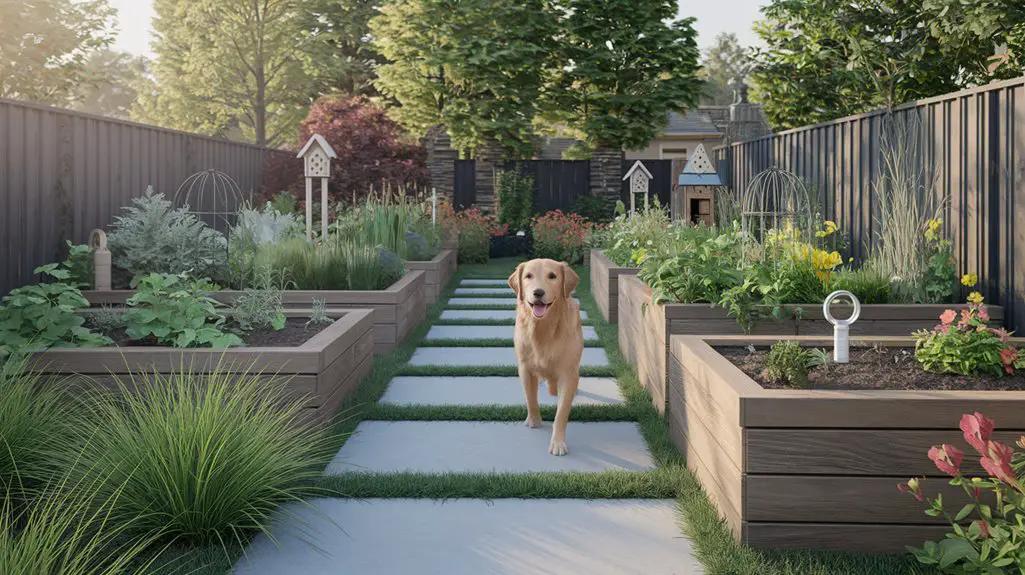
Consider installing decomposed granite pathways that prevent muddy paws while allowing proper drainage and reducing erosion.
Microclover blends provide an especially durable alternative to traditional turf, resisting urine damage and maintaining color throughout active use.
These sustainable ground covers not only protect your pets from harmful chemicals but also conserve water resources and create habitat niches for beneficial insects. Incorporating eco-friendly practices in your gardening approach enhances the overall health of your backyard ecosystem.
Non-Toxic Plant Selection for Curious Pets
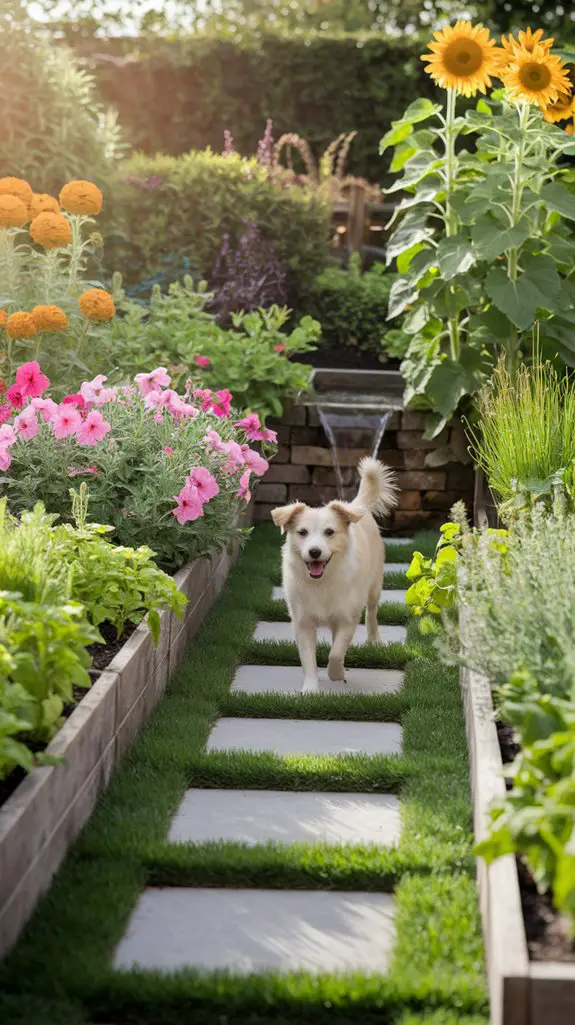
Beyond ground cover considerations, the plants you select form the botanical backbone of your pet-safe landscape design.
Prioritize native species like coneflowers, black-eyed Susans, and ornamental grasses that naturally resist pet damage while supporting local ecosystems.
Avoid toxic varieties such as lilies, azaleas, and sago palms that pose ingestion hazards. Instead, incorporate pet-friendly herbs—mint, rosemary, and thyme—that withstand occasional trampling and offer sensory enrichment.
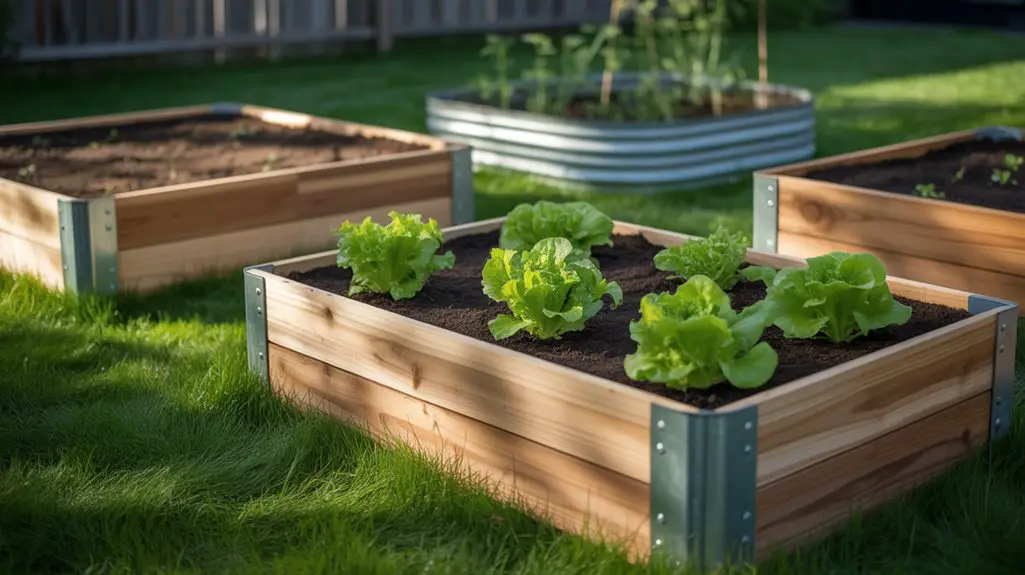
Position these strategically in raised planters to minimize access by particularly determined diggers.
For structural elements, consider sturdy ornamentals like rose of Sharon, magnolias, and camellias with non-toxic profiles.
Implement vertical gardening techniques where appropriate to elevate vulnerable specimens beyond your pets’ reach while maximizing limited space in urban settings. Additionally, integrating wildlife-friendly practices can further enhance the ecological balance of your garden.
Water Conservation Systems for Pet Areas
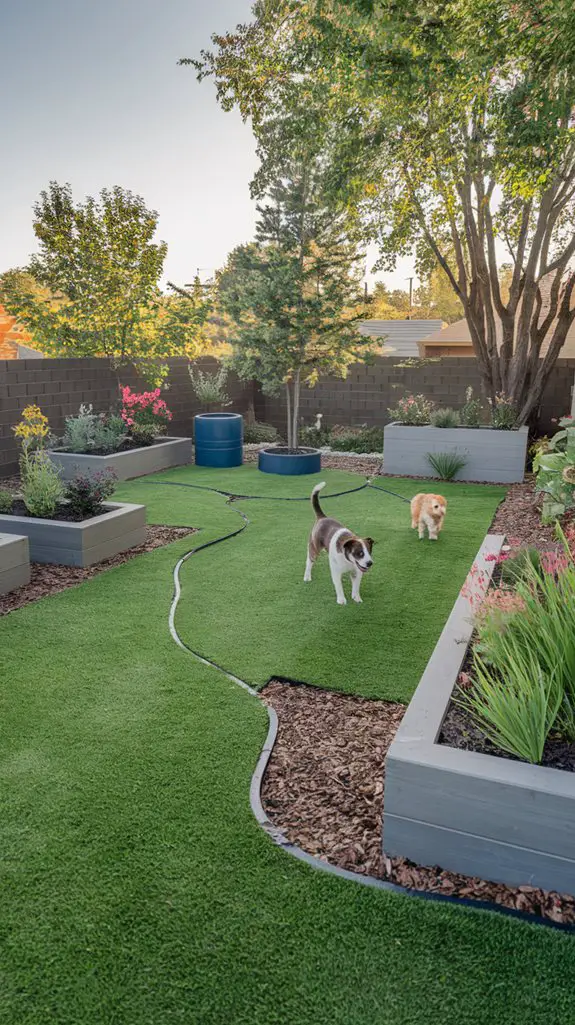
Creating sustainable water systems for pet areas requires balancing your furry companions’ needs with responsible resource management.
Design integrated solutions that minimize waste while ensuring pets have access to fresh water throughout your outdoor space.
- Install recirculating pet fountains powered by small solar panels to provide continuous fresh water without grid electricity.
- Implement rainwater harvesting systems with pet-safe filters to collect and store precipitation for drinking stations and area cleaning.
- Create permeable surfaces in play zones using decomposed granite or synthetic pet turf that allows water infiltration while preventing muddy paws.
- Position drip irrigation for pet-friendly plants on timers to maximize growth while reducing overall water consumption by 30-50% compared to sprinklers.
In addition, incorporating rainwater management techniques can further enhance your backyard’s sustainability and efficiency.
Biodegradable Waste Management Solutions
Managing pet waste effectively represents a critical component of any sustainable backyard ecosystem.
Consider implementing a dedicated compost system designed specifically for pet waste, utilizing microbial enzymes that accelerate decomposition while neutralizing harmful pathogens.
You’ll find biodegradable collection bags made from cornstarch or vegetable oils offer a significant upgrade from traditional plastic options, breaking down within 90 days in proper conditions.
For dog owners, install a mini septic system—essentially a buried waste digester that uses specialized bacteria to transform waste into liquid that safely filters into soil.
Cat owners should avoid flushing litter, instead opting for plant-based alternatives made from wheat, paper, or walnut shells that can be composted in separate systems from food waste.
These solutions minimize landfill impact while returning nutrients to your garden ecosystem. Additionally, embracing backyard wildlife can enhance your pest control efforts, creating a more balanced environment.
Chemical-Free Pest Control for Pet Safety
While traditional pest control methods often rely on synthetic chemicals that can harm pets, implementing integrated pest management practices provides a safer alternative for your four-legged companions.
By focusing on prevention and biological controls, you’ll create an ecosystem that naturally deters unwanted visitors while keeping your pets safe.
- Introduce beneficial insects like ladybugs and parasitic wasps to target aphids, caterpillars, and other garden pests.
- Plant strategic companion flora such as marigolds, lavender, and mint to repel insects through natural compounds.
- Install bird feeders and bat houses to encourage natural predators that consume mosquitoes and other problematic insects.
- Apply food-grade diatomaceous earth around perimeter areas as a non-toxic barrier that dehydrates crawling pests.
- Additionally, incorporating essential plants into your garden can enhance the effectiveness of your pest control efforts.
Renewable Materials for Pet Play Structures
When selecting materials for pet play structures, sustainable options offer both environmental benefits and increased safety for your companions.
Consider bamboo for climbing frames and tunnels—it’s rapidly renewable, naturally antimicrobial, and exceptionally durable.
Reclaimed timber provides sturdy platforms while diverting wood from landfills and eliminating the need for new logging.
For ground surfaces, cork mulch offers a non-toxic, springy alternative to chemical-treated wood chips.
It’s harvested without harming trees and naturally repels insects.
Hemp rope outperforms nylon for durability in tug toys and climbing features while biodegrading at end-of-life.
Choose water-based, zero-VOC sealants to protect wooden elements.
They’re non-toxic when dry and won’t off-gas harmful compounds during hot weather when pets might chew or lie on surfaces. Additionally, when planning your garden, incorporating pet-friendly plants can enhance the safety and aesthetics of your outdoor space.
Solar-Powered Pet Amenities
Solar-powered pet amenities represent a significant advancement in creating self-sufficient backyard spaces that serve your pets’ needs while minimizing environmental impact.
These innovative solutions harness renewable energy to power essential pet comfort and care systems without increasing your carbon footprint.
- Heated pet houses – Utilize photovoltaic panels to maintain ideal temperatures in outdoor shelters, particularly beneficial during colder months.
- Automatic water fountains – Solar-powered circulation systems that provide fresh, filtered water throughout the day.
- Motion-activated lighting – Low-energy LEDs that illuminate pet pathways and play areas after sunset.
- Automated feeding stations – Programmable dispensers that operate on stored solar energy, ensuring consistent feeding schedules even when you’re away.
Upcycled Shelter Options for Outdoor Pets
Rather than purchasing new pet shelters, upcycled materials offer sustainable alternatives that reduce waste while providing comfortable, durable housing for your outdoor companions.
Consider repurposing wooden shipping pallets into elevated dog platforms or cat perches—just sanitize thoroughly and remove any protruding nails first.
Transform plastic barrels into waterproof shelters by cutting entry points and installing insulated flooring made from reclaimed fabric.
Old tires stacked and secured create innovative rabbit hutches when topped with salvaged wood. Weather-resistant options include converting unused toolsheds or plastic storage containers with proper ventilation cutouts.
For smaller pets, repurpose vintage suitcases or wooden wine crates with eco-friendly cushioning. Incorporating multiple pets into your design ensures a harmonious and functional space for all your furry friends.
Whatever design you choose, incorporate natural temperature regulation by partially burying structures or adding green roofs with drought-resistant succulents.
Native Landscaping for Wildlife and Pet Harmony
Creating a harmonious outdoor space where both pets and wildlife thrive requires thoughtful integration of native plant species throughout your landscape design. Native plants create sustainable ecosystems that support local biodiversity while providing a safe environment for your four-legged companions.
- Buffer zones – Establish designated areas with dense native shrubs that create natural boundaries, allowing wildlife refuge spaces where pets can’t access.
- Non-toxic selections – Choose region-specific flora like coneflowers, bee balm, and native grasses that won’t harm curious pets if ingested.
- Vertical stratification – Layer plantings from ground covers to canopy trees, maximizing habitat while maintaining open play areas for pets.
- Water integration – Install recirculating water features using native aquatic plants that filter naturally, providing drinking sources for pets and wildlife. Additionally, incorporating wildlife-friendly practices can enhance the overall health of your backyard ecosystem.
Permeable Surfaces for Drainage and Paw Health
Traditional hardscaping in backyards can damage sensitive paw pads and create harmful runoff when rain events occur, which is why permeable surfaces represent an essential component of pet-friendly landscape design.
Consider installing decomposed granite pathways that provide excellent drainage while remaining gentle on paws. These surfaces allow water to percolate naturally into the soil, reducing puddles where parasites breed. For play areas, select engineered wood fiber mulch that cushions impacts and won’t splinter into paws like traditional wood chips. Grass-reinforcement grids offer another dual-purpose solution—they prevent soil compaction in high-traffic zones while maintaining a natural surface your pets can enjoy.
When selecting materials, prioritize those without chemical treatments that could leach into soil or harm paws after rainfall. Furthermore, using sustainable landscaping techniques can enhance both the ecological health of your yard and the well-being of your pets.
Conclusion
By implementing these integrated eco-systems, you’ve created a nexus where sustainability meets functionality—precisely where your retriever bounds across clover while butterflies visit the same coneflowers that naturally deter pests. Your permeable pathways now channel rainwater to native plants while solar-powered amenities illuminate evening playtime. It’s this deliberate design harmony that guarantees both your pet’s paws and the planet’s health remain in perfect ecological balance.