
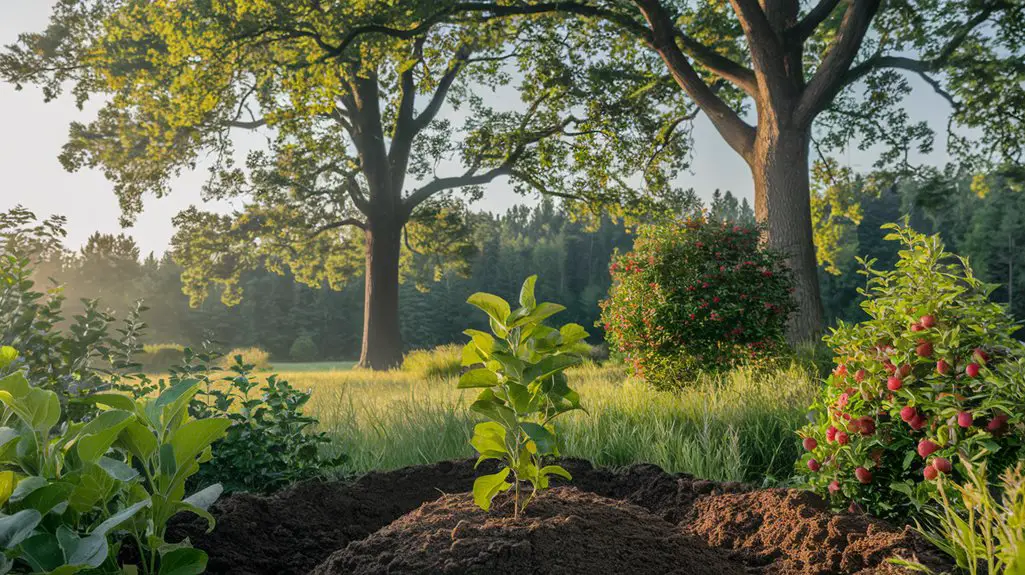
Selecting the right trees for wildlife habitats is like composing nature's symphony, where every tree species plays an integral role. Start by identifying native species that are well-adapted to your local climate and soil; they're essential for providing both food and shelter needed by diverse wildlife.
Considerations extend to tree size, growth rate, and the structural complexity they offer. Will you guarantee a harmonious environment for flourishing biodiversity? Experts have insightful strategies to share.
On this page
Understanding the Needs of Local Wildlife
Before selecting trees for a wildlife habitat, it's crucial to understand the specific needs of the local wildlife effectively. Start by identifying the species that inhabit or migrate through the area. Each species has unique dietary, shelter, and nesting requirements.
For instance, if you have an abundance of seed-eating birds, consider trees that produce seeds or nuts. Observe the seasonal behaviors of the wildlife, noting any migratory patterns or breeding cycles.
Examine the existing vegetation and determine which species are currently supporting wildlife. Remember, interactions like predation or competition also shape habitats.
A detailed wildlife survey can reveal these intricate relationships. Additionally, incorporating native plants into your habitat design can enhance biodiversity and provide essential resources for wildlife.
Selecting Native Tree Species
Selecting native tree species is integral to establishing a thriving wildlife habitat, as these trees have co-evolved with local fauna. Make certain you research specific native species suited to your region's climate and soil conditions.
Native trees offer peak nutritional resources, shelter, and breeding sites for wildlife, supporting ecological balance. They're adapted to resist local pests and diseases, reducing maintenance needs and artificial interventions.
When selecting, prioritize species that produce fruits, nuts, or seeds. Trees like oaks and hickories are advantageous due to their high-value food provision.
Additionally, native trees bolster local biodiversity by supporting specialized relationships with insects and fungi. This holistic approach aids in reinforcing the ecosystem's resilience and stability, fostering a sustainable environment for wildlife.
Considering Tree Size and Growth Rate
Understanding the size and growth rate of trees is vital when choosing species for wildlife habitats. You need to evaluate how much space a tree occupies at maturity and its growth dynamics. A tree's size influences the habitat's carrying capacity, affecting the number of species it can support.
Fast-growing species quickly offer cover, while slower growers provide long-term stability. It's important to assess spatial constraints and future canopy competition: overlapping trees may hinder growth or lead to resource depletion.
Consider the ecosystem's specific requirements. For instance, large trees provide nesting cavities, while smaller trees offer cover or perching sites for different fauna.
Understanding these dynamics guarantees that the selected species contribute effectively to the ecological structure and function of the habitat.
Evaluating Food Resources for Wildlife
When evaluating food resources for wildlife, it's important to assess the nutritional offerings of various tree species. Trees can provide diverse feeding options that are vital for supporting wildlife populations.
You should focus on three primary aspects:
- Fruit and Nut Production: Choose trees like oaks, which produce acorns, or berry-producing species, ensuring a steady food supply for birds and small mammals.
- Bark and Leaf Consumption: Opt for trees whose bark and leaves are palatable to wildlife. For instance, beech and maple can serve as nutritional sources for sap-eating and leaf-feeding species.
- Seasonal Availability: Select trees that offer food throughout different seasons. Apple trees or hollies with late-season fruits support wildlife even through the winter months by providing food when it's scarce. Additionally, incorporating trees that bloom at staggered times can enhance wildlife food resources and attract a wider variety of species throughout the year.
Providing Shelter and Nesting Sites
While evaluating food resources is paramount for wildlife support, ensuring adequate shelter and nesting sites is equally essential.
Select diverse tree species emphasizing structural complexity and longevity. Evergreen trees, like pines and spruces, offer year-round protection against harsh weather. Broadleaf trees, such as oaks or maples, provide dense canopies essential for nesting birds and roosting mammals.
Look for trees with cavities or peeling bark, which serve as nesting sites or insect habitats. Don't overlook understory layers; shrubs and young trees enhance ground-level cover.
Assess potential for deadwood or snags, which offer critical nesting or perching spots for various species. By focusing on shelter attributes, you greatly enhance the habitat's integration across all seasons, fostering a stable wildlife environment. Additionally, creating wildlife-friendly gardens can further support the diverse needs of local fauna.
Enhancing Biodiversity With Complementary Plantings
To enhance biodiversity in wildlife habitats, complement tree plantings with a variety of native shrubs, grasses, and flowering plants.
These complementary plantings create diverse ecosystems that support multiple species by providing food, shelter, and breeding grounds.
Ascertain your design includes:
- Layered Vegetation: Incorporate plants of varying heights to form stratified layers. This mimics natural habitats, offering niches for different organisms. Picture lush understories beneath towering trees.
- Seasonal Variation: Select species that bloom or produce fruit in different seasons to ascertain year-round resources. Imagine vibrant spring blossoms followed by summer berries.
- Functional Diversity: Choose plants that fulfill various roles like nitrogen fixers or pollinator attractors. Consider the ecological synergy when native species interact harmoniously, sustaining balanced biodiversity.
Additionally, incorporating wildlife-friendly practices can further enhance the effectiveness of your landscape design.
With these strategies, you'll craft a thriving natural haven.
Conclusion
In selecting trees for wildlife habitats, you facilitate a thriving ecosystem by prioritizing native species. Investigate the theory that native trees support more biodiversity than non-native species due to co-evolution with local fauna.
By choosing a diverse mix of fast and slow-growing trees that offer both food and structural complexity, such as cavities and evergreens, you can meet wildlife needs year-round. This approach not only sustains local wildlife but also enhances overall ecological stability.
