You’ll need more than a random pile of logs to efficiently heat your home through winter. Proper firewood organization prevents moisture damage, reduces pest infestations, and guarantees you’re burning properly seasoned wood when needed. Without a structured approach, you’ll waste time searching for suitable logs and potentially damage your fireplace with insufficiently dried wood. The right location, storage system, and rotation method can transform your firewood management from chaotic to seamless.
Choose the Optimal Stacking Location for Your Firewood
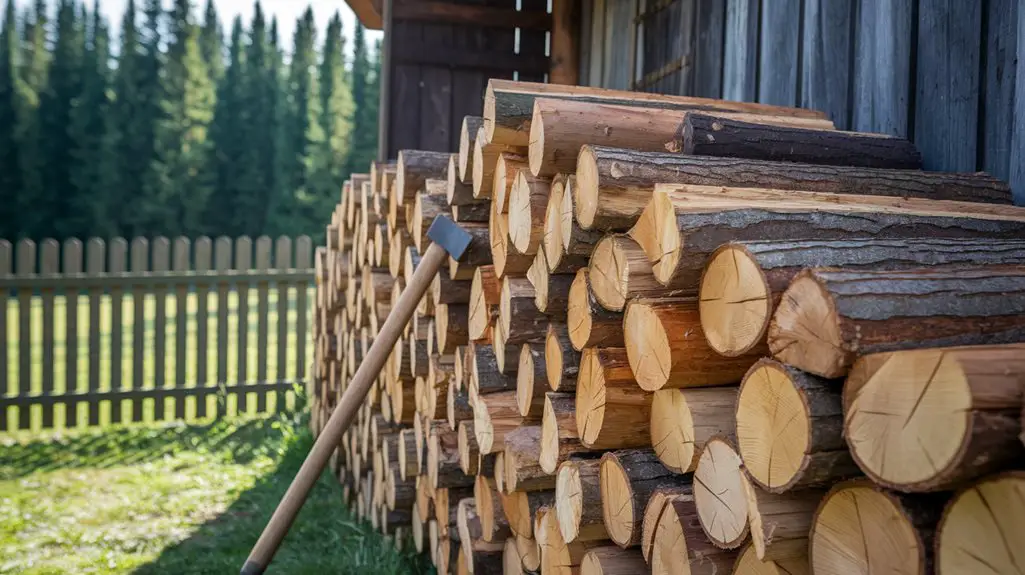
When selecting a location for your firewood stack, consider both accessibility and environmental factors that affect wood quality. Position your stack 20-30 feet from your home for convenience but far enough to discourage pests from entering your living space.
Choose an area with partial sun exposure and good airflow to facilitate drying while preventing mold growth. The ground should be level and slightly elevated to minimize moisture absorption from soil contact. A concrete pad or gravel base provides ideal drainage.
Place your firewood stack perpendicular to prevailing winds to maximize air circulation between logs. Southern exposures accelerate drying in northern climates.
If possible, locate your stack where rain runoff and snowmelt won’t accumulate beneath it. Avoid low-lying areas where dampness persists. Additionally, consider using attractive firewood storage options to enhance the aesthetic appeal of your backyard setup.
Design a Practical and Weather-Resistant Storage System

With your stacking location selected, the design of your firewood storage system becomes the next priority. Focus on creating a structure that balances airflow with weather protection. A raised base prevents ground moisture absorption, while adequate roof coverage shields against precipitation.
| Design Element | Function | Material Options |
|---|---|---|
| Base | Elevates wood 4-6″ from ground | Pallets, pressure-treated lumber, concrete blocks |
| Sides | Provides stability while allowing ventilation | Cross-stacked logs, open slat design, wire mesh |
| Cover | Protects from rain/snow while permitting airflow | Metal roofing, waterproof tarp, corrugated plastic |
Consider prevailing weather conditions when selecting materials. For high-precipitation areas, prioritize robust roofing with 2-3″ overhang. In humid environments, maximize side ventilation to prevent mold growth. Always construct with seasonal wood expansion and contraction in mind. Additionally, incorporating stylish firewood storage can enhance the overall aesthetic of your landscape while serving a functional purpose.
Implement Effective Wood Rotation and Pest Prevention Methods

Properly managing your firewood supply requires consistent rotation and vigilant pest monitoring. Implement a first-in, first-out system by marking stacks chronologically and consuming oldest wood first. Position new logs at the back of your storage area while moving seasoned wood forward for accessibility.
Check wood regularly for termites, carpenter ants, and wood-boring beetles. Remove bark when possible, as it harbors insects and retains moisture. Elevate stacks 6-8 inches off the ground using pressure-treated supports to prevent ground contact and moisture absorption.
Spray perimeters with borate-based repellents bi-annually. Consider introducing beneficial nematodes to soil beneath stacks to control pest larvae. Never use chemical pesticides that could transfer toxins when burning.
Conduct monthly inspections, paying special attention to bottom rows where moisture accumulates and pests typically establish initial colonies. Additionally, proper firewood storage can significantly reduce pest infestations and maintain the quality of your firewood.
Conclusion
You’ve now mastered the art of firewood management—congratulations on your newfound ability to stack logs with the precision of a structural engineer while your neighbors’ haphazard woodpiles collapse like poorly designed Jenga towers. You’ll smugly watch from your window as they frantically search for dry kindling in December, while you’re selecting perfectly seasoned oak from your methodically rotated, elevated, and scientifically ventilated system. Quite the pyromaniac’s paradise, isn’t it?