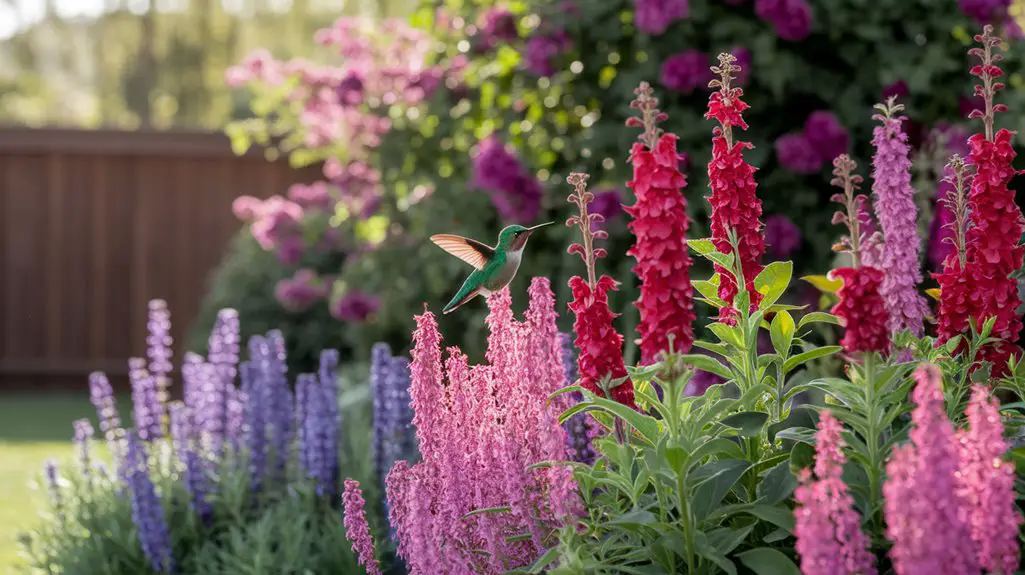
Enhancing your garden with Nectariniidae favorites isn't just about bright colors; it's about strategic planting to create a biodiverse oasis. Trumpet creeper, classified as Campsis radicans, acts as your garden's pièce de résistance with its tubular, red-orange blossoms. Combining it with Monarda didyma (bee balm) guarantees sustained nectar flow. Imagine creating a hummingbird haven that simultaneously beckons butterflies. Are you prepared to transform your backyard into an ecological symphony?
Trumpet Creeper: The Hummingbird Magnet
The trumpet creeper, scientifically known as Campsis radicans, is a definitive choice for those wishing to attract hummingbirds to their backyard gardens. You'll find this vigorous woody vine in the Bignoniaceae family.
With pinnately compound leaves, the foliage exhibits a lush green hue, providing an excellent backdrop to the vibrant blooms. Terminal clusters of tubular flowers, primarily orange to red, peak in summer, offering a nectar-rich feast for these aerial acrobats.
To cultivate Campsis radicans, make certain you plant it in full sun, where it thrives best, reaching heights of up to 12 meters.
It's crucial to provide robust support structures, as this vine employs aerial roots to climb. Prune periodically to manage growth and encourage flowering, making sure your garden remains a hummingbird haven.
Bee Balm: Vibrant Blooms for Backyard Visitors
Shifting focus from the vigorous trumpet creeper, Bee Balm (Monarda didyma) presents another excellent option for enticing hummingbirds with its enchanting blooms.
This perennial of the Lamiaceae family displays vibrant inflorescences in hues of red, pink, and purple, strategically designed to attract pollinators. Characterized by its tubular corollas, Bee Balm facilitates probing by the hummingbird's elongated bill.
Plant it in well-drained acidic to neutral soil, providing full sun to part shade to promote ideal growth and blooming. With heights ranging from 2 to 4 feet, it creates striking vertical interest.
Guarantee adequate air circulation to prevent powdery mildew, a common ailment. Additionally, Bee Balm exudes a minty aroma, enhancing your garden's olfactory appeal while supporting avian biodiversity. Incorporating wildlife-friendly plants like Bee Balm can create a thriving habitat for various species in your garden.
Salvias: A Colorful Addition to Any Garden
Salvias, members of the Lamiaceae family, stand out as a vibrant and diverse group of perennials known for their ability to enchant gardens with a kaleidoscope of colors.
Characterized by their tubular corollas, they're particularly effective at attracting hummingbirds. You'll find species like Salvia guaranitica and Salvia microphylla offering a feast of nectar. The inflorescences typically rise above aromatic foliage, with hues ranging from intense blues and purples to radiant reds and pinks.
When selecting salvias, consider your hardiness zone. These plants, with trichome-covered stems and leaves, thrive in full sun and well-draining soil.
Deadheading prolongs blooming, and regular pruning guarantees bushy growth. Integrate salvias in your garden, and they'll reward you with both pollinator activity and visual grandeur.
Cardinal Flower: A Natural Hummingbird Feeder
With salvias enriching your garden's palette, another stellar choice for enticing hummingbirds is Lobelia cardinalis, commonly known as the cardinal flower.
This herbaceous perennial thrives in moist, rich soils, reaching up to 4 feet in USDA Hardiness Zones 3-9. Its racemose inflorescence exhibits vibrant, scarlet blossoms, a Li attractor for hummingbirds due to their tubular corolla that facilitates nectar access.
The foliage, arranged alternately along a robust central stem, possesses a deep green tint, complementing the fiery blooms. Cardinal flowers prefer partial shade but tolerate full sun with adequate moisture.
By planting Lobelia cardinalis, you're transforming your garden into a natural nectar source, essential for sustaining hummingbird populations through migration and breeding seasons.
Select well-drained sites to prevent root rot.
Butterfly Bush: Dual Attraction for Butterflies and Hummingbirds
Although it's often overlooked, the butterfly bush, or Buddleja davidii, serves as a compelling draw for both butterflies and hummingbirds alike. With its panicles of tubular flowers, Buddleja davidii offers both nectar and visual appeal. This deciduous shrub thrives in USDA Hardiness Zones 5 through 9, requiring full sun exposure for ideal growth. Its inflorescences, which can range from purple to pink or white, emit a subtle fragrance that attracts pollinators. When planting, make sure to provide well-draining soil to prevent root rot. Additionally, including pollinator-friendly plants in your garden can enhance the overall biodiversity and health of your local ecosystem.
| Plant Characteristic | Detail | Significance |
|---|---|---|
| Flower Shape | Tubular | Perfect for hummingbird feeders |
| Bloom Time | Summer-Fall | Long flowering season |
| Soil Type | Well-drained | Prevents disease, promotes health |
Plant it where it will add height and color to your garden.
Honeysuckle: Classic Choice for Pollinator Gardens
Famed for its effervescent cascades of flowers, honeysuckle, or Lonicera spp., ranks as a quintessential plant for attracting pollinators to your garden. Belonging to the Caprifoliaceae family, honeysuckle thrives in a range of environments, displaying tubular blooms in vivid hues—ranging from scarlet to orange—that beckon hummingbirds with rich nectar stores.
You can plant it in well-drained, moderately fertile soil, where it benefits from full sun to partial shade.
These deciduous or evergreen vines exhibit twining growth habits, ideal for trellises or arbors, enhancing vertical garden spaces. Regular pruning guarantees a manageable spread and promotes vibrant blooms.
You'll appreciate its fragrance during blooming season. By incorporating Lonicera spp. into your landscape, you're creating a haven not only for hummingbirds but other beneficial pollinators as well. Additionally, providing a frog-friendly oasis in your garden can further support biodiversity and enhance the ecosystem for all wildlife.
Columbine: Delicate Flowers With Nectar Appeal
Columbine, known scientifically as Aquilegia spp., captivates with its intricate blossoms and potent allure for hummingbirds. Each flower boasts five petal-like sepals, coupled with spurred petals that serve as nectaries, providing rich rewards for these avian visitors.
When choosing a variety, you'll find a spectrum of colors – from soft pastels to vibrant reds and purples – that can complement your garden's palette.
These perennial plants thrive in well-drained soil, with dappled sunlight enhancing their growth. You can plant columbines in mixed borders or under trees, mimicking their natural woodland habitats.
Fuchsia: Hanging Beauties That Draw Hummingbirds
While often featured in hanging baskets, Fuchsia, classified scientifically as Fuchsia spp., captivates hummingbirds with its vibrant, drooping flowers and high nectar content.
Fuchsias are dicotyledonous angiosperms, belonging to the family Onagraceae, exhibiting complex inflorescences draped in a spectrum of colors from vivid pink to deep magenta. The tubular petals, flanked by prominent sepals, offer a striking visual. Derived from diverse species, hybrids create cascading visual feasts, ideal for pollinator attraction.
Position your Fuchsia in partially shaded areas, ensuring soil retains moisture yet drains efficiently. Pruning encourages continuous blooming, essential for energy-seeking hummingbirds.
Consider varieties like 'Gartenmeister Bonstedt' for robust growth and vivid blooms. Incorporate organic matter into the planting medium, elevating nutrient availability, ensuring thriving plant health.
Agastache: Fragrant Herbs Perfect for Pollinators
Agastache, known scientifically as Agastache spp., presents an exceptional herb for attracting pollinators like hummingbirds. Their tubular flowers produce abundant nectar, drawing in your feathered visitors. With aromatic foliage and bright spikes of flowers, these perennials enhance your garden's appeal. Let's examine some attributes of Agastache.
| Attribute | Description | Benefit to Pollinators |
|---|---|---|
| Flower Color | Purple, pink, orange, or red | Attracts visually |
| Bloom Period | Summer to early fall | Sustained nectar source |
| Plant Height | 18 to 36 inches | Visible to hummingbirds |
| Plant Hardiness | USDA zones 5-10 | Adaptable to various climates |
| Soil Preference | Well-draining, moderately fertile | Promotes healthy growth |
Each species in this genus provides unique textures and scents, ensuring an enticing habitat for hummingbirds while elevating your garden's biodiversity. Additionally, incorporating herbs that benefit insects can create a more harmonious ecosystem in your garden.
Zinnia: Bright Blooms That Attract a Crowd
Zinnia, scientifically referred to as Zinnia spp., is a vibrant annual that captures the attention of hummingbirds with its vivid composite blooms.
These plants belong to the Asteraceae family and exhibit ray florets surrounding a central disc floret, creating a daisy-like structure. You'll find them thriving in USDA hardiness zones 3 through 10, with a preference for full sun and well-drained soil.
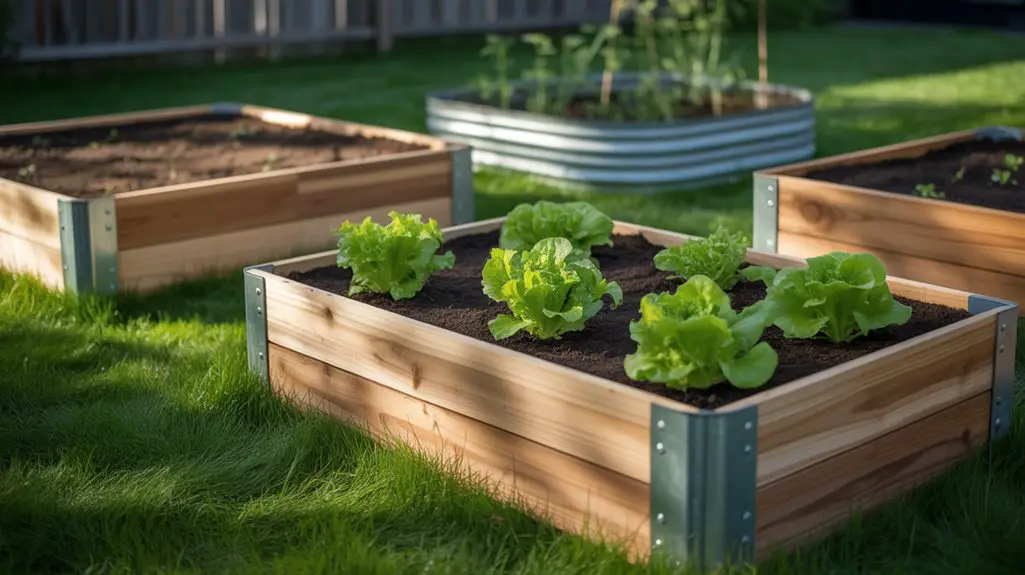
Their chromatic range spans from bold reds to bright pinks and sunlit yellows, offering nectar-rich rewards. It's best to plant zinnias close together for maximum visual impact, which mimics a natural nectar buffet. Additionally, consider placing your zinnias in optimal spots for raised garden beds to enhance their growth and accessibility for hummingbirds.
Regular deadheading of spent flowers promotes continuous blooming, enhancing the garden's allure to those energetic avian pollinators seeking sustenance in your backyard.
Conclusion
Don't worry if you're concerned about maintenance; these selections are mostly low-maintenance perennials. With vibrant Lonicera sempervirens (trumpet creeper) and Monarda didyma (bee balm), you'll have continuous blooms throughout the season. Add Salvia spp. and Lobelia cardinalis for their vivid hues that won't disappoint. Buddleja spp. and Aquilegia spp. offer dual attraction. The elegant Fuchsia spp., aromatic Agastache spp., and colorful Zinnia spp. add dimensions of height and texture. Your backyard will become a pollinator's paradise effortlessly.