
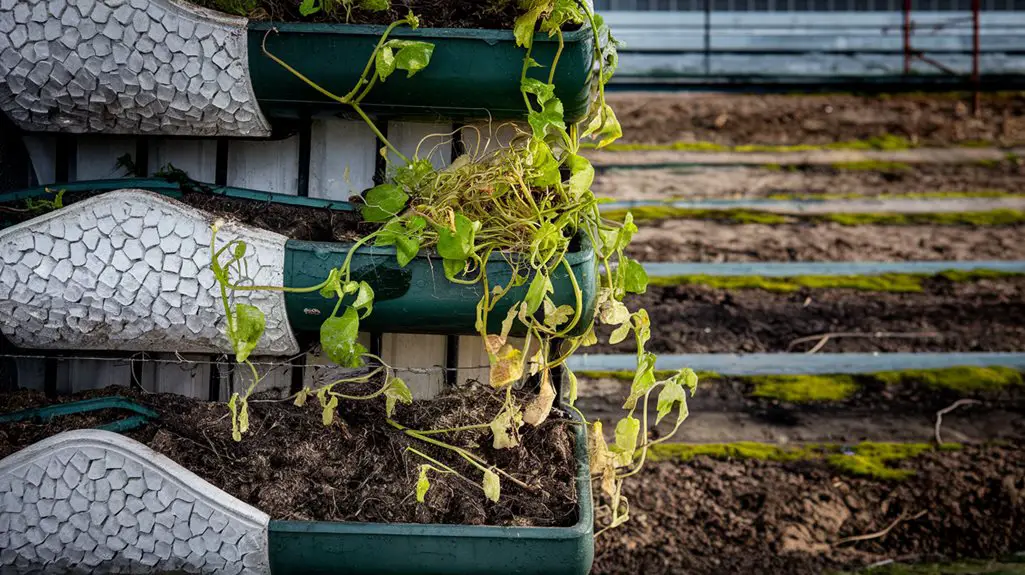
Many people underestimate the importance of plant selection in vertical gardening, which can make or break your success. Choosing varieties that don't match your specific light and humidity conditions can lead to poor growth or failure.
It's not just about the plants, though; there are other common pitfalls you'll want to avoid. Understanding these can help you create a thriving vertical garden that flourishes in your space. Let's explore these critical errors further.
On this page
Choosing the Wrong Plants
When you plunge into vertical gardening, one of the biggest mistakes you can make is choosing the wrong plants for your space.
You'll want to take into account factors like light, humidity, and the plant's growth habits. For instance, if you've got a sunny spot, opt for sun-loving varieties like succulents or herbs. On the other hand, shady areas suit ferns and certain leafy greens.
Additionally, think about the plant's size; some might grow too tall or spread too wide, overwhelming your structure. Focus on plants that thrive together, avoiding those that require different care. Incorporating low-maintenance plants can also make your vertical garden easier to manage amidst a busy lifestyle.
Inadequate Support Structures
If you neglect to provide adequate support structures for your vertical garden, you risk your plants toppling over or getting damaged.
Start by choosing sturdy trellises, mesh, or grids that can withstand your plants' weight as they grow. Make certain your supports are anchored properly; use brackets or stakes to secure them against wind or heavy rain.
Consider the growth habits of your plants; some, like tomatoes or cucumbers, will need more robust support than lighter options.
Regularly check your structures for wear or weakness, especially as plants mature.
Poor Watering Techniques
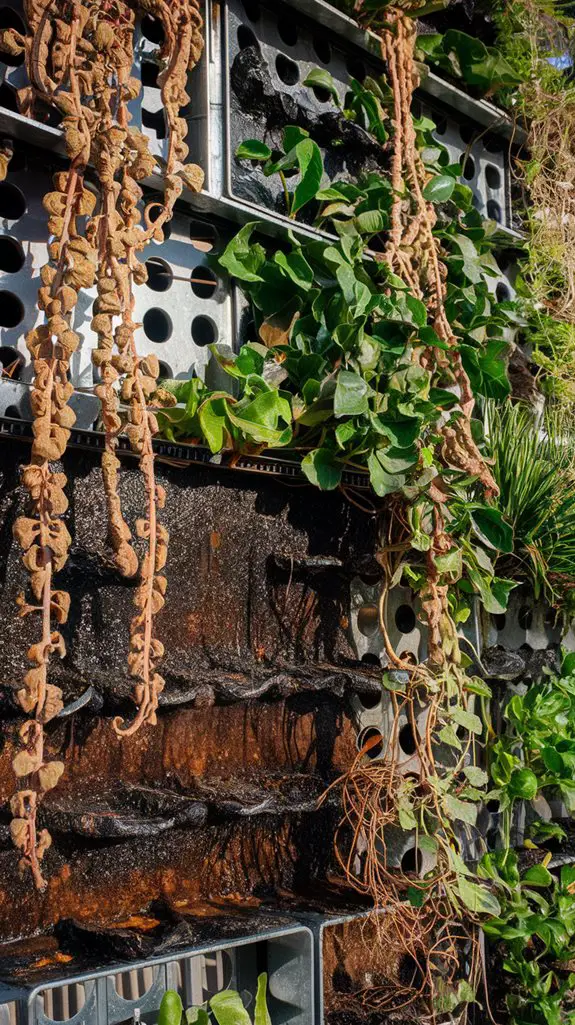
Although you may be enthusiastic to nurture your vertical garden, poor watering techniques can lead to disastrous results.
To guarantee your plants thrive, follow these tips:
- Water Consistently: Establish a regular watering schedule to keep the soil moist but not soggy.
- Check Drainage: Ensure your vertical garden has proper drainage to prevent root rot and water accumulation.
- Use the Right Tools: Employ a watering can or drip system for even moisture distribution, avoiding overhead watering that can lead to fungal issues.
- Monitor Soil Moisture: Regularly check the soil's moisture level with your finger or a moisture meter, adjusting your watering frequency based on the plant's needs.
Neglecting Sunlight Requirements
Watering techniques are just one piece of the puzzle in maintaining a healthy vertical garden. You can't afford to overlook sunlight requirements, as they're essential for your plants' growth.
Each plant has specific light needs, so research the varieties you're planning to grow. Place sun-loving plants at the top of your vertical structure and shade-tolerant ones lower down.
Monitor sunlight exposure daily, adjusting your setup if necessary; even small changes in the environment can impact light availability. Consider using reflective materials to maximize light exposure.
Additionally, incorporating vertical gardening benefits can enhance your overall gardening success, making the most of your limited space. If your plants start to stretch or become leggy, it's a sign they're not getting enough sunlight. Prioritize their light needs to guarantee a thriving and productive vertical garden.
Overlooking Pest Control Measures
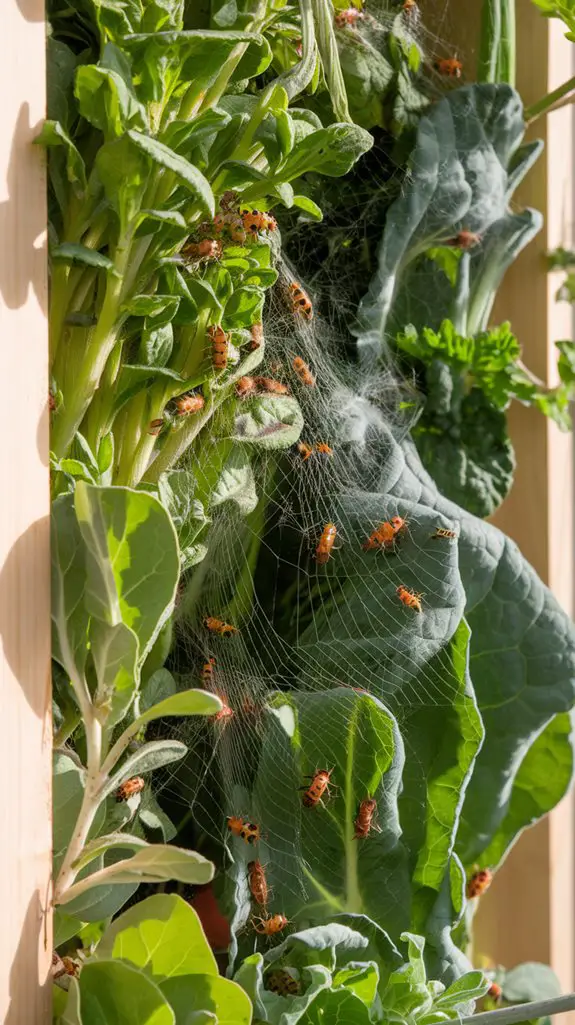
While it might be tempting to focus solely on watering and sunlight, overlooking pest control measures can quickly turn your vertical garden into a battleground.
Pests can damage your plants and ruin your hard work, so it's essential to stay vigilant. Here are some practical steps to keep pests at bay:
- Regular Inspections: Check your plants weekly for any signs of pests or damage.
- Natural Predators: Introduce beneficial insects like ladybugs or lacewings that eat harmful pests.
- Neem Oil: Use this natural pesticide to deter insects without harming your plants.
- Companion Planting: Grow pest-repelling plants alongside your crops to create a natural barrier.
Implementing these measures will protect your vertical garden and guarantee it thrives.
Conclusion
To guarantee your vertical garden thrives, avoid the common mistakes we've discussed. For instance, imagine pouring your heart into a stunning vertical setup, only to watch your carefully chosen plants wilt because they're incompatible with your home's lighting.
By selecting the right plants and providing adequate support, watering, and pest control, you'll create a lush oasis that flourishes. Embrace these tips, and your vertical garden will not only survive but truly thrive, bringing joy and beauty to your space.
