
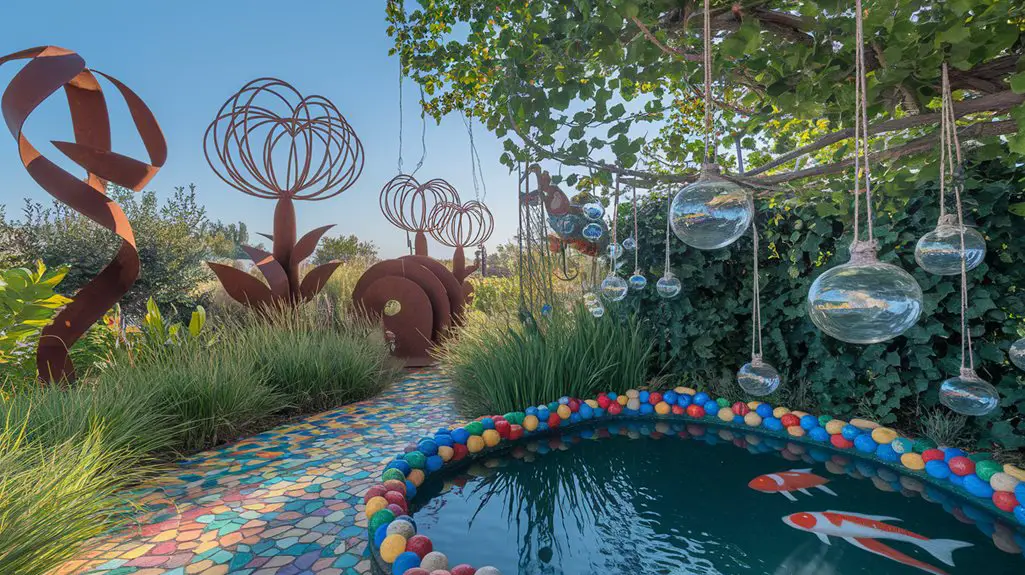
When you transform your garden into an artistic sanctuary, you’re creating more than beauty—you’re crafting an experience. Your outdoor space can become a narrative landscape where art and nature converge in unexpected ways.
Consider how mythology-inspired sculptures might guide visitors through a storyline, or how kinetic installations can dance with the breeze. The right artistic elements don’t just decorate your garden; they fundamentally shift how you and others interact with the environment.
On this page
Mythology and Folklore-Inspired Garden Sculptures
As myths and legends have enchanted humanity throughout the ages, garden sculptures inspired by folklore offer a fascinating way to infuse your landscape with narrative depth and symbolic meaning.
Position these storied figures strategically to create visual focal points that complement your garden’s natural flow.
Consider placing a Greek deity near water features, Celtic knots among native plantings, or Japanese kitsune statues along winding paths. You’ll find these mythological elements seamlessly bridge cultural storytelling with environmental design.
The scale of your sculptures should harmonize with surrounding vegetation—smaller fairies nestled among ground cover, while larger griffin or dragon sculptures can anchor broader spaces.
Select materials that weather appropriately in your climate, allowing your folklore-inspired installations to develop character as they integrate with your evolving garden ecosystem.
Sustainable Art Using Reclaimed Materials
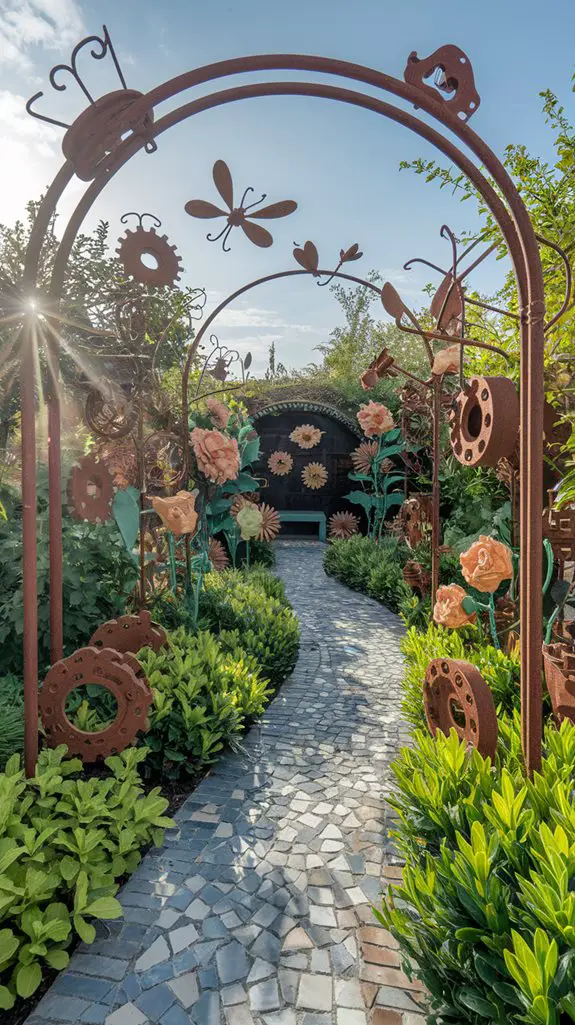
While traditional garden art often relies on newly manufactured materials, sustainable installations crafted from reclaimed objects offer environmental benefits alongside striking visual appeal.
You’ll find that old windows transform into greenhouse walls, salvaged metal becomes kinetic sculptures that dance with the wind, and discarded bottles emerge as colorful light-catching borders.
Position these pieces strategically within your landscape to create focal points that tell a story of renewal.
Consider how driftwood can form natural archways, or how industrial remnants might frame garden beds with rustic elegance.
The weathered patina of reclaimed materials integrates seamlessly with living elements, creating a dialogue between human history and natural growth.
These installations not only reduce waste but also connect your garden to broader ecological narratives through functional beauty. Additionally, incorporating eco-friendly materials can enhance the sustainability and longevity of your garden features.
Interactive Sound and Light Installations
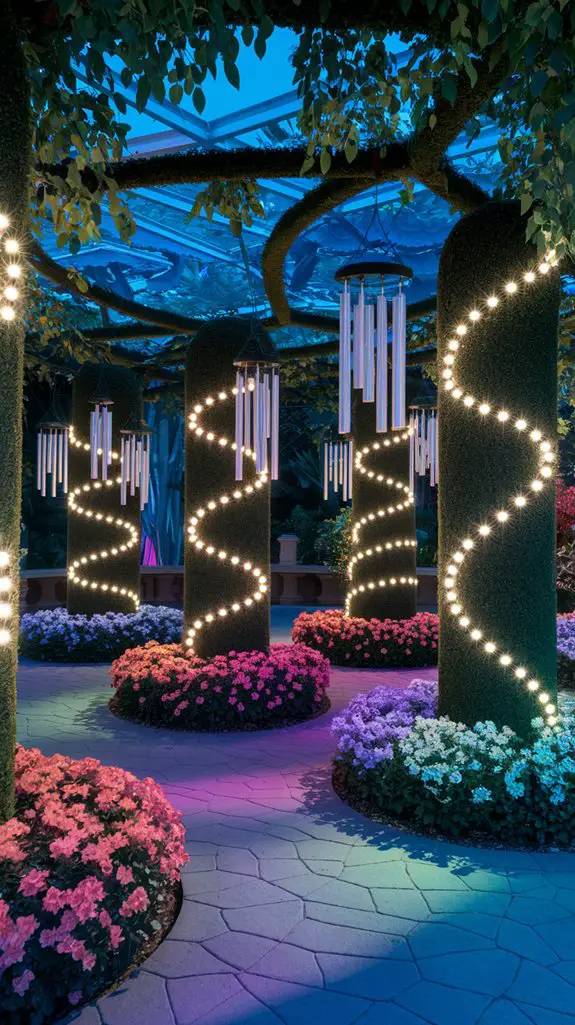
Gardens come alive after dusk when interactive sound and light installations transform ordinary spaces into multisensory experiences.
You’ll create depth and dimension by strategically positioning motion-activated LED pathways that respond to footsteps with subtle color shifts and ambient tones.
Consider incorporating solar-powered chimes that collect energy by day and release gentle melodies when evening breezes pass through.
Weatherproof speakers camouflaged within foliage can emit nature-inspired soundscapes, while downlighting in trees casts intricate shadow patterns on walking surfaces below.
For maximum ecological integration, select fixtures with minimal light pollution and program sound elements to respect wildlife patterns.
The most effective installations blend seamlessly with existing garden elements—water features amplified with subtle underwater illumination or arbors fitted with touch-sensitive strings that produce harmonious notes when brushed against. Additionally, eco-friendly water features can enhance the overall ambiance, providing both visual appeal and sustainability.
Wildlife-Mimicking Art Pieces
Lifelike wildlife sculptures bring unexpected animation to garden spaces when strategically positioned to mimic natural behaviors and movements.
You’ll find these installations most effective when placed where real animals would naturally appear—birds perched on branches, foxes peeking from underbrush, or frogs beside water features.
Consider materials that weather naturally into your landscape. Copper sculptures develop patina over time, while weathered steel blends with earthy tones.
Position pieces to create narrative—deer appearing to drink from ponds or butterflies in mid-flight between flowering plants.
For maximum impact, you’ll want to incorporate movement elements. Wind-activated sculptures that sway or rotate add dimension, while shadow-casting designs create changing patterns throughout the day, making static art feel alive as sunlight shifts across your garden. Additionally, using native plants for wildlife can enhance the habitat and attract real animals, complementing your art installations beautifully.
Water-Integrated Artistic Features
Integrating water features with artistic elements transforms ordinary garden spaces into dynamic sensory experiences where sound, movement, and reflection merge.
You’ll discover how artistic water installations create focal points that evolve with changing light conditions while establishing rhythm throughout your landscape.
- Install floating sculptures that cast intricate shadow patterns across water surfaces
- Create stepped channels where water cascades over textured materials, producing variable sounds
- Design reflective pools that capture sky imagery and surrounding foliage
- Incorporate illuminated water walls as living dividers between garden rooms
When you position these water-integrated art pieces strategically, you’ll establish visual corridors that draw visitors through your garden.
The interplay between artistic materials and flowing water creates microenvironments that shift with seasonal changes, ensuring your outdoor space remains engaging year-round. Additionally, incorporating a koi pond not only enhances the aesthetic appeal but also promotes a tranquil atmosphere in your garden.
Seasonal Transformation Art Displays
Beyond the permanent features of water installations, your garden can host art that celebrates and responds to nature’s rhythms through the changing seasons.
Consider sculptural elements with materials that intentionally weather—corten steel that deepens in rust tones or copper that develops patina throughout the year.
You’ll find kinetic installations particularly effective, as they respond differently to spring breezes versus autumn winds. Integrate plant-based art using seasonal bloomers in strategic arrangements that evolve through color palettes organically.
For winter interest, incorporate structures with ice-capturing capabilities that form crystalline displays during freezes.
Light-reactive components can maximize shorter daylight hours during winter while casting different shadows as the sun’s angle changes.
These transformation-focused installations create a garden that’s never static, revealing new artistic dimensions with each season’s shift. Additionally, creating a wildlife-friendly garden can enhance the beauty of these installations by attracting diverse species that interact with your art.
Cultural Heritage Garden Galleries
Cultural traditions shape the most compelling garden galleries, where artifacts, sculptures, and installations honor your heritage while creating meaningful outdoor spaces.
You’ll find these cultural touchpoints transform ordinary gardens into living museums that connect visitors to your ancestry and values.
- Integrate family heirlooms and cultural artifacts within plant arrangements that highlight their significance
- Create dedicated zones that represent different eras or regions important to your heritage
- Use traditional materials and techniques in contemporary ways for benches, pathways, and borders
- Incorporate storytelling elements like engraved stones or audio installations that explain cultural contexts
When designing your cultural heritage gallery, focus on authenticity rather than stereotypes.
Layer elements strategically, allowing visitors to discover connections between plants, art, and history as they move through the space.
Kinetic Art That Moves With Wind
Wind-powered garden sculptures transform static landscapes into dynamic experiences as air currents animate carefully engineered art pieces.
These installations harness natural energy to create perpetual motion, establishing a dialogue between art and environment.
You’ll find various kinetic elements work beautifully in gardens—delicate metal pinwheels catching light while spinning, suspended mobiles that twist with gentle breezes, and tall wind-activated chimes that add auditory dimensions to visual movement.
Position these pieces where prevailing winds will maximize their movement potential.
Consider scale and placement carefully—smaller works excel in intimate corners where subtle movements draw closer inspection, while larger installations create dramatic focal points visible across your landscape.
The most successful kinetic sculptures respond to even the slightest air movements, creating continuous, ever-changing compositions that reveal themselves differently throughout changing seasons and weather conditions.
Minimalist Zen-Inspired Art Arrangements
Embracing the philosophy of “less is more,” Zen-inspired garden arrangements create powerful visual impact through deliberate restraint and thoughtful composition.
You’ll find that carefully positioned stones, raked gravel patterns, and minimal sculptural elements transform your outdoor space into a contemplative sanctuary.
- Select three key elements maximum (stone, water, sculpture) to avoid visual clutter
- Position objects asymmetrically to create tension and visual flow
- Incorporate negative space intentionally—emptiness highlights form
- Choose materials with naturally weathered textures that evolve over time
When designing your Zen garden installation, consider how light changes throughout the day, casting evolving shadows across your carefully curated elements. Incorporating elegant minimalist water features can enhance the sense of tranquility in your space.
The beauty emerges not from decorative excess but from the relationship between objects and the surrounding environment, inviting quiet reflection and mindful observation.
Conclusion
Your garden’s transformation begins as you envision these themes—each sculpture, sustainable piece, or kinetic element carving new pathways through your outdoor canvas. Notice how artistry merges with nature’s rhythms, creating spaces that whisper stories at every turn.
What awaits in your landscape’s negative spaces? What will emerge when light shifts through your installations? The garden you’re crafting isn’t just beautiful—it’s an ever-evolving conversation between art and earth.
