
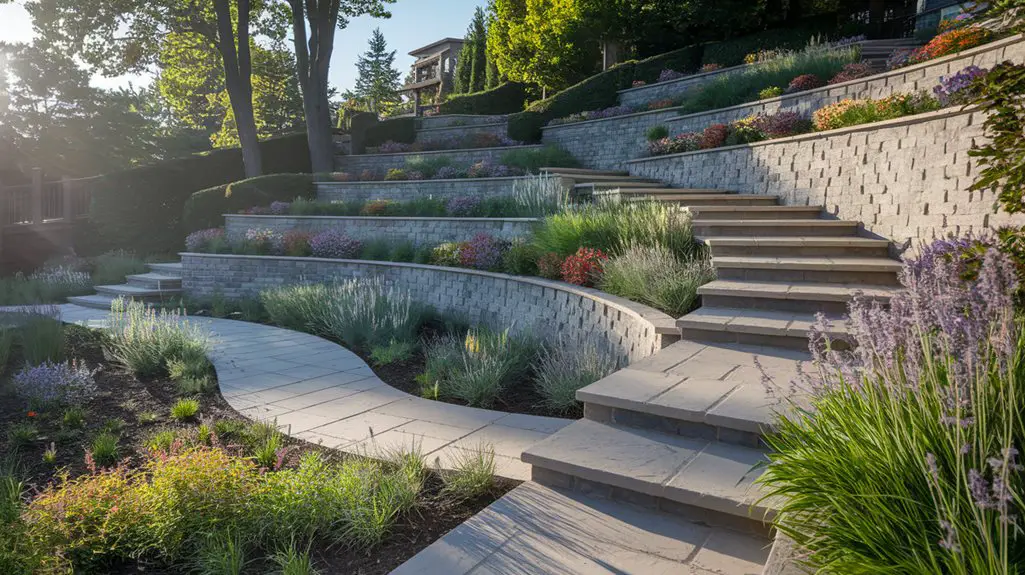
When you’re facing the challenges of a sloped garden, steps and pathways aren’t merely aesthetic additions—they’re essential infrastructure. You’ll find they transform difficult terrain into usable, safe outdoor spaces while preventing soil erosion and runoff damage.
Beyond functionality, well-designed walkways create visual flow, guiding movement through your landscape’s distinct zones. The right materials and placement can dramatically increase your property’s value while making maintenance markedly easier. What makes this combination so powerful?
On this page
Safety Benefits of Installing Proper Garden Stairs
When properly designed and constructed, garden stairs greatly reduce the risk of falls and injuries on sloped landscapes. They provide secure footing with consistent riser heights and tread depths that accommodate your natural gait, unlike the uneven terrain of hillsides.
Proper stairs incorporate vital safety elements like non-slip treads, adequate width (minimum 36 inches), and appropriate handrails for steeper sections. Strategic lighting along steps prevents nighttime accidents, while landing areas every 5-6 steps offer rest points and stability shifting zones.
You’ll also benefit from improved garden accessibility during wet conditions when slopes become particularly hazardous. Quality materials like stone, concrete, or composite lumber resist erosion and maintain structural integrity, preventing dangerous deterioration.
Enhancing Property Value Through Tiered Accessibility
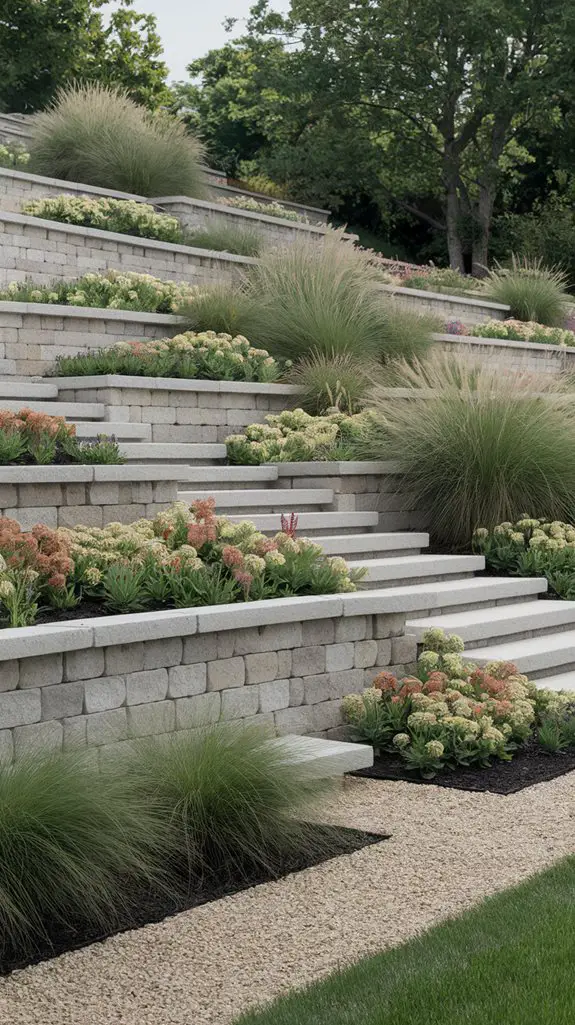
While homeowners often focus on interior renovations, professionally designed garden stairs and pathways can add to your home’s appeal through enhanced landscape accessibility. You’ll find that tiered landscapes create usable outdoor spaces that potential buyers immediately recognize as valuable assets. Incorporating decorative gravel into your walkway design adds both aesthetic appeal and functionality.
| Feature | Value-Adding Benefit |
|---|---|
| Terraced gardens | Increases usable square footage |
| Stone stairways | Provides elegant, all-weather access |
| Lighting integration | Extends outdoor usage hours |
| Matching materials | Creates cohesive design language |
When you invest in quality pathways, you’re not just addressing slope issues—you’re transforming challenging terrain into your property’s most distinctive feature. Real estate professionals consistently report that homes with accessible, well-designed sloped gardens command premium prices and sell faster than comparable properties with undeveloped slopes.
Creating Functional Zones in Sloped Landscapes
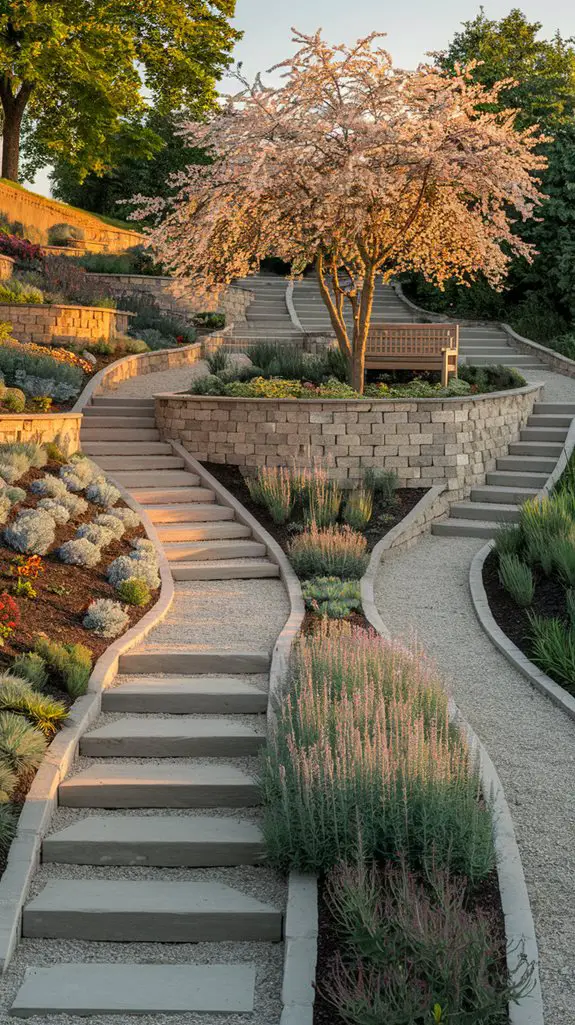
Sloped landscapes naturally lend themselves to distinct functional zones, each operating at its own elevation to serve specific purposes in your garden design. By incorporating strategically placed steps and pathways, you’ll transform challenging terrain into a series of usable outdoor rooms.
Upper zones typically work well for viewing areas, meditation spaces, or sun-loving plantings that benefit from increased light exposure.
Mid-level terraces can accommodate dining areas, fire pits, or kitchen gardens where easy access is essential.
Lower zones often serve as play areas, shade gardens, or water features that capitalize on natural drainage patterns.
Connect these zones with switchback pathways that reduce erosion while creating intuitive circulation patterns. Incorporating low-maintenance designs can further enhance the usability of these pathways for busy homeowners.
Each change between zones becomes an opportunity for visual interest through material changes, plantings, or resting points.
Material Options for Durable Hillside Walkways
Choosing the right materials for hillside walkways demands careful consideration of both durability and drainage capabilities. You’ll need surfaces that withstand erosion forces while managing water runoff effectively. Additionally, opting for eco-friendly materials can enhance the sustainability of your outdoor projects.
| Material | Durability | Best Applications |
|---|---|---|
| Flagstone | High; natural slip resistance | Formal gardens, Mediterranean designs |
| Gravel | Moderate; excellent drainage | Casual paths, low-traffic areas |
| Timber | Medium; requires treatment | Rustic settings, gentle slopes |
When selecting materials, assess your slope’s gradient—steeper inclines require more substantial hardscaping elements like concrete or stone. Incorporate cross-slope construction techniques where pathways run diagonally across the hillside rather than directly up and down.
This approach minimizes erosion risk while creating a more navigable grade for daily use. Consider combining materials strategically—stone treads with gravel landings balance stability with proper drainage.
Erosion Control Through Strategic Path Planning
Effective erosion control begins with thoughtful path design that works with—not against—your sloped garden’s natural water flow patterns. By incorporating switchbacks and traversing the slope diagonally, you’ll reduce water velocity and minimize soil displacement during heavy rainfall.
Integrate water-dispersing features like French drains alongside paths or install permeable surfaces that allow absorption rather than runoff. Position stepping stones with 1-2″ gaps planted with creeping thyme or sedums to slow water flow while maintaining walkability.
Strategic placement of check dams at intervals along steeper sections redirects water away from vulnerable soil.
Additionally, consider using garden walkways to enhance both aesthetics and functionality in your landscape design.
You’ll also benefit from installing gravel-filled trenches at path edges to capture sediment before it’s carried downhill. These techniques transform your pathways from potential erosion channels into effective water management systems.
Blending Aesthetic Appeal With Practical Navigation
While traversing your sloped garden requires practical considerations, you shouldn’t sacrifice visual harmony in the process. Incorporate materials that complement your landscape’s natural elements—flagstones echo rocky outcroppings, while timber steps integrate seamlessly with wooded areas.
Consider how your pathway’s flow directs both physical movement and visual attention through the garden.
Vary step widths strategically; wider sections create natural pausing points and viewing platforms. Implement gentle curves rather than rigid straight lines to soften the shift between elevation changes. Integrate low-growing groundcovers between stepping stones to soften edges and reduce visual harshness.
The most successful sloped garden pathways balance functionality with design consciousness—they’re safe and erosion-resistant while simultaneously enhancing your garden’s aesthetic narrative through thoughtful material selection, proportional scaling, and rhythmic patterning. Additionally, unique stone walkway designs can further enhance the charm of your garden space.
Conclusion
Your sloped garden becomes far more usable when you incorporate thoughtfully designed steps and pathways. Beyond preventing erosion and falls, these elements create a harmonious flow between distinct garden zones while considerably boosting property value. By selecting materials that complement your soil composition and rainfall patterns, you’ll develop a landscape that’s not just accessible but also ecologically sound and visually integrated with your property’s natural contours.
