
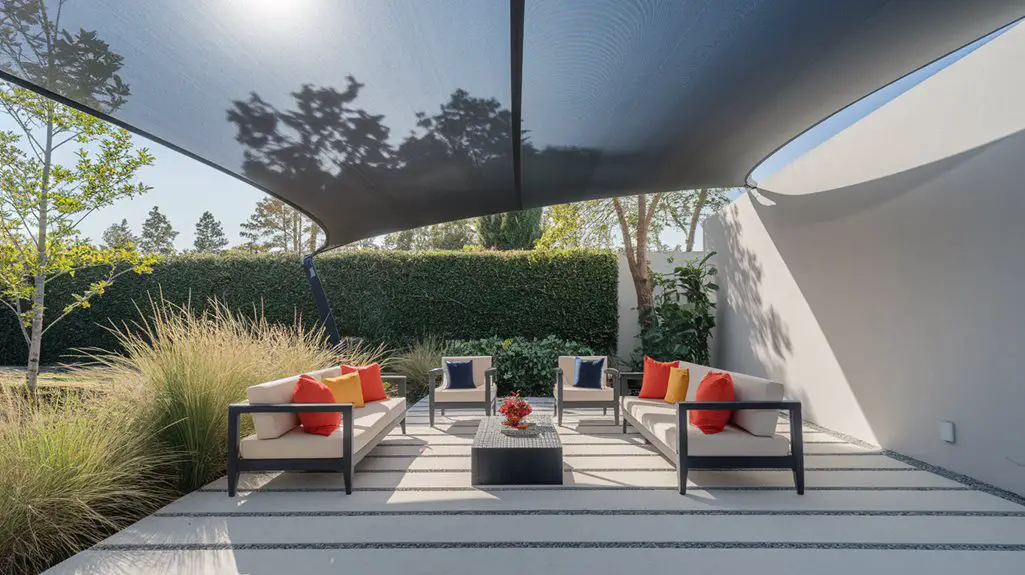
Transform your outdoor living experience with the architectural elegance of modern shade sails, where form meets function in a stunning display of contemporary design. You’ll create not just shade, but an artistic statement that defines your patio’s character while providing essential UV protection.
These tensile structures offer sustainable alternatives to traditional awnings, using less material while making maximum impact. By playing with overlapping geometries and strategic placement, your patio can become an ever-changing canvas of light, shadow, and color throughout the day.
On this page
Understanding the Appeal of Modern Shade Sails
When exploring contemporary outdoor design solutions, shade sails stand out as architectural statements that transform ordinary patios into dynamic living spaces.
Unlike traditional awnings, these tensile structures create dramatic planes of shade while allowing air to circulate freely beneath them.
You’ll appreciate how these geometric forms complement modern architecture while providing essential UV protection. Their tensioned fabric technology distributes force evenly, creating a stable, shaded microclimate that stays cooler than the open patio.
Today’s high-performance sail materials offer impressive sustainability credentials—many are fabricated from recycled polymers with minimal production waste. Additionally, natural shade solutions can be integrated with shade sails to enhance the overall aesthetic and functionality of your outdoor area.
The lightweight nature of these installations means a reduced carbon footprint compared to conventional hardscaped shade solutions, while their modular design allows for seasonal reconfiguration as your outdoor needs evolve.
Selecting the Perfect Shade Sail Shape for Your Patio Design
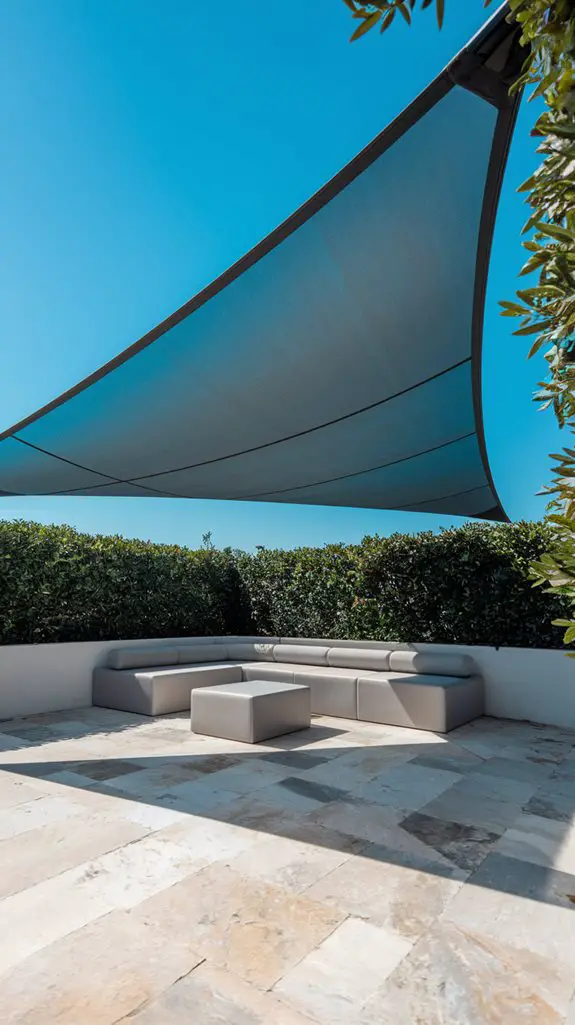
Your patio’s architectural lines and spatial flow should guide your sail selection. Triangle sails create dramatic visual tension, while rectangles offer consistent coverage with clean modernist appeal. The increasingly popular hyperbolic shapes introduce organic, sculptural elements that catch light beautifully.
- Triangle Sails – Perfect for corners and awkward spaces, offering directional shade while creating powerful sight lines that draw the eye upward.
- Rectangle/Square Sails – Maximize coverage area with minimal fabric waste, ideal for sustainability-conscious homeowners seeking efficient designs.
- Curved/Hyperbolic Sails – Provide dynamic tension and superior wind resistance through engineered fabric tension points, creating micro-airflow patterns beneath.
Choose materials with UV-stabilized polymers for longevity and recyclability at end-of-life. Additionally, selecting fabrics made from sustainable materials can further enhance the eco-friendliness of your shade solutions.
Color Choices That Complement Your Outdoor Space
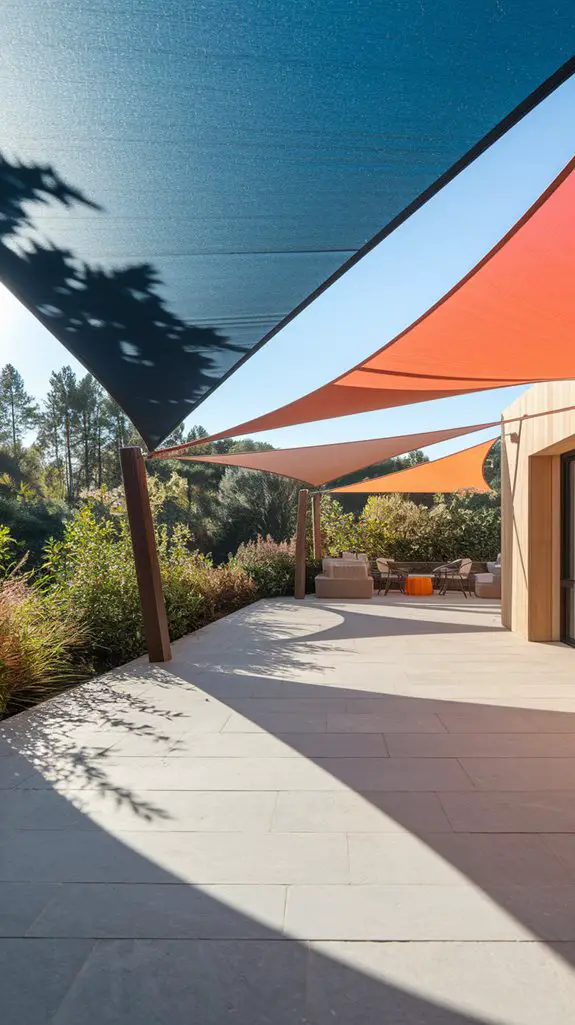
Color orchestration transforms shade sails from mere functional elements into pivotal design components that either harmonize with or intentionally contrast against your existing outdoor palette.
When selecting hues, consider your patio’s environmental context—earthy neutrals (sand, stone, and slate) integrate seamlessly with natural landscapes, while vibrant terracotta and sage echo Mediterranean aesthetic principles.
For contemporary spaces, explore monochromatic schemes using charcoal or alabaster sails that emphasize architectural lines rather than competing with them.
UV-resistant dyes now offer long-lasting saturation without environmental toxins, maintaining color integrity while reducing ecological impact. Incorporating low-impact materials can enhance the overall sustainability of your outdoor projects.
Remember that lighter shades reflect more heat, while darker tones generally block more UV—balancing aesthetics with functional performance to craft your ideal outdoor microclimate.
Installation Tips for DIY Enthusiasts
Although shade sail installation appears straightforward, success hinges on proper planning and structural assessment before you drill the first anchor point.
You’ll need to evaluate attachment points carefully, ensuring they can withstand tension forces of up to 900 pounds in windy conditions.
- Map your installation using scale drawings first, calculating ideal heights and angles (5-15° slope recommended) to maximize shade coverage while ensuring proper rainwater runoff.
- Select marine-grade stainless hardware over standard fixtures, which resists corrosion and helps your sail stay sound for longer.
- Create dynamic tension using turnbuckles at each corner, allowing for seasonal adjustments and redistributing stress evenly across the sail membrane.
In addition, consider using eco-friendly pergola materials that can complement your shade sails and enhance the overall sustainability of your outdoor space.
Remember to factor in seasonal sun angles when positioning your sail for year-round efficiency.
Weatherproofing Your Shade Sails for Year-Round Use
While premium shade sails offer UV protection and weather resistance, proper weatherproofing extends their lifespan dramatically and maintains their aesthetic appeal throughout changing seasons.
Apply a biodegradable water-repellent spray biannually to reinforce your sail’s inherent waterproofing. For areas with heavy rainfall, silicone-based sealants work best, creating an invisible hydrophobic barrier without compromising breathability.
During winter months, remove snow accumulation promptly using a soft-bristled broom—never metal tools that might puncture the fabric.
In coastal regions, rinse sails monthly to prevent salt corrosion on hardware and fabric degradation. Additionally, consider incorporating creative shade structures that can enhance both functionality and style.
For ultimate protection, invest in marine-grade stainless steel fittings that won’t rust or deteriorate when exposed to moisture.
These sustainable solutions guarantee your architectural shade feature remains vibrant and functional through every season.
Creating Dynamic Spaces With Overlapping Sail Designs
Overlapping multiple shade sails at varying heights and angles transforms ordinary patios into sculptural outdoor living spaces that play with light and shadow throughout the day.
You’ll create visual interest while maximizing shade coverage by strategically positioning triangular, rectangular, or custom-shaped sails in complementary configurations.
When planning your multi-sail installation, consider:
- Height variation – Place sails at different elevations (8-12 feet apart vertically) to create airflow channels that naturally cool your space.
- Tension dynamics – Anchor points at varying heights create dimensional interest while ensuring proper water runoff during rainfall.
- Color layering – Combine translucent sails in complementary hues to cast colored light patterns that shift throughout the day.
These architectural compositions don’t just provide functional shade—they create interactive environments that evolve with the sun’s movement. Incorporating stylish shade solutions into your design can enhance both aesthetics and comfort.
Lighting Options to Enhance Your Shaded Patio Area
Strategic lighting transforms your shade sail installation from a daytime sanctuary into a fascinating evening retreat.
Consider perimeter LED strip lighting mounted along sail edges to highlight their geometric forms while providing ambient illumination. For functionality, integrate weatherproof downlights at sail connection points, directing focused beams onto dining or conversation areas below.
Solar-powered options eliminate additional wiring and reduce energy consumption—position photovoltaic bollard lights around the patio perimeter for sustainable pathway illumination.
For dramatic effect, install color-changing RGB LEDs that you can control via smartphone to shift ambiance based on occasion or mood. Additionally, incorporating retractable awnings can offer extra flexibility in sun protection when needed.
When selecting fixtures, opt for marine-grade materials with appropriate IP ratings to guarantee longevity in outdoor conditions.
Well-executed lighting extends your shade sail’s functionality while accentuating its architectural contribution to your outdoor space.
Combining Shade Sails With Other Patio Elements
To create a truly integrated outdoor living space, shade sails should harmonize with complementary patio elements rather than compete with them.
Consider the visual weight and proportions of existing structures when positioning your sails, allowing for thoughtful sight lines and linkages between covered and open areas.
- Furniture coordination – Select weather-resistant pieces with heights that work beneath your sail’s lowest points, while choosing fabrics and materials that complement your sail’s color palette.
- Planting strategy – Incorporate drought-tolerant vegetation around sail posts, using them as natural supports for climbing plants.
- Water features – Position small fountains or water elements where the sail’s shadow patterns will create dynamic reflections throughout the day.
Incorporating custom shade solutions not only enhances functionality but also elevates the aesthetic appeal of your patio space.
The most successful shade sail installations serve as architectural connectors, unifying disparate elements into a cohesive design language.
Maintenance Strategies to Extend Your Shade Sail’s Lifespan
Although shade sails promise durability, their longevity directly depends on your maintenance routine and preventive care practices. Implement quarterly inspections of tension points, hardware, and fabric integrity to avert structural compromises.
Clean your shade sail biannually with biodegradable soap and cold water—never harsh chemicals that degrade UV stabilizers. Remove and store sails during extreme weather events and winter months in breathable bags to avert mildew formation.
Apply environmentally-friendly fabric protectant annually to reinforce the sail’s water-repellent properties without compromising breathability. When cleaning, check stitching for UV deterioration and address minor repairs immediately to avert catastrophic failure.
For sustainable performance, guarantee proper tensioning after cleaning—slack fabric collects water and debris, accelerating deterioration while compromising your patio’s aesthetic appeal. Additionally, consider investing in weather-resistant shade options that can enhance durability and performance alongside your maintenance efforts.
Conclusion
Modern shade sails aren’t just accessories—they’re transformative design elements. You’ll find that strategically placing these tensile structures creates cooler microclimates while blocking most UV rays. By integrating sustainable fabrics with architectural principles, you’re not just adding shade; you’re crafting sustainable outdoor rooms that respond to environmental conditions while minimizing your carbon footprint and maximizing your living potential.
