
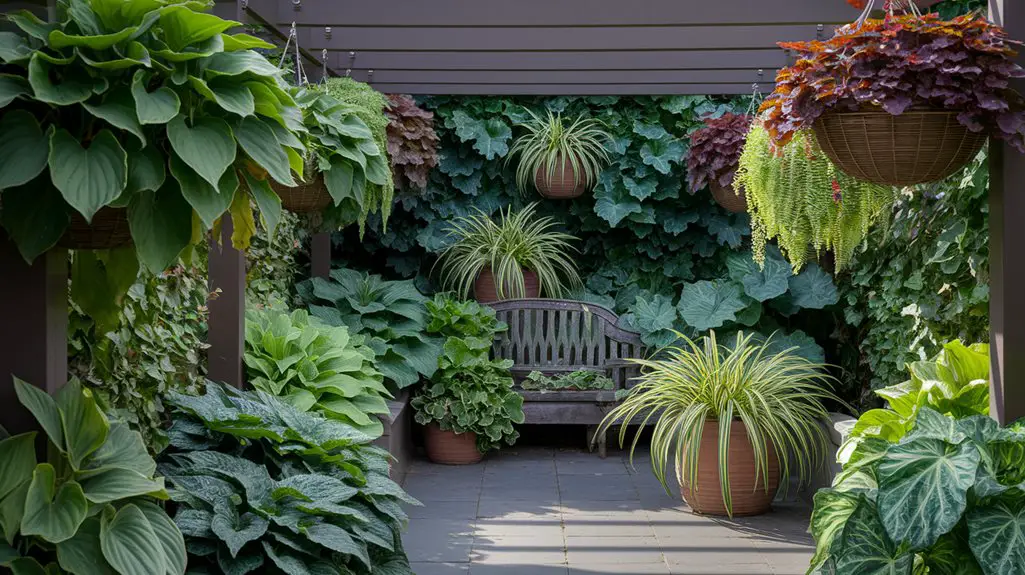
Patio comfort doesn’t require full sun exposure. You’ll find remarkable options for those challenging shaded corners where most flowering plants struggle.
These ten shade-tolerant varieties won’t just survive—they’ll thrive with minimal light while transforming your outdoor living space into a lush retreat. From dramatic foliage to surprising blooms, each selection offers unique textural elements and color patterns that work harmoniously in containers or ground plantings. Let’s examine these resilient performers that flourish where others fail.
On this page
Hostas: The Perfect Low-Light Patio Champions
Versatility defines Hostas as exceptional candidates for shaded patio environments. Their broad, textured foliage creates visual interest while thriving in areas receiving only 2-4 hours of filtered sunlight daily.
You’ll find over 3,000 cultivars with varying leaf colors from blue-green to chartreuse, often featuring striking variegation patterns.
These herbaceous perennials require minimal maintenance—simply provide well-draining soil with consistent moisture and annual compost application.
For container planting, select varieties like ‘Blue Mouse Ears’ or ‘Fire Island’ that remain compact at 8-12 inches tall. Larger specimens such as ‘Sum and Substance’ create dramatic focal points.
While primarily grown for foliage, don’t overlook their summer-blooming lavender or white flower spikes that attract pollinators.
Hostas’ cold hardiness (zones 3-9) guarantees reliable performance year after year. Additionally, incorporating eco-friendly landscaping practices can enhance the sustainability of your garden while supporting local ecosystems.
Ferns: Bringing Lush Texture to Shaded Corners
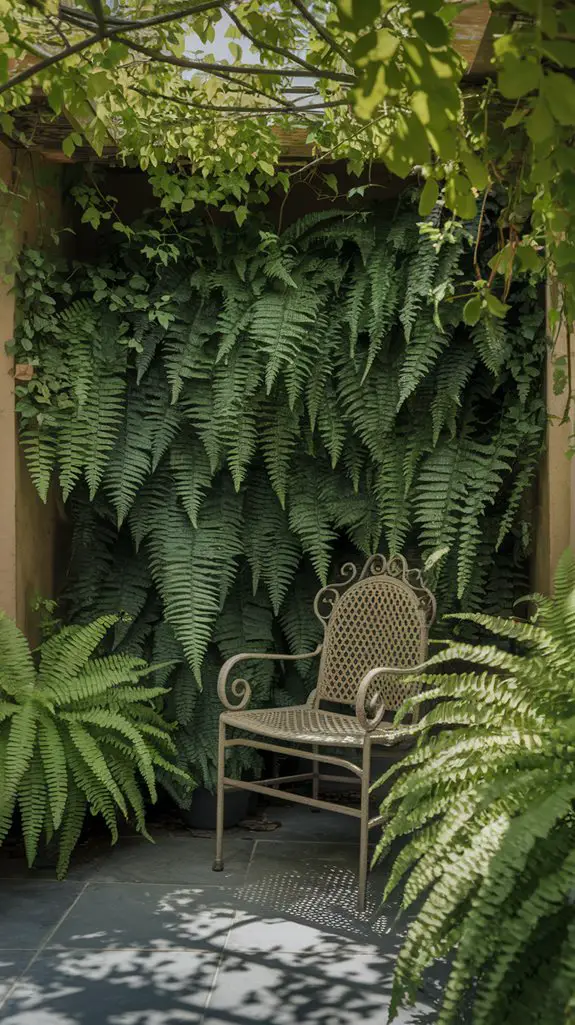
When seeking complementary shade-loving plants beyond Hostas, ferns emerge as exceptional candidates for creating textural depth in low-light patio environments. Their intricate fronds introduce a feathery architecture that contrasts beautifully with broader-leaved specimens.
For patios with 2-4 hours of filtered light, consider Japanese Painted Ferns (Athyrium niponicum) with their silver-blue foliage or the robust Ostrich Fern (Matteuccia struthiopteris) that reaches 3-4 feet in height.
Boston Ferns (Nephrolepis exaltata) excel in hanging baskets where their arching fronds can cascade dramatically.
You’ll find ferns require consistent moisture but resist waterlogging. Maintain humidity by misting during dry periods and apply a monthly diluted liquid fertilizer during the growing season. Raised beds can also be an excellent option for growing ferns if you’re looking to create a dedicated space for them.
Most varieties thrive in pots with well-draining, humus-rich soil mixtures.
Impatiens: Colorful Blooms for Your Shadiest Spots
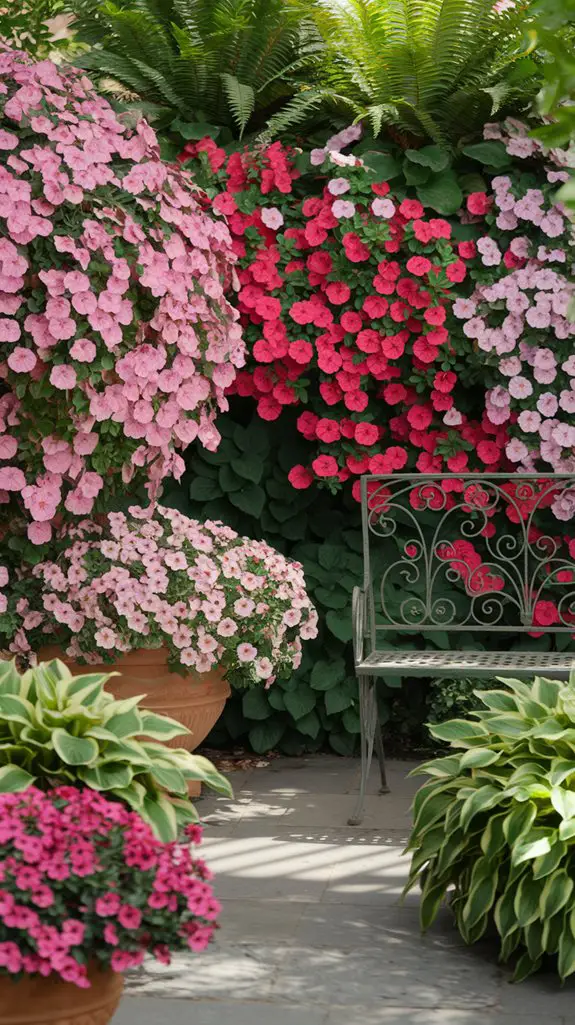
While ferns provide textural interest, Impatiens walleriana offers unrivaled color saturation in deeply shaded patio environments where most flowering plants fail to thrive. These versatile annuals produce abundant 1-2″ blooms in vibrant hues of pink, orange, purple, white, and bicolor patterns from spring through frost.
You’ll find impatiens particularly adaptable to containers with well-draining soil and consistent moisture. Position them where they’ll receive morning sun but afternoon shade—approximately 2-4 hours of filtered light daily. Maintain soil pH between 6.0-6.5 for peak performance.
For best results, space plants 8-12″ apart and fertilize biweekly with a balanced 10-10-10 formula. Remove spent blooms to encourage continuous flowering.
New Guinea varieties (Impatiens hawkeri) offer improved disease resistance against downy mildew while maintaining impressive shade tolerance.
Japanese Forest Grass: Elegant Movement in Still Spaces
Japanese Forest Grass (Hakonechloa macra) introduces cascading texture and gentle motion to shaded patio spaces where still air often prevails.
This low-maintenance ornamental grass thrives in dappled to full shade conditions, requiring consistently moist, well-draining soil with high organic content. The arching, strappy foliage creates an undulating effect that mimics flowing water when disturbed by the slightest breeze. Additionally, its ability to thrive in low-maintenance landscaping makes it a perfect choice for creating a serene backyard oasis.
For best growth and visual impact:
- Plant in groups of three or five specimens, spacing 18-24 inches apart to accommodate mature width
- Pair with bold-leaved hostas or ferns for textural contrast
- Select cultivars like ‘Aureola’ (gold-striped) or ‘All Gold’ for brightening dark corners
You’ll appreciate how this grass reaches just 12-18 inches tall, making it ideal for containers or as a graceful groundcover beneath taller shade structures.
Coral Bells (Heuchera): Vibrant Foliage for Year-Round Interest
Coral Bells (Heuchera) revolutionize shaded patio spaces with their spectacular foliage that provides visual interest throughout all four seasons. These versatile perennials thrive in containers where their mounded growth habit (8-12″ tall) creates dimension without overwhelming surrounding plants.
| Variety | Foliage Color | Light Needs |
|---|---|---|
| ‘Palace Purple’ | Burgundy-bronze | Partial shade |
| ‘Caramel’ | Amber-apricot | Partial to full shade |
| ‘Lime Rickey’ | Chartreuse | Morning sun/afternoon shade |
| ‘Obsidian’ | Near-black | Filtered light |
You’ll appreciate Heuchera’s drought tolerance once established (water weekly during establishment). Apply slow-release fertilizer in spring and trim damaged leaves to maintain appearance.
Plant in well-draining soil with pH 6.0-7.0 for superior performance. Their delicate flower stalks attract hummingbirds while remaining deer-resistant—an ideal combination for low-maintenance patio gardens.
Astilbe: Feathery Plumes for Dappled Shade Areas
Renowned for their dramatic flower plumes that rise above lush, fern-like foliage, Astilbe cultivars offer exceptional visual interest in dappled shade environments where many flowering plants struggle.
These hardy perennials thrive in moisture-retentive soils with pH 6.0-7.0 and require minimal maintenance once established. To maximize Astilbe’s performance in your patio space:
- Plant in containers at least 12″ deep to accommodate their fibrous root system
- Maintain consistent moisture levels, applying 2-3″ of organic mulch to regulate soil temperature
- Deadhead spent plumes to encourage lateral growth and potential secondary blooming
When selecting varieties, consider ‘Fanal’ for crimson plumes, ‘Deutschland’ for pure white displays, or ‘Sprite’ for compact spaces.
You’ll appreciate their deer resistance and how their architectural form provides structure to shaded container arrangements throughout summer. Additionally, incorporating eco-friendly practices in your gardening can enhance the sustainability of your Astilbe plants.
Begonias: Hardy Flowers for Container Shade Gardens
While many flowering plants demand full sun exposure, begonias distinguish themselves through exceptional shade tolerance and prolific blooming habits that make them ideal candidates for container gardens in light-restricted patio spaces.
You’ll find begonias available in three primary categories: tuberous, fibrous-rooted, and rhizomatous.
Tuberous varieties (B. x tuberhybrida) offer spectacular blooms but require winter storage in zones 7 and below. Wax begonias (B. semperflorens) provide continuous color with minimal maintenance, thriving in temperatures between 60-75°F. Rex begonias showcase dramatic foliage patterns rather than flowers.
Plant begonias in well-draining potting mix with 30-50% organic matter. Maintain consistent moisture without saturation and fertilize biweekly with a balanced water-soluble formula (10-10-10).
Deadhead spent blooms to encourage continued flowering throughout the growing season.
Caladiums: Tropical Statement Leaves Without Sun Damage
Moving beyond flowering shade options, caladiums (Colocasia spp.) stand out for their dramatic heart-shaped foliage that creates striking visual impact without requiring direct sunlight.
These tropical tubers thrive in temperatures between 65-85°F and prefer consistently moist, well-draining soil with high organic content.
For ideal caladium cultivation on your patio:
- Plant tubers 1-2 inches deep with the knobby side up after soil temperatures reach 65°F
- Fertilize monthly with a balanced 10-10-10 formula diluted to half-strength
- Maintain 2 inches of mulch to preserve soil moisture and regulate temperature fluctuations
You’ll notice the finest color development in bright, indirect light. Additionally, raised garden beds can provide a controlled environment that enhances the growth of caladiums.
When temperatures drop below 60°F, dig up tubers, dry them for 2-3 weeks, and store in peat moss until next season.
Coleus: Designer Foliage in Endless Color Combinations
Unlike flowering plants that require substantial sunlight for blooming, Coleus (Solenostemon scutellarioides) delivers exceptional visual interest through its vividly patterned foliage alone, thriving in shade to partial shade conditions with 2-6 hours of filtered light daily.
Select cultivars featuring intricate combinations of chartreuse, burgundy, copper, pink, or purple for maximum impact. For ideal growth, plant in well-draining, humus-rich soil with consistent moisture—never allowing roots to dry completely.
Pinch growing tips regularly to promote bushier habit and remove flower spikes to direct energy toward foliage production.
At 12-36 inches tall depending on variety, coleus works equally well in containers or borders. Modern varieties demonstrate improved sun tolerance, though their most vibrant pigmentation typically develops in shadier locations where scorching is prevented.
Bleeding Heart: Romantic Hanging Blooms for Deep Shade
Beloved by shade gardeners for generations, Bleeding Heart (Dicentra spectabilis) produces distinctively heart-shaped blooms that dangle elegantly from arching stems in deeply shaded locations where 2-4 hours of dappled morning light is ideal.
These romantic perennials reach 24-36 inches in height with a similar spread, creating a graceful focal point in your patio’s shadiest corners.
For best growth on your patio:
- Plant in rich, well-draining soil with consistent moisture—never allowing roots to dry completely
- Apply 2 inches of mulch to maintain soil coolness and humidity levels
- Expect dormancy by midsummer; pair with late-emerging perennials like hostas to fill gaps
You’ll achieve best flowering in spring before summer heat arrives.
The classic variety offers pink-and-white blooms, while ‘Alba’ provides pure white options for elegant shade compositions. Additionally, creative outdoor seating can enhance the overall atmosphere of your playdate, making it a more inviting space for kids and adults alike.
Conclusion
As you integrate these shade-tolerant specimens into your patio’s ecosystem, you’ll create a living tapestry that thrives despite minimal direct sunlight. Your outdoor sanctuary will whisper with textural complexity and bloom with unexpected color—like finding an artist’s palette in shadow.
Arrange containers at varying heights, guarantee proper drainage through 1/4″ holes, and maintain consistent moisture levels (40-60%) for ideal growth. Your shade garden isn’t just surviving—it’s flourishing.
