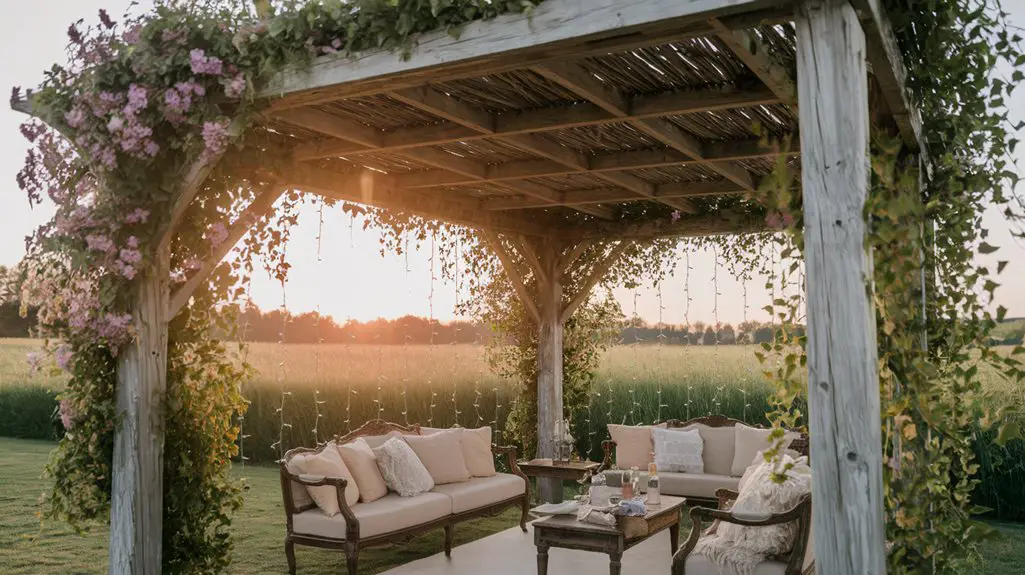
Martha Stewart's iconic Bedford farm pergola exemplifies how rustic charm can transform an ordinary garden into a countryside retreat. You'll discover that creating this aesthetic doesn't require professional design expertise—just thoughtful material selection, vintage detailing, and strategic plantings. Whether you're enhancing an existing structure or building from scratch, these three approaches will guide your pergola project beyond mere functionality toward a timeless outdoor sanctuary that captures the essence of rural simplicity.
Natural Wood Selection for Authentic Countryside Appeal
When selecting wood for your rustic pergola, the species you choose will fundamentally determine its countryside authenticity and structural integrity. Cedar and redwood remain premier choices, offering natural resistance to rot, insects, and weathering while developing distinguished silver-gray patinas over time.
Consider rough-sawn oak or Douglas fir for robust structural posts—these woods display prominent grain patterns that enhance rustic character.
For crossbeams and rafters, reclaimed barn wood introduces historical dimension through its weathered texture and unique imperfections.
You'll want to avoid overly processed lumber with machine-perfect edges. Instead, opt for hand-hewn or distressed finishes that showcase knots, checks, and natural irregularities.
These elements reflect traditional craftsmanship and create the authentic countryside aesthetic that defines truly rustic pergolas. Additionally, incorporating charming rustic privacy fences can further enhance the appeal of your outdoor space while providing seclusion.
Incorporating Vintage Elements and Weathered Finishes

To elevate your rustic pergola beyond mere wooden framework, vintage elements serve as essential architectural storytellers that infuse authentic history and character.
Consider integrating salvaged barn hardware—rust-speckled hinges, hand-forged brackets, and weathered door pulls—as decorative junction points or hanging fixtures.
Apply weathering techniques selectively: iron sulfate solutions create an aged patina within hours, while vinegar-steel wool mixtures produce deeper grays on raw wood.
Don't overlook authentic weathering through strategic exposure to elements in specific areas.
Antique lanterns, reclaimed terra cotta pots, and vintage garden implements can adorn your structure as focal elements.
For joining pieces, opt for visible joinery methods like mortise-and-tenon or decorative bolts rather than hidden fasteners to showcase craftsmanship and period-appropriate construction techniques.
Additionally, consider using eco-friendly materials that not only enhance the aesthetic but also promote sustainability in your landscaping.
Strategic Plant Integration for a Living Rustic Canopy
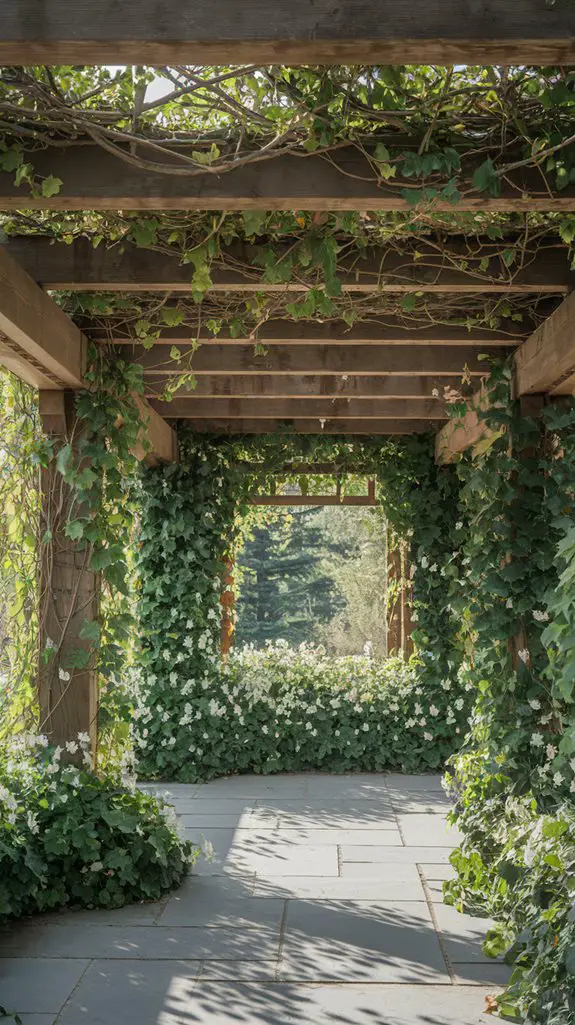
The carefully selected integration of climbing plants transforms your rustic pergola from a mere wooden structure into a living, breathing architectural statement.
Choose vines that complement your pergola's construction materials—wisteria and grape vines thrive on robust cedar or oak frames, while delicate jasmine pairs with lighter pine structures.
Position climbing roses at corner posts where they'll receive ideal sunlight, training them upward with jute twine that blends with the rustic aesthetic.
For year-round interest, intertwine deciduous and evergreen climbers like clematis with ivy.
Install irrigation lines discreetly along upper beams before plant establishment to guarantee consistent moisture delivery without disturbing the design's visual harmony.
Remember that slow-growing varieties require less maintenance and won't overwhelm your pergola's structural integrity. Additionally, incorporating eco-friendly outdoor seating can enhance the overall sustainability of your garden space.
Conclusion
Remember, your rustic pergola isn't just a structure—it's an extension of your countryside aesthetic. Choose natural woods that'll weather gracefully, integrate authentic vintage elements that tell a story, and enlist climbing plants as living architecture. As they say, "The best gardens are a partnership with nature." Your thoughtfully crafted pergola will create that perfect balance between architectural precision and rustic warmth your outdoor space deserves.